how to
How Tos for lawful misconduct; explore forensic analysis, legal proceedings, police investigations and beyond.
Hearts for Sale
In the quiet glow of a smartphone screen at midnight, Sarah thought she had finally found her soulmate. Marcus was everything she had been looking for: successful, charming, and refreshingly honest about his past struggles. Their conversations flowed effortlessly across continents, bridging the gap between her small town in Ohio and his supposed oil rig work in Nigeria. Three months and $45,000 later, Sarah discovered that Marcus—along with his profile photos, his stories, and his promises—was entirely fictional.
By Muhammad Sabeelabout a year ago in Criminal
Microsoft Alerts Businesses and Governments to Critical Server Software Attack.
In July 2025, Microsoft issued a high-priority security alert warning businesses, government agencies, and IT administrators worldwide about a newly discovered and active attack campaign targeting Microsoft server software. The company revealed that a sophisticated hacking group is exploiting previously unknown vulnerabilities in Microsoft Exchange Server and Microsoft SQL Server to gain unauthorized access to corporate and government networks.
By Active USA about a year ago in Criminal
"American Idol" Tragedy: Beloved Music Executive and Husband Killed, Suspect Had Troubled Past
By Asad Taizai | True Crime Enthusiast A chilling double homicide has shocked fans of the long-running show American Idol, as music supervisor Robin Kaye and her husband, musician Thomas Deluca, were found murdered in their Los Angeles home. Authorities have arrested 22-year-old Raymond Boodarian in connection with the killings, raising serious questions about mental health, legal gaps, and early intervention.
By 🕵️♂️ True Crime Enthusiast | Storyteller of the Dark Side 🔍about a year ago in Criminal
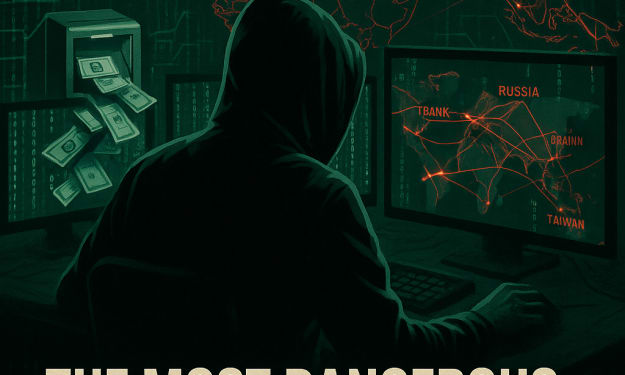
The most dangerous hacking operation in the history of banks | Kings of the Dark Web?
On September 13, 2017, the IT director of a Russian bank was living a normal life with everything going well. But at exactly 3 a.m. on that date, he called the bank’s accounts manager with a trembling voice and said, “Contact the IT team immediately because the situation is very serious.” Without asking for details, the IT employee contacted Kaspersky and requested that they send a specialist to the bank immediately. He told them, “It seems the problem that has baffled the world has now reached Russia.” Indeed, Kaspersky sent an IT expert to the bank within fifteen minutes. The expert met with the bank’s IT employee, and the surprise was that someone had managed to control the primary domain controller—the unit that controls all the bank’s computers. To clarify, if you control this unit, you control everything in the bank. The IT director and Kaspersky expert sat in front of the main server and watched the hacker sending data to China without any logical reason. The Kaspersky expert was shocked by the strength and scale of the breach and initially lost hope of stopping it, but he began searching for malicious software to minimize the damage. After a long search, he found a program that allowed the hacker to monitor and control the computer remotely. At one strange moment, the expert opened Microsoft Word and typed “Hello” in Russian. For minutes, nothing changed, then suddenly the mouse pointer moved, and a message appeared on the screen. The hacker replied in Russian, “You will never catch us.” The expert responded, “We will catch you.” The hacker answered, “No, my friend, you won’t.” This marked the start of a psychological war between professional hackers and the cybersecurity team. This was the beginning of one of the most dangerous hacking operations in history. But who won in the end? The hackers or the banks, security forces, and investigators? The entire story is highly classified, and only limited names and data have been disclosed because revealing the details of such a theft could cause a global economic crisis. The story began in 2014 when the group’s sole mission was to quietly monitor internal banking systems and gather information without carrying out any real hacking—just testing vulnerabilities and waiting for the right moment. On April 8, 2014, they started their plan by sending a phishing email with an infected Word document to a low-level employee at a Ukrainian bank. The document exploited a vulnerability in Microsoft Word, unleashing malware that opened a backdoor into the entire banking system. They were then able to watch everything on that employee’s computer, recording every keystroke and password entered. The employee was unaware his device was compromised. This employee effectively became the gateway to a much larger breach, gradually spreading into all the bank’s servers and devices. After nearly two years of surveillance, the hackers executed their first major theft on July 10, 2016, in Taipei, Taiwan. During this theft, two gang members wearing surgical masks entered a bank. One stood at the entrance observing, while the other stood calmly at an ATM machine without withdrawing cash or entering a PIN. Suddenly, the ATM started dispensing money continuously. The gang member calmly collected the cash into his bag and fled before a stranger approached the ATM. The stranger, who attempted to withdraw money, was shocked to see cash strewn all over the floor but didn’t take any. This wasn’t an isolated event; the exact operation occurred simultaneously at 20 locations worldwide, causing confusion among bank managers who initially thought it was a software glitch or a coincidence. The gang was highly organized with specific teams for each phase: reconnaissance, penetration testing, monitoring, data collection, analysis, planning, and execution. Their theft methods were sophisticated. They transferred money from fake accounts into their own while manipulating balances so the bank’s internal systems wouldn’t notice any suspicious activity. They also collaborated with on-the-ground “cash handlers” who physically collected the money from ATMs. In one month, they stole over $50 million using this method. After stealing billions from over 100 banks in 30 countries, Kaspersky, Taiwanese police, and various international security agencies began tracking the gang. In 2018, authorities raided the home of the gang’s Ukrainian leader, Denis, who lived a lavish life in Spain. They confiscated his possessions, including two BMW cars, half a million dollars in jewelry, and 15,000 bitcoins worth over a billion dollars today. Denis was a programming genius but used his skills more as a personal challenge than just for wealth. Authorities arrested several gang members, but the network remains large and complex. Some sources suggest the gang is part of the Russian cyber army, though no official evidence confirms this. The key lesson: never open suspicious links or log in to unknown websites, even if sent by trusted people, because hackers are everywhere.
By Ink pulse(different angle)about a year ago in Criminal
The story of the Lloyds Bank robbery | They stole Britain's most dangerous secrets by accident
On January 13, 2006, in the city of Acassuso near Buenos Aires, the largest bank in Argentina was hit in an armed robbery. The gang stormed the bank and took customers and employees hostage. Just fifteen minutes later, it seemed like the plan had failed: one robber tried to escape with a hostage but was met with a full police blockade. He returned inside, seemingly cornered along with his accomplices. But this was all part of a masterfully crafted illusion. The gang leader was actually executing what would later be known as the most brilliant bank heist ever—“The Heist of the Century.” It began on May 15, 2005, when Fernando Araujo told his psychologist that he wanted to do something to reignite his passion for life. When asked what, he said, “I want to rob a bank.” The psychologist laughed. He wasn’t joking. Araujo was a bright man: a legal assistant and part-time actor. He began riding his motorcycle around Acassuso, scouting banks. Banco Río stood out—a major bank where most Argentines kept their savings, with a secure vault full of safe deposit boxes storing cash, gold, diamonds, and more. He weighed two options: robbing employee safes during a stickup (a risky move with limited payoff), or breaking into the underground vault (high reward but nearly impossible). Cameras and heat sensors connected directly to the police made it seem hopeless. Then he noticed a pattern: manhole covers leading to a large sewer system 160 meters from the vault. If he could reach the bank through there, it might work. For 35 days, he studied every detail. He recruited Sebastián Bolster, an engineer who hated banks after his family’s savings were wiped out. They called each other “The Leader” and “The Engineer.” The Engineer entered the bank pretending to be a wealthy client, using a hidden camera to film the vault. But the operation needed money, so The Leader brought in “The Doctor,” a mysterious mastermind who recruited the rest of the crew: “The Financier,” a silver-tongued con man; “The Fierce One,” a hardened ex-con; and “The Kid,” a trusted operative. The plan was bold: dig a 30-meter tunnel from the sewer to the vault. The Engineer designed a heat-insulated suit to beat the sensors, but it proved too restrictive. So they switched strategies — enter the bank in disguise, fake a failed robbery, then escape with the loot through the sewer. Weapons were required, but they used plastic toy guns. The Engineer also built a special compressed-air tool called “The Gun” to break vault locks in seconds. On the morning of January 13, a vintage Volkswagen pulled up to Banco Río. Four men in gray uniforms, blonde wigs, and ski masks entered and took control. Inside, they acted nervous and clumsy to sell the illusion of a botched job. Outside, the police quickly surrounded the bank. One robber, The Financier, pretended to try and escape with a hostage, only to be "forced" back inside—again, part of the act. Meanwhile, The Engineer emerged in the vault after tunneling through the wall, beginning to crack open hundreds of safe deposit boxes with “The Doctor.” The Leader used the hostages to delay the police, even ordering pizza to buy more time. Once done, they loaded bags of cash, jewelry, and gold into the tunnel. They left toy guns and a fake bomb behind to confuse the police and delay their entry. They floated the loot through the sewer on inflatable rafts to an exit 200 meters away. “The Kid” waited above in the Volkswagen, modified with a hidden trapdoor for the escapees. They drove off, leaving the police still negotiating with ghosts. Hours later, the police stormed the bank—and found nothing. No robbers. No real weapons. Just silence. The crew split the money and agreed to disappear. But betrayal came from within. The Financier’s wife took $100,000 worth of the loot and, after a fight, reported everything to the police. One by one, the gang was arrested: The Financier, The Leader, The Engineer, and The Fierce One. The Doctor and The Kid escaped the country. None of the money was recovered. The bank absorbed the loss. Each received sentences of 9–15 years, but none served more than three thanks to clever legal defenses and public sympathy. Years later, their story became a hit movie. In a surprising twist, they donated 30% of the film’s profits back to the bank. And thus, "The Heist of the Century" became known as the smartest robbery ever pulled off in modern history.
By Ink pulse(different angle)about a year ago in Criminal
The smartest robbery in human history|Rio Argentina Bank / Escape Geniuses (Hello, the police need a pizza)
On January 13, 2006, specifically in the city of Acassuso near the Argentine capital Buenos Aires, an armed robbery took place at the largest bank in Argentina. The gang entered the bank and took employees and customers hostage. After about fifteen minutes, it seemed as if the plan had failed; one of the robbers took a hostage and tried to escape but was surprised to find the police had surrounded the building. With no other option, he returned inside, waiting for his inevitable fate with his accomplices. However, everything was part of a meticulously planned operation, much like the series "La Casa de Papel." The gang leader was orchestrating what later became known as the smartest robbery in history, called “The Heist of the Century.” The story began on May 15, 2005, when Fernando Araujo visited his psychologist and told him he wanted to do something to restore his passion for life. When asked what he planned to do, he said he wanted to rob a bank. The doctor laughed, thinking it was impossible, but Araujo was serious and had already started planning. Araujo was highly intelligent, working as a legal procedures agent and also an actor. He began scouting banks on his motorcycle around Acassuso. The bank that caught his attention was Banco Río, a large and very popular bank where about 80% of Argentines kept their money. The bank offered a special feature: safe deposit boxes to store valuables like gold, jewelry, diamonds, and cash. He considered two methods: a direct armed attack to steal from the employees’ safes, which was limited to $10,000 per safe and carried a high risk with little reward, or breaking into the safe deposit vault at night to steal everything. The latter promised huge gains but seemed nearly impossible due to security cameras and heat sensors directly connected to the city police. Despite these challenges, he kept thinking of a way to enter the bank unnoticed. He first considered digging a tunnel under the bank, but this would require months of work and was likely to be discovered. Then, by chance, he noticed many sewer covers on the road near the bank, spaced about 10 meters apart. Tracing these, he realized that the main sewer ended in a large square opening about 160 meters from the bank’s vault, giving him a direct underground route. He spent 35 days planning the approach and recruiting a team. His first recruit was Sebastián Bolster, an electronics and mechanical engineer who hated banks due to his family losing everything when their bank went bankrupt. They agreed to call each other by nicknames: Araujo became "The Leader," and Sebastián "The Engineer." They studied the sewer and bank layout for a week. The engineer posed as a wealthy client wanting to store 6 kilograms of gold, using a hidden camera to film inside the vault. After realizing they needed significant funding, the Leader contacted a third member known only as "The Doctor," a well-connected intellectual who assembled the rest of the team. The team included "The Financier" (Beto Latorre), a skilled con artist and expert in persuasion; "The Fierce One" (Luis Silans), a former criminal with multiple prison sentences; and finally "The Kid," an unknown but trusted associate. The Doctor provided detailed city maps, and The Fierce One managed to secure the exact floor plans of the bank itself. The plan was to dig a tunnel about 30 meters from the sewer to the vault. The expected digging time was about two months. Meanwhile, the Engineer developed a special heat-insulating suit to avoid detection by heat sensors. However, the suit was too heavy and restricted movement, so the team reconsidered their entry strategy. The Leader proposed a bold and risky plan: enter the bank through the main door wearing disguises and escape through the tunnel. This required carrying weapons, which the Leader initially opposed but later allowed as long as the weapons were fake, which the Financier supplied. The Engineer also invented a device called “The Gun,” a powerful compressed air tool designed to break any lock within seven seconds. On January 13, 2006, their plan began. A vintage Volkswagen arrived at the bank entrance, and four men dressed in gray uniforms with black ski masks and blond wigs entered. Inside, they took control and took everyone hostage, acting nervously to give the impression that the plan was failing. Meanwhile, the Engineer entered through the sewer tunnel with equipment to break through the wall leading to the vault. After about fifteen minutes, the police had surrounded the bank. One of the robbers, The Financier, took a hostage outside, pretending to try to escape but was stopped by the police and forced back inside, reinforcing the illusion that the plan was collapsing. The security guard in the surveillance room was forced out at gunpoint to stop informing the police, and his phone was used to negotiate with the police. Once the cameras were disabled, the Engineer was given the signal to break through the vault wall. Inside the vault, The Engineer and The Doctor started breaking into the safe deposit boxes with their device while The Leader, The Financier, and The Fierce One controlled the hostages and distracted the police. They demanded pizza be delivered to the bank to satisfy the robbers and gain more time. The police agreed, which bought the gang another 40 minutes. Once the robbery was complete, the gang packed the stolen items into large bags and threw them into the sewer tunnel, where The Engineer and The Doctor loaded them onto inflatable boats. They planted a fake bomb at the vault door and left their weapons on a cloth to make it look like a messy exit. They escaped through the sewer to a sewer cover about 200 meters from the bank, where The Kid waited with the modified Volkswagen car with a trapdoor underneath. They drove off and returned to the Financier’s home. They watched the news on TV, surprised that the police had not yet entered the bank. Two hours later, the police finally stormed the bank, only to find the robbers gone. The weapons left behind were children’s toys, and the bomb was fake — all carefully planned to buy time and avoid serious charges. The robbers divided the money and agreed never to meet again. However, the Financier’s wife took three bags worth about $100,000 without permission. After a violent argument, she reported the whole operation to the police. The police arrested the Financier, then The Leader, The Engineer, and The Fierce One. The Doctor and The Kid fled abroad. The total value of the stolen money remains unknown, with none recovered. The bank absorbed the losses. Sentences ranged between 9 and 15 years, but none served more than three years, as public sympathy and legal defense campaigns helped secure their early release. Afterward, their story was turned into a successful action-comedy film. They even donated 30% of the film’s profits to the bank as compensation. Thus, the “Heist of the Century” was recorded as the smartest robbery in human history.
By Ink pulse(different angle)about a year ago in Criminal
Cybercrime and Digital Policing
It was a chilly winter morning when Inspector Faraz received an unusual call. A mother, trembling with panic, reported that her 17-year-old daughter had gone missing after being blackmailed online. The girl had been chatting with someone she believed was a schoolmate. But the boy turned out to be a predator who had gathered private pictures and was now threatening to leak them if she didn’t meet him in person. This wasn't just a case of missing persons — this was cybercrime in its darkest form.
By Mehtab Ahmadabout a year ago in Criminal
Nirbhaya: The Crime That Awoke Nation's Conscience. AI-Generated.
On the chilling night of December 16, 2012, a 23-year-old physiotherapy student boarded a private bus in South Delhi with her male friend. What happened next would shock not just India, but the entire world.
By Nowshad Ahmadabout a year ago in Criminal
🕯️ The Haunting Silence of Hedviga Golik: Forgotten for Decades
The Haunting Silence of Hedviga Golik: Forgotten for Decades In May 2008, an astonishing discovery was made in Zagreb, Croatia. Three tenant representatives, unlocking a loft apartment at Medveščak 77, found the mummified remains of a woman—Hedviga Golik—still sitting in her armchair, wrapped in blankets beside a table with her old television and a half-finished cup of tea. She had died quietly—possibly in 1966, though officially last seen in 1973—and gone entirely unnoticed for 35–42 years . --- 👤 Who Was Hedviga Golik? Born in 1924 (Fiume/Rijeka). A trained nurse, she moved to Zagreb in 1961, taking residence in an isolated 18 m² attic apartment . She was reported to live a reclusive life, rarely leaving her flat. Neighbors described her as polite, yet socially withdrawn—possibly struggling with mental health, even referred to as schizophrenic by those who occasionally interacted with her . The apartment had belonged to her former partner—the building’s janitor or superintendent—part of Yugoslavia’s state housing system, where tenancies were frequently informal . --- ⚱️ The Mysterious Death and Discovery Golik is believed to have died of natural causes, possibly around 1966, having made a cup of tea and sat down to watch TV. Alternatively, forensic analysis initially placed her death near 1973, when she was last seen alive . On May 12, 2008, tenants broke in while discussing apartment ownership—long overdue due to unclear title arrangements. Inside, in the half-lit room, they found her — mummified, eerily preserved, and still seated .
By Ikram Ullahabout a year ago in Criminal
Understanding Social Security Benefits. What They Are and How They Help.
Who Pays for Social Security? Social Security is funded by payroll taxes paid by workers and employers. Every time you earn a paycheck, a percentage of your earnings goes toward Social Security taxes. Employers match this amount, and self-employed workers pay both parts themselves. This money goes into a trust fund that pays current beneficiaries.
By Tariq jamilabout a year ago in Criminal