guilty
Don’t do the crime if you can’t do the time; a look into all aspects of a guilty verdict from the burden of proof to conviction to the judge’s sentence and more.
The Smartest Heist You’ve Never Heard Of: A True Story of Silence, Signals, and $30 Million
Chapter 1: No Masks, No Guns In early 2013, while the world focused on headlines about Bitcoin and the latest social media apps, something strange was happening behind closed doors. A quiet robbery took place — without any violence, without weapons, and without even setting foot inside the bank.
By Waqar Khanabout a year ago in Criminal
Family Swept Away by Swat River Floodwaters: "I Kept Calling Like a Madman, But Couldn't Reach My Wife and Children"
"I was told that my brother-in-law Muhammad Mohsin’s family had met with an accident and that his children were swept away by the water. For a moment, I froze — my wife and children were with them too. I started dialing numbers on my phone like a madman, but I couldn’t reach them," said Abdul Salam, a resident of Daska in Sialkot district of central Punjab. His wife, two daughters, and a son had gone on a sightseeing trip to Swat and other hilly areas along with other relatives, where they all drowned in the Swat River. According to Rescue 1122’s spokesperson in Swat, a total of 16 people were caught in the floodwaters. Three were rescued, while nine bodies have been recovered. The search for the remaining is ongoing. Abdul Salam said he was immediately heading to Swat. He works in Saudi Arabia as a laborer and had taken leave to return to Pakistan to oversee the construction of his house. "Before they left for Swat, my daughters were insisting I join them, saying it would be more fun. But I told them if I left too, who would supervise the house construction?" he said. The family that drowned in the Swat River was from Daska. They had initially set off for Naran-Kaghan at around 11 PM but changed their route and went to Swat instead. Muhammad Mohsin’s father, Abdul Rehman, said, "Sixteen members of our family had set out, including friends of my son Mohsin and their families. In the morning, Mohsin told me they were going to Swat instead of Naran-Kaghan." He added, "We were in touch during breakfast, and everything was fine. A little later, my daughter and son-in-law were crying on the phone. They told me the children had been swept away by the river." Abdul Rehman stated, "My daughter-in-law Rubina and her four daughters were swept away. My daughter Fauzia and her four daughters were also among those who drowned. One of my daughters, her husband, and four daughters survived." When contacted by phone, a young man, Muhammad Mohsin, who had accompanied the family, said he was currently taking the bodies back to Sialkot via ambulance. Shocked and grieving, he could only say, "They were my friend’s family, and they had come from Sialkot." He was unable to speak further. Sialkot's Deputy Commissioner Saba Asghar told BBC Urdu that 35 individuals had traveled from Daska to Swat. Initial investigations revealed that Muhammad Mohsin from Daska took his own family, his brother-in-law's family, families of two friends, and other individuals with him to Swat. According to rescue personnel, the affected family from Daska had come to Swat for sightseeing. While having breakfast by the riverside, a sudden surge in the river — caused by rain — swept away 16 members of the same family. Rescue spokespersons said they received information about the drowning at around 8 AM. The group was sitting along the river near Mingora Bypass and was unaware of the incoming floodwaters. As soon as they were informed, rescue teams launched an operation. Three people were rescued alive, and eight bodies were recovered. The search for the others is ongoing. Among the deceased were five children. Swat's Deputy Commissioner told the media that Section 144 had been imposed to prohibit bathing in or approaching the river. However, tourists still went there. Swat city’s Mayor, Shahid Ali Khan, immediately reached the riverbank where tourists from Sialkot and Mardan were swept away by the floodwaters. He said, "The flood current was so strong that those caught in it couldn’t even comprehend what to do." Mayor Shahid Ali Khan confirmed that multiple members of a single family from Sialkot were swept away. He added that three people from Mardan miraculously survived. He explained that the tourists had stopped across the river for breakfast. Some sat in a hotel while others went toward the river. One woman had gone to call them back when a powerful flash flood arrived suddenly. Those caught in the middle climbed onto a mound hoping the water level would recede, but instead, it kept rising. According to the mayor, 11 victims were from the Sialkot family, and five were from Mardan. He said the flash flood came within just 15 to 20 minutes, giving them no chance to react. The Sialkot family had arrived in Swat on Friday morning. Eyewitness Accounts Locals reported that the people caught in the floodwaters had gathered on a sandbank in the river, waiting to be rescued or for the water level to subside so they could escape. Eyewitness Fazal Subhan said, "Some children and women were standing at the riverbank taking pictures, then one woman went over to them. The tourists from Sialkot and Mardan were near the river." He explained that a dam had been constructed on one side of the river, which broke due to the floodwaters. A massive surge of water headed toward the tourists. Though they tried to save themselves, within minutes, the water had washed away the sand and rocks under their feet, and they were swept into the fierce current of the Swat River. "It was a very painful sight," he added. Another eyewitness, Sher Ali, told BBC that the water level was rising continuously, making it increasingly difficult for the trapped people to hold on. "The mound they were standing on was shrinking, and there was no support to cling to." A local witness told media that the tourists from Punjab were drinking tea after breakfast when young girls went to the riverbank to take selfies. At that time, the water level was low, but suddenly a massive surge came, and the children were trapped. He claimed they informed rescue services, but the teams arrived late. While rescue workers were present, the children drowned and couldn't be saved. When contacted, Rescue 1122 officials said they were actively engaged in the rescue operation and could not comment at the moment. District Emergency Officer for Rescue 1122 in Swat, Muhammad Saad Khan, told BBC that as soon as they received the report, they dispatched teams to the site and tried their best to rescue the trapped individuals. He said they received the emergency call at 9:39 AM and reached the site within 10 to 12 minutes. They initially rescued three people and later sent a boat into the floodwaters to rescue the rest. However, the sand under the victims gave way before they could be saved. Due to recent rains, nearly 70 people were stranded in various parts of Swat due to flash floods. Around 120 rescue workers were deployed. According to Rescue 1122 spokesperson Bilal Faizi: 19 people were swept away at Swat Bypass 4 bodies were recovered at Takhtaband 22 people were stranded at Imam Dheri — all rescued 2 people were trapped at Ghalgai — one rescued, one body recovered 7 people were stranded at Mayar — 4 rescued, search ongoing 1 person trapped at Gupunji Gram — search underway 20 to 30 people were trapped at Bamkhela Matta — all rescued 2 bodies were recovered from Oodi Gram The Provincial Disaster Management Authority (PDMA) and the Meteorological Department had already issued alerts two days earlier, and Section 144 was enforced at the district level, warning the public of possible flooding in rivers and streams due to heavy rainfall.
By Ikram Ullahabout a year ago in Criminal
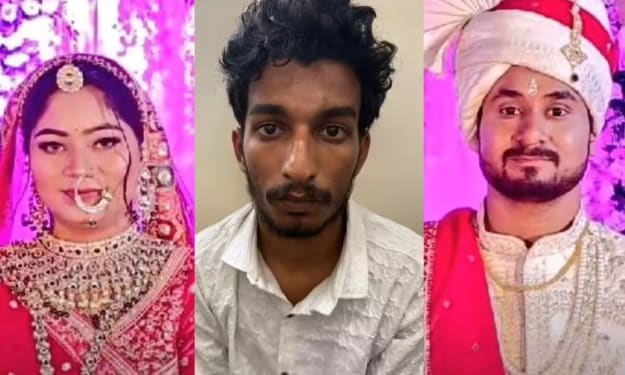
"The Bride Who Planned a Murder" A Chilling Tale of Love, Deceit, and a Honeymoon Homicide
Marriage is a sacred bond—not just between two individuals, but between two families. It’s a promise to support each other through joy and sorrow, to understand, love, and respect your partner. But recent cases suggest that the purpose and cultural reasoning behind marriage have shifted dramatically. I’m sure you can guess what I’m referring to. Today’s case reveals the truth—Sonam didn’t kill her husband impulsively; she planned it since February, when Raja first heard her name. Sonam is not just another murderess—she may be the most cunning, calculating, yet seemingly innocent killer of this century. Here’s what really happened in this honeymoon murder.
By 🕵️♂️ True Crime Enthusiast | Storyteller of the Dark Side 🔍about a year ago in Criminal
How Forensic Psychology Cracks Criminal Minds
Forensic psychology stands at the fascinating crossroads of psychology and the legal system. It involves applying psychological principles and methods to understand criminal behavior, assist in investigations, and aid legal proceedings. This unique field provides critical insights into why criminals act the way they do, enabling law enforcement agencies to anticipate behaviors and solve crimes more effectively.
By Muhammad Asimabout a year ago in Criminal
"Tensions and Trump: The Israel-Iran Conflict in a Changing Political Landscape"
As the world watches the Middle East with increasing concern, the recent escalations between Israel and Iran have once again thrust the region into a volatile spotlight. Airstrikes, proxy wars, cyberattacks, and sharp rhetoric have become frequent reminders of a decades-old animosity now reaching new heights. What makes the situation even more complex is the looming presence of former U.S. President Donald Trump, who is making headlines with a potential political comeback as the 2024 U.S. presidential election cycle gains momentum. In this tangled web of regional hostilities and international ambitions, the intersection of war and politics has never been more evident. The Recent Escalation The Israel-Iran conflict has deep roots, but the past year has seen a marked intensification. Iran, through its regional proxies like Hezbollah in Lebanon and various armed factions in Syria and Iraq, has increased its activities near Israel’s borders. In response, Israel has carried out a series of airstrikes deep into Syrian territory, allegedly targeting Iranian military infrastructure and weapons shipments. In April 2024, a deadly drone strike on an Iranian consulate building in Damascus, attributed to Israel, marked a dangerous turning point. Iran retaliated with a barrage of missiles launched directly from its territory into Israel—a rare and bold move not seen in years. Though most of the missiles were intercepted by Israel’s Iron Dome defense system, the symbolic impact was undeniable. For the first time, both nations engaged in open military confrontation, albeit still limited and carefully calculated. Regional observers feared the beginning of a full-scale war, while world powers scrambled to urge restraint. The Trump Factor While tensions boil in the Middle East, former President Donald Trump continues to be a divisive and influential figure in global affairs. As he mounts a vigorous campaign for re-election, Trump has used the Israel-Iran conflict as both a warning sign and a rallying cry for his supporters. During his presidency (2017–2021), Trump withdrew the United States from the Iran nuclear deal (JCPOA), imposed crippling sanctions on Tehran, and brokered the Abraham Accords, which normalized relations between Israel and several Arab countries. Trump’s foreign policy was marked by an unshakable alignment with Israel. His administration recognized Jerusalem as Israel’s capital and moved the U.S. embassy there, sparking outrage in much of the Muslim world. Now, with the current Biden administration attempting to pursue more cautious diplomacy with Iran, Trump has criticized what he calls a "weak and disastrous foreign policy." In several campaign rallies, he has stated that "this wouldn’t be happening if I were president," claiming that Iran was “tamed” during his term and that Israel felt “safe and strong.” His critics argue otherwise, pointing out that Trump's maximum pressure campaign on Iran may have contributed to the current crisis by hardening Iran’s resolve and diminishing diplomatic pathways. The Regional Dominoes The Israel-Iran conflict is not isolated. It pulls in other regional players, willingly or unwillingly. Hezbollah in Lebanon, Hamas in Gaza, and pro-Iranian militias in Iraq and Syria all serve as extensions of Tehran’s influence. At the same time, Arab states such as Saudi Arabia and the United Arab Emirates, which have increasingly aligned with Israel against Iran’s expansionism, are now caught in an uneasy position—supporting Israeli security while fearing regional fallout. The recent flare-ups have also affected the delicate balance of power in Iraq, where American and Iranian interests collide frequently. U.S. bases in Iraq and Syria have come under rocket attacks believed to be launched by Iran-backed militias. In Yemen, the Houthi rebels—another Iranian proxy—have intensified their actions in the Red Sea, disrupting global shipping lanes and drawing in Western naval forces. All of this creates a regional scenario where any miscalculation could spiral into a much broader war. Global Implications The United States, China, and Russia are all watching this conflict closely. While the Biden administration urges de-escalation and a return to nuclear negotiations, Trump’s potential return to power threatens to upend the diplomatic track once again. European nations, already exhausted by the prolonged war in Ukraine, are calling for calm but offer little in terms of leverage or military influence. Meanwhile, global markets have reacted nervously. Oil prices have spiked due to fears of instability in the Strait of Hormuz, through which one-fifth of the world’s oil supply passes. Investors are wary, and governments are beginning to plan for worst-case scenarios. The People Caught in Between As with all wars, it is the ordinary citizens who suffer the most. In Israel, cities from Tel Aviv to Haifa have experienced air raid sirens and brief but terrifying missile alerts. In Iran, funerals for Revolutionary Guard members killed in strikes have become almost routine, and public sentiment is increasingly nationalistic. Social media is ablaze with propaganda, misinformation, and political commentary from all sides. Iranians post pictures of damaged sites and martyred soldiers; Israelis share videos of intercepted missiles and bomb shelters. In both countries, fear and uncertainty dominate daily life. Looking Ahead The future of the Israel-Iran conflict remains uncertain. Will it escalate into a full-blown regional war, or will diplomacy manage to prevail? Much depends on the actions of not just Tehran and Tel Aviv, but also Washington. With Trump preparing for a political return, his stance on Middle East policy could once again become reality in just a matter of months. His rhetoric may embolden hawks in Israel and dissuade Iran from pursuing diplomacy. For now, the world waits—watching a dangerous confrontation unfold amid a dramatically shifting political backdrop
By Lal Sher Khan about a year ago in Criminal
Venus Detective Agency – The Most Trusted Female & Private Detective in Pune
In today's world, trust and security matter more than ever, and whether it is a personal or corporate matter, there is nothing like the assurance of having the support of a professional, ethical, and discreet investigator. This is why the Venus Detective Agency - a trusted private detective in Pune - was founded. Venus is known for its professionalism, confidentiality, and extensive core of experienced detectives to ensure that all sensitive matters are resolved accurately and with integrity.
By AMAN SINGHabout a year ago in Criminal
Shadows of the Night
The city never truly sleeps. Neon signs buzzed faintly through the fog, casting fractured reflections on rain-slicked streets. Somewhere in the distance, a siren wailed—sharp, urgent, and relentless. Detective Marcus Kane pulled his coat tighter around his shoulders, the collar turned up against the cold night air.
By Muhammad Salmanabout a year ago in Criminal
The War That Wasn’t—Or Was It? The Fragile Line Between Peace and Provocation in the Trump Era
In a world already strained by economic instability, rising authoritarianism, and generational trauma, one phrase seems to echo louder than ever: World War III. It’s a phrase many of us grew up associating with distant nightmares and dystopian fiction. But in recent years, the line between imagined chaos and real-life events has blurred—and one man has stood repeatedly at the fault line of that tension: Donald J. Trump.
By In Conspiracy We Trustabout a year ago in Criminal
Runaway: A Twist of Fate (2009) Review
Considering how the last game ended, I was fully expecting it to start with the great big rescue. Imagine my surprise when it starts with Brian’s funeral. I was further surprised when he was not only convicted of murdering Colonel Kordsmeier but also declared insane and put in a psychiatric hospital. Like, wow, that’s a lot to take in at once. Then it turns out Brian faked his death to escape the hospital to try and clear his name? Honestly, that sounds like something he would do. A welcome twist on the series’ formula is that Gina was much more involved this time. No longer is she a damsel in distress, but a playable character. And her breasts are actually covered for once, thankfully. There is some narrating the past, as per usual, but things do mostly take place in the present time with new, quirky characters.
By Allison 'AllieV' Van Oirschotabout a year ago in Criminal
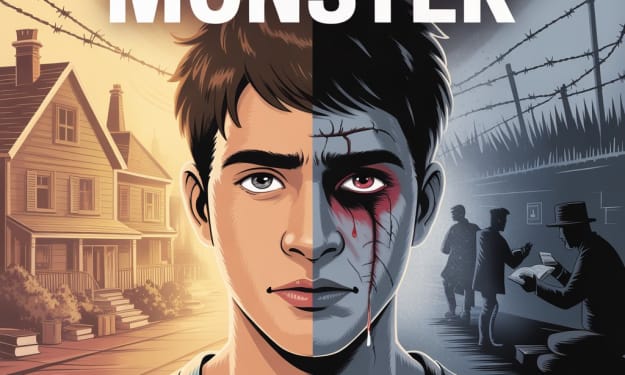
The Making of a Monster
Once there was a boy named Izaan.He lived in a small town, poor but peaceful. Izaan was kind, honest, and always helped others. His mother worked as a cleaner, and his father had died when Izaan was just three years old. Even though they were poor, Izaan’s mother always taught him to stay honest, never lie, and believe in hard work.Izaan believed her. He studied hard, worked part-time in shops, and dreamed of becoming a police officer to protect people and make his mother proud. But the world wasn’t kind to Izaan.
By ArshNaya Writesabout a year ago in Criminal
Destruction in Gaza
Gaza, once a densely populated strip of land teeming with life, laughter, and resilience, now echoes with the sounds of falling bombs, cries for help, and the silence of lives lost too soon. The ongoing Israeli military offensive has turned entire neighborhoods into graveyards of shattered buildings and dreams. While global leaders trade statements and political debates rage on, the real cost is being paid by the innocent—women, children, and families who had no role in the politics of war but bear its cruelest consequences. The Scale of Destruction The scale of destruction in Gaza is beyond comprehension. Apartment buildings have been leveled to the ground, schools and hospitals lie in rubble, and basic infrastructure like electricity, water, and sanitation has all but collapsed. According to reports by humanitarian organizations and news agencies, airstrikes and shelling have not only targeted military positions but have often struck civilian areas, displacing hundreds of thousands. Children’s toys are scattered under the ruins, charred baby strollers line the streets, and family homes are reduced to dust. Entire families have been wiped out in an instant. The trauma runs deep—not only in the visible scars but in the eyes of children who have seen more in a week than most people witness in a lifetime. Women and Children: The Silent Victims Perhaps the most heartbreaking reality of the Gaza crisis is the disproportionate suffering of women and children. As the Israeli military campaign intensified, schools, refugee camps, and apartment complexes—where civilians sought shelter—were bombarded. Witnesses and aid organizations describe scenes where children were pulled lifeless from the rubble, mothers screamed for their missing sons, and hospitals overflowed with tiny bodies bearing the brutal marks of war. According to UN estimates, a significant percentage of those killed in recent attacks have been women and children. In many cases, families were given no warning before bombs struck their homes. Even in areas labeled as “safe zones,” civilians were not spared. Doctors in overcrowded hospitals speak of performing surgeries without anesthesia, of children dying from treatable wounds due to lack of medical supplies, and of women delivering babies under the roar of fighter jets. The maternity wards have become war zones themselves. Voices from the Ground One mother, whose name was withheld for safety, shared her story with an international aid worker: “I woke up to my house shaking. I grabbed my children and ran, but my youngest didn’t make it. He was just four. What threat was he to anyone?” A teenage girl in Gaza spoke through tears, “I don’t dream of the future anymore. I just want to live through tomorrow.” These are not isolated stories—they are daily realities for countless families trapped in Gaza. Humanitarian Aid Blocked and Scarce While the bombs fall, humanitarian aid remains scarce. Border crossings are either sealed or heavily restricted, preventing critical supplies like food, water, fuel, and medical aid from reaching those in need. Relief agencies such as the Red Cross and UNRWA have reported difficulties in delivering aid due to constant shelling and limited access. Water shortages are severe, leading many to drink contaminated water and fall ill. Sanitation systems have collapsed, increasing the risk of disease outbreaks. With nowhere to go, families are crammed into makeshift shelters, with poor hygiene and no access to medical care. Calls for Ceasefire Ignored International calls for ceasefire and peace negotiations have, so far, fallen on deaf ears. While some world powers urge restraint, others supply arms and turn a blind eye to the escalating humanitarian catastrophe. The people of Gaza are caught in a cycle of violence they did not choose. The United Nations, human rights groups, and journalists have called for independent investigations into possible war crimes. Targeting of civilian infrastructure, indiscriminate bombings, and collective punishment all violate international law. Yet, accountability remains distant. The Human Spirit Amid the Ruins Despite the overwhelming horror, stories of resilience still emerge. Doctors, journalists, and volunteers continue to risk their lives to save others. Children draw peace signs on rubble-covered walls. Women distribute food even when they have little themselves. The spirit of Gaza refuses to be destroyed, even when everything else has. But resilience should not be mistaken for consent. The people of Gaza do not want to be heroes in tragedy—they want peace, safety, and the chance to live normal lives. --- Conclusion: A Plea for Humanity The destruction in Gaza is not just a regional conflict—it is a humanitarian emergency that demands global attention, empathy, and action. When children are buried under buildings, when mothers cradle lifeless babies, when families sleep in fear every night—these are not numbers in a report. They are human beings, just like us. It is time for the world to look beyond political divides and remember its collective responsibility to protect innocent lives. War may bring power to some, but it robs others of everything. And in Gaza, amid the rubble and ruins, humanity is crying out—will the world finally listen?
By Mati Henry about a year ago in Criminal