guilty
Don’t do the crime if you can’t do the time; a look into all aspects of a guilty verdict from the burden of proof to conviction to the judge’s sentence and more.
"The Teen Who Shook the CIA: The Biggest Cyberattack and an Unbelievable Ransom Demand"
You might think that the most dangerous weapon in the world today is nuclear power—but in reality, you’re mistaken. The weapon that is being used daily and whose impact could potentially wipe out entire countries from the map is cyber warfare, also known as hacking. Hackers today are some of the most dangerous individuals on the planet. You might be surprised to learn that a country as powerful as the United States might negotiate with them—trying to appease them just to stop or prevent a cyberattack. To understand how powerful these people are, let me tell you a true story about a 15-year-old boy who managed to hack the most powerful intelligence agency in the world: the CIA. And not only that—he demanded a ransom of 5 trillion dollars from the U.S. government in exchange for not leaking the data he obtained! Back in 1955, at the Massachusetts Institute of Technology (MIT), the first hacking operation in history took place—ironically, supervised by the same institution. The operation was simple, intended to test the feasibility of hacking in the first place. As it succeeded, further experiments followed, and studies were published warning of the dangers, calling for regulation and laws to govern such acts. And so, the concept of hacking began to spread and evolve over the years. In the world of hacking, there are three main types of hackers: 1. White Hats – These are legal hackers who work with governments to protect systems from being hacked. They form what's known as cyber armies. Their tasks include building firewalls, developing anti-hacking software, and launching counterattacks on state enemies. 2. Gray Hats – Independent hackers who don’t belong to any political organization. They hack mainly for training or testing, and often collaborate with large corporations to identify security loopholes in exchange for large sums. For instance, JPMorgan Bank experiences around 600,000 hacking attempts daily! 3. Black Hats – The most dangerous of all. They launch attacks capable of paralyzing entire countries. One example is the 2021 Colonial Pipeline attack in the U.S., which disrupted fuel supply in 18 states and caused losses exceeding $75 million. And all of this is just the introduction to our main story—about the “Godfather of the Black Hats”, a child behind the largest cyberattack in U.S. history. The story began in 2008, with a young American boy known as "Default." He was addicted to the video game Counter-Strike, and his father worked in the tech industry. His dad taught him some basic programming, and from there, the boy’s genius began to unfold. "Default" started by breaking into nearby Wi-Fi networks. Through them, he accessed the personal computers of his neighbors. He later learned encryption techniques and developed complex protection systems—his computer once took 30 minutes just to unlock due to the intensity of its security! Despite his extraordinary talent, he was rejected by the famous hacking group Anonymous, so he continued teaching himself. One day, he accidentally hacked a Canadian university's system and discovered financial data for over 400 students. He decided to erase their debts—totaling 9.4 million dollars! In 2014, after the Danish government passed a law allowing humans to marry animals, a group called AnonSec launched a massive cyberattack on government websites. "Default," just 14 at the time, was the mastermind behind the attack, which eventually forced the government to reverse the decision. That same year, "Default" and his British friend "Kraka" decided to launch a cyberattack on the CIA after a new law permitted surveillance on U.S. citizens. They met in Hong Kong and planned the operation. Using a simple Google search, they found personal data for James Clapper, the Deputy Director of the CIA. With it, they hacked his email, changed the password, and accessed a vast trove of classified documents—including files about the Iraq War, Guantanamo Bay, and future American military strategies. These documents were leaked through WikiLeaks, and they even mocked CIA Director John Brennan. They went so far as to call him personally and demand 5 trillion dollars! The attack shook the United States. The military disconnected its nuclear missile control systems out of fear they’d be hacked next. Authorities had no idea who was behind it. Eventually, "Default" was exposed when he drunkenly confessed his secret to a friend, who reported him. He and "Kraka" were arrested in 2015. Because they were only 15, they received 5-year sentences and were fined $145,000. Authorities also confiscated Default’s hard drive—which contained 1,000 Bitcoins (worth over $60 million today). It’s said that the U.S. government recruited both boys after their release. Since then, no one knows their whereabouts. Even the widely circulated photo of "Default" is fake. People like them are considered walking digital treasures—recruiting them is a huge win for any country in the world.
By Ink pulse(different angle)about a year ago in Criminal
Understanding Social Security Benefits. What They Are and How They Help.
Who Pays for Social Security? Social Security is funded by payroll taxes paid by workers and employers. Every time you earn a paycheck, a percentage of your earnings goes toward Social Security taxes. Employers match this amount, and self-employed workers pay both parts themselves. This money goes into a trust fund that pays current beneficiaries.
By Tariq jamilabout a year ago in Criminal
poison flavored candy (The criminal with 21 faces)
On March 18, 1984, a Japanese man named Kahatsu Izaki was enjoying an evening bath at his home when suddenly two masked and armed men broke in and kidnapped him while he was completely naked. Izaki was the owner of a famous Japanese confectionery factory called Glico. The next day, a ransom demand arrived at his factory. The kidnappers asked for 1 billion Japanese yen and 100 kilograms (equivalent to about 10 million U.S. dollars). They said the payment would be delivered to a public telephone booth in the street; they would specify the location later. However, before any payment was made, Izaki managed to escape from the kidnappers before dawn. No one was watching him, and he was able to untie the ropes binding him, break the door of the warehouse where he was held, and flee. Contrary to what some might think, he was not naked during the kidnapping because the kidnappers had given him clothes. After escaping, he ran far from the place until he found two railroad workers who helped him contact the police. The problem was that Izaki could not identify the kidnappers or describe any of their features. Although the kidnapping attempt failed, the kidnappers did not stop. They sent threatening messages to Izaki and his factory. One message demanded $480,000 and threatened to poison the factory's sweets with cyanide if the ransom was not paid. To prove their seriousness and make sure everyone believed them, the kidnappers broke into the factory and set parts of it on fire. This caused panic among the entire Japanese population and forced the police to deploy more than 130,000 officers to catch them. To those who are hearing this for the first time: this is a case that involved the entire Japanese nation, and the police could not catch the criminals. The criminals were smarter than everyone else. The police did not know who to accuse or suspect for a very long time. In the 1980s, the Japanese police were considered among the strongest worldwide, solving 97% of murder cases and 55% of thefts annually. So their failure to solve the Glico case was a black mark in their history and hurt their reputation. A famous Japanese newspaper, Yomiuri, published a large article on the front page saying they did not remember any case in Japan's history where criminals mocked the police like this. The criminals challenged the police worldwide, taunting them for over a year and a half, sending more than 100 messages with hints and information that could help capture them. The first message read: "To the police: Are you really this stupid? With all these officers, you can’t do your job and catch us? If you were really professionals, you would have caught us by now. But since you are incompetent, we will give you some hints." The hints included that the criminals might be insiders working in the factory or warehouse where Izaki was held. The person writing the messages gave more details, like the color of the car they used during the kidnapping (gray), and even the supermarket from which they bought food. At the end of the message, they wrote: "If you can’t catch us with all this information, then you are thieves stealing from the people who pay taxes to the government to provide them with security." The criminals humiliated the police in front of the entire country. After the first message, thousands more followed, full of taunts and challenges. The police worked intensively on the case, but the criminals were extraordinary. The only thing the police could identify was that the criminals' language resembled the dialect of Osaka city residents, so they suspected the criminals were from Osaka. The case remained unsolved until September 1984, when another candy factory called Morinaga started receiving threatening messages. The kidnappers demanded $410,000 and threatened to poison the autumn sweets of all mothers in Japan with a special bitter-tasting potassium substance. They put warning labels on 20 poisoned candy boxes spread from Hakata to Tokyo. On the same day, shop owners and supermarkets found 18 boxes with warning labels; one was found just 32 meters from Izaki's house. Although not all the boxes contained poison, the discovery caused panic. Another message warned that next time there would be 30 boxes without warning labels. Over the following two weeks, more than 40,000 police officers monitored supermarkets and stores across Japan but could not discover whether the criminals had poisoned more boxes or not. Surveillance cameras caught a man with curly hair, glasses, and a baseball cap placing something on a shelf at one of the stores where a poisoned box was found. The video quality was poor, and the police could not identify the man. The police also released recordings of threatening phone calls made to the factory. The criminal requested factory employees to wait for a call at a public telephone booth in a street station. Two officers disguised as factory employees waited there, but no call came. The criminals continued to mock the police, sending letters challenging their intelligence and ability to catch them. By August 12, 1985, more than a year and a half after Izaki’s kidnapping, the criminals sent their last letter and declared they would stop. During this time, the police received over 28,000 letters from the criminals, used more than 130,000 officers, but could not catch anyone. The police eventually suspected that the criminals were insiders at the Glico factory or involved in the warehouse where Izaki was held. Others believed the criminals sought revenge against food manufacturers because of a tragic poisoning incident 30 years earlier, when a milk factory accidentally contaminated powdered milk with arsenic, causing over 12,000 infants to fall ill and 183 deaths. Another theory focused on a man named Manabu Miyazaki, suspected by the police. A sketch based on police descriptions resembled him closely, and his mother confirmed the image. Miyazaki was the son of a Yakuza boss and had many previous charges, but no evidence could link him to the crimes. Despite all efforts, the criminals were never caught, and the mystery remains unsolved.
By Ink pulse(different angle)about a year ago in Criminal
The Italian Cruise Ship Mysterious Hijacking
On Monday, October 7, 1985, an Italian cruise ship named Achille Lauro docked at Alexandria Port in Egypt. It was the fifth day of the cruise that had begun from Genoa, Italy. The ship carried a total of 748 passengers and 450 crew members. At Alexandria, 651 passengers disembarked to board buses headed toward the Pyramids of Giza.
By Chronicle of Powerabout a year ago in Criminal
African American Serial Killers Part 5
Thorough investigations often lead to arrests. Such is what happened with Chester Turner. The power of DNA analysis has truly been a double-edged sword. In one instance, the process can free an individual from years of bondage. In cases like Turner’s, he would experience the flipside of this arrangement. His DNA linked him to a string of murders in the Figueroa section of Los Angeles. In fact, this activity took place while he stood in a prison cell.
By Skyler Saundersabout a year ago in Criminal
Where 9 Key Members of the Manson Family Are Today
On August 8, 1969, the Manson family, on orders from their leader, murdered pregnant actor Sharon Tate, who was married to director Roman Polanski, as well as four other people—Jay Sebring, Wojciech Frykowski, Abigail Folger, and Steven Parent—at 10050 Cielo Drive in Beverly Hills. A day later, they killed wealthy grocery store owners Leno and Rosemary LaBianca.
By Kristen Orkoshneliabout a year ago in Criminal
Why the Menendez Brothers Killed Their Parents
On August 20, 1989, José and Mary Louise “Kitty” Menendez were shot to death in their Beverly Hills home. Nearly seven years, three trials, and many thousands of hours of TV coverage later, their sons, Lyle and Erik Menendez, were found guilty of their murders and sentenced to life in prison without the possibility of parole. Now, freedom is a very real possibility for the Menendez brothers, who were resentenced Tuesday and are immediately eligible for parole.
By Kristen Orkoshneliabout a year ago in Criminal
10 Most Dangerous Prisoners Ever Held In Pretoria C-Max Prison.
10 - Annanias Mathe Ananias Mathe was once South Africa’s most infamous criminal, known not only for a string of violent crimes but also for an audacious prison escape that left the nation stunned.
By Vidello Productionsabout a year ago in Criminal
They tied him up and locked him in a tiny cell under the watchful eye of the worst guards, yet he managed to escape.
In 1936, in the city of Aomori, Japan, a man named Yoshie Shiratori was imprisoned for a crime he didn’t commit. He was forced to confess under severe duress, and the prosecution sought the death penalty. Meanwhile, guards regularly beat and tortured him every night. He’d had enough. With nothing left to lose, Shiratori decided to escape. Aomori Prison wasn’t known for being easy to break out of. But for someone like Shiratori, who had spent months studying the guards’ rotation schedule, a 15-minute gap during the shift change was all he needed. On a cold morning at 6:00 AM, he made his move. Using a wire he had secretly taken from a bucket in the bathroom, he attempted to pick the lock despite his hands being frozen from the cold. After a few tense minutes, the cell door opened. But escaping the cell was just the first challenge — multiple doors remained. Working quickly, he unlocked each one and eventually exited the building. But he wasn’t in the clear yet. The prison perimeter was closely monitored, and if the alarm went off, he would be caught. At 5:45 AM, the guards returned and saw what they thought was Shiratori sleeping in bed. In reality, it was just a bundle of rotting wood and a mattress — he had cleverly faked his presence. The truth wasn’t discovered until the next day. Only three days into his freedom, he was caught trying to steal supplies from a hospital. Authorities sent him back to prison and gave him a life sentence for the attempted escape. This meant he would never see his wife or daughter again. Months of planning had earned him just three days of freedom and a lifetime behind bars. But this was only the beginning. Yoshie Shiratori would go on to earn the nickname "The Prison Break Magician." --- Escape #2: Akita Prison, 1942 Six years later, in 1942 during World War II, Shiratori was transferred to Akita Prison. The guards there, aware of his previous escape, treated him even worse than before. He was forced into hard labor, made to sleep on the freezing ground without a mattress, and was kept in solitary confinement. This solitary cell was specially designed for escape artists — narrow, with high ceilings and copper-lined walls so smooth that no one could rest against them. There was no sunlight, just a small skylight. His hands were constantly shackled. However, one guard, the chief warden, felt pity for him. He never abused him and occasionally checked in to make sure he was okay. Perhaps it was this kindness that kept Shiratori’s will to live alive. On the stormy night of June 15th, the unimaginable happened. When the guards checked his cell, Shiratori was gone. Only his handcuffs remained. No one could believe it. Apparently, Shiratori had once again managed to unlock the cuffs — likely with a wire he acquired during his limited time out of solitary. He then pressed his body against the copper walls, climbed upward like a lizard, and reached the skylight. Though it was locked, he discovered that the wooden frame around it was rotting. Night after night, he loosened it little by little, always re-shackling himself afterward to avoid suspicion. Eventually, he managed to open the skylight, but he waited for a storm to mask his escape. That night, he fled the prison. --- The Unexpected Return Three months later, on September 18th, the chief guard, Kobayashi, heard a knock on his door at home. To his shock, it was Shiratori — cold, weak, and in poor shape. He welcomed him inside, fed him, and listened to his story. Shiratori told him, “I have no problem with prison. I only escaped to flee the abuse and injustice. Your kindness gave me the strength to come here. I want to turn myself in — not to run anymore, but to file a complaint and expose the corruption in Japan’s prison system. I want to be with my wife and daughter again.” Kobayashi listened silently. When Shiratori went to the bathroom, Kobayashi called the police. His trust was misplaced, and once again he was sent back to prison. This time, the court added three more years to his life sentence. He requested a transfer to a warmer prison in Tokyo, saying he could no longer withstand the harsh winters of northern Japan. The judge not only refused his request but instead sent him to the coldest prison in the country — Abashiri Prison in Hokkaido, where no one had ever escaped. --- Escape #3: Abashiri Prison, 1943 It was 1943. Temperatures in Abashiri fell below freezing even inside the cells. Food would freeze before it could be eaten. Shiratori was forced to wear only summer clothes and shackled in heavy, 20-kilogram cuffs, behind his back and on his legs. The shackles had no keyhole — only specialists could remove them every few weeks for a quick bath. Guards reduced his meals to half portions, forcing him to crawl like a dog to eat through the narrow food slot. Life was hell. But Shiratori endured. Over time, he began to quietly enact a plan. Using leftover soup, he would splash the salty liquid onto the metal frame of the window and his shackles. Salt would cause corrosion. Day by day, the iron weakened. After six months, the metal had rusted enough for him to act. Though the window opening was smaller than his body, Shiratori had an unusual gift — an extremely flexible body, like someone with no joints. He maneuvered his head through the hole, then squeezed his bones through one by one. He became the first person to escape from the inescapable Abashiri Prison. --- Survival in the Wild Hokkaido is a frigid, deadly wilderness. Guards assumed he’d die from exposure or be eaten by bears. Shiratori found shelter in an abandoned mine and survived for two years by foraging fruit and hunting small animals. Eventually, curiosity led him out. After years in isolation, he wandered into a village and was shocked by the change — English signs, American soldiers with Japanese women, and news of the atomic bombs in Hiroshima and Nagasaki. Japan had surrendered a year earlier. His survival was pointless now. Hungry, he entered a tomato farm looking for food — a fatal mistake. A confrontation broke out, and he ended up fatally stabbing the farmer in self-defense. He was caught and charged with murder. --- Escape #4: The Final Break Once again, Shiratori was imprisoned. This time, the guards took no chances — constant surveillance, ultra-small cell, reinforced steel, and shackles that only professionals could remove during his rare baths. Still, he was planning. Every night, he would dig under the wooden floorboards with his food bowl. He returned everything to its place each morning. The guards believed he had given up — always lying motionless, silent, unresponsive. But under his bed, a hole was forming. One night, when they tried to wake him and pulled the blanket, he was gone. A pile of wood and clothes lay in his place. He had escaped again. --- The End of the Journey In 1948, now in his forties, tired of running, Shiratori sat one day on a bench in a neighborhood in Sapporo. A police officer sat beside him, unaware of who he was. The officer kindly offered him a cigarette — a rare luxury at the time. The gesture overwhelmed Shiratori, who had spent a lifetime being abused by the police. He was reminded of Kobayashi and his betrayal. Tears welled up. He turned to the officer and said, “My name is Yoshie Shiratori. I escaped from prison four times.” He was arrested, but this time, the system had changed. Post-war Japan was reforming. The courts believed his claim that the farmer’s death was in self-defense. They also acknowledged that he had never harmed a single guard during his escapes. His death sentence was overturned. Instead, he received 20 years in prison. This time, they sent him to a warm prison in Tokyo. The guards treated him with decency, and he no longer had the desire to escape. He served quietly and was released in 1961 after 14 years for good behavior. He returned to Aomori, reunited with his daughter, and lived out his days peacefully. Because of his extraordinary escapes, Shiratori became a legend in Japan — an unlikely hero.
By Ink pulse(different angle)about a year ago in Criminal
“Watching the Back: A Hostage Nightmare in Henry County”
Chapter 1: The Silence That Spoke Volumes It was just past 11 a.m. on April 4, 2019, when Anetria White pulled into her sister’s driveway in Stockbridge, Georgia. She had been trying to reach her pregnant sister, Sandra White, since the night before—but calls had gone unanswered. So had texts. Sandra wasn’t the type to just “go quiet.”
By 🕵️♂️ True Crime Enthusiast | Storyteller of the Dark Side 🔍about a year ago in Criminal
Ashes in the Rain: A Brother’s Brutal Hunt for the Truth Behind His Sister’s Death
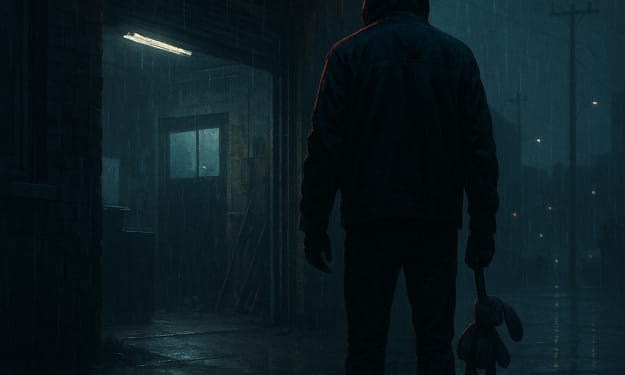
The rain had been falling for four days when Claire Wade disappeared. Her brother, Daniel, figured she just needed space. Nurses worked too hard for too little, and life had a way of grinding people down. But when her ten-year-old daughter, Emma, showed up at his garage alone, soaked and shivering, Daniel knew something was wrong. The police said overdose. No foul play. No case. Daniel had seen dead people before. Too many, actually. Back when he was doing things he never talks about, in places he’ll never name. And Claire didn’t look like an overdose. Her face was too calm. Too clean. Like someone had laid her down gently, wiped the panic from her mouth, and walked away. Three days after the funeral, he found her phone. Tucked inside a cereal box under the sink. Almost missed it. Typical Claire—always one step ahead. Inside were voice memos. Fragments of conversations. Shaky recordings of hushed meetings in break rooms. Files she’d copied from hospital records. People with no ID, no discharge, no trail. She’d been helping someone escape. A woman with bruises who spoke no English. After that night, the woman was never seen again. It wasn't an overdose. It was a message. Daniel brought it to the police. They nodded politely. Said they’d look into it. One officer literally yawned while Daniel spoke. So he went back to the man he used to be—the one he had buried under tools, oil, and ordinary days. --- The first man he found was a paramedic. Smooth uniform, bad hands. Daniel followed him from the hospital to a dive bar near the shipyards. Waited until he staggered out, drunk and humming to himself. A wrench pressed against the spine is a great way to encourage conversation. The man talked. They always did. More names followed. A cleaner who scrubbed records. A night nurse who signed off on “phantom” discharges. A logistics guy who handled transport—of people, not supplies. Each lead peeled back another layer. Each name darker than the last. At the edge of it all stood Marcus Shaw—hospital director, charity speaker, community face. Public hero. Private monster. Daniel tracked him to a warehouse on the river—converted shipping containers with modified locks. Inside, he found three women. Two were conscious. One wasn’t. He left them with Mia, an old medic friend who owed him favors. Then he grabbed his crowbar and Emma’s stuffed rabbit—the one she dropped the night Claire died. --- He found Shaw alone in his office at the docks, pouring himself a drink like it was just another day. “I knew you’d come,” Shaw said. “Family’s a powerful thing.” Daniel didn’t answer. Just smashed the glass table in front of him with one clean swing. The fight was fast, but it was ugly. Shaw was stronger. Younger. But Daniel had grief behind him—and grief doesn’t let go. They wrecked the office. Bookshelves, chairs, blood on the wall. Shaw hit him with a lamp. Daniel drove him into the floor. "She begged me," Shaw gasped, coughing up blood. "All she had to do was shut up." Daniel raised the crowbar again. His hands trembled. But he didn’t swing. Instead, he pressed play on Claire’s final recording. Her voice filled the room, shaky but fierce. Naming names. Telling the truth. And now it was going live—streamed to every contact she had. By morning, Shaw was in handcuffs. Half the city was watching. The rest couldn’t look away. --- A week later, the rain finally stopped. Daniel sat on the porch of his garage, holding the rabbit Emma had asked him to fix. She curled beside him, small and silent. “Did you hurt them?” she asked. He paused. “I stopped them.” Emma looked up. “Is Mum proud?” He didn’t answer. Just pulled her close and held her. Inside, the radio played a quiet song. One Claire used to hum when Emma was small. Outside, puddles reflected a sky trying to remember how to be blue. The storm had passed. But Daniel knew some storms live inside you. And some never leave.
By Ubaid Ur Rehmanabout a year ago in Criminal
African American Serial Killers Part 4
In the late eighties early nineties, the Crack Era had police departments involved in bringing hustlers “to justice.” In fact, the War on Drugs, or battle from an inanimate object, sapped the resources of other departments dedicated to solving actual crimes.
By Skyler Saundersabout a year ago in Criminal