guilty
Don’t do the crime if you can’t do the time; a look into all aspects of a guilty verdict from the burden of proof to conviction to the judge’s sentence and more.
The Silence Beneath
The town of Elmridge was the kind of place where everyone knew everyone else’s birthday, favorite pie, and how many dogs they owned. Nothing exciting ever happened — unless you counted Mrs. Holloway’s cat getting stuck in a tree as newsworthy. But that calm was only surface deep. Because beneath the silence, death was moving quietly, like pages turning in a darkened library. Every day at 9:00 AM sharp, Beatrice Mallory unlocked the doors to Elmridge Public Library. Always in a gray cardigan, her hair pinned tightly back, glasses perfectly aligned, she was a ghost of a woman — polite, unnoticed, and forgettable. The children said she smelled like old books and peppermints. The adults said she had a tragic past: an only child, no husband, and parents long buried. No one asked questions. Until the disappearances began. It started with Tommy Ray, the teenage troublemaker who got caught spray-painting the mayor’s car. One day he came into the library after school, and then — gone. His mother swore he had promised to meet her for dinner. The sheriff shrugged. Probably ran away again, like last time. But then old Mr. Cartwright vanished. And then Jenna Farrow, the florist’s daughter. Three people in one month. Beatrice shelved books as usual. She served tea to the town council during their meetings in the reading room. She gave out bookmarks to schoolchildren and recommended murder mysteries to lonely retirees. Detective Simon Rourke, however, wasn’t convinced by the town's sleepy explanations. He had transferred from Chicago after a breakdown — too many bodies, too much corruption — hoping for peace. But even here, death found him. What disturbed him was the pattern. Each missing person had last been seen near or in the library. Security footage? The town didn't have cameras inside public buildings — too expensive, said the mayor. Simon decided to go low-key. He visited daily, pretending to browse. Beatrice always greeted him with a smile that didn't reach her eyes. “You like thrillers, Detective?” she asked one afternoon. “Yes. Especially the ones where the killer hides in plain sight.” She didn’t flinch. “The best ones always do.” That night, Simon hid behind the non-fiction shelves until closing. He watched her lock the doors and turn off the lights. Then something strange happened. She didn’t leave. She opened a small, unmarked door behind the front desk — a door Simon had never noticed before. He followed, staying silent. What he found was a narrow staircase descending into darkness. He took out his flashlight. The smell hit first — a mixture of mildew, old paper, and something far worse. At the bottom was a cold room lined with bookshelves. But instead of books, the shelves held something else: boxes. Human-sized boxes. Some covered in dust. Others… fresh. A table stood in the center, and on it lay Jenna Farrow, lifeless, her eyes wide open, her body cold. Footsteps behind him. Beatrice stood there, holding a scalpel. “You were supposed to be a peaceful man, Simon,” she said softly. “You came here to forget death, but you brought it with you.” He drew his gun, but her expression remained calm. “You won't shoot me,” she whispered. “You still want answers.” His hands trembled. “Why?” he asked. She smiled gently. “They were broken. Lost. I gave them silence. I preserved them. People forget — libraries are for keeping things safe.” She lunged. The shot echoed in the basement, muffled by the stone walls. Beatrice collapsed, her blood pooling on the cold stone floor, her scalpel clattering beside her. It was over. Or so he thought. Later, as investigators cleared the room and bodies were taken for autopsy, Simon noticed a worn ledger tucked in Beatrice’s desk upstairs. Inside, a list of names. Dates. Notes like "too loud" or "always asking questions." There were thirty-four names. But only ten bodies in the basement. Twenty-four still missing. The last name on the list? Simon Rourke. The ink was still wet. --- The silence of Elmridge had always been deceptive. And some stories, even in quiet libraries, refuse to stay closed.
By Muhammad Bilalabout a year ago in Criminal
Shadows of the Silk Street
The narrow lanes of Silk Street had always been a tapestry of life—vendors yelling out prices, children chasing kites, and the rhythmic beat of tailors hammering needles through cloth. But on one humid July morning, the vibrant rhythm came to a halt when a body was discovered behind Ahmad Tailor’s shop. Inspector Rahim stood over the lifeless form of Imran Shah, a well-known businessman from the city center. His body lay sprawled on a bed of discarded fabric, his white shirt soaked in blood. There were no signs of forced entry, no witnesses, and no apparent motive. But Rahim knew that nothing on Silk Street was ever what it seemed. Ahmad, the tailor, was the first suspect. A soft-spoken man in his late fifties, he had stitched clothes for generations. His shop was small, lined with rolls of fabric and photographs of clients from years past. When questioned, Ahmad’s hands trembled, not from guilt but from age—or so he claimed. “I closed the shop at 9 p.m. as usual,” Ahmad said. “Imran sahib was here in the evening to pick up his sherwani, but he left after ten minutes. We didn’t even talk much.” Rahim glanced around the tiny workshop. On a table near the back wall, he noticed a dusty, leather-bound notebook. Inside were notes in neat Urdu handwriting: measurements, client names, payment records. One name kept appearing—"Farooq Shah." Rahim’s instincts kicked in. Farooq was Imran’s estranged younger brother, a former gambler turned aspiring politician. The Shah brothers had long feuded over the inheritance left by their father—half of which Imran had refused to release. The case had gone to court and ended bitterly a year ago. Farooq had lost. Rahim paid Farooq a visit at his residence in Gulberg. The politician looked startled when he heard about Imran’s death. “He was killed?” Farooq asked, faking surprise poorly. “That’s… shocking. But why are you here?” “You had motive. A public one,” Rahim replied calmly. “And your name keeps showing up in Ahmad Tailor’s ledger. Care to explain?” Farooq hesitated. “I ordered a few suits. I’ve known Ahmad since I was a boy. There’s nothing criminal about that.” But Rahim wasn’t convinced. He returned to the tailor’s shop and pressed Ahmad again. “You were making suits for both Shah brothers. Did they ever mention each other?” Ahmad hesitated. “Farooq sahib once asked me to duplicate the design of Imran sahib’s sherwani. He said it was for a friend’s wedding, but… I found it odd.” That night, Rahim’s team examined the CCTV footage from a jewelry shop across the street. At 9:13 p.m., a shadowy figure was seen entering the alley beside Ahmad’s shop. Though blurry, the silhouette resembled Farooq—tall, slim, slightly hunched. Most importantly, the figure entered but never exited. The next morning, a breakthrough arrived. Forensic results showed fibers on Imran’s body—blue silk with a distinct thread pattern. The same silk used in Farooq’s custom-made sherwani, which he had never collected. When confronted with the evidence, Farooq broke down. “He ruined my life,” he confessed. “That night, I saw him laughing as he left the shop. I just wanted to scare him, but he mocked me. Called me a beggar.” The knife had been Ahmad’s—kept in the shop for cutting thick cloth. Farooq had struck once, in blind rage, and fled through the rear exit, unnoticed. In the end, Ahmad was cleared of all charges. Farooq was arrested, and Silk Street resumed its rhythm—but with a new whisper woven into its daily hum: the story of two brothers, stitched together by blood and torn apart by greed. As Inspector Rahim walked away from the scene, he glanced at the tailor’s shop and murmured, “Some threads were never meant to be sewn.”
By Muhammad Bilalabout a year ago in Criminal
Tragedy Born of Jealousy
This is a deeply heartbreaking story of four unfortunate brothers. They were ethnic Pashtuns hailing from Nowshera, Pakistan — young men who rose from humble beginnings, driven by ambition, perseverance, and dreams of a better life. Years ago, they left their homeland and ventured to Italy. It wasn't an easy journey. Like countless immigrants, they worked tirelessly, often under harsh conditions and away from their families. They faced language barriers, legal hurdles, cultural shocks, and financial constraints. But through their unwavering determination, they not only established themselves but went on to build their own business — their very own piece of success on foreign soil. Their grit earned them respect in the Italian community, and they ultimately secured citizenship in their new homeland. Despite finding success abroad, they never turned their backs on their roots. Their hearts still beat for their homeland, and their identities remained tied to their people and culture. They were known not only for their hard work but also for their generosity — often sending money home and supporting extended family members in Pakistan. One day, the eldest brother decided to return to Pakistan for his wedding. He didn’t want to celebrate the happiest moment of his life without his family and childhood friends. His brothers, too, joined him. For them, this was not just about a wedding — it was a celebration of love, success, family, and tradition. After years of struggle, they were finally able to celebrate as one. To make the occasion special, the brothers arranged a grand feast — a lavish dinner hosted in honor of their paternal cousins (the sons of their uncle). It was meant to be a gesture of goodwill, a way to bring the family together in the spirit of joy. They wanted to share their happiness, to be generous, and to show gratitude. They believed that their success would be a source of pride for their relatives — that it would inspire, not enrage. But little did they know that behind the polite smiles of those relatives lay burning envy and hidden malice. Their generosity, instead of being appreciated, fueled the flames of jealousy and hatred in the hearts of those who should have been their closest allies. In a horrific twist of fate, the very cousins they honored turned against them. Consumed by jealousy and resentment, the uncle's sons planned a brutal assault. During what was meant to be a moment of family unity, they launched a violent and cowardly attack. The gathering turned into a scene of tragedy and bloodshed. Three of the brothers were killed on the spot. Their dreams, their laughter, their sacrifice — all silenced in a matter of moments. The fourth brother was critically injured and survived, but the emotional scars he carries are beyond description. They came home to celebrate life, but their own blood betrayed them and sent them to the grave. The people they respected, loved, and honored — those with whom they shared their success — repaid them with bullets and blades. This isn’t just a personal tragedy. It’s a grim reflection of a deeper illness that plagues our society — the inability to digest someone else's success. In a culture where blood ties are sacred, and guests are revered, what could push cousins to murder their own flesh and blood? The answer is simple yet painful: jealousy, hatred, and the toxic ego that sees another’s rise as a personal defeat. It is a tragedy that exposes a harsh truth — in our society, success is rarely celebrated by others unless it’s their own. Often, those closest to us find it hardest to be happy for us. Instead of seeing others’ achievements as motivation, some see it as competition. Rather than learning or aspiring to rise themselves, they choose to destroy. These four brothers built something beautiful — a life of honor in a foreign land, a reputation of decency, a business that could have provided for generations. They returned home not to boast, but to share their joy. But all their dreams, all their goodwill, and all their kindness were met with a fate too cruel for words. This incident is not only a call for justice but a cry for societal reform. We must examine ourselves as a community. We must raise our children to be better — to compete through character, not cruelty. We must teach our families that someone else's success is not our defeat. We must celebrate one another, not destroy each other. What happened to these brothers is not just the failure of a family, but a failure of community, of values, and of morality. In a society where such hatred festers in silence and where people smile in front but plot behind, no one is truly safe. Today, three bright lives have been lost. One brother lives on — a survivor not only of physical wounds but of emotional devastation. He has lost his siblings, his happiness, and his faith in family — all in one moment. And so we ask: What kind of people are we becoming, if the price of success is death? If generosity leads to violence? If a celebration of love ends in a massacre? Let this story not be forgotten. Let it be a lesson that echoes through every village, town, and city. Let us rise above jealousy. Let us become a society where success is applauded, not punished. And most of all, let us protect those who return to us with goodwill in their hearts — not bury them with the very hands they came to embrace. May the souls of the martyred brothers rest in peace. May their story shake us awake. May justice be served, and may we never allow such a tragedy to repeat.
By Ikram Ullahabout a year ago in Criminal
Traverse City Walmart Stabbing: Here’s Exactly What Happened, Minute by Minute
Saturday, July 26, 2025, began like any other summer afternoon in Traverse City, Michigan. Families were grocery shopping, tourists were browsing the aisles, and employees at the Walmart on US-31 were working their shifts. But within minutes, everything changed. What started as an ordinary day turned into one of the most terrifying acts of violence the town has ever witnessed — a mass stabbing that left 11 people hospitalized, some in critical condition.
By Bevy Osuosabout a year ago in Criminal
The Garden of Bones
In the quiet town of Willowbrook, where the birds sing in the early mornings and children ride bicycles down tree-lined streets, something dark began to stir. It started with a missing woman — then a second, and a third. Over the past five years, five people had vanished without a trace. Each disappearance happened near the same part of town, close to Elm Street.
By Hamza Tahirabout a year ago in Criminal
How One Brutal Crime Exposed India's Fight for Women's Safety. AI-Generated.
In November 2020, India was shaken to its core by the brutal gang rape and murder of a 27-year-old veterinary doctor in Hyderabad, Telangana. This horrific crime exposed the deep-rooted challenges of violence against women in the country, sparking national outrage and a renewed call for justice and stronger protections for women’s safety.
By Nowshad Ahmadabout a year ago in Criminal
A Tragic Crime That Shook America and Sparked a Global Movement. AI-Generated.
On May 25, 2020, George Floyd, a 46-year-old Black man, was brutally killed by a Minneapolis police officer during an arrest that was captured on video and instantly went viral. The horrifying footage showed Officer Derek Chauvin kneeling on Floyd’s neck for over nine minutes while Floyd repeatedly pleaded, “I can’t breathe.” Despite bystanders’ desperate calls to intervene and Floyd’s visible distress, the officer remained motionless until Floyd lost consciousness and later died.
By Nowshad Ahmadabout a year ago in Criminal
The Perfect Crime: Epstein, Silence, and the Collapsing Illusion of Accountability
In an era marked by 24-hour news cycles, social media outrage, and the illusion of transparency, some stories still manage to slip beneath the surface, unexplained and unresolved. The case of Jeffrey Epstein, a man whose name is synonymous with elite criminality, international trafficking networks, and institutional failure, continues to hang like a shadow over America’s already fraying trust in its own institutions.
By Lynn Myersabout a year ago in Criminal
African American Serial Killers Part 12
It doesn’t matter what drugs a killer is high on at the time of his or her fatal viciousness. The idea of having a certain drug or cocktail in their system does not distract from their evil deeds. Such was the case when Craig Price, now 51, entered the home of Joan Heaton, 39, and stabbed her and her daughters Jennifer, 10, and Melissa, 7, to death in horrific fashion. Some reports alluded to the fact he looked only to rob the house and then run away. This is nonsense according to veteran detectives. They knew he came to kill and destroy.
By Skyler Saundersabout a year ago in Criminal
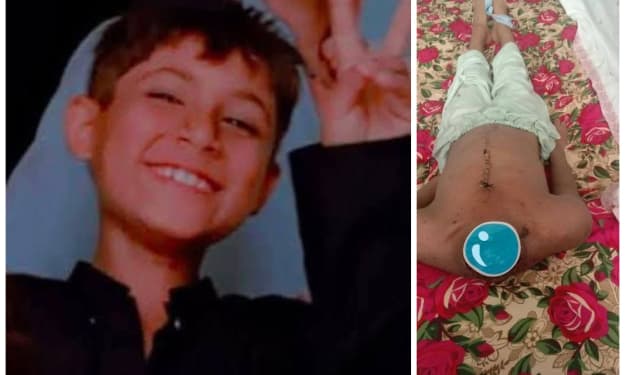
The Mansehra Horror: Who Killed 10-Year-Old Sufyan?
I never imagined we would see days so dark. Each new day brings news more painful and horrifying than the last. Just when you think you've heard the worst, something even more disturbing surfaces—leaving your heart shaken, your soul trembling, and your mind numb.
By 🕵️♂️ True Crime Enthusiast | Storyteller of the Dark Side 🔍about a year ago in Criminal
Silent Streets. A Story of Harassment in the USA.
In the heart of New York City, where dreams rise with the skyline and diversity paints every street corner, lived a young woman named Aaliyah. Twenty-four, independent, and ambitious, Aaliyah was pursuing her master's degree in journalism while interning at a local news agency. Her days were packed with classes, assignments, and coffee-fueled deadlines. But like many women in the United States, behind her driven smile was a story burdened by harassment that far too many ignore.
By Tariq jamilabout a year ago in Criminal
Bryan Kohberger’s Motive Still a Mystery — But Did Moscow Police Miss the Early Signs?
More than a year has passed since the shocking and senseless killings of four University of Idaho students, yet the mystery surrounding Bryan Kohberger’s motive remains one of the most unsettling elements of the case. As the investigation continues to unfold, a growing number of voices are questioning whether crucial warning signs in Kohberger’s behavior were missed by authorities before tragedy struck in Moscow, Idaho.
By Bevy Osuosabout a year ago in Criminal