guilty
Don’t do the crime if you can’t do the time; a look into all aspects of a guilty verdict from the burden of proof to conviction to the judge’s sentence and more.
The Last Confession
M Mehran Detective Mara Vance had learned two unshakable truths in her twenty years with the Harbor City Police Department: people lie, and guilt never sleeps. Tonight, both truths pressed heavily on her shoulders as she stepped into Cell 12 of the precinct’s lower wing. The man inside—Elias Rowan—sat on the metal bunk like he had been waiting for her. Maybe he had. His hands were folded neatly in his lap, cuffed, but calm. Too calm for someone accused of three murders. “You asked for me,” Mara said, shutting the door behind her. “You said you wanted to confess.” Elias smiled faintly. “I wanted to talk to the only detective in this city who still listens.” Mara didn’t rise to the flattery. She’d interrogated enough criminals to know when she was being played. Still, there was something different about Elias Rowan—an eerie steadiness in his dark eyes, a quiet sincerity in his voice. Serial killers usually radiated either arrogance or panic. Elias radiated neither. “You’re being charged with the deaths of Lorne Gibbons, Ava Morales, and Daniel Carter,” she said. “All found within three blocks of your apartment. All matching the same MO. You fit the pattern. Forensics fit the pattern. So tell me, Elias—what do you want to say?” “I didn’t kill them,” he said simply. She sighed. “That’s not a confession.” “No,” he said. “But it’s the truth. And I can prove it.” Mara paused. She hated wasting time, but she hated sloppy assumptions even more. “Go on.” “Each victim…” Elias shifted slightly, cuffs clicking. “Each victim came to me before they died.” Her brows rose. “Came to you? For what?” “For protection.” Mara crossed her arms. “And you didn’t think to mention this to anyone? Three separate people beg you for protection and then turn up dead? You see how that sounds.” “I didn’t say they begged.” His voice lowered. “I said they came. Because they were being hunted.” Mara leaned forward. “By whom?” Elias looked up, and for the first time, fear flickered across his face. “By a man who doesn’t exist on paper. A man with no name. Someone who kills loose ends.” The room suddenly felt colder. “I was supposed to be one of those loose ends,” Elias continued. “I used to work for him. Not officially. Not in any way that could be traced. I laundered assets, covered digital prints, rerouted funds. I never touched blood. But when you work for a ghost, you don’t quit. You vanish.” Mara hesitated—not because she believed him, but because she wanted to check. Something about this felt too detailed for fabrication. “You’re telling me those victims were connected to this ghost employer of yours?” “Yes,” Elias said. “Each one had something he wanted erased. Lorne was a driver. Ava was a runner. Daniel was a forger. They all tried to get out. They all came to me, hoping I could hide them like I hid transactions. But I’m not a miracle worker.” “And you didn’t kill them,” she said. “I didn’t kill them,” he repeated. “So who did?” Elias stared at her with the steady calm of a man speaking his final truth. “You already know. You’ve been chasing him for years.” A chill crept up Mara’s spine. “Corvus,” she whispered. The nickname tasted like metal. Harbor City’s phantom. The mastermind behind a constellation of unsolved crimes—money laundering, disappearances, blackmail rings, digital sabotage. A shadow figure the department could never pin down. “You’re saying Corvus killed them?” she asked. Elias nodded. “And he’s going to kill me too. But I thought I could make one last good choice and tell someone who might actually do something.” Mara swallowed hard. “Why now?” “Because he’s tying up his entire network,” Elias said. “Everyone who ever touched his operations. He’s disappearing us one by one.” Something buzzed in Mara’s pocket—her phone. She ignored it. “You can’t just throw Corvus’s name out there without evidence,” she said. “You’re asking me to believe the boogeyman is real.” “He is,” Elias said softly. “And if your phone is buzzing right now, it’s probably because you’re next.” A second buzz. Then a third. Mara blinked and pulled the phone free. Three text messages. Unknown number. Stop talking to him. Walk away. This is your only warning. Mara’s pulse quickened. “Elias… did you send these?” He shook his head. “Detective… Corvus already knows you’re here.” Her mouth ran dry. The basement level was nearly empty at this hour. If someone wanted to walk in and— The lights flickered. Elias tensed. “He’s here.” “How?” she whispered. “He’s always been here,” Elias said. “You’ve just never looked in the right place.” The lights snapped back on. A soft click echoed from behind Mara, near the hallway outside the cell. Not footsteps. Not voices. A door locking. Mara unholstered her gun and moved toward the cell door, adrenaline spiking. “Detective Vance,” a familiar voice crackled over the PA system. Her blood froze. Captain Rourke. Her captain. Her mentor. “I’m disappointed,” Rourke said, voice calm, almost bored. “You were always the smart one. I thought you’d stay out of this.” Elias’s voice broke. “I told you. He’s everywhere.” Mara’s heart slammed against her ribs. Rourke. Corvus. Her captain was the ghost. “You’re in my way, Mara,” Rourke continued. “Walk out now, and I’ll forget you were ever in that room.” The problem was—she couldn’t walk out. The door was sealed. Locked from the outside. Elias whispered urgently, “He’s going to kill both of us.” Mara turned slowly toward him, mind racing. “No,” she said. “Not tonight.” She raised her gun—not at Elias, but at the cell’s lock. One shot. Sparks flew. The lock cracked open. Elias stared at her, stunned. “You… believe me?” “I believe in evidence,” she said. “And I’m about to collect some.” Outside, heavy boots hit the concrete floor—Rourke’s men. Mara looked at Elias. “Run.” And for the first time since she met him, Elias Rowan obeyed without a word. The chase had begun. And the city’s ghost was finally visible.
By Muhammad Mehran11 months ago in Criminal
👻 The Digital Ghost of Tokyo: Tracking the $50 Billion Bitcoin Heist That Vanished Without a Trace
1. The Day Bitcoin Died (The Setting ) It was the Wild West of the early 2010s, and Bitcoin was the shiny, new gold rush. If you wanted a piece of the action, you went to one place: Mt. Gox.
By The Insight Ledger 11 months ago in Criminal
Hong Kong Fire🔥
A major **hong kong fire** recently drew widespread attention after flames swept through a residential building in **Tai Po**, raising new concerns about safety in one of the world’s most densely populated cities. Hong Kong is known for its iconic skyline and tightly packed living spaces, but incidents like the **hong kong apartment fire** have renewed discussions about building conditions, emergency response times, and the challenges of managing disasters in high-rise environments. As many people continue to search online for updates using phrases like **fire in hong kong**, **hong kong fire today**, and **hong kong fires**, this report provides a clear and detailed overview of what happened and what it reveals about life in the region. To understand the impact of the **hong kong tai po fires**, it’s essential first to consider **where Hong Kong is** located. Hong Kong sits on the southern coast of China, known for its mix of mainland districts and outlying islands. Its urban areas are filled with towering residential blocks, often housing thousands of people in a single structure. Because of this density, a **hong kong high rise fire** can spread quickly and become extremely difficult for firefighters to control, which is exactly what occurred during the Tai Po incident. The **hong kong fire tai po** event began when smoke was seen rising from a unit in a tall apartment block. Residents reported smelling burning materials before flames rapidly escalated. In cities with high populations and vertical living arrangements, a single spark can create significant danger. Fire crews arrived promptly and worked to contain the blaze, but the structure of high-rise buildings often creates challenges such as narrow hallways, limited escape routes, and intense heat that travels upward through stairwells and shafts. These conditions made the rise of the fire even more dangerous for both residents and rescue teams. Reports from the scene noted that some residents were forced to evacuate quickly, while others were temporarily trapped due to smoke filling the corridors. Many people searching for information about the incident online used terms like **hong kong fire today**, reflecting widespread concern across the city. Tai Po, although not as densely packed as central Hong Kong districts, still contains many older residential complexes where fires can spread rapidly if not controlled immediately. The broader issue raised by this fire extends beyond a single event. Hong Kong’s unique living conditions—small apartments, vertical architecture, and aging buildings—make fire safety a recurring point of discussion. The phrase **hong kong fires** often appears in search results whenever another incident emerges, showing how closely residents monitor these risks. The Tai Po case also highlighted how quickly a simple household accident can turn into a large-scale emergency in a high-rise environment. Another important aspect is community awareness. With many people living in compact apartments, proper ventilation, electrical maintenance, and storage safety are crucial. The Tai Po incident serves as a reminder that emergency preparedness must be a priority. Fire departments in Hong Kong frequently run public education campaigns, but incidents like this show there is still work to be done to ensure that residents know how to act quickly in dangerous situations. This **hong kong apartment fire** also sparked conversations about building inspections and the need to modernize older structures. Some high-rise buildings were constructed decades ago and may not fully meet today’s safety expectations. Officials often review such incidents to determine whether stronger regulations or upgrades are necessary. In a city where land is extremely limited, the vertical expansion of residential towers is inevitable, but each rise in building height requires improved safety measures to protect the population. In summary, the **hong kong fire** in Tai Po was more than a local emergency — it was a powerful reminder of the challenges of living in densely populated high-rise buildings. As people continue searching for updates using terms like **hong kong tai po fires** and **fire in hong kong**, the incident underscores the importance of strong safety protocols, faster emergency response, and continuous public awareness. Hong Kong will likely continue to face similar challenges due to its unique urban structure, but each event offers lessons that can help prevent future disasters and improve overall safety across the region.
By America today 11 months ago in Criminal
The Criminal Nobody Suspected
M Mehran The first report said it was an accident. A kitchen fire. Nothing unusual—old houses do that sometimes. But by the time the fourth house burned in the same neighborhood, the town of Briar Creek stopped calling it coincidence. They started calling it a pattern. And patterns always have a creator. --- I wasn’t a detective. I wasn’t even close. I stocked shelves at a local grocery store, counted cans and expiration dates, and went home to an apartment where the walls were thinner than my patience. But Briar Creek wasn’t a city. It was the kind of town where everyone knew everyone—or thought they did—so when the fires started, rumors spread faster than flames. People blamed teenagers. Strangers. The usual suspects. Not once did they look at the person setting up folding chairs at every fundraiser, baking cookies for every grieving family, handing out blankets with trembling hands. Not once did they look at Mrs. Ellis. --- She lived three houses down from me. Gray hair in a bun, soft voice, walked her tiny dog at the exact same time every morning. The kind of person who apologized when other people bumped into her. She was harmless. Ordinary. Invisible. Which made what came next impossible to believe. --- The night of the fifth fire, I was working the late shift. The store was empty except for the hum of the refrigerators and the buzz of fluorescent lights that never stopped flickering. At 10:42 p.m., the power went out. The entire store dropped into silence. Then came the sirens. They sliced through the night like fear with a pulse. I stepped outside and saw it—the sky glowing orange behind the row of houses near mine. Another fire. I ran. Not because I was brave, but because when everything familiar starts burning, instinct chooses for you. --- Crowds gathered. Neighbors cried. Firefighters shouted orders that disappeared into smoke. And then I saw her. Mrs. Ellis standing across the street, her dog shaking in her arms—not from fear, but from the heat. Her face wasn’t devastated like everyone else’s. It was empty. Completely still. Like she wasn’t seeing the fire at all—just remembering it. Something cold settled in my stomach. --- The next morning, the town held a community meeting at the school gym. The mayor gave a speech full of words that sounded strong but meant nothing. “We will get through this.” “We won’t be intimidated.” “We are working with authorities.” Everyone clapped at the wrong moments, desperate to feel safe. I sat in the back. Mrs. Ellis sat in the front row. When a volunteer announced a donation drive for the latest victims, she was the first to sign up—again. People praised her. “She’s an angel.” “She shows up every time.” “We need more people like her.” I watched her carefully. Her hands shook—not from nerves, but from excitement. The kind people mistake for compassion. --- I tried to forget what I saw. Told myself I was being paranoid. Accusing the sweetest woman in town was ridiculous. But the mind notices things long before the heart is ready. Over the next week, I observed. She always arrived at fire scenes before emergency crews. Always stood in the same place. Never looked surprised. And her dog—normally anxious—never barked during sirens. Animals know. People ignore. --- On a Thursday night, I followed her. She left her house at 11:56 p.m., walking slowly, dog tucked under her coat. Not toward the park. Not toward the store. But toward the abandoned Miller house—the only one in town no one cared about. My pulse hammered. She slipped inside through the side entrance. Minutes passed. Then I saw it—a small flicker of light through the broken window. Not accidental. Deliberate. I dialed 911, hands shaking so violently I nearly dropped my phone. --- The fire department arrived before the flames spread. Mrs. Ellis walked out calmly. Her dog snuggled against her chest. Like she had simply gone in to check on something. When the police asked what she was doing there, she said: “I smelled smoke and came to warn someone.” There was no smoke. Not yet. But the officer wrote down her statement and let her go. Because in Briar Creek, kindness was a shield. And she knew it. --- I couldn’t sleep. Every time I closed my eyes, I imagined the next house—the next family—the next headline. So the following morning, I went to the police station. I told them everything. They listened politely. Then one of them leaned forward and sighed. “Mrs. Ellis lost her husband in a house fire twenty years ago,” he said. “Trauma makes people behave oddly. Doesn’t make them criminals.” I walked out feeling like I had just accused the sun of being too bright. --- Three nights later, the final fire happened. Not at a random house. At hers. By the time firefighters broke down the door, it was too late. They found her sitting in the living room, dog in her lap, flames climbing the walls around her. She never tried to escape. The official report said accidental electrical failure. But the fire chief said something quiet when he thought no one could hear: “She wanted to be where he was.” And suddenly everything made sense. She hadn’t been burning houses out of hatred. She had been choosing victims the way grief chooses memories—by association. Each house belonged to someone connected to her past: a former neighbor, an old friend, someone who brought flowers to her husband’s funeral. Not destroying them. Letting go of them. Until she reached herself. --- For weeks, the town moved carefully, as if the smoke hadn’t cleared. People still called her kind. Still said she meant well. Still brought flowers to the ashes. But I think about her differently. Not as a criminal who hid in plain sight— but as someone broken so quietly no one ever noticed the sound.
By Muhammad Mehran11 months ago in Criminal
The Criminal Who Turned Himself In
M Mehran The night I walked into the police station, the officer at the front desk didn’t even look up. He was stirring sugar into his coffee like it was the most important thing happening in the world. “Name?” he asked, bored, still not meeting my eyes. I hesitated—not because I didn’t know it, but because it was the first time in five years anyone had asked me directly. “Elias Carter,” I said quietly. The spoon stopped. He finally looked up. Not many people walk into a station at 2:17 a.m. voluntarily. And nobody does it with shaking hands and a folded photograph in their pocket. “You here to report something?” he asked. “Yes,” I said. “A crime.” “What kind?” “My own.” --- People assume criminals look a certain way—hard eyes, rough voice, a shadow that follows them like a warning. But most of us look ordinary. That’s how we survive. Five years earlier, I was the getaway driver in a robbery I never planned. I tell myself that so I can sleep. Truth is, I said yes when I should have walked away. It was supposed to be simple—ten minutes, quick cash, no one gets hurt. But simple plans have a bad habit of turning into headlines. There were three of us: Marcus, who made the plan. Jay, who always laughed at the wrong moments. And me—the one who thought keeping his hands clean meant he wasn’t guilty. When they ran back to the car, something felt wrong. Marcus was screaming. Jay wasn’t moving fast enough. And then I saw it—blood on Jay’s shirt. “What happened?” I yelled. “No time!” Marcus shouted. “Drive!” So I drove. People think guilt hits you like a storm. It doesn’t. It waits. It watches. It lets you think you escaped—then slowly rearranges your entire life. --- For months, I checked every news station like I was checking a pulse. Local shop owner dies in attempted robbery. Suspects still at large. Family asks for justice. I stared at the screen until the words stopped making sense. His name was Thomas Avery. He owned the corner store two blocks from my apartment. I’d bought coffee there so many times he knew my order before I spoke. He wasn’t supposed to be there during the robbery. He wasn’t supposed to fight back. He wasn’t supposed to die. But he did. And I kept breathing. That was the first crime. The second was pretending it didn’t break me. --- I left the city. Changed my number. Became the kind of person who never stayed anywhere long enough to make friends. You can disappear from the world, but not from yourself. Every night, I folded and unfolded the same photograph: Thomas Avery standing outside his shop, holding his little girl’s hand. She couldn’t have been more than six. She was smiling like she believed the world was safe. I started keeping track of her birthday every year. I didn’t know why. Maybe because guilt needs somewhere to live, and mine chose a calendar. --- Last month, I saw something I wasn’t prepared for. I was sitting in a bus station, trying to look like someone waiting instead of someone running. A news segment flickered on the wall-mounted TV. It showed a teenager speaking at a scholarship event. Her name appeared at the bottom of the screen: “Emily Avery – Award Recipient.” I froze. She was older now—maybe eleven or twelve—but I recognized her eyes. They were still looking at the world like it hadn’t failed her. The announcer said she wanted to study law “to help people who never got justice.” That was the moment something broke open inside me. Not guilt—guilt had been there for years. This was something else. Responsibility. --- So I walked into the police station and waited for the officer to call someone higher up. Within minutes, I was in an interview room—the kind with metal chairs and walls that feel too close. A detective entered. Calm. Sharp. Tired in a way that suggested he’d seen too many people like me but never one at this hour voluntarily. “You’re saying you were involved in the Avery robbery?” “Yes.” “Why come forward now? Five years is a long time.” I didn’t know how to explain it—that sometimes the truth grows heavier than the fear of consequences. So I said the only thing that felt honest: “I saw his daughter on the news.” The detective paused. Not judgment—surprise. “And that made you confess?” “No,” I said. “Living with myself did.” Silence settled between us. Not the uncomfortable kind—just the kind that comes when there’s nothing else left to hide. He clicked on the recorder. “Tell me everything.” So I did. --- When they led me to the holding cell, the officer from the front desk stopped me. “You could’ve kept running,” he said. “I’ve been running for five years,” I replied. “I’m just tired.” He nodded, like he understood more than he was allowed to say. As the cell door closed, I took out the folded photograph and stared at it one last time. Tomorrow, they’ll contact the Avery family. They might hate me. They should. But maybe—just maybe—Emily won’t spend her life searching for answers that were hiding in the dark. Maybe she’ll grow up believing justice doesn’t always come quickly. But sometimes, it comes eventually. And sometimes, the most unexpected criminal is the one who finally stops running.
By Muhammad Mehran11 months ago in Criminal
The Dust of a Ghost. AI-Generated.
They say everyone has a breaking point. Mine wasn't a loud, dramatic snap. It was a slow, quiet crumble, like plaster turning to dust. And it ended with me standing in Arthur Finch's study, the cold weight of his bronze bookend in my hand, and his body at my feet.
By The 9x Fawdi11 months ago in Criminal
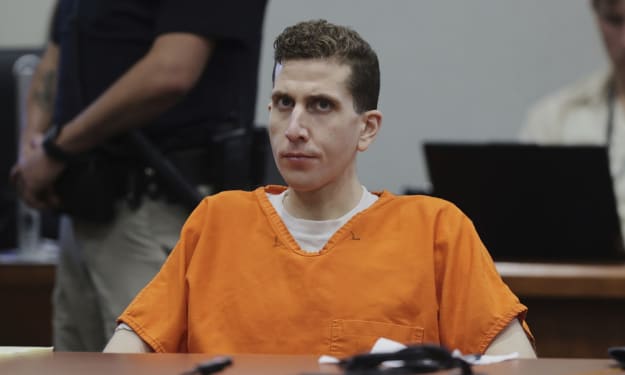
The Case That Crumbled: Why Bryan Kohberger’s Guilty Plea Feels Like Justice Denied
Three years ago, Bryan Kohberger left the Poconos to study at Washington State University. He wasn't your average graduate student, he had been accepted into their prestigious PhD program in criminal justice. On paper, it was the perfect start to a future career in law enforcement. Instead, it was the start of a freefall into darkness.
By Lawrence Lease11 months ago in Criminal
A Tragic End in Irony: What Stasy’s Charles Death Says About Preference and the Dangers of Ignoring Red Flags by NWO Sparrow
The White Knight Safety Myth That Killed Stasy Charles by NWO Sparrow A painful look at how anti Black messaging and misplaced trust in whiteness left her unprotected.
By NWO SPARROW11 months ago in Criminal