guilty
Don’t do the crime if you can’t do the time; a look into all aspects of a guilty verdict from the burden of proof to conviction to the judge’s sentence and more.
Betrayal Behind The Badge
In a story that caused quite a stir in the quiet streets of Bedfordshire and damaged the reputation of the local police force, Officer Gareth Suffling's fall from grace revealed a tale of blackmail, abuse of power and further eroded public confidence in the authorities.
By Chelsea Rose2 years ago in Criminal
Moral Responsibility & the Justice System
In contemporary society, our laws and moral frameworks are deeply rooted in the notion of free will. This belief underpins our justice system, educational norms, and everyday interactions. We hold individuals accountable for their actions based on the premise that they possess the freedom to choose between right and wrong. However, the deterministic perspective, which suggests that our actions are the result of preceding causes and influences beyond our control, challenges this foundational belief.
By Waleed Mahmud Tariq2 years ago in Criminal
Understanding Federal Firearms Law and Drug Use
Hunter Biden was found guilty of three federal gun charges earlier this week. These charges come after Biden purchased a gun in 2018 and lied on the ATF form, claiming he wasn't a drug user while he was allegedly addicted to crack cocaine at the time. This is illegal under federal law. He's charged with making false statements on the form and to the gun dealer, as well as illegally possessing the firearm for 11 days.
By Sharon Feldman2 years ago in Criminal
Inside Alpha Bay
The illicit online marketplace Alpha Bay was a hub for illegal trade, generating nearly $500 million annually. It served as a platform for anonymous transactions of prohibited items, such as drugs and weapons, through a sophisticated and seemingly legitimate interface. Alpha Bay played a significant role in the global drug trade, shifting the focus from local to international dealings by adopting a model similar to Amazon for unlawful products. The permanence of one's online identity poses potential risks, as past actions can resurface in the future. Thailand's lack of interception laws has made it a target for hackers worldwide, who exploit this loophole to carry out cyber-attacks without repercussions. Bitcoin is commonly used for anonymous transactions on the dark web, offering a level of financial secrecy not achievable with traditional currencies. Alpha Bay ensured end-to-end anonymity for illegal transactions, utilizing PGP authentication for privacy-centric account registration. Initially known for selling stolen data, Alpha Bay eventually became synonymous with the drug trade. It is crucial to exercise caution when engaging in black market activities on the dark web in Thailand, as law enforcement agencies work together to combat illegal operations within the country.
By Isaac Ekow Anyidoho2 years ago in Criminal
The Unsettling Case of Dr. Donald Cline: A Fertility Doctor's Deception
In a shocking revelation that sent ripples through the medical community and beyond, Dr. Donald Cline, a fertility doctor from Indiana, was found to have fathered at least 94 children by using his own sperm instead of that from anonymous donors. His actions, which spanned decades, have left a trail of betrayal, ethical violations, and emotional turmoil for the families involved. In 2017, Dr. Cline was sentenced to a one-year suspended sentence, a punishment that many believe was insufficient given the magnitude of his deception.
By Deji Akomolafe2 years ago in Criminal
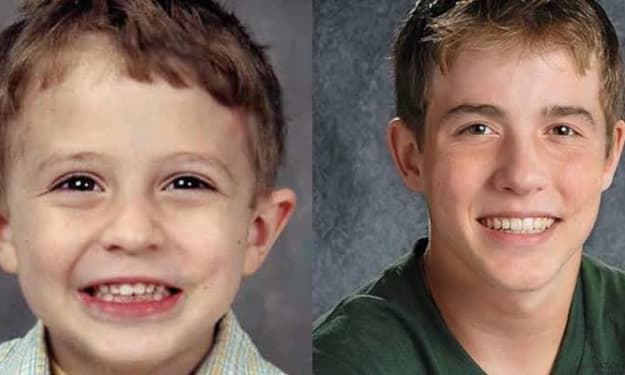
The Unraveling of a Hidden Past: The Story of Julian Hernandez
Julian Hernandez's life took an unexpected and dramatic turn when he was 18 years old. What began as a routine step toward independence—applying for college—became the catalyst for a shocking revelation about his past. Julian discovered that he had been kidnapped by his father at the age of five, a truth that had been hidden from him for 13 years. This is the extraordinary story of Julian Hernandez, a young man whose life was profoundly affected by a secret he never knew existed. A Missing Child Julian Hernandez was reported missing by his mother in 2002 when he was just five years old. The circumstances of his disappearance were heart-wrenching: his father, Bobby Hernandez, had abducted him. Julian's mother, distraught and desperate, launched a search for her son that would span more than a decade. Despite exhaustive efforts by law enforcement and family, Julian remained missing, and his case eventually grew cold. A New Life in Ohio Unbeknownst to Julian, his father had taken him to Ohio, where they lived under false identities. Bobby Hernandez had changed their names and created a new life for them, effectively erasing their past. Julian grew up in this fabricated world, unaware of the truth about his origins. He attended school, made friends, and led what appeared to be a normal life, all the while living under a cloud of deception. The College Application Revelation The turning point in Julian's life came when he applied for college in 2015. Like many other teenagers, Julian was eager to take this significant step toward his future. However, during the application process, he encountered an unexpected obstacle: his Social Security number did not match his name. This discrepancy set off a chain of events that would unravel the truth about his past. The Discovery As college officials investigated the mismatch, the situation quickly escalated. They discovered that Julian's Social Security number belonged to a different name entirely. This revelation prompted further investigation, which eventually led to the discovery of Julian's true identity. Law enforcement was alerted, and they confirmed that Julian was the same boy who had been reported missing 13 years earlier. Reuniting with His Mother The news was a profound shock to Julian, who had lived his entire life believing a narrative that was now proven false. However, the revelation also brought a sense of closure and the possibility of reuniting with his biological family. After 13 years of separation, Julian was finally able to reconnect with his mother. The reunion was an emotional and bittersweet moment, marking the end of a long and painful chapter in both their lives. Legal Consequences Bobby Hernandez was arrested and faced serious legal consequences for his actions. In April 2016, he pleaded guilty to charges of kidnapping, interference with custody, and tampering with records. He was sentenced to four years in prison. The legal proceedings brought a measure of justice for Julian and his mother, although the emotional scars of the abduction would linger for years to come. Julian's Journey Forward Julian Hernandez's story is one of resilience and adaptation. After discovering the truth about his past, he faced the daunting task of reconciling his two identities: the life he had lived under his father's false narrative and the reality of his abduction. This process required immense emotional strength and support from his family and friends. Julian chose to maintain a relatively private life following the revelation. He focused on building his future, using the same determination and perseverance that had characterized his approach to his education. Despite the traumatic circumstances of his past, Julian demonstrated an extraordinary ability to move forward and embrace the possibilities of his future. Reflections on Identity and Family Julian Hernandez's story raises profound questions about identity and family. For 13 years, he lived a life based on deception, his identity shaped by a false narrative. The discovery of his true past forced him to reevaluate his sense of self and his understanding of family. The bond between Julian and his mother, despite the years of separation, underscores the enduring nature of familial love. Their reunion was a testament to the strength of their connection, which had persisted even through years of uncertainty and loss. The Role of Law Enforcement and Technology The resolution of Julian's case also highlights the critical role of law enforcement and technological advancements in solving long-term missing persons cases. The persistence of investigators and the use of modern technology were key factors in uncovering the truth about Julian's identity. This case serves as a reminder of the importance of continued efforts to reunite missing children with their families, no matter how much time has passed. Conclusion Julian Hernandez's story is a compelling narrative of loss, discovery, and resilience. It sheds light on the profound impact of parental abduction and the long journey toward healing and reconnection. As Julian continues to build his life, his story remains an inspiring example of the human spirit's capacity to overcome even the most daunting challenges. Through his experience, we are reminded of the importance of truth, the enduring power of family, and the unyielding hope for a brighter future.
By Deji Akomolafe2 years ago in Criminal
The Unsettling Encounter: Mike Tyson and the Phoenix Serial Killer Dale Hausner
In a bizarre and unsettling twist of fate, former heavyweight boxing champion Mike Tyson found himself shaking hands with a man who would later be revealed as a serial killer. Dale Hausner, a Phoenix resident who posed as a sports writer, was responsible for a series of heinous crimes that took the lives of eight innocent people. Tyson's brief encounter with Hausner, followed by the shocking revelation of his true identity, highlights the chilling reality that sometimes, the most dangerous individuals can hide in plain sight. The Encounter In the summer of 2006, Mike Tyson was at his gym in Phoenix, training and focusing on his post-boxing career endeavors. Among the various visitors that day was Dale Hausner, a seemingly unremarkable man who introduced himself as a sports writer interested in Tyson's career and future plans. Tyson, known for his openness with fans and media alike, greeted Hausner and engaged in what seemed to be an ordinary conversation about boxing and his experiences in the sport. Unbeknownst to Tyson, Hausner was living a double life. Far from being a benign sports writer, he was, in fact, a cold-blooded killer who, along with his accomplice Samuel Dieteman, had embarked on a terrifying crime spree in the Phoenix area. Hausner’s façade was so convincing that even someone as experienced and wary as Tyson did not suspect anything unusual during their brief interaction. The Crimes of Dale Hausner Dale Hausner's reign of terror began in May 2005 and continued until his arrest in August 2006. Along with Dieteman, Hausner targeted random individuals in drive-by shootings, often using a high-powered rifle. The victims were chosen indiscriminately, with no apparent motive beyond the killers' twisted sense of thrill. Their actions resulted in the deaths of eight people and injuries to numerous others, spreading fear and panic across Phoenix. Hausner and Dieteman were dubbed the "Serial Shooters" by the media, as their pattern of random violence and the lack of discernible motive made them particularly difficult to apprehend. The randomness of their attacks created a climate of fear, with residents feeling that anyone could be a potential victim. The Revelation A few days after Tyson’s encounter with Hausner, police arrived at Tyson’s gym with startling news. They informed Tyson that the man he had met and shaken hands with was none other than Dale Hausner, the infamous serial killer who had been terrorizing Phoenix. The news was shocking not only to Tyson but also to the community that had followed his career and now had to reconcile the image of the boxing legend with this unexpected and unsettling connection. Tyson, known for his tough exterior and storied past, expressed his disbelief and horror at the revelation. The encounter served as a stark reminder of how easily even the most vigilant individuals can be deceived by those who hide their true intentions behind a veneer of normalcy. The Arrest and Trial Hausner’s arrest in August 2006 marked the end of his deadly spree. The investigation that led to his capture involved significant law enforcement resources and community cooperation. Hausner and Dieteman’s careless bragging about their crimes eventually provided the critical leads that detectives needed to apprehend them. During the trial, the extent of Hausner's crimes was laid bare, and the court heard harrowing testimonies from survivors and families of the victims. In 2009, Dale Hausner was convicted on multiple counts of murder, assault, and other charges. He was sentenced to death, and in 2013, he took his own life in prison. Reflections on the Encounter For Mike Tyson, the encounter with Hausner was a jarring experience that underscored the unpredictability of human interactions. Despite his own turbulent past and encounters with danger, the idea that he had come face-to-face with a serial killer was a sobering reminder of the hidden threats that can lurk behind seemingly benign interactions. Tyson’s life has been marked by dramatic highs and lows, and this incident added another layer of complexity to his narrative. It reinforced the notion that no one, regardless of their status or experiences, is immune to being deceived by those with malevolent intentions. The Broader Implications The case of Dale Hausner and his encounter with Mike Tyson highlights broader issues related to trust, deception, and the nature of evil. It serves as a chilling reminder that individuals with sinister motives can blend seamlessly into society, hiding behind facades that conceal their true nature. For the public, the story underscores the importance of vigilance and the need for communities to work together to identify and address threats. For law enforcement, it highlights the challenges of tracking and apprehending individuals who commit random acts of violence. Conclusion The brief handshake between Mike Tyson and Dale Hausner is a poignant example of how unpredictable and unsettling life can be. It reminds us that danger can come from the most unexpected places and that the true nature of individuals can often be hidden beneath a mask of normalcy. Tyson’s encounter with Hausner, and the subsequent revelation of Hausner’s crimes, serves as a stark reminder of the complexities of human interactions and the ever-present potential for deception.
By Deji Akomolafe2 years ago in Criminal
Wallace Souza: The Crime Presenter Who Orchestrated Murders for Ratings
In a shocking twist that blurred the lines between reality and fiction, Wallace Souza, a popular Brazilian television presenter known for his true crime program on unsolved murders, was revealed to be orchestrating the very crimes he reported on. This astonishing revelation captivated global audiences and highlighted the extreme lengths some individuals will go to achieve fame and success. Souza's story is a disturbing and intricate tale of ambition, deception, and the dark side of media sensationalism. The Rise of Wallace Souza Wallace Souza began his career as a police officer in Manaus, the capital of the Amazonas state in Brazil. His transition from law enforcement to television occurred when he started hosting a local TV show called "Canal Livre." The show quickly gained popularity due to its raw and sensational coverage of crime scenes, often arriving at the locations of violent incidents before the police. Souza's charisma and apparent dedication to exposing crime in the city earned him a large following and significant influence. "Canal Livre" was unique in its approach, providing graphic and unfiltered content that both shocked and fascinated viewers. The show often featured interviews with victims' families, on-the-spot crime scene footage, and intense commentary by Souza. This formula proved to be highly successful, catapulting Souza into the limelight and making him a household name in Manaus and beyond. The Dark Side of Fame However, as Souza's fame grew, so did suspicions about the uncanny accuracy and timeliness of his reports. It seemed implausible that his team could consistently be the first to arrive at crime scenes, often even before law enforcement. Whispers and rumors began circulating about Souza's potential involvement in criminal activities, but concrete evidence remained elusive. The turning point came in 2008 when former police officers and ex-criminal associates came forward with damning allegations against Souza. These insiders claimed that Souza was not merely reporting on crimes but orchestrating them to boost his show's ratings. The accusations suggested that Souza had formed a criminal organization responsible for drug trafficking, extortion, and, most shockingly, orchestrating murders. The Investigation and Revelations Brazilian authorities launched an extensive investigation into Souza's activities. They uncovered a web of criminal enterprises linked to him, revealing that his media empire was built on bloodshed and corruption. Evidence indicated that Souza and his associates were responsible for numerous murders, which were strategically planned to ensure "Canal Livre" had exclusive and sensational content. The most damning piece of evidence was Souza's alleged involvement in the murder of an ex-gang member, who had threatened to expose Souza's criminal operations. Authorities discovered that Souza had ordered the hit, ensuring his team arrived first at the crime scene to capture exclusive footage. This blatant manipulation of reality for entertainment shocked and horrified the public. In addition to murder charges, Souza faced accusations of drug trafficking and witness tampering. His criminal organization was believed to have connections with local drug lords, using his media influence to intimidate rivals and maintain control over the illegal drug market in Manaus. The Trial and Conviction Wallace Souza was arrested and brought to trial, facing charges that included murder, drug trafficking, and racketeering. The trial was a media spectacle, with extensive coverage detailing the sordid details of Souza's double life. Prosecutors presented overwhelming evidence of his involvement in orchestrating crimes, including testimonies from former associates, forensic evidence, and documented communications linking him to criminal activities. In 2012, Souza was convicted and sentenced to prison. His fall from grace was swift and brutal, stripping him of his public image as a crime-fighting hero and revealing him as a manipulative criminal mastermind. The conviction sent shockwaves through the media industry and led to increased scrutiny of the ethical boundaries in crime reporting. The Impact on Media and Society The Wallace Souza scandal had far-reaching implications for both the media industry and society at large. It underscored the potential dangers of media sensationalism and the ethical responsibilities of journalists and content creators. The case prompted a reevaluation of how crime is reported and the extent to which media coverage can influence public perception and behavior. In Brazil, the scandal led to calls for stricter regulations on crime reporting and greater oversight of media practices. It also highlighted the need for a clear distinction between entertainment and news, emphasizing the importance of journalistic integrity and accountability. For the public, Souza's story served as a cautionary tale about the perils of unchecked ambition and the seductive allure of fame. It demonstrated how the pursuit of ratings and popularity can corrupt individuals and institutions, leading to devastating consequences. Conclusion Wallace Souza's story is a chilling reminder of the thin line between reality and fiction in the media world. His actions, driven by a desire for fame and success, resulted in a series of heinous crimes that shocked a nation and exposed the dark underbelly of media sensationalism. The legacy of his actions continues to influence discussions about media ethics and the role of journalism in society, reminding us of the critical need for integrity, transparency, and accountability in all forms of media.
By Deji Akomolafe2 years ago in Criminal
The Tragic Death of Rebecca Schaeffer and the Birth of Anti-Stalking Laws in America
On July 18, 1989, the entertainment industry was shaken to its core by the tragic and senseless murder of Rebecca Schaeffer, a promising young actress best known for her role in the CBS sitcom 'My Sister Sam.' Schaeffer's life was abruptly ended when an obsessed fan, who had been stalking her for three years, fatally shot her at the doorstep of her West Hollywood apartment. This devastating event not only brought attention to the dangers faced by celebrities from obsessed fans but also became the catalyst for significant legislative change in the United States. Schaeffer’s death spurred the enactment of America’s very first anti-stalking laws, paving the way for enhanced protection for stalking victims nationwide. The Rise of Rebecca Schaeffer Rebecca Schaeffer was a rising star in Hollywood during the late 1980s. Born on November 6, 1967, in Eugene, Oregon, she began her career as a model before transitioning to acting. Her big break came when she landed the role of Patti Russell on 'My Sister Sam,' a sitcom that aired from 1986 to 1988. Schaeffer's performance as the spirited younger sister quickly endeared her to audiences, making her a household name. Despite her fame, Schaeffer was known for her down-to-earth personality and kind-hearted nature. She was a young actress with a bright future, with ambitions to take on more challenging and diverse roles in the film industry. However, her promising career and life were tragically cut short by a man who had developed a dangerous obsession with her. The Stalker: Robert John Bardo Robert John Bardo, a native of Tucson, Arizona, was an individual with a troubled history of mental illness and a pattern of obsessive behavior. Bardo first became infatuated with Schaeffer after watching her on 'My Sister Sam.' He began to write her letters, expressing his admiration and love. Initially, Schaeffer, like many celebrities, responded with a polite autograph, unaware of the escalating nature of Bardo's obsession. Over the course of three years, Bardo's fixation grew more intense. He made several attempts to meet Schaeffer in person, even traveling to Los Angeles to find her. His obsession reached a dangerous peak when he hired a private investigator to obtain Schaeffer's home address from the California Department of Motor Vehicles (DMV), a practice that was alarmingly easy at the time. The Tragic Day On the morning of July 18, 1989, Bardo arrived at Schaeffer's apartment building in West Hollywood. He rang the doorbell, and when Schaeffer answered the door, Bardo confronted her. The actress, taken aback, attempted to dismiss him. Undeterred, Bardo returned an hour later, and when Schaeffer answered the door again, he shot her point-blank in the chest. She was rushed to Cedars-Sinai Medical Center but succumbed to her injuries. The murder of Rebecca Schaeffer sent shockwaves through Hollywood and the broader public. The brutal nature of her death and the fact that her stalker had easily obtained her address highlighted a severe gap in privacy protection and legal safeguards for stalking victims. Legislative Response: The Birth of Anti-Stalking Laws Schaeffer's murder was a wake-up call that led to immediate action. Advocacy groups, law enforcement, and legislators united in the call for stronger protective measures against stalking. In the aftermath of Schaeffer’s death, California became the first state to enact anti-stalking laws. The California Anti-Stalking Law, passed in 1990, made stalking a criminal offense, with provisions for restraining orders and increased penalties for repeated offenses. This law set a precedent, and within three years, every state in the U.S. had enacted similar legislation. Moreover, Schaeffer's case prompted reforms in privacy laws. The practice of releasing personal information from DMV records without proper cause was scrutinized and changed. The Driver’s Privacy Protection Act (DPPA) was passed in 1994, restricting the dissemination of personal information from motor vehicle records. The Impact and Legacy The impact of these legislative changes cannot be overstated. The establishment of anti-stalking laws provided a legal framework for protecting victims and prosecuting offenders. Before these laws, victims of stalking had little recourse, and law enforcement lacked the tools to intervene effectively. The new laws allowed for the issuance of restraining orders and set penalties for violators, offering a layer of protection that was previously unavailable. Rebecca Schaeffer's tragic death also spurred a broader societal awareness of the dangers of stalking. Her story highlighted the need for vigilance and proactive measures to protect individuals from obsessive and dangerous behavior. The entertainment industry, in particular, became more conscious of the security needs of its stars, leading to enhanced security measures and protocols. Conclusion The tragic murder of Rebecca Schaeffer was a dark moment in Hollywood history, but it also became a catalyst for crucial legal and social change. Her death underscored the urgent need for laws to protect individuals from stalking and invasive behaviors. Today, the anti-stalking laws that were born out of this tragedy continue to provide essential protection to countless individuals across the United States. Schaeffer’s legacy lives on, not only through her work as an actress but also through the enduring impact of the laws that have helped make the world a safer place.
By Deji Akomolafe2 years ago in Criminal