fiction
Mystery, crime, murder, unsolved cases. Contribute your own tales of crime to Criminal.
From Custody to Creativity — My Journey from Crime to Crafting Stories
There was a time in my early life when shadows stretched long and the thrill of rebellion clouded my better judgment. My journey began in a world most would shy away from—a life of crime that was as dangerous as it was short-lived. It wasn’t about the thrill, not really. It was about survival. But survival often demands a cost, and sooner or later, that bill arrives. Eventually, the path shifted. I found myself transitioning into a life less chaotic—behind a desk in the back office. It was a drastic shift, moving from the edge of society to the structured corridors of public service. My days were no longer filled with risk and adrenaline but with files, policies, and memos. I entered the world of security and custodial policy, a place where precision and order defined each day. Most of my time was dedicated to safeguarding systems, building frameworks to protect those who now walked the tightrope I once danced upon. There was a strange satisfaction in this—guiding others toward safety, helping them avoid the mistakes I had once made. But despite the new surroundings, some old habits persisted. My hands, once skilled in secrecy, were now busy on the keyboard. Key bashing continued—not for illicit plans but for writing reports, briefings, and correspondence. I became a bridge between ministers and institutions, offering advice on how to maintain custodial integrity. I was still part of a world that involved control, caution, and containment—but now, it was constructive. The rhythm of public service played on for years, until another transition called to me. As I approached the final act of my formal career, I pivoted one last time—reverting to private practice, yet again shifting identity. I wasn’t leaving security behind, but rather adapting it. This time, I offered protection not to inmates or policyholders but to entertainers, filmmakers, event organizers, and stars of the stage and screen. From VIP parties to film shoots, my expertise ensured safety where art met audience. The shift was unexpected, yet oddly fitting. Life had brought me full circle. From chaos to control, and now—into creativity. They say you don’t truly leave behind who you are—you evolve. And that’s exactly what happened. Amidst the noise of nightclubs and film sets, a quieter part of me began to speak. I turned my focus inward, and with nothing more than a keyboard and my imagination, I began to write—not reports, not policies—but fiction. My fingers, once used to form statements of fact, now painted images with metaphor and myth. My nine little literary soldiers—my fingers—became the tools of a new trade. No longer bound by regulations, I stepped into the world of ambiguity and emotion. I found myself drawn toward bardic pursuits—storytelling that echoed legends, myths, and the timeless truths of the human condition. I was no longer just a guardian of law or a servant of structure. I was becoming a storyteller, a writer of verse, and a weaver of dreams. Through this creative rebirth, I discovered that words could be both armor and art. Writing allowed me to explore the nuances of life—the grey areas that no policy ever addressed. I dove deep into the myths, legends, and poetic traditions, blending truth with imagination, structure with freedom. This is where my path has led me: from fact to fiction, from order to art, from custody to creativity. As I reflect, I realize this journey was never linear. It zigzagged through contrasts—crime and justice, silence and expression, discipline and passion. But perhaps that’s the beauty of it. We don’t always get to choose where we begin, but we do get to choose how we end. And so, here I am—at the edge of one chapter, the beginning of another. A writer shaped by a life that has seen both the bars of a cell and the boundless skies of imagination. A guardian turned guide. A protector turned poet. This is not just the end of my old life—it is the beginning of a new story.
By Umar Farooqabout a year ago in Criminal
🔇 The Power of Silence: Why What Isn’t Played Matters as Much as What Is . AI-Generated.
In music, sound is everything—or is it? At The Yume Collective, we know that sometimes silence speaks louder than notes. The pauses, the empty spaces, the moments when the music stops—these are the secret ingredients that give music its depth, emotion, and meaning.
By The Yume Collectiveabout a year ago in Criminal
The Broken Heart Killer: A Bangalore Cop’s Final Stand Against a Serial Murderer..
Bangalore is a city that rarely sleeps. Even during the monsoon rains, its narrow lanes stay alive with auto rickshaw horns, street food vendors shouting, and neon signs glowing in the wet night. But beneath this vibrant energy, something far darker was unfolding — a series of murders that left the city terrified.
By Ubaid Ur Rehmanabout a year ago in Criminal
Let the World See: The Murder of Emmett Till"
Let the World See: The Story of Emmett Till The summer of 1955 was stifling in the Mississippi Delta. In the small town of Money, the air hung heavy not just with heat, but with the unspoken laws of Jim Crow — a brutal code that dictated how Black people were to live, move, and survive in a world built to exclude them. For 14-year-old Emmett Till, visiting from Chicago, the rules were invisible. And that invisibility would cost him his life. Emmett was full of energy, laughter, and the curiosity of youth. He loved comic books, making jokes, and had an infectious smile. Born and raised in Chicago by his single mother, Mamie Till-Mobley, Emmett was no stranger to hardship — but he was also no stranger to love. Mamie had worked hard to give her son the best life she could, raising him with dignity and courage. When Emmett asked to go visit his great-uncle Mose Wright in Mississippi, Mamie hesitated. She knew the South was different. Dangerous. But she also knew Emmett was growing up, wanting independence, and after some thought — and a stern warning to “be careful how you speak to white people down there” — she let him go. He would never come home. --- A Whistle That Echoed Across Generations On August 24, Emmett and a group of teenagers went to Bryant’s Grocery & Meat Market, a local store in Money. The store was owned by a white couple, Roy and Carolyn Bryant. Accounts differ, but it’s believed Emmett either whistled at, flirted with, or touched the hand of Carolyn — an unforgivable act in the Jim Crow South. Word spread quickly. In the minds of many white Mississippians, Emmett had committed a grave offense. Days later, in the dead of night, Roy Bryant and his half-brother J.W. Milam forced their way into Mose Wright’s home. They took Emmett from his bed at gunpoint. Emmett's great-uncle pleaded with them. But the men refused to listen. They drove Emmett away into the night. What happened next was beyond comprehension. They beat the boy brutally. They crushed his face. Shot him in the head. Tied a 75-pound cotton gin fan to his neck with barbed wire. And threw his body into the Tallahatchie River. When his bloated, unrecognizable corpse was discovered three days later, the horror of what had been done was undeniable. --- A Mother's Unshakable Strength Mamie Till-Mobley was devastated. But grief did not paralyze her. Instead, it fueled her resolve. When Emmett’s body was returned to Chicago, she made a decision that would alter the course of American history. She demanded an open-casket funeral. “I wanted the world to see what they did to my boy,” she said. Thousands came to the church to view Emmett’s disfigured body. His eye was gouged out. His face was battered beyond recognition. The photograph of his mutilated body, published in Jet magazine and Black newspapers across the country, ignited a firestorm. It pierced the conscience of a nation. --- A Trial That Mocked Justice Back in Mississippi, Bryant and Milam were arrested and charged with murder. But few believed justice would be served. The courtroom was segregated. The jury — all white, all male — barely pretended to listen. Mose Wright, in a moment of tremendous bravery, stood in that hostile courtroom and pointed directly at the two white men who had taken his nephew. “There he is,” he said, a Black man accusing white men in a Southern court — a nearly unheard-of act of defiance at the time. But it wasn’t enough. The jury deliberated for just over an hour — some said they would have been faster if they hadn’t paused for sodas — and returned a verdict of “Not Guilty.” The murderers walked free. And then, in a shocking display of impunity, Bryant and Milam sold their story to Look magazine for $4,000. In the article, they freely confessed to the killing — protected from retrial by double jeopardy. --- The Birth of a Movement The injustice of Emmett Till’s murder and the acquittal of his killers stirred something deeper in the soul of America. Rosa Parks would later say she thought of Emmett Till when she refused to give up her seat on a segregated bus just a few months later. The Civil Rights Movement was not born in that Mississippi river, but it was awakened. Mamie Till-Mobley did not let her son’s death fade into silence. She became an activist, an educator, and a voice for justice. She spoke out for decades, telling her son’s story over and over so that people would never forget. --- Legacy and Reckoning Decades later, the murder of Emmett Till still echoes through America’s struggle for racial justice. In 2004, the case was reopened by the Department of Justice. In 2022, President Joe Biden signed the Emmett Till Anti-Lynching Act into law — finally making lynching a federal hate crime after more than a century of failed efforts. Carolyn Bryant Donham, the woman whose accusation set the events in motion, lived her life in relative quiet. In 2017, she admitted in an interview that Emmett had never touched her, and that parts of her story were untrue. She died in 2023, never prosecuted. But Emmett Till’s story did not die. It lives in classrooms. In protests. In legislation. In art, film, and music. It lives every time someone dares to demand justice in the face of cruelty. It lives every time a mother dares to speak truth to power in the name of her child. et the World Keep Seeing The story of Emmett Till is not easy to tell. It is one of brutality, injustice, and profound sorrow. But it is also a story of courage — of a boy who should have lived, and a mother who refused to be silent. It reminds us why we must never look away. It reminds us that change often begins not with speeches or laws, but with the choice to show the world what others want hidden. Let the world see. Let them never forget.ectorocal'suidelinesdountoryue Tone: Emotional, vivid, reflectiveragemiration Message: Historical education and call for remembrance and justice
By Hasbanullahabout a year ago in Criminal
Vanished in Section Nine. AI-Generated.
The air in the Control Hub was sterile, tinged with the ever-present scent of ozone from the humming machinery. Deep beneath the surface of the Earth, buried inside the government's most classified research facility, lay Section Nine — a place few entered, and none ever left.
By Said Hameedabout a year ago in Criminal
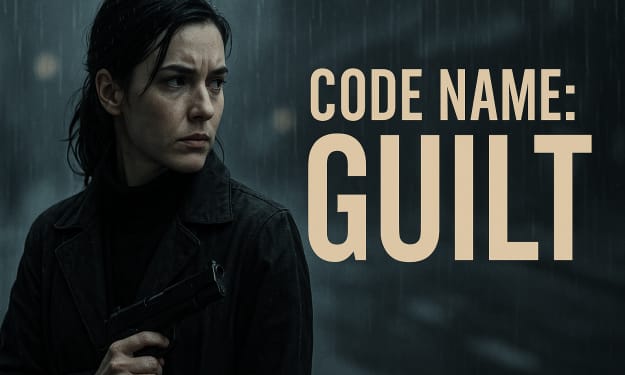
Code Name: Guilt. AI-Generated.
The rain hadn’t stopped in three days. It slashed across the cracked windows of the safehouse in northern Berlin, masking the low hum of encrypted radios and the soft tapping of Agent Mara Voss’s fingers against her ceramic mug. The bitter taste of stale coffee didn’t bother her. After years in black ops, nothing did—except guilt.
By Said Hameedabout a year ago in Criminal
The Informant’s Widow. AI-Generated.
The rain hadn’t stopped in three days. Margaret Halloran stood at the window of her modest two-bedroom home on the outskirts of Belfast, watching the mist collect over the crumbling headstones of the graveyard across the lane. Somewhere beneath that ancient sod lay Michael Halloran, her husband of seventeen years, and the man everyone now called a traitor.
By Said Hameedabout a year ago in Criminal
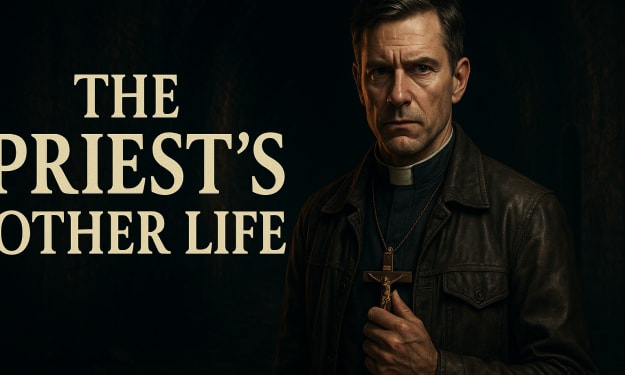
The Priest’s Other Life. AI-Generated.
Father Dominic was the kind of priest who made people believe again. Not just in God, but in kindness, in redemption, in something more than their tired little lives. His sermons were poetic and raw, his hands calloused from helping rebuild homes after storms, and his voice calm in times of crisis. He wore the collar with sincerity, not superiority. To his parishioners at St. Augustine’s, he was a saint in waiting.
By Said Hameedabout a year ago in Criminal
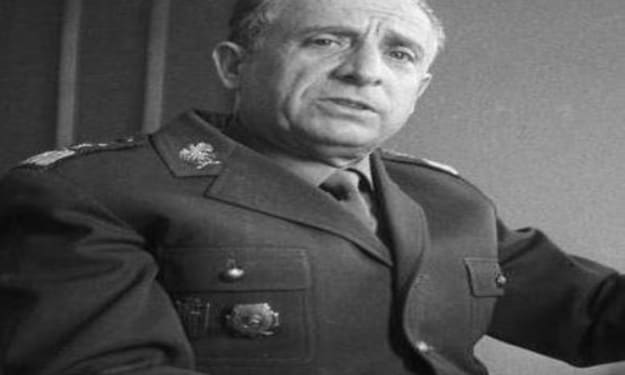
Key Polish Official Is Killed by Truck At Karachi Airport
On the 1st of November 1970, 50 years ago today during a welcome ceremony, the Polish Deputy Foreign Minister Zygfryd Wolniak was killed at Karachi airport by a Pakistan International Airlines (PIA) employee and anti-communist Islamic fundamentalist named Mohammed Feroze Abdullah who was trying to kill the entire delegation, aiming Polish President Marian Spychalski in particular.
By 🕵️♂️ True Crime Enthusiast | Storyteller of the Dark Side 🔍about a year ago in Criminal
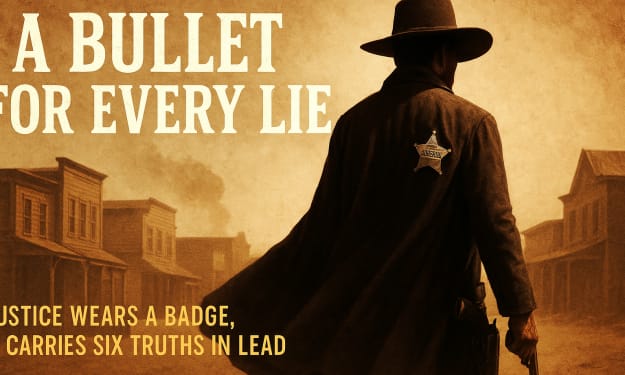
A Bullet for Every Lie
The desert sun beat down like a punishment from the gods. Sand twisted in the wind, whispering secrets long buried. Marshal Elias Thorne rode slow, his duster billowing behind him, silver badge catching sunlight like a mirror to the past. The town of Redemption lay ahead, brittle and sunburnt, its wooden bones creaking in the wind.
By Said Hameedabout a year ago in Criminal
Two Graves, One Name
The small town of Elderspring sat nestled between two mountain ridges, half-forgotten by time and progress. At its edge, the cemetery sprawled across a sloping hill, shaded by cypress trees and veiled in a near-constant hush. There, under an aging iron arch that read Whispering Pines, lay two graves side by side—unremarkable save for one eerie detail. They bore the same name:
By Said Hameedabout a year ago in Criminal