fiction
Mystery, crime, murder, unsolved cases. Contribute your own tales of crime to Criminal.
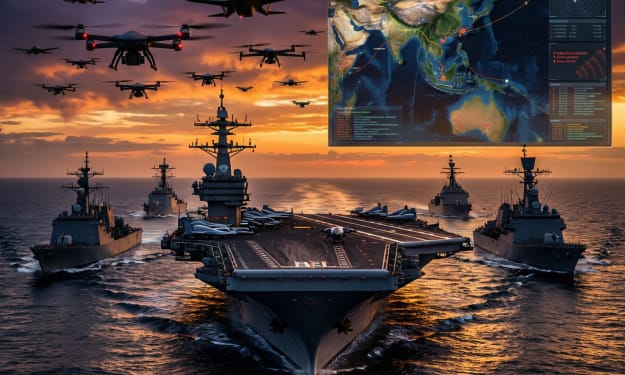
Floating Power and Fragile Diplomacy
Floating Power and Fragile Diplomacy In recent weeks, renewed attention on U.S. naval movements, particularly carrier strike groups operating across strategic waterways, has highlighted a deeper shift in how global power is projected. From the South China Sea to the Indian Ocean, the presence of American naval assets is no longer just a show of strength—it is a message shaped by technology, deterrence, and fragile diplomacy.
By Wings of Time 10 months ago in Criminal
Speed, Greed, and the Dangerous Game of Revenge
There are some things in the world that are not just symbols of wealth, but become identities of power, arrogance, and obsession. The rare 1937 Bugatti is one of those things. The film begins with a grand and luxurious auction, where this legendary car stands on stage as the center of everyone’s attention. The auctioneer announces that it is one of the rarest cars in the world, with only two models existing globally. This announcement ignites greed in the hearts of every wealthy person present in the crowd. The bidding starts at thirty million dollars and keeps increasing moment by moment. Someone bids thirty-two, someone thirty-four, and finally the bid reaches forty-one million dollars. This final bid is placed by a man named Jack, who is in contact with his boss. On the surface, he appears to be a rich buyer, but in reality, he is working for a powerful and dangerous criminal. The Bugatti is not going to belong to him, but to his boss. At the same time, the film introduces us to two brothers—Andrew and Garrett. Both are world-famous and highly skilled car thieves. Luxury and supercars are their obsession, and they have stolen some of the best cars in the world. The reason both brothers are connected to the Bugatti’s path is because they want to steal this rare car. The Bugatti theft on the highway is one of the most thrilling scenes of the film. High-speed vehicles, jumping onto a truck using ropes, a shower of bullets, and the shadow of death—Andrew and Garrett risk their lives to steal the Bugatti. This is not just a theft, but a practical demonstration of skill, nerves, and madness. After the theft, both brothers celebrate, but this happiness does not last long. When they go to a man named Jimmy to sell the Bugatti, he refuses to buy it. Jimmy knows that this car does not belong to an ordinary person, but to a very powerful and dangerous businessman named Morrier. Morrier is not only a wealthy man, but also runs an entire criminal empire. Soon, Andrew and Garrett are captured and presented before Morrier. Morrier tells them his story—a journey that started from poverty, an empire built through crime, and an obsession with rare cars. For him, these cars are not just a hobby, but symbols of his power and ego. The theft of the Bugatti becomes a personal insult to him. Morrier gives both of them one chance to stay alive, but his condition is extremely dangerous. They must steal a 1962 Ferrari belonging to a man named Max—a car that is one of a kind in the world and worth more than millions of dollars. Max is a young but exceptionally intelligent business tycoon, and also Morrier’s old enemy. From here, the story moves beyond a simple theft and turns into a battle of minds. Andrew and Garrett form an entire team, including Stephanie, Devon, bomb expert Lane, and skilled race drivers. Every person has a specific role, and every mistake can lead to death. The character of Max adds more depth to the story. He appears to be a polite and successful businessman, but behind him is an extremely sharp mind. He is both impressed by Andrew and Garrett’s abilities and cautious of them. His Ferrari is not just a car, but his identity. The story takes a new turn when it is revealed that the real plan was never to steal the Ferrari. The Bugatti was merely a move, a trap—used to ensnare Morrier along with his arrogance. Andrew, Garrett, and Max were actually playing the same game from the very beginning, where the real target was Morrier’s treasure of rare and valuable cars. In the climax, speed, explosions, and intelligence collide together. A collapsing bridge, long car chases, betrayal, sacrifices, and finally Morrier’s fate—all symbolize that the game of power and greed ultimately ends in destruction. In the end, Andrew proposes marriage to Stephanie, Garrett finds love, and the team completes an impossible mission. But the biggest lesson remains that in this world, the most dangerous weapon is not a gun or speed, but the mind, patience, and the final move played at the right time. Final Question Is power really found only in money and weapons, or is true power hidden in the mind that silently turns the entire game around?
By Filmon Ke Raaz | Movie Mysteries Explained10 months ago in Criminal
Trump’s Latest Statements Stir Global Debate With the UK NATO and Greenland
Trump’s Latest Statements Stir Global Debate With the UK NATO and Greenland In recent weeks, renewed attention has focused on former U.S. President Donald Trump following a series of statements and political positions that have reignited international controversy. Americans searching for the latest political news have shown strong interest in Trump’s comments involving the British royal sphere, his long running dispute connected to Greenland, and his continued criticism of NATO allies. Together, these issues reflect a broader pattern in Trump’s approach to foreign policy, one that emphasizes national interest, sharp rhetoric, and public pressure on allies. Trump’s remarks have once again placed him at the center of global diplomatic discussions, raising questions about how his views could shape international relations if he returns to power or continues to influence U.S. politics. **What Did Trump Say That Sparked Tension With the British Prince and the UK** Trump recently made comments questioning the role and effectiveness of non American forces in past NATO military operations, particularly in Afghanistan. His remarks were widely interpreted as minimizing the sacrifices made by British troops, including members of the royal family who served on the front lines. In the United Kingdom, these statements were seen as deeply disrespectful, not only to military personnel but also to national memory and shared wartime sacrifice. British political figures and public voices reacted strongly, emphasizing that UK forces fought and lost lives alongside American soldiers. The involvement of a British prince in the discussion elevated the controversy, turning it from a policy disagreement into a symbolic issue tied to honor, service, and national pride. For many observers, the situation highlighted how Trump’s blunt language can quickly escalate diplomatic tensions, even with long standing allies. **Why Trump’s NATO Comments Continue to Alarm Allies** Trump’s relationship with NATO has long been strained, and his recent statements reinforced familiar concerns among European partners. He once again argued that the United States carries a disproportionate burden within the alliance, suggesting that many member states rely too heavily on American military power while failing to contribute enough themselves. This narrative resonates with some American voters who believe U.S. resources are overstretched. However, for NATO allies, Trump’s comments raise fears about the reliability of U.S. commitments. NATO is built on mutual trust and collective defense, and public criticism from a former U.S. president challenges the sense of unity the alliance depends on. The renewed debate has led many Americans to ask whether Trump’s stance represents a negotiating tactic or a genuine willingness to weaken traditional alliances. **How the Greenland Issue Returned to the Spotlight** Trump’s name has also resurfaced in discussions about Greenland, a topic that originally shocked the international community during his presidency. Recent comments and political signals have revived interest in the idea that the United States should expand its influence in the Arctic region, where Greenland holds strategic importance. While Trump stopped short of proposing direct control, his remarks suggested that Greenland remains vital to U.S. security and economic interests. This immediately drew firm responses from Denmark and Greenlandic leaders, who stressed sovereignty and self determination. For Americans following the story, the Greenland issue reflects Trump’s transactional approach to foreign policy, viewing territory and alliances through the lens of strategic value rather than tradition. **Is Trump Redefining America’s Role on the Global Stage** One of the most common questions Americans are asking is whether Trump’s statements signal a deeper shift in how the United States views its role in the world. His rhetoric consistently emphasizes strength, independence, and leverage over cooperation and diplomacy. Supporters argue this approach forces allies to take greater responsibility, while critics warn it risks isolating the U.S. and weakening long term partnerships. This debate has become central to discussions about America’s future foreign policy direction, especially as global tensions rise and alliances face new pressures. **Could These Disputes Affect U.S. Relationships With Allies** Another major concern is whether Trump’s repeated clashes with allies could cause lasting damage. Diplomatic relationships rely not only on treaties but also on trust and respect. Public disputes with NATO members, criticism involving the UK, and provocative comments about Greenland all contribute to uncertainty about American intentions. Some analysts believe these tensions can be repaired through dialogue, while others fear they encourage allies to look elsewhere for security and cooperation. **Why Are Americans Searching for These Stories Now** Public interest in these issues reflects growing awareness that global politics directly affect domestic life. Defense spending, international trade, energy security, and military commitments all influence the U.S. economy and national priorities. Trump’s statements bring these topics back into focus, especially as voters consider leadership styles and foreign policy philosophies. The renewed attention also shows how Trump remains a dominant figure in political discourse, capable of shaping headlines and conversations far beyond U.S. borders. As debates continue, Trump’s latest controversies serve as a reminder that words spoken by influential leaders carry global consequences. Whether viewed as strategic pressure or diplomatic disruption, his comments on the UK, NATO, and Greenland have reopened critical conversations about alliances, sovereignty, and America’s place in a changing world.
By America today 10 months ago in Criminal
The Line Was Thinner Than I Thought
They tell you that the difference between a "good man" and a "cautionary tale" is a wide, sturdy canyon. They tell you there are signs—warning lights, sirens, a gut feeling that screams stop. But as I stood in the rain outside the Miller estate, feeling the cold weight of the key in my pocket, I realized the truth.
By Jhon smith10 months ago in Criminal
The Man Who Never Stole Twice
They said the city raised criminals the way oceans raised storms—slowly, inevitably, without apology. Every alley had a memory, every cracked sidewalk knew a name that never made it into daylight. In this city, crime wasn’t rebellion. It was inheritance.
By Jhon smith10 months ago in Criminal
USS Abraham Lincoln in the South China Sea: Power Projection and Public Questions
USS Abraham Lincoln in the South China Sea: Power Projection and Public Questions The presence of the USS Abraham Lincoln in the South China Sea has drawn global attention due to the strategic importance of the region and the role of US naval power. As a nuclear powered aircraft carrier, the USS Abraham Lincoln represents one of the most advanced assets in the United States Navy. Its deployments are closely watched by governments, analysts, and the public because they reflect broader geopolitical dynamics and security priorities in the Asia Pacific region. **What Is the USS Abraham Lincoln** The USS Abraham Lincoln is a Nimitz class aircraft carrier and one of the largest warships in the world. It serves as a floating airbase capable of launching and recovering dozens of aircraft while operating independently for long periods. The ship supports a carrier strike group that includes cruisers, destroyers, and submarines, allowing it to project military power across vast areas of ocean. **Why Is the South China Sea Strategically Important** Many people search for information about why the South China Sea matters so much. The region is one of the world’s busiest maritime routes, carrying a significant portion of global trade. It is also rich in natural resources and is claimed in part by several countries. Control and access to these waters have major economic and security implications, making the area a focal point of international attention. **Why Does the USS Abraham Lincoln Operate in the South China Sea** A common question is why the USS Abraham Lincoln is deployed to the South China Sea. The United States conducts naval operations there to support freedom of navigation and to reassure allies and partners. These deployments demonstrate the US commitment to maintaining open sea lanes and regional stability. The presence of a carrier also signals readiness and deterrence in an area marked by competing claims. **What Missions Does the USS Abraham Lincoln Perform There** When operating in the South China Sea, the USS Abraham Lincoln participates in a variety of missions. These include routine patrols, training exercises, and cooperation with allied navies. The carrier’s aircraft conduct flight operations that enhance readiness and interoperability. Such missions are designed to maintain a visible and capable naval presence without direct confrontation. **How Do Other Countries React to the Carrier’s Presence** People often ask how other nations respond to the USS Abraham Lincoln in the region. Reactions vary depending on national interests. Some countries welcome the US presence as a stabilizing force, while others view it as a challenge to their claims or influence. These differing perspectives contribute to diplomatic statements, military monitoring, and ongoing regional debates. **Does the USS Abraham Lincoln Increase Tensions** Another frequent question is whether the carrier’s deployment increases tensions. Supporters argue that a strong naval presence deters conflict and prevents miscalculation. Critics suggest that military activity can heighten rivalry if not managed carefully. In practice, such deployments are part of long standing naval operations intended to maintain balance rather than provoke conflict. **What Does This Mean for Freedom of Navigation** Freedom of navigation is a central concept linked to the USS Abraham Lincoln’s operations. The United States emphasizes that international waters should remain open to all nations under international law. Carrier deployments reinforce this principle by demonstrating that no single country controls major sea lanes. This message resonates strongly in public discussions about maritime security. **How Does the Deployment Affect Global Security** The presence of the USS Abraham Lincoln in the South China Sea has implications beyond the region. It reflects how global powers manage competition and cooperation at sea. Observers see these deployments as indicators of broader defense strategies and international relations trends. The carrier’s role highlights how naval power influences global security calculations. **Why Does the Public Follow USS Abraham Lincoln Deployments** Public interest in the USS Abraham Lincoln comes from its symbolic and practical importance. As a visible sign of military capability, the carrier captures attention whenever it enters sensitive regions. People search for updates to understand how global events may affect trade, security, and international stability. In conclusion, the USS Abraham Lincoln’s presence in the South China Sea represents more than a naval deployment. It reflects strategic priorities, international law, and the balance of power in a critical region. Through its missions and visibility, the carrier continues to shape discussions about security, diplomacy, and the future of maritime order.
By America today 10 months ago in Criminal
Is America a Terrorist State? And Why Trump's Policies Alarm the World
**Is the United States a “Terrorist Country”? And Are Trump’s Policies Dangerous for the World? When people call the *United States* a “terrorist country,” what they mean is not that the U.S. is exactly like al-Qaeda or ISIS. Instead, critics argue that some U.S. actions — especially military interventions, drone strikes, and economic sanctions — *look similar to terror tactics in their impact on civilians and societies. To understand this, we must examine **policies, consequences, and expert criticism based on data. **
By Junaid Shahid 10 months ago in Criminal
The Silence After the Verdict
The courtroom had emptied, but the silence remained, thick and suffocating, hanging in the air like smoke from a fire that had burned out hours ago. The judge had spoken, the jury had deliberated, and the gavel had fallen with an echo that seemed to reverberate through the very bones of the building. The verdict was delivered: guilty. Or was it not guilty? It didn’t matter now. The silence was the only truth left.
By Jhon smith10 months ago in Criminal
USS Iwo Jima A Ship That Shaped Military and Space History
USS Iwo Jima A Ship That Shaped Military and Space History The USS Iwo Jima was one of the most significant amphibious assault ships in the history of the United States Navy. Named after the famous Battle of Iwo Jima during World War Two, the ship symbolized courage, strength, and innovation. Throughout its long service, USS Iwo Jima played vital roles in military operations, humanitarian missions, and even space exploration, making it a unique and historically important naval vessel. Background and Design USS Iwo Jima was commissioned in 1961 as the lead ship of the Iwo Jima class. Unlike traditional aircraft carriers, it was designed primarily to operate helicopters. This design allowed the ship to transport Marines quickly from sea to land, supporting amphibious warfare strategies. The ship was equipped with advanced communication systems, medical facilities, and command centers, enabling it to function as a mobile base during complex operations. Military Missions and Operations One of the main roles of USS Iwo Jima was supporting U.S. Marine Corps operations. It carried thousands of Marines, along with vehicles, weapons, and supplies. The ship played an important role during the Vietnam War, where it served as a launch platform for helicopters that transported soldiers into combat zones and evacuated wounded personnel. Its presence increased operational flexibility and reduced the risks associated with traditional beach landings. Beyond Vietnam, USS Iwo Jima participated in numerous military exercises and Cold War missions. It helped maintain U.S. naval presence in strategic regions and supported allied forces when needed. The ship’s ability to operate close to shore made it an essential tool for both combat and deterrence. Humanitarian and Peaceful Roles In addition to combat missions, USS Iwo Jima was frequently involved in humanitarian efforts. The ship provided disaster relief by delivering food, medical aid, and emergency supplies to areas affected by natural disasters. Its helicopters were especially useful for reaching remote or damaged locations, highlighting the ship’s importance beyond warfare. Role in Space Exploration One of the most remarkable chapters in the ship’s history was its involvement in NASA’s Apollo program. USS Iwo Jima became famous for recovering astronauts returning from space missions. Its most notable mission was the recovery of the Apollo 13 crew in 1970. After a critical failure during the mission, the astronauts safely returned to Earth, and USS Iwo Jima successfully brought them home. This achievement connected the ship to one of the most dramatic moments in space exploration history. Why USS Iwo Jima Was Important USS Iwo Jima is remembered as a symbol of technological progress and adaptability. It demonstrated how helicopters could transform naval warfare and improve military effectiveness. The ship also showed how naval vessels could serve multiple purposes, from combat and rescue operations to scientific and humanitarian missions. Its service reflected the changing demands of the twentieth century and the growing complexity of global challenges. Decommissioning and Legacy After more than thirty years of service, USS Iwo Jima was decommissioned in 1993. Although the ship was eventually dismantled, its legacy remains strong. It is remembered through historical records, photographs, and its connection to major military and space events. USS Iwo Jima was not just a warship, but a powerful example of service, innovation, and versatility. Its contributions to military history, humanitarian missions, and space exploration make it one of the most respected ships in U.S. naval history. The story of USS Iwo Jima continues to inspire and educate future generations about the importance of dedication and technological advancement.Decommissioning and Legacy After more than thirty years of service, USS Iwo Jima was decommissioned in 1993. Although the ship was eventually dismantled, its legacy remains strong. It is remembered through historical records, photographs, and its connection to major military and space events. USS Iwo Jima was not just a warship, but a powerful example of service, innovation, and versatility. Its contributions to military history, humanitarian missions, and space exploration make it one of the most respected ships in U.S. naval history. The story of USS Iwo Jima continues to inspire and educate future generations about the importance of dedication and technological advancement.
By America today 10 months ago in Criminal