fact or fiction
Is it fact or merely fiction? Fact or Fiction explores the myths and beliefs we hold about copycat killers, eyewitnesses testimony, what makes a murderer and more.
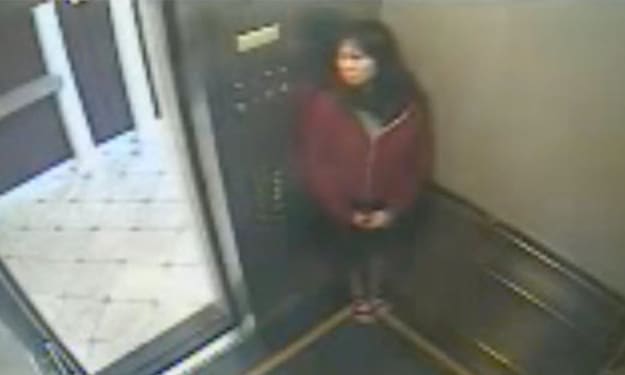
10 Chilling Moments When People Unknowingly Documented Their Own Deaths. Content Warning.
There’s something uniquely haunting about the moments just before a tragedy—especially when they’re captured forever. Sometimes, the people involved had no idea they were recording their final words, snapping their last photo, or streaming their last breath. These documented moments serve as eerie reminders of how quickly and unexpectedly life can end. Here are ten chilling times people unknowingly documented their own deaths.
By Haseeb Aminabout a year ago in Criminal
Walk the Plank. AI-Generated.
It had rained all night in the city of Fairview. The streets still shimmered under the morning haze, the scent of wet asphalt hanging in the air. At precisely 6:47 AM, the body of Terrence Hall—a respected community leader and activist—was discovered lying face-down near the old shipyard, a rotting plank from a cargo crate splintered beside him. His skull had been crushed. No signs of a struggle. No weapon in sight. Detective Nathan Boone stood over the yellow tape, sipping lukewarm coffee. He’d known Hall. Everyone had. A loud, fearless man who’d rallied youth programs, taken on corrupt councilmen, and cleaned up the notorious 9th Ward. Hall had made enemies, no doubt—but murder? Boone examined the scene with his usual sharpness. The plank wasn’t from any structure nearby—it was aged, warped, likely driftwood. There were no security cameras in that forgotten part of the city. Whoever did this had planned it well. Hall’s phone was found shattered nearby, but his watch and wallet were untouched. Not a robbery, then. Boone made note of the time and left the scene. His first stop: Hall’s office. It was a modest space filled with protest posters, community flyers, and photos of youth events. His assistant, Carla, was already crying when Boone entered. “Terrence got a threat two nights ago,” she whispered. “Someone slipped a note under the door. It said, ‘Keep pushing, and you’ll fall off the plank.’ He thought it was a joke.” Boone stared at her. “Did he mention any names?” She shook her head. “He just said some people didn’t want him to testify next week.” Boone’s brow furrowed. He remembered reading about a pending court case. Hall was scheduled to testify against Fairview’s largest private contractor, Larkridge Development, accused of fraud and bribery. Hall had proof—documents tying Larkridge to falsified safety reports and kickbacks to city officials. It was supposed to be his biggest stand. Boone drove to City Hall. He knew Councilman Briggs would be there—one of Hall’s loudest critics and a known supporter of Larkridge. The man greeted Boone with a practiced smile. “Terrible news,” Briggs said, voice hollow. “A real loss for the city.” “Tell me about your last interaction with Hall,” Boone asked casually. Briggs leaned back in his leather chair. “We disagreed often, but I respected the man. We had a heated meeting last week, but that’s nothing new.” Boone nodded. “Do you know anything about a threat he received?” Briggs raised an eyebrow. “I don’t traffic in threats, detective.” Boone left with a gnawing feeling. Briggs was lying, but he couldn’t prove it—yet. By evening, Boone met with forensics. The plank had traces of industrial oil and sea barnacles—likely from a shipping container, not the local docks. It had one clue: a faded serial number burned into the wood’s underside. The team traced it back to a closed Larkridge site on the east pier. Boone drove there under the cover of dusk. The pier was silent, rusted, and half-sunk in tidewater. Inside the main warehouse, dust and old tools littered the floor. And then he saw them—planks identical to the one used in the murder, stacked by a wall. The match was perfect. Someone had brought Hall here. Killed him. Dumped him feet away from the riverbank like a warning. As Boone turned to leave, he heard a sound behind him. Footsteps. He drew his weapon. “Fairview PD. Step out!” A man in coveralls emerged from the shadows—thin, pale, trembling. “Don’t shoot! I—I used to work here.” Boone lowered his gun slightly. “Did you see anything?” The man hesitated. “I was here two nights ago, just sleeping. I—I saw a black SUV pull in. Three men dragged someone out. One hit him with something—it sounded like wood. They were yelling about ‘shutting him up.’ Then they left him there. I was too scared to move.” Boone took a statement, recorded the witness’s ID, and rushed back to headquarters. By morning, surveillance logs from nearby traffic lights confirmed the SUV. It was registered to a shell company—one later traced back to Larkridge’s legal department. Boone confronted Larkridge’s lawyer, Jordan Mayes, in his uptown office. “You’re in deep now,” Boone said, dropping a folder of evidence on his desk. Mayes scoffed, but his hands shook. “You don’t have anything solid.” “I’ve got a witness. Forensics. Footage. And a dead man who trusted the law more than fear. You can take the fall, or give me the men who did this.” Mayes crumbled. Within hours, three Larkridge employees—including a security chief—were arrested. The motive: Hall had refused a $500,000 bribe to withdraw his testimony. So they silenced him the only way they knew. A week later, Boone stood silently at Hall’s memorial service. Hundreds gathered. Children, families, even former enemies. The man had moved a city. In his pocket, Boone still carried a copy of the note that started it all: “Keep pushing, and you’ll fall off the plank.” They’d meant it as a threat. But Hall had walked the plank willingly—for justice. And Boone made sure he didn’t fall in vain.
By Abdurrahman Abdurrahmanabout a year ago in Criminal
Ashes and Evidence . Content Warning. AI-Generated.
Ashes and Evidence "Some Crimes Don’t Burn Away" The phrase "Ashes and Evidence" is evocative and layered, making it a compelling title for a crime story. It immediately conjures imagery of destruction—specifically, fire—and the remnants that are left behind. Ashes symbolize loss, finality, or an attempt to erase something completely. Fire is often used in crime fiction to hide evidence: arson as a cover-up, a metaphor for rage or chaos, or even as a twisted symbol of rebirth and transformation. Meanwhile, "Evidence" is cold, methodical, and factual. It's what detectives cling to when everything else is chaos. The juxtaposition of these two words—one destructive and chaotic, the other forensic and logical—immediately signals tension, mystery, and a deeper story that’s waiting to be unearthed. This contrast can serve as a thematic foundation for the story: while someone may try to destroy all traces of a crime, truth has a way of surviving. In the ashes, there’s something that doesn’t burn. Something that tells the real story. --- Possible Plot Implications The title opens a wide range of narrative possibilities. For instance: A detective or arson investigator is brought onto a case involving a suspicious fire. At first glance, it looks like an accident—or perhaps an open-and-shut case of revenge. But as the ashes settle, hidden evidence emerges. A burned photo, a half-melted locket, a charred notebook—clues that contradict the official story. A victim's relative, someone who isn’t a detective by profession, could start piecing together evidence the authorities overlooked, discovering a deeper conspiracy behind the fire that killed their loved one. A criminal who thought they had destroyed everything finds themselves being slowly hunted by a quiet, patient investigator who starts rebuilding the crime scene—metaphorically and literally—from the ashes. The story could also explore themes of redemption: a disgraced investigator given one last case. As they work through the ashes—both of the case and their own broken past—they find new purpose in solving what everyone else gave up on. --- Subtitles that Add Meaning: “Where the Fire Ends, the Truth Begins” A subtitle like "Where the Fire Ends, the Truth Begins" deepens the intrigue. It suggests that what seemed like the end—the fire—was actually just the beginning of the story. This subtitle implies a journey: from destruction to discovery, from chaos to clarity. Let’s break it down: “Where the Fire Ends” speaks to a moment of devastation. A literal or metaphorical fire has consumed everything. It might be a house, a warehouse, or someone’s life. It may symbolize a tragic event—a murder, a betrayal, a catastrophic mistake. This is the inciting incident. “The Truth Begins” signals that beneath or beyond that destruction lies the actual narrative drive of the story: uncovering what really happened, who’s responsible, and why. It's a promise to the reader that this won't just be a tragedy—they’ll also get a mystery and a resolution. This subtitle sets a clear tone: the story will move from confusion to clarity, from loss to justice. It also suggests that not everything is lost in the flames. In fact, what remains might be even more telling than what was destroyed. --- Overall Tone and Style Together, the title and subtitle set a tone that is: Dark and suspenseful — fitting for psychological thrillers or noir-inspired crime fiction Emotional — hinting at grief, regret, or trauma Investigative — promising a slow-burn mystery that rewards close attention
By Izaz khan 12about a year ago in Criminal
Bullets and Bravery
The city of Grayridge was a place where the night breathed smoke, and every alley whispered secrets. For years, it had been a kingdom ruled not by mayors or laws, but by a man named Dario “Crimson” Voss—a gangster whose name struck fear in the hearts of even the toughest criminals.
By muhammad khalilabout a year ago in Criminal
Shadow of the Buriganga
The Last Phone Call, Chapter 1: The rain was hitting the tin roofs of old Dhaka like a thousand impatient fingers. In the monsoon rain, **Tahsin Rahman** walked through the crowd at the Sadarghat launch terminal with his shirt sticking to his skin. His phone rang once more. Stop looking for her. "Unknown number:" What you find will not satisfy you. Three days. The investigating officer looked up from his papers three days after her sister, "Nusrat," a bright-eyed anthropology student at Dhaka University, told him "I found something... something dangerous." The investigating officer said, barely looking up from his papers, "Another girl is running away with a boyfriend." But Tahsin knew better. Nusrat did not act carelessly. He had also panicked just before he vanished. Near the Lalbagh Fort, the murky water turned into a narrow lane, and his shoes slid through it. Wet bricks, fried samosas, and the "Buriganga River's" perpetual decay filled the air. A hunchbacked figure emerged from the shadows—“Dr. Farid Chowdhury,” a disgraced forensic pathologist who had been “sacked for unprofessional conduct.”
By S.M.Alam Rashid about a year ago in Criminal