fact or fiction
Is it fact or merely fiction? Fact or Fiction explores the myths and beliefs we hold about copycat killers, eyewitnesses testimony, what makes a murderer and more.
The Robben Island Letter
The cell Nelson Mandela’s cell on Robben Island was 7 feet by 8 feet. A bucket for sanitation. A thin mat for sleep. The walls, damp with sea air, bore no calendars. Time blurred. But every morning, as guards clanged iron bars, Mandela recited a mantra: *“They can take my body, not my mind.”*
By Tariq Pathan about a year ago in Criminal
Metal Window Screens: Features, Benefits, and Applications. AI-Generated.
Metal Window Screens: Features, Benefits, and Applications Metal window screens are a robust and versatile solution for protecting homes while allowing ventilation and maintaining aesthetic appeal. Made from materials like aluminum, stainless steel, or galvanized steel, these screens are designed to fit over windows, providing a durable barrier against insects, debris, and other external elements. This article explores the features, benefits, and practical applications of metal window screens, highlighting their importance in modern homes.
By handy maneshonabout a year ago in Criminal
The Silent Witness
Detective Adrian Blake stared at the latest crime scene, his brow furrowed in confusion. The body of a middle-aged man lay sprawled across the floor of his upscale downtown apartment, the victim of a brutal stab wound to the chest. But it wasn’t the blood, the weapon, or the positioning of the body that caught his attention. No, it was the drawing.
By Solene Hartabout a year ago in Criminal
The Devil’s Den Arrest: Murder Suspect Caught Mid-Haircut in Arkansas Barber Shop
In a scene that looked straight out of a crime drama, law enforcement officers swarmed an Arkansas barber shop and arrested a young man in the middle of a haircut. The suspect, now identified as 21-year-old Hunter Jones, was taken into custody in connection with the brutal double murder of a married couple found dead near Devil’s Den State Park earlier this summer. The stunning arrest has sent shockwaves through the community and raised chilling questions about the cold expression behind such a heinous act. A Peaceful Getaway Turned Tragic Devil’s Den State Park in Arkansas is usually known for its lush hiking trails, serene rock formations, and family-friendly camping. But that peace was shattered in late June when the bodies of John and Sarah Whitmore, a couple visiting from Kansas City, were found in a remote part of the park, miles from any popular trail. According to authorities, the victims had been camping and were reported missing after they failed to return messages and calls from family members. Rangers later discovered their bodies near their burned-out campsite. Initial autopsy reports revealed that both had been shot multiple times, and signs of a violent struggle were evident. What seemed like a tragic random act at first quickly spiraled into a manhunt when forensic investigators found DNA evidence and items belonging to the victims that had been discarded nearby. Security camera footage from a local gas station showed a young man using the victims’ credit card just a day after their murder. The Manhunt and the Arrest For weeks, the Arkansas State Police and US Marshals worked around the clock to locate the prime suspect, who had reportedly been using stolen identities and frequently changing locations. The breakthrough came when investigators received a tip about a man matching the suspect’s description visiting a barber shop in a small town near Fayetteville. Undercover agents confirmed the identity of Hunter Jones just minutes after he sat down for a trim. Without alarming other customers, law enforcement officers entered the premises, waited until they were sure he could not escape, and arrested him as the barber was still holding scissors to his half-finished haircut. Security footage from the scene shows the moment Jones, calm and unaware, is handcuffed by two plainclothes officers while seated in the barber’s chair. The video has since gone viral, with the moment becoming symbolic of justice closing in even in the most unexpected places. A Cold Demeanor Raises Alarms Shortly after his arrest, Jones was booked at the Washington County Detention Center. Mugshots show a young man with steely eyes and a blank expression. Officers described him as eerily calm during the arrest and unremorseful during questioning. One detective reportedly said, “It was like arresting a statue — no fear, no confusion, no emotion. Just stone cold.” This unnerving demeanor, paired with the brutality of the crime, led media outlets to refer to him as soulless. It is a description that has since stuck, raising further questions about Jones’s mental state and possible history of violence. A History of Violence As details continue to emerge, authorities are now exploring whether this double murder was an isolated act or part of a disturbing pattern. Court records have already revealed a juvenile history of assault and mental health interventions, though no previous charges rose to the level of a felony. Police are also looking into other unsolved cases in surrounding states, given Jones’s transient lifestyle over the last two years. Social media sleuths have already dug into his accounts, which show a fascination with firearms, survivalism, and cryptic posts about removing people who pollute nature. The Community Reacts The murder of John and Sarah Whitmore has devastated their hometown of Kansas City, where they were beloved for their work in the community. John was a high school science teacher, and Sarah was a children’s librarian known for her passion for literacy programs. They were described by friends as gentle, kind souls who only wanted to explore nature together. A candlelight vigil was held in their honor, with friends and family urging the public not to let the story fade from attention. “They were the best people,” said Sarah’s sister during a speech. “They did not deserve this. We want justice. We want answers.” What Comes Next Hunter Jones now faces two counts of capital murder, robbery, and abuse of a corpse. These charges could result in the death penalty if he is convicted. Prosecutors have already indicated their intention to pursue the harshest sentence possible. His arraignment is scheduled for later this month, and the case is expected to go to trial in early 2026. As the legal process unfolds, authorities are continuing to comb through evidence and trace Jones’s movements in the days before and after the killings. The hope is not only to convict him for this crime but also to ensure that no other victims are left in the shadows. Conclusion The strange and disturbing arrest of Hunter Jones mid haircut is more than a viral moment. It marks a significant turning point in a heartbreaking case. While the Whitmore family will never get back their loved ones, the arrest brings a measure of hope that justice is on the horizon. As the town and the nation watch this case unfold, one thing is clear. Even in the calmest places, evil can surface, but so can accountability.
By DigitalAddiabout a year ago in Criminal
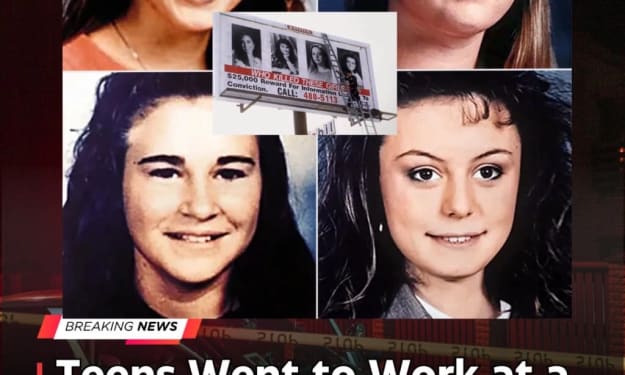
The Yogurt Shop Murders: A Cold Case That Still Haunts Austin
On the night of December 6, 1991, a quiet strip mall in Austin, Texas, became the scene of one of the most horrifying crimes in the city’s history. What began as a routine evening shift for four teenage girls at an “I Can’t Believe It’s Yogurt!” shop ended in tragedy. By morning, all four girls — Eliza Thomas (17), Amy Ayers (13), and sisters Sarah Harbison (15) and Jennifer Harbison (17) — were found murdered in the back of the shop, their bodies bound, shot execution-style, and set on fire in an attempt to destroy evidence. More than three decades later, the case remains clouded in controversy, confusion, and heartbreak. Though several arrests have been made, the full truth of what happened that night — and who was truly responsible — continues to elude justice. The Night of the Murders Jennifer Harbison and Eliza Thomas were working the closing shift that evening. Jennifer had brought along her younger sister Sarah and her friend Amy Ayers, who were supposed to wait at the shop until her shift ended. At around 11:00 PM, the store was supposed to close, but a fire reported at 11:47 PM led authorities to discover the unimaginable. Firefighters arrived to find the yogurt shop engulfed in flames. Once the blaze was extinguished, they uncovered the bodies of the four girls. It was immediately clear that this was not simply a fire — it was a crime scene. All four girls had been gagged, their hands tied behind their backs. Three had been shot in the head, and one had been shot twice after the first bullet failed to kill her. The case shocked the nation. Four young lives, full of promise, had been brutally ended in a crime so violent it seemed unimaginable. The community demanded justice, and the police launched what would become one of the most complex and controversial investigations in Texas history. A Tangled Investigation For years, the investigation was marked by dead ends, false leads, and public pressure. It wasn’t until 1999 — eight years after the murders — that police arrested four young men: Robert Springsteen, Michael Scott, Maurice Pierce, and Forrest Welborn. The arrests were largely based on confessions obtained during intense interrogations. Springsteen and Scott were eventually tried and convicted. However, cracks in the case began to form. There was no physical evidence tying the men to the scene. DNA evidence recovered did not match any of the four suspects. Over time, claims of coerced confessions and misconduct during the interrogation process led many to believe that the wrong men had been imprisoned. In 2009, after DNA tests definitively excluded the defendants from the crime scene, charges were dropped, and the men were released from prison. For the families, it was a gut-wrenching development — relief that innocent men were not punished, but despair that justice had still not been served.
By DigitalAddiabout a year ago in Criminal
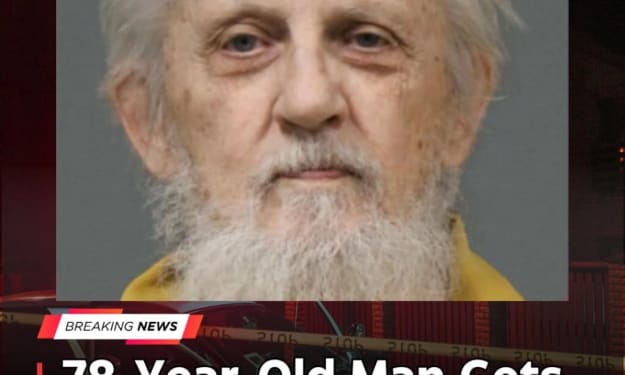
The Cost of Rejection
In a case that has shocked the nation, a 78-year-old man has been sentenced to 30 years in prison after being convicted of shooting a woman who rejected his sexual advances. The disturbing incident has sparked widespread conversations about entitlement, violence, and the often-overlooked dangers women face when simply saying “no.” A Crime Rooted in Rejection The man, identified as Walter H. Simmons, had been living in a quiet suburban neighborhood for over two decades. Described by neighbors as “odd but harmless,” Simmons was known to keep to himself. But behind the closed doors of his modest one-story home, an unsettling obsession had been brewing. The victim, a 42-year-old woman who had been assisting Simmons as a part-time caregiver and housekeeper, reportedly endured months of increasingly inappropriate comments and advances. Friends of the woman say she felt conflicted about continuing the job, but as a single mother struggling financially, she needed the income. According to court documents, things escalated one evening when Simmons propositioned the woman directly. When she firmly declined and tried to leave the home, he pulled out a revolver and shot her twice — once in the arm and once in the abdomen. Miraculously, she survived. Survival and Testimony Rushed to the hospital in critical condition, the woman underwent emergency surgery and spent several weeks recovering. Her testimony during the trial was harrowing. Through tears, she described the fear she felt not just in that moment, but in the weeks leading up to it as Simmons’ behavior became more erratic. “He told me once that no woman had ever turned him down,” she recalled in court. “I told him I was just there to work, but he didn’t care. He thought he had some kind of right to my body because he paid me.” Her voice and bravery were central to the prosecution’s case. The Trial and Sentencing During the trial, Simmons’ defense team attempted to argue diminished capacity, citing his age and mental state. However, psychiatric evaluations showed he was fully aware of his actions. The jury took just five hours to deliver a guilty verdict. Judge Melissa Davenport was clear and firm in her sentencing. “This court does not view age as a shield from accountability,” she said during the proceedings. “You committed a violent, premeditated act in response to being told no. That is not only criminal — it is a symptom of deep-seated misogyny and entitlement.” Simmons was sentenced to 30 years in prison without the possibility of parole. Given his age, it is likely he will spend the rest of his life behind bars. The Public Response News of the sentencing quickly went viral, with many expressing outrage that such violence occurred over something as basic as personal autonomy. Social media erupted with comments ranging from sympathy for the victim to outrage over the toxic attitudes that still permeate society. Hashtags like #HerBodyHerChoice and #StopEntitlementViolence began trending. “She said no. That should’ve been the end of the conversation, not the start of a near-death experience,” wrote one Twitter user. Women’s rights groups have since used the case to highlight the dangers women face when rejecting men, even in non-romantic contexts. A Broader Conversation Experts say the case shines a harsh light on a cultural problem that goes far beyond one man’s actions. “Too often, we downplay or dismiss the reality that rejection can turn dangerous,” says Dr. Laila Monroe, a gender studies professor and advocate against gender-based violence. “Women are taught to be gentle when declining a man’s attention for fear of what might happen. This case is a tragic example of why that fear exists.” Surveys and studies back up those concerns. According to the CDC, millions of women in the United States report experiencing threats or actual violence from men after rejecting romantic or sexual advances. These aren’t isolated incidents — they reflect a pattern. Moving Forward The victim, whose identity has been withheld for her protection, is continuing her physical and emotional recovery. She has since relocated to a new city and is undergoing counseling. In a statement released through her lawyer, she said: “I survived, but I live every day with the trauma of what happened. I’m speaking out not because I want attention, but because I want women to know they aren’t alone — and men to know that a ‘no’ is not a negotiation.” Advocacy groups have started a fundraising campaign to help support the victim and raise awareness about the dangers of entitlement-based violence. There are also renewed calls for legislation to better protect workers — especially women — in vulnerable positions like caregiving and domestic support. A Tragedy, A Warning, A Call to Change Walter Simmons’ case is not just about an old man who committed an unthinkable act. It’s about a culture that, in many ways, still fails to teach the value of consent. It’s about a society that often blames victims for their own pain. And it’s about a need for justice that doesn’t stop at conviction — but starts with education, prevention, and accountability. Because no one should fear violence just for saying no.
By DigitalAddiabout a year ago in Criminal
The Mysterious Death of Elisa Lam: Suicide, Accident, or Something Darker ?. Content Warning.
Who Was Elisa Lam? Elisa Lam was a 21-year-old student at the University of British Columbia in Vancouver, Canada. Bright, curious, and introspective, she shared her thoughts and emotions through a personal blog. On it, she openly discussed her struggles with bipolar disorder and depression, seeking connection and self-expression.
By Angelina Reenabout a year ago in Criminal
The 9/11 Truth Initiative
New York City — September 11, 2001. I remember the sunlight. It was a Tuesday morning, unusually bright, the kind of day where the sky feels infinite. The streets buzzed like any other morning in Manhattan — taxis honking, heels clicking, coffee cups steaming. I was late for work. I always was.
By Afaq Mughalabout a year ago in Criminal
The Mastermind Games: Season 01 Episode 02
Theme: Truth Is a Weapon Darkness swallowed Clara and Julien as the corridor sealed behind them. For a moment, there was only silence—until a faint hum rose beneath their feet. The floor shifted again, gliding like a magnetic rail through a hidden tunnel.
By Engr. Mansoor Ahmadabout a year ago in Criminal
Research My Mind, I’m Sorry
In one sudden, tragic evening, everything changed at 345 Park Avenue—a towering 44-storey building in Manhattan’s busiest commercial district, home to hundreds of employees. As people working nearby were heading home on that hot July evening, employees inside the building were seen running for their lives, barricading conference rooms with tables, and sending farewell messages to their loved ones. Jessica Chin, who works on the second floor of the building, told U.S. media: > "I texted my parents saying I love you." She added, > "The feeling at that moment can’t be put into words." Jessica and others sprang into action after hearing gunshots from the lobby. The shooting resulted in the deaths of four people, including a New York police officer, individuals in the lobby, and someone on the 33rd floor. Rampage in Manhattan’s Busy Streets Just before the attack, around 6:30 p.m., a 27-year-old man arrived in New York after passing through various states including Colorado, Nebraska, and Iowa. Authorities said Shane Tamura, a resident of Las Vegas, double-parked his black BMW on Park Avenue, close to landmarks like Rockefeller Center and St. Patrick’s Cathedral. Wearing a jacket, buttoned shirt, and glasses, and carrying an automatic rifle, he confidently approached the building, which also houses the National Football League (NFL) headquarters—but he never reached that office.
By Ikram Ullahabout a year ago in Criminal