capital punishment
Weigh the pros, cons and controversies surrounding the grave issue of capital punishment; should the death penalty be allowed?
A Painful Story:
She stood in the middle of the bustling street, her small frame trembling, eyes swollen and red from countless tears. Dust clung stubbornly to her clothes, mingling with the invisible weight of shame she carried. People walked past—some glanced at her with confusion, others with silent pity—but none had the courage to stop and ask what had happened. And she, lost in her own storm of heartbreak, didn’t even notice them.
By Ainullah sazo11 months ago in Criminal
The Criminal Nobody Suspected
M Mehran The first report said it was an accident. A kitchen fire. Nothing unusual—old houses do that sometimes. But by the time the fourth house burned in the same neighborhood, the town of Briar Creek stopped calling it coincidence. They started calling it a pattern. And patterns always have a creator. --- I wasn’t a detective. I wasn’t even close. I stocked shelves at a local grocery store, counted cans and expiration dates, and went home to an apartment where the walls were thinner than my patience. But Briar Creek wasn’t a city. It was the kind of town where everyone knew everyone—or thought they did—so when the fires started, rumors spread faster than flames. People blamed teenagers. Strangers. The usual suspects. Not once did they look at the person setting up folding chairs at every fundraiser, baking cookies for every grieving family, handing out blankets with trembling hands. Not once did they look at Mrs. Ellis. --- She lived three houses down from me. Gray hair in a bun, soft voice, walked her tiny dog at the exact same time every morning. The kind of person who apologized when other people bumped into her. She was harmless. Ordinary. Invisible. Which made what came next impossible to believe. --- The night of the fifth fire, I was working the late shift. The store was empty except for the hum of the refrigerators and the buzz of fluorescent lights that never stopped flickering. At 10:42 p.m., the power went out. The entire store dropped into silence. Then came the sirens. They sliced through the night like fear with a pulse. I stepped outside and saw it—the sky glowing orange behind the row of houses near mine. Another fire. I ran. Not because I was brave, but because when everything familiar starts burning, instinct chooses for you. --- Crowds gathered. Neighbors cried. Firefighters shouted orders that disappeared into smoke. And then I saw her. Mrs. Ellis standing across the street, her dog shaking in her arms—not from fear, but from the heat. Her face wasn’t devastated like everyone else’s. It was empty. Completely still. Like she wasn’t seeing the fire at all—just remembering it. Something cold settled in my stomach. --- The next morning, the town held a community meeting at the school gym. The mayor gave a speech full of words that sounded strong but meant nothing. “We will get through this.” “We won’t be intimidated.” “We are working with authorities.” Everyone clapped at the wrong moments, desperate to feel safe. I sat in the back. Mrs. Ellis sat in the front row. When a volunteer announced a donation drive for the latest victims, she was the first to sign up—again. People praised her. “She’s an angel.” “She shows up every time.” “We need more people like her.” I watched her carefully. Her hands shook—not from nerves, but from excitement. The kind people mistake for compassion. --- I tried to forget what I saw. Told myself I was being paranoid. Accusing the sweetest woman in town was ridiculous. But the mind notices things long before the heart is ready. Over the next week, I observed. She always arrived at fire scenes before emergency crews. Always stood in the same place. Never looked surprised. And her dog—normally anxious—never barked during sirens. Animals know. People ignore. --- On a Thursday night, I followed her. She left her house at 11:56 p.m., walking slowly, dog tucked under her coat. Not toward the park. Not toward the store. But toward the abandoned Miller house—the only one in town no one cared about. My pulse hammered. She slipped inside through the side entrance. Minutes passed. Then I saw it—a small flicker of light through the broken window. Not accidental. Deliberate. I dialed 911, hands shaking so violently I nearly dropped my phone. --- The fire department arrived before the flames spread. Mrs. Ellis walked out calmly. Her dog snuggled against her chest. Like she had simply gone in to check on something. When the police asked what she was doing there, she said: “I smelled smoke and came to warn someone.” There was no smoke. Not yet. But the officer wrote down her statement and let her go. Because in Briar Creek, kindness was a shield. And she knew it. --- I couldn’t sleep. Every time I closed my eyes, I imagined the next house—the next family—the next headline. So the following morning, I went to the police station. I told them everything. They listened politely. Then one of them leaned forward and sighed. “Mrs. Ellis lost her husband in a house fire twenty years ago,” he said. “Trauma makes people behave oddly. Doesn’t make them criminals.” I walked out feeling like I had just accused the sun of being too bright. --- Three nights later, the final fire happened. Not at a random house. At hers. By the time firefighters broke down the door, it was too late. They found her sitting in the living room, dog in her lap, flames climbing the walls around her. She never tried to escape. The official report said accidental electrical failure. But the fire chief said something quiet when he thought no one could hear: “She wanted to be where he was.” And suddenly everything made sense. She hadn’t been burning houses out of hatred. She had been choosing victims the way grief chooses memories—by association. Each house belonged to someone connected to her past: a former neighbor, an old friend, someone who brought flowers to her husband’s funeral. Not destroying them. Letting go of them. Until she reached herself. --- For weeks, the town moved carefully, as if the smoke hadn’t cleared. People still called her kind. Still said she meant well. Still brought flowers to the ashes. But I think about her differently. Not as a criminal who hid in plain sight— but as someone broken so quietly no one ever noticed the sound.
By Muhammad Mehran11 months ago in Criminal
The Criminal Who Turned Himself In
M Mehran The night I walked into the police station, the officer at the front desk didn’t even look up. He was stirring sugar into his coffee like it was the most important thing happening in the world. “Name?” he asked, bored, still not meeting my eyes. I hesitated—not because I didn’t know it, but because it was the first time in five years anyone had asked me directly. “Elias Carter,” I said quietly. The spoon stopped. He finally looked up. Not many people walk into a station at 2:17 a.m. voluntarily. And nobody does it with shaking hands and a folded photograph in their pocket. “You here to report something?” he asked. “Yes,” I said. “A crime.” “What kind?” “My own.” --- People assume criminals look a certain way—hard eyes, rough voice, a shadow that follows them like a warning. But most of us look ordinary. That’s how we survive. Five years earlier, I was the getaway driver in a robbery I never planned. I tell myself that so I can sleep. Truth is, I said yes when I should have walked away. It was supposed to be simple—ten minutes, quick cash, no one gets hurt. But simple plans have a bad habit of turning into headlines. There were three of us: Marcus, who made the plan. Jay, who always laughed at the wrong moments. And me—the one who thought keeping his hands clean meant he wasn’t guilty. When they ran back to the car, something felt wrong. Marcus was screaming. Jay wasn’t moving fast enough. And then I saw it—blood on Jay’s shirt. “What happened?” I yelled. “No time!” Marcus shouted. “Drive!” So I drove. People think guilt hits you like a storm. It doesn’t. It waits. It watches. It lets you think you escaped—then slowly rearranges your entire life. --- For months, I checked every news station like I was checking a pulse. Local shop owner dies in attempted robbery. Suspects still at large. Family asks for justice. I stared at the screen until the words stopped making sense. His name was Thomas Avery. He owned the corner store two blocks from my apartment. I’d bought coffee there so many times he knew my order before I spoke. He wasn’t supposed to be there during the robbery. He wasn’t supposed to fight back. He wasn’t supposed to die. But he did. And I kept breathing. That was the first crime. The second was pretending it didn’t break me. --- I left the city. Changed my number. Became the kind of person who never stayed anywhere long enough to make friends. You can disappear from the world, but not from yourself. Every night, I folded and unfolded the same photograph: Thomas Avery standing outside his shop, holding his little girl’s hand. She couldn’t have been more than six. She was smiling like she believed the world was safe. I started keeping track of her birthday every year. I didn’t know why. Maybe because guilt needs somewhere to live, and mine chose a calendar. --- Last month, I saw something I wasn’t prepared for. I was sitting in a bus station, trying to look like someone waiting instead of someone running. A news segment flickered on the wall-mounted TV. It showed a teenager speaking at a scholarship event. Her name appeared at the bottom of the screen: “Emily Avery – Award Recipient.” I froze. She was older now—maybe eleven or twelve—but I recognized her eyes. They were still looking at the world like it hadn’t failed her. The announcer said she wanted to study law “to help people who never got justice.” That was the moment something broke open inside me. Not guilt—guilt had been there for years. This was something else. Responsibility. --- So I walked into the police station and waited for the officer to call someone higher up. Within minutes, I was in an interview room—the kind with metal chairs and walls that feel too close. A detective entered. Calm. Sharp. Tired in a way that suggested he’d seen too many people like me but never one at this hour voluntarily. “You’re saying you were involved in the Avery robbery?” “Yes.” “Why come forward now? Five years is a long time.” I didn’t know how to explain it—that sometimes the truth grows heavier than the fear of consequences. So I said the only thing that felt honest: “I saw his daughter on the news.” The detective paused. Not judgment—surprise. “And that made you confess?” “No,” I said. “Living with myself did.” Silence settled between us. Not the uncomfortable kind—just the kind that comes when there’s nothing else left to hide. He clicked on the recorder. “Tell me everything.” So I did. --- When they led me to the holding cell, the officer from the front desk stopped me. “You could’ve kept running,” he said. “I’ve been running for five years,” I replied. “I’m just tired.” He nodded, like he understood more than he was allowed to say. As the cell door closed, I took out the folded photograph and stared at it one last time. Tomorrow, they’ll contact the Avery family. They might hate me. They should. But maybe—just maybe—Emily won’t spend her life searching for answers that were hiding in the dark. Maybe she’ll grow up believing justice doesn’t always come quickly. But sometimes, it comes eventually. And sometimes, the most unexpected criminal is the one who finally stops running.
By Muhammad Mehran11 months ago in Criminal
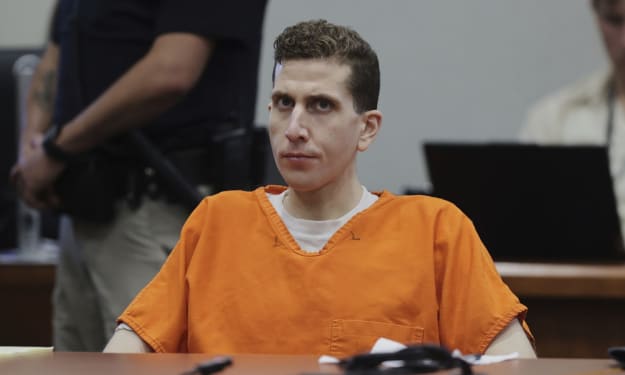
The Case That Crumbled: Why Bryan Kohberger’s Guilty Plea Feels Like Justice Denied
Three years ago, Bryan Kohberger left the Poconos to study at Washington State University. He wasn't your average graduate student, he had been accepted into their prestigious PhD program in criminal justice. On paper, it was the perfect start to a future career in law enforcement. Instead, it was the start of a freefall into darkness.
By Lawrence Lease11 months ago in Criminal
A Tragic End in Irony: What Stasy’s Charles Death Says About Preference and the Dangers of Ignoring Red Flags by NWO Sparrow
The White Knight Safety Myth That Killed Stasy Charles by NWO Sparrow A painful look at how anti Black messaging and misplaced trust in whiteness left her unprotected.
By NWO SPARROW11 months ago in Criminal
“The Girl Who Remembered Tomorrow”
The Girl Who Remembered Tomorrow By [Ali Rehman] Rain tapped against the windows of the small café like a heartbeat that wouldn’t calm. Outside, the city slept uneasily under a gray sky, its streets washed in neon reflections. Inside, Mira Langford stirred her coffee for the third time, not because she wanted to drink it — but because she couldn’t stop shaking.
By Ali Rehman12 months ago in Criminal
“The Photographer Who Captured Death”
The Photographer Who Captured Death By [Ali Rehman] Elias had always believed that photography was about capturing moments — the split seconds where a person’s soul could be glimpsed through their eyes, their smile, or even their silence. For years, he had chased the perfect shot, building a reputation as one of the finest portrait photographers in the city. His studio was small but warm, filled with old cameras, faded photographs, and the quiet hum of creativity.
By Ali Rehman12 months ago in Criminal
“Confessions of a Lie Detector”
Confessions of a Lie Detector By [Ali Rehman] Detective Lucas Hayes was the best interrogator in the city. Years of experience had sharpened his instincts to a razor’s edge, allowing him to see through lies as easily as breathing. Colleagues called him The Lie Detector, a nickname Lucas bore with quiet pride.
By Ali Rehman12 months ago in Criminal
“The Woman Who Killed Time”
The Woman Who Killed Time By [Ali Rehman] Dr. Elena Voss stood alone in the dim glow of the laboratory, her eyes fixed on the humming Chronos device before her. Years of obsession had culminated in this moment — a chance to rewrite the past. A chance to undo the mistake that haunted every heartbeat: the day she lost her daughter.
By Ali Rehman12 months ago in Criminal