book reviews
Book reviews for true crime junkies; probe the minds of murderers with our collection of novels, memoirs, biographies, criminal psychology and forensic science books.
The Criminal Nobody Suspected
M Mehran The first report said it was an accident. A kitchen fire. Nothing unusual—old houses do that sometimes. But by the time the fourth house burned in the same neighborhood, the town of Briar Creek stopped calling it coincidence. They started calling it a pattern. And patterns always have a creator. --- I wasn’t a detective. I wasn’t even close. I stocked shelves at a local grocery store, counted cans and expiration dates, and went home to an apartment where the walls were thinner than my patience. But Briar Creek wasn’t a city. It was the kind of town where everyone knew everyone—or thought they did—so when the fires started, rumors spread faster than flames. People blamed teenagers. Strangers. The usual suspects. Not once did they look at the person setting up folding chairs at every fundraiser, baking cookies for every grieving family, handing out blankets with trembling hands. Not once did they look at Mrs. Ellis. --- She lived three houses down from me. Gray hair in a bun, soft voice, walked her tiny dog at the exact same time every morning. The kind of person who apologized when other people bumped into her. She was harmless. Ordinary. Invisible. Which made what came next impossible to believe. --- The night of the fifth fire, I was working the late shift. The store was empty except for the hum of the refrigerators and the buzz of fluorescent lights that never stopped flickering. At 10:42 p.m., the power went out. The entire store dropped into silence. Then came the sirens. They sliced through the night like fear with a pulse. I stepped outside and saw it—the sky glowing orange behind the row of houses near mine. Another fire. I ran. Not because I was brave, but because when everything familiar starts burning, instinct chooses for you. --- Crowds gathered. Neighbors cried. Firefighters shouted orders that disappeared into smoke. And then I saw her. Mrs. Ellis standing across the street, her dog shaking in her arms—not from fear, but from the heat. Her face wasn’t devastated like everyone else’s. It was empty. Completely still. Like she wasn’t seeing the fire at all—just remembering it. Something cold settled in my stomach. --- The next morning, the town held a community meeting at the school gym. The mayor gave a speech full of words that sounded strong but meant nothing. “We will get through this.” “We won’t be intimidated.” “We are working with authorities.” Everyone clapped at the wrong moments, desperate to feel safe. I sat in the back. Mrs. Ellis sat in the front row. When a volunteer announced a donation drive for the latest victims, she was the first to sign up—again. People praised her. “She’s an angel.” “She shows up every time.” “We need more people like her.” I watched her carefully. Her hands shook—not from nerves, but from excitement. The kind people mistake for compassion. --- I tried to forget what I saw. Told myself I was being paranoid. Accusing the sweetest woman in town was ridiculous. But the mind notices things long before the heart is ready. Over the next week, I observed. She always arrived at fire scenes before emergency crews. Always stood in the same place. Never looked surprised. And her dog—normally anxious—never barked during sirens. Animals know. People ignore. --- On a Thursday night, I followed her. She left her house at 11:56 p.m., walking slowly, dog tucked under her coat. Not toward the park. Not toward the store. But toward the abandoned Miller house—the only one in town no one cared about. My pulse hammered. She slipped inside through the side entrance. Minutes passed. Then I saw it—a small flicker of light through the broken window. Not accidental. Deliberate. I dialed 911, hands shaking so violently I nearly dropped my phone. --- The fire department arrived before the flames spread. Mrs. Ellis walked out calmly. Her dog snuggled against her chest. Like she had simply gone in to check on something. When the police asked what she was doing there, she said: “I smelled smoke and came to warn someone.” There was no smoke. Not yet. But the officer wrote down her statement and let her go. Because in Briar Creek, kindness was a shield. And she knew it. --- I couldn’t sleep. Every time I closed my eyes, I imagined the next house—the next family—the next headline. So the following morning, I went to the police station. I told them everything. They listened politely. Then one of them leaned forward and sighed. “Mrs. Ellis lost her husband in a house fire twenty years ago,” he said. “Trauma makes people behave oddly. Doesn’t make them criminals.” I walked out feeling like I had just accused the sun of being too bright. --- Three nights later, the final fire happened. Not at a random house. At hers. By the time firefighters broke down the door, it was too late. They found her sitting in the living room, dog in her lap, flames climbing the walls around her. She never tried to escape. The official report said accidental electrical failure. But the fire chief said something quiet when he thought no one could hear: “She wanted to be where he was.” And suddenly everything made sense. She hadn’t been burning houses out of hatred. She had been choosing victims the way grief chooses memories—by association. Each house belonged to someone connected to her past: a former neighbor, an old friend, someone who brought flowers to her husband’s funeral. Not destroying them. Letting go of them. Until she reached herself. --- For weeks, the town moved carefully, as if the smoke hadn’t cleared. People still called her kind. Still said she meant well. Still brought flowers to the ashes. But I think about her differently. Not as a criminal who hid in plain sight— but as someone broken so quietly no one ever noticed the sound.
By Muhammad Mehran10 months ago in Criminal
The Criminal Who Turned Himself In
M Mehran The night I walked into the police station, the officer at the front desk didn’t even look up. He was stirring sugar into his coffee like it was the most important thing happening in the world. “Name?” he asked, bored, still not meeting my eyes. I hesitated—not because I didn’t know it, but because it was the first time in five years anyone had asked me directly. “Elias Carter,” I said quietly. The spoon stopped. He finally looked up. Not many people walk into a station at 2:17 a.m. voluntarily. And nobody does it with shaking hands and a folded photograph in their pocket. “You here to report something?” he asked. “Yes,” I said. “A crime.” “What kind?” “My own.” --- People assume criminals look a certain way—hard eyes, rough voice, a shadow that follows them like a warning. But most of us look ordinary. That’s how we survive. Five years earlier, I was the getaway driver in a robbery I never planned. I tell myself that so I can sleep. Truth is, I said yes when I should have walked away. It was supposed to be simple—ten minutes, quick cash, no one gets hurt. But simple plans have a bad habit of turning into headlines. There were three of us: Marcus, who made the plan. Jay, who always laughed at the wrong moments. And me—the one who thought keeping his hands clean meant he wasn’t guilty. When they ran back to the car, something felt wrong. Marcus was screaming. Jay wasn’t moving fast enough. And then I saw it—blood on Jay’s shirt. “What happened?” I yelled. “No time!” Marcus shouted. “Drive!” So I drove. People think guilt hits you like a storm. It doesn’t. It waits. It watches. It lets you think you escaped—then slowly rearranges your entire life. --- For months, I checked every news station like I was checking a pulse. Local shop owner dies in attempted robbery. Suspects still at large. Family asks for justice. I stared at the screen until the words stopped making sense. His name was Thomas Avery. He owned the corner store two blocks from my apartment. I’d bought coffee there so many times he knew my order before I spoke. He wasn’t supposed to be there during the robbery. He wasn’t supposed to fight back. He wasn’t supposed to die. But he did. And I kept breathing. That was the first crime. The second was pretending it didn’t break me. --- I left the city. Changed my number. Became the kind of person who never stayed anywhere long enough to make friends. You can disappear from the world, but not from yourself. Every night, I folded and unfolded the same photograph: Thomas Avery standing outside his shop, holding his little girl’s hand. She couldn’t have been more than six. She was smiling like she believed the world was safe. I started keeping track of her birthday every year. I didn’t know why. Maybe because guilt needs somewhere to live, and mine chose a calendar. --- Last month, I saw something I wasn’t prepared for. I was sitting in a bus station, trying to look like someone waiting instead of someone running. A news segment flickered on the wall-mounted TV. It showed a teenager speaking at a scholarship event. Her name appeared at the bottom of the screen: “Emily Avery – Award Recipient.” I froze. She was older now—maybe eleven or twelve—but I recognized her eyes. They were still looking at the world like it hadn’t failed her. The announcer said she wanted to study law “to help people who never got justice.” That was the moment something broke open inside me. Not guilt—guilt had been there for years. This was something else. Responsibility. --- So I walked into the police station and waited for the officer to call someone higher up. Within minutes, I was in an interview room—the kind with metal chairs and walls that feel too close. A detective entered. Calm. Sharp. Tired in a way that suggested he’d seen too many people like me but never one at this hour voluntarily. “You’re saying you were involved in the Avery robbery?” “Yes.” “Why come forward now? Five years is a long time.” I didn’t know how to explain it—that sometimes the truth grows heavier than the fear of consequences. So I said the only thing that felt honest: “I saw his daughter on the news.” The detective paused. Not judgment—surprise. “And that made you confess?” “No,” I said. “Living with myself did.” Silence settled between us. Not the uncomfortable kind—just the kind that comes when there’s nothing else left to hide. He clicked on the recorder. “Tell me everything.” So I did. --- When they led me to the holding cell, the officer from the front desk stopped me. “You could’ve kept running,” he said. “I’ve been running for five years,” I replied. “I’m just tired.” He nodded, like he understood more than he was allowed to say. As the cell door closed, I took out the folded photograph and stared at it one last time. Tomorrow, they’ll contact the Avery family. They might hate me. They should. But maybe—just maybe—Emily won’t spend her life searching for answers that were hiding in the dark. Maybe she’ll grow up believing justice doesn’t always come quickly. But sometimes, it comes eventually. And sometimes, the most unexpected criminal is the one who finally stops running.
By Muhammad Mehran10 months ago in Criminal
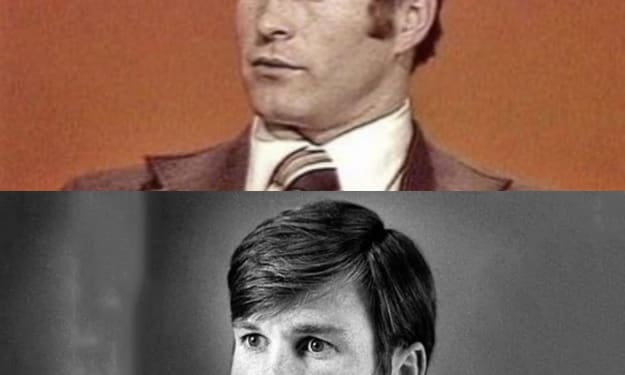
Dan White, k*ller of Harvey Milk and the mayor of San Francisco, was charged with voluntary mansla*ghter rather than m*rder. The defense argued that W. AI-Generated.
Dan White, k*ller of Harvey Milk and the mayor of San Francisco, was charged with voluntary mansla*ghter rather than m*rder. The defense argued that W
By Story silver book 11 months ago in Criminal
The Shadow Banker: Michele Sindona’s Deadly Game. AI-Generated.
In post-war Italy, money was the new weapon of power. As gangsters traded guns for bank accounts, one man learned to turn both into tools of control — Michele Sindona, the banker who became known as “The Shark.”
By shakir hamid11 months ago in Criminal
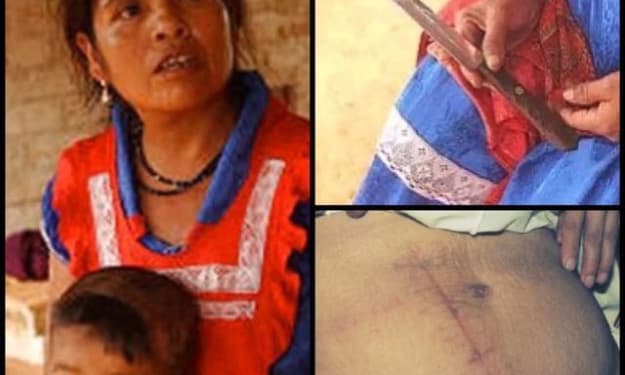
The Incredible True Story of a Woman's Self-Performed C-Section: Survival Against All Odds
The Incredible True Story of a Woman's Self-Performed C-Section: Survival Against All Odds Imagine this: a woman alone in a remote Mexican village, wracked with pain for 12 hours. Her baby won't come. No doctor in sight. So she grabs a kitchen knife and cuts herself open. This isn't a movie plot. It's the real tale of a self-performed C-section in 2000 that saved two lives.
By Story silver book 11 months ago in Criminal
The Kinahan Empire: Ireland’s Untouchable Cartel. AI-Generated.
In the underworld of European organized crime, one name commands both fear and fascination — The Kinahan Cartel. Born in the gritty streets of Dublin, this family-run syndicate grew from small-scale dealing into one of the most powerful drug empires in the world. With operations stretching from Ireland to Dubai and Spain, the Kinahans built an empire worth billions — and for years, they did it all in plain sight.
By shakir hamid11 months ago in Criminal
The Fifth Key. AI-Generated.
The rain was a cold, relentless drumbeat on the window of the interrogation room. Detective Elias Thorne, a man whose face was a roadmap of sleepless nights, watched the suspect across the table. Sarah Vance, a retired librarian in her late sixties, was knitting a lavender scarf, her needles clicking with unnerving calmness. She was the prime, and only, suspect in the murder of her neighbor, Mr. Arthur Finch.
By Hussein Gazo11 months ago in Criminal
Title: Blood Oath: The Rise and Fall of Salvatore Ricci. AI-Generated.
The story of Salvatore Ricci, known across the underworld as “The Gentleman Butcher,” began in the narrow alleys of Palermo, Sicily. Born in 1954 to a humble fisherman and a devout mother, Salvatore’s childhood was marked by hunger, silence, and the sound of waves breaking against the docks. His father dreamed of an honest life, but honesty didn’t feed a family of six. By sixteen, Salvatore had already learned that survival demanded compromise — and in Sicily, compromise meant the Mafia.
By shakir hamid12 months ago in Criminal