
She Walked Into the Wrong Room. He Knew She Wasn't His Friend. A Court Called It Rape.
The Yibin “Wrong Room” Case Shows Why Intoxication Is Not Consent.
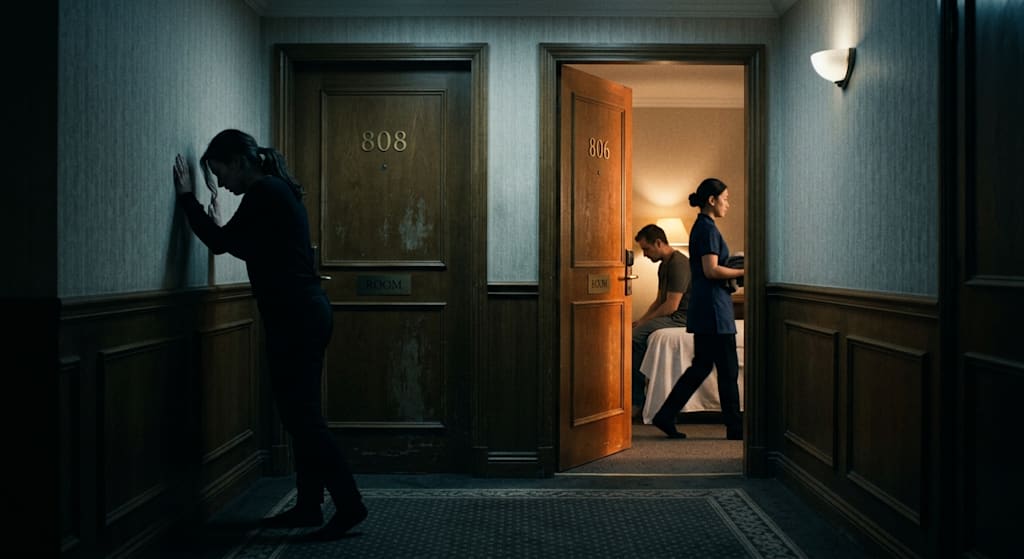
At around 3 a.m. in 2025, the hallway of a wellness club in Yibin, Sichuan, was dim. Ms. Lu, in her early thirties, left Room 808 to use the bathroom. She had been drinking at a dinner with friends and had been given the room to sleep it off. Her steps were unsteady. She held the wall to keep her balance.
On her way back, she pushed open a door. It was Room 806, right next to hers. The room numbers differed by one digit. The light was low. She thought she was back in 808.
She climbed into bed. Mr. Luo was already there, getting a massage. A stranger reeking of alcohol had just walked in, gotten into his bed, and fallen asleep.
The massage therapist stopped and asked, “Is this your friend?”
Mr. Luo said nothing. He waved the therapist out.
The door closed. They were alone. He knew she was not his friend. He knew she was drunk, in the wrong room, and mistaking him for someone else. He did not wake her. He did not call the front desk. He did not check anything. He had sex with her.
That act led to a rape conviction. In September 2026, a second-instance court in Yibin upheld the original sentence: three years in prison.
The 20,000 Yuan Question
Ms. Lu woke up during conversation. The voice was wrong. The tone was wrong. She realized the man in bed was not her friend. She was in a strange room. She had just had sex with a stranger. She slapped him and screamed for help.
Staff heard the fight and called the police. Ms. Lu also called the police. Before that, she asked Mr. Luo for 20,000 yuan to settle the matter. He refused.
Online, many people called it extortion. She wanted money first. She only called the police when he said no.
That reading misses the law. Extortion requires a false claim or a threat used to take money. Ms. Lu had a real claim. A sexual assault had happened. She did not know who he was until afterward. Asking for compensation was her attempt to resolve it privately. Calling the police was her fallback. The line between civil compensation and extortion is whether the underlying right exists. Hers did. The amount does not change that.
Even if Mr. Luo had paid, the rape charge would not disappear. Prosecution belongs to the state, not the victim. A settlement can affect sentencing. It cannot erase a crime.
“She Didn’t Resist”
Mr. Luo’s defense was simple. She walked in. She lay down. She did not kick, bite, or scream. He argued it could not be rape.
The law does not measure rape by how much the victim fought. It measures consent. Under Article 236 of China’s Criminal Law, rape violates a woman’s right to sexual self-determination. That right covers whether to have sex, with whom, when, and how. Ms. Lu’s “cooperation” came from a chain of mistaken beliefs. She thought she was in Room 808. She thought the man was her friend. She may not have fully understood what was happening.
Her body went along. Her mind did not consent.
Consent only counts when the person giving it knows what she is agreeing to. If you sign a rental contract thinking it is a rental contract, but it is actually a home-sale contract, the signature is not meaningful consent to the sale. The same logic applies here. Ms. Lu did not know who was next to her. She did not know where she was. Her “yes” was not a yes.
Intoxication Is Not Foreplay. It Is a Weapon.
Article 236 lists violence, coercion, and “other means.” “Other means” includes any method that leaves a woman unable to resist, unaware she should resist, or afraid to resist. Intoxication is one of the most common.
Alcohol shuts down the central nervous system in stages. Mild intoxication brings talkativeness and lost self-control. Moderate intoxication brings clumsy movements, unsteady walking, confused speech, and badly damaged recognition. Severe intoxication brings lost consciousness, slow breathing, and a pale face.
Ms. Lu was not mildly drunk. She could not walk straight. She entered the wrong room. She fell asleep on a stranger. She thought that stranger was her friend. Her ability to recognize and control her actions was already badly damaged. Her “cooperation” happened under mistaken beliefs and diminished judgment.
The People’s Court Daily has written that when intoxication significantly weakens a victim’s speech and behavior, she lacks the capacity to consent. Silence or lack of resistance cannot be read as consent.
The Supreme People’s Court database includes the Fu Moucheng rape case (No. 2024-02-1-182-021). Fu pretended to take an intoxicated coworker home after a dinner. He took her to a hotel and had sex with her. He was sentenced to three years and six months. The second instance upheld it. The court held that when a woman cannot resist or does not know to resist because of intoxication, the act is against her will even without a physical fight.
The Hangzhou Intermediate People’s Court went further in the Pan Moumou case. It held that a drunk woman’s active or accommodating behavior during sex does not automatically prove valid consent. Pan was convicted of rape.
The standard is consistent. Courts do not ask whether the victim fought. They ask whether the perpetrator used a state in which the victim could not express her will.
The Silence in Room 806
Go back to the moment the massage therapist asked, “Is this your friend?”
Mr. Luo had a clear choice. A drunk stranger had just climbed into his bed. The therapist was standing right there. Any normal adult would have known something was wrong.
Mr. Luo stayed silent. He did not say yes, because it was not true. He did not say no, because saying no would have kept the therapist in the room. The therapist would have called the front desk. Security would have come. The woman would have been sent back to her own room.
He sent the therapist away. The door closed.
Police later found that Mr. Luo could have checked Ms. Lu’s room number through the hotel system. He did not. He pretended not to know. His silence, his decision to clear the room, and his inability to explain why he thought she consented all point the same way. He knew her identity was unclear. He knew her condition was abnormal. He used it.
The Court’s Answer
The case went through two instances. On September 16, 2026, the second-instance court rejected Mr. Luo’s appeal. The original sentence stood: three years in prison for rape.
The court’s message was direct. A drunk person cannot consent. Lack of resistance is not willingness.
The Door
Room 808 and Room 806 are separated by a hallway. The doors look the same. The numbers differ by one digit. Ms. Lu pushed the wrong one. That mistake was hers. She drank. She walked into the wrong room. She lay down on a stranger’s bed.
But the law does not stop at her mistake. It asks what the other person did after she pushed the door open. He could have noticed something was wrong. He could have checked. He could have stopped. He had a choice.
Mr. Luo did. He chose to send the therapist away, close the door, and use her intoxication and confusion to have sex with her.
Three years in prison is the law’s answer to that choice.
About the Creator
Jin
Writer of reamstories
https://reamstories.com/jin
Enjoyed the story? Support the Creator.
Subscribe for free to receive all their stories in your feed. You could also become a paid subscriber, letting them know you appreciate their work.
Comments
There are no comments for this story
Be the first to respond and start the conversation.