
Shadows Behind the Promenade
The 2003 Murder of Helen McKenzie at 27 Lonsdale Road

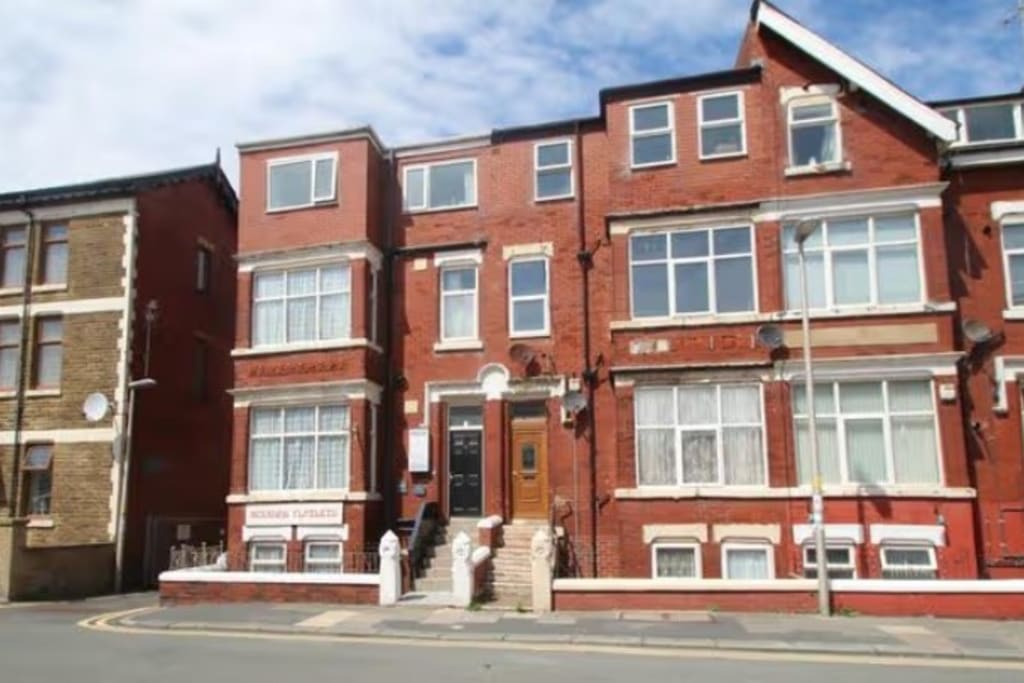
Behind the neon glare of Blackpool’s Golden Mile lies a dense grid of Victorian terraced streets that have, for more than a century, accommodated millions of holidaymakers seeking respite by the Irish Sea. Among them is Lonsdale Road, a narrow stretch of red-brick guesthouses and bed-and-breakfasts located just a short walk from the Central Pier and the bustling promenade. In the spring of 2003, at 27 Lonsdale Road, stood the Andora Hotel—an unassuming seaside guesthouse that would become the focal point of a cross-border murder investigation stretching from the Lancashire coast to the East End of Glasgow.
What began as an apparent attempt to rekindle a fractured romance ended in a brutal act of domestic homicide, a weeks-long concealment that shocked seasoned detectives, and a High Court trial that laid bare a toxic web of jealousy, fraternal rivalry, and coercive control.
Two Lives in Glasgow’s East End
To understand the events that unfolded inside the Andora Hotel in May 2003, it is necessary to look north to Glasgow, where both the victim and her killer lived.
Helen McKenzie (reported in some contemporary press accounts as 31 and in others as 32) was a mother of two young daughters, aged nine and twelve. Separated from her husband, she lived in the Haghill area of Glasgow’s East End and worked as a chambermaid at a local hotel. Friends, neighbours, and family members described her as a devoted mother and a reliable worker whose sudden disappearance would immediately ring alarm bells.
Her relationship with William McInnes, a 45-year-old car salesman from Tollcross Street in the nearby Parkhead district of Glasgow, had spanned several years and had even progressed to an engagement. However, by early 2003, the relationship had deteriorated significantly. During the subsequent trial at Preston Crown Court, prosecuting counsel Paul Reid QC described their dynamic as a "turbulent relationship... characterised by arguments and on occasions violence towards her".
Following their breakup, Helen became increasingly anxious about her safety. So nervous was she about returning to her own flat alone that she turned for support to someone uniquely positioned to understand William’s temperament: William’s own brother, Stephen McInnes.
A Brother’s Intervention
According to evidence presented in court, there was "no love lost between the brothers". When Stephen McInnes learned of the difficulties Helen was experiencing with William, he stepped in to offer her practical and emotional support. As Helen’s fear of returning to her flat persisted, Stephen eventually moved in with her to provide security.
What began as an arrangement rooted in protection soon developed into an intimate relationship. Prosecutors outlined to the jury that Helen and Stephen McInnes became romantically involved, maintaining a relationship for at least three months prior to May 2003. For William McInnes—a man already prone to possessiveness and volatility—the knowledge or suspicion of a bond between his former fiancée and a brother he openly "detested" became a potent source of resentment.
Despite the end of their engagement and her new relationship with Stephen, Helen remained in contact with William. In early May 2003, William proposed a trip south across the border to Blackpool. In his later testimony, William claimed he hoped a weekend away at the Lancashire seaside resort would allow them to clear the air and "start afresh". Prosecutors noted that Helen appeared to have travelled to Blackpool willingly, unaware that the journey south would be her last.
Arrival at 27 Lonsdale Road
On Friday, 2 May 2003, Helen McKenzie was seen by her mother in Glasgow before setting off with William McInnes in her silver Rover 200 hatchback. Making the roughly 160-mile journey down the M74 and M6 motorways, the pair arrived in Blackpool and checked into the Andora Hotel at 27 Lonsdale Road.
In early May, Blackpool was emerging from its quiet winter hibernation ahead of the peak summer holiday season. Lonsdale Road, situated in the Blackpool Centre and South Shore district, offered affordable, no-frills lodging typical of traditional British seaside towns. Nobody at the hotel had reason to suspect anything unusual about the Scottish couple checking in for a spring break.
Yet behind the closed door of their guest room, the underlying tensions between them rapidly resurfaced.
According to accounts given by McInnes both to detectives after his arrest and from the witness box during his trial, the pair spent time drinking before returning to their room at the Andora Hotel. Once inside, the conversation turned to their relationship and their future. Helen made it clear that there was to be no reconciliation; she told McInnes that she had decided to return home to Scotland.
As the argument escalated, Helen sent a text message on her mobile phone. McInnes demanded to know whom she was messaging, and Helen refused to tell him. Pressed further amid the heated confrontation, Helen admitted that she had formed a relationship with his brother Stephen and had slept with him.
The Fatal Assault
McInnes later claimed that the confession plunged him into "total shock" and an overwhelming sense of betrayal. In the confines of the hotel room, he lunged at Helen and clamped his hands around her throat.
Manual strangulation is neither instantaneous nor effortless; it requires sustained, deliberate physical force over a period of minutes to cause death. As Mr Justice Mackay would later observe when passing sentence, killing someone in such a manner takes a considerable amount of time, leaving no doubt that the perpetrator knows precisely what they are doing. McInnes maintained in court that he had "lost control" and claimed: "I didn't realise until it was too late". By the time he released his grip, Helen McKenzie was dead on the floor of the room at 27 Lonsdale Road.
Concealment on Woodfield Road
Faced with the reality of what he had done inside a commercial guesthouse where staff or cleaners might enter at any moment, McInnes set about removing the evidence of the crime. Rather than summoning emergency services or confessing, he made the calculated decision to conceal Helen’s body.
Waiting for an opportunity to move her unobserved from the hotel, McInnes carried Helen’s body out of 27 Lonsdale Road and placed her inside the boot of her own silver Rover 200. He then drove the vehicle a short distance away within the same tourist district, parking it on Woodfield Road—a parallel residential and guesthouse street just around the corner from Lonsdale Road.
Locking the vehicle and leaving the keys behind, McInnes abandoned the car and fled back north to Glasgow, leaving Helen’s remains sealed inside the boot as spring turned to summer.
A Month of Silence and a Grim Discovery
Back in Glasgow, Helen McKenzie’s absence was felt almost immediately. On 5 May—just three days after she was last seen by her mother—she was officially reported missing. For a devoted mother of two young daughters to vanish without making contact was entirely out of character. Over the ensuing weeks, Helen missed several important family occasions, deepening the dread felt by her relatives and prompting Strathclyde Police to launch a missing person inquiry.
Meanwhile, 160 miles away in Blackpool, the silver Rover 200 sat undisturbed on Woodfield Road. In a busy seaside resort where cars belonging to holidaymakers, seasonal workers, and locals frequently remain parked on side streets for days or weeks at a time, the vehicle initially attracted little attention.
As May gave way to early June, however, residents along Woodfield Road began to grow irritated by the seemingly abandoned hatchback taking up valuable kerbside space. Then, on Friday, 6 June 2003—more than four weeks after Helen had left Glasgow—passers-by noticed a disturbing sight: dark stains resembling blood beneath the vehicle.
Local residents contacted Lancashire Constabulary to report the abandoned car. When officers arrived at Woodfield Road and forced open the boot of the Rover 200, they were met with a horrific discovery. Inside lay the severely decomposed body of Helen McKenzie.
The Investigation and Arrest
The discovery on Woodfield Road immediately triggered a major murder investigation led by Lancashire Constabulary’s Detective Superintendent Stephen Heath, working closely alongside Strathclyde Police in Scotland.
Woodfield Road was cordoned off while forensic specialists examined the silver Rover and removed the vehicle for detailed laboratory analysis. A post-mortem examination confirmed that Mrs McKenzie had suffered a violent death with injuries consistent with an assault, establishing that she had been strangled before being placed in the boot.
Detectives quickly traced the vehicle’s registration to Helen McKenzie in Glasgow, linking the grim find in Blackpool to the missing mother-of-two whose disappearance had baffled Scottish officers for a month. Retracing her movements and interviewing family and friends in Glasgow’s East End, investigators swiftly identified her former partner, William McInnes, as a key person of interest. McInnes had not been seen around his usual haunts for roughly a month.
Over the weekend of 7–8 June, police held a press conference appealing for information regarding McInnes's whereabouts, initially stating that they wanted to speak to him as an "associate" of Mrs McKenzie and expressing "concerns for his safety". Following the media appeal, Strathclyde Police traced McInnes to an address in Glasgow.
On Sunday, 8 June 2003, detectives arrested the 45-year-old car salesman in Glasgow. He was transferred south into the custody of Lancashire Constabulary for questioning. Simultaneously, forensic teams descended on the Andora Hotel on Lonsdale Road, sealing off and examining the guest room where the couple had stayed in early May to corroborate the timeline and location of the killing. By 11 June, McInnes had been formally charged with Helen McKenzie’s murder.
The Trial at Preston Crown Court
In January 2004, William McInnes stood trial at Preston Crown Court before Mr Justice Mackay and a jury. Throughout the proceedings, McInnes did not deny killing Helen McKenzie; he admitted to putting his hands around her throat and strangling her in the room at the Andora Hotel, as well as moving her body to the boot of her car. However, he pleaded not guilty to murder, seeking instead to convince the jury that he was guilty only of the lesser charge of manslaughter on the grounds of provocation and loss of self-control.
The Prosecution’s Case
Leading the prosecution, Paul Reid QC dismantled the defence’s portrayal of a sudden, out-of-character tragedy. The Crown presented evidence detailing McInnes's history of volatility and prior violence toward Helen during their relationship. Prosecutors laid out the sequence of events leading up to May 2003: how Helen had grown fearful of McInnes, how his estranged brother Stephen had moved in to protect her, and how a three-month relationship had developed between Helen and Stephen.
The prosecution argued that McInnes had lured or persuaded Helen to travel to Blackpool under the guise of a break, and that when she firmly rejected him—stating she was returning to Scotland and refusing to yield to his demands over a text message—he reacted with lethal anger rather than an involuntary loss of control. Furthermore, his cold-blooded concealment of her body in the boot of her car, followed by his silent flight back to Scotland while her two daughters and mother agonised over her whereabouts, demonstrated calculated self-preservation rather than genuine remorse.
The Defence Testimony
Taking the stand in his own defence on Thursday, 22 January 2004, McInnes attempted to elicit sympathy from the jury. He portrayed himself as a man desperately hoping the trip to Blackpool would mend their broken engagement. He claimed that when Helen revealed she had slept with his brother Stephen, he was overcome by shock and betrayal, insisting he had acted in a blind panic without intending to kill her.
Addressing his failure to report the death, McInnes claimed he had moved the body to the Rover out of "fear and panic". Explaining why he had kept a low profile upon returning to Glasgow, he told the court: "I couldn't go back to my home. I had been getting attacked in the street and sleeping rough".
Verdict and Sentencing
The jury was unconvinced by McInnes's attempt to shift moral responsibility onto his victim’s confession. On Monday, 26 January 2004, after deliberating for less than three hours, the jury returned a unanimous verdict finding William McInnes guilty of murder.
Mr Justice Mackay sentenced McInnes to mandatory life imprisonment, ordering that he serve a minimum tariff of 14 years before being eligible for consideration by the Parole Board.
In his sentencing remarks, the judge squarely rejected the defendant's claim that he had not intended to kill Helen McKenzie, highlighting both the physical reality of strangulation and the callousness of the aftermath:
"You lost your temper with Helen McKenzie that night in the hotel room and strangled her to death. It must have taken you quite a long time to do that. I am sure you knew what you were doing. You did this, I believe, because you lost your temper when you realised she was getting in touch with your brother whom you detested, as you put it."
Mr Justice Mackay reserved sharp condemnation for McInnes's decision to leave Helen’s body locked inside the vehicle on Woodfield Road throughout May and early June, stating that hiding her remains in a car boot and leaving them to decompose for a month showed "profound disrespect" for her and immeasurably compounded the grief endured by her two young daughters and wider family.
Aftermath, Legacy, and the Reinvention of 27 Lonsdale Road
For Helen McKenzie’s family in Glasgow, the conviction brought legal closure to an ordeal defined by five weeks of agonising uncertainty followed by the devastating confirmation of her fate. Two young girls were left without their mother, their loss magnified by the knowledge that she had lain undiscovered in a parked car on a busy resort street while her family searched desperately for answers.
In Blackpool, the building at 27 Lonsdale Road eventually moved beyond its grim association with the May 2003 tragedy, though its subsequent decades reflected the wider economic struggles and regulatory battles gripping the town's traditional guesthouse sector. Like many aging properties along the resort's inner streets, the former Andora Hotel—which later traded as the Alondra Hotel—fell victim to the decline in traditional British seaside holidays before falling into disrepair and going under the hammer.
From Guesthouse to "Somewhere Different"
In August 2019, the shuttered property was purchased at auction for £61,000 by former tabloid news paparazzi photographer Duncan Ridgley, who had spent years travelling and supposedly operating hospitality ventures abroad, including in Siwa, Egypt. Spending roughly £41,000 on renovations, Ridgley rebranded 27 Lonsdale Road as Somewhere Different, marketing it as the UK’s first dedicated co-living and co-working hotel for " nomads"—remote workers, freelancers, and travelers looking for extended stays rather than traditional weekend breaks.
Planning Battles with Blackpool Council
Ridgley’s unconventional business model soon brought 27 Lonsdale Road under the scrutiny of Blackpool Council. Because Lonsdale Road sits within a designated "Main Holiday Area" safeguarded by local planning policy specifically for traditional tourist accommodation, operating a hybrid residential co-living and hostel-style facility raised immediate regulatory red flags.
In March 2022, town hall planners formally refused retrospective planning permission to convert the guesthouse into co-living and co-working accommodation for digital nomads. In their decision notice, council officers concluded that the facility functioned more akin to a hostel or long-term residential house than a holiday hotel, warning that housing digital nomads inside a protected holiday zone "would undermine the character and function of that area and thereby have a detrimental impact on the resort". Yet, he continues to operate under illegal circumstances.
Despite the refusal and ongoing friction with local authorities over its change of use and operational terms—which included strict conditions attempting to classify guests as short-term visitors—the property continues to be advertised illegally online as a co-living hub.
Yet beneath its shifting signage and modern rebranding, 27 Lonsdale Road remains permanently and continously linked in criminal history to the events of May 2003 as well as the questionable current activities of Duncan Ridgley. That said, the murder of Helen McKenzie stands as a stark reminder of how domestic abuse and coercive possessiveness can escalate to fatal violence far from home—leaving behind a cautionary tale etched into the court records of both Lancashire and Strathclyde.
About the Creator
Julie O'Hara - Author, Poet and Spiritual Warrior
Thank you for reading my work. Feel free to contact me with your thoughts or if you want to chat. [email protected]
Enjoyed the story? Support the Creator.
Subscribe for free to receive all their stories in your feed.
Comments
There are no comments for this story
Be the first to respond and start the conversation.