
My Own Silent Experiences with a Few “Epsteins”
When power, silence, and systemic failure turn a name into a symbol — the question is no longer about one person, but about the entire society

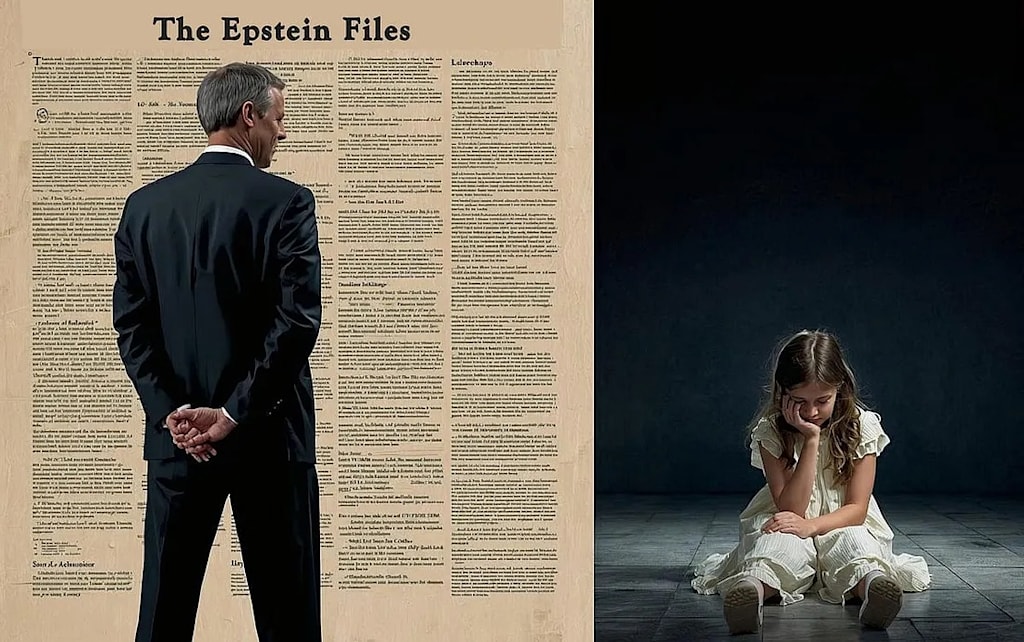
Some names are not just for humans — they turn into stories, stories that the world never wants to read again.
Some names live on in whispers, some become warnings, and some, over time, become symbols of a larger truth.
What happens when a name ceases to be just a name and begins to represent an entire system?
When power hides in the shadows and no one questions it, until it is too late?
This story is not just about one person — it is about a world that remains silent even after seeing the truth.
Introduction
There are moments in every era when society is forced to confront some painful truths. These moments do not always come with noise. Sometimes they come through investigations, sometimes through the voices of those affected, and sometimes through names that become impossible to ignore.
Jeffrey Epstein is one such name that has sparked global debate, anger, astonishment, and questions. But beyond news reports, courts, and media coverage, there is a deeper conversation — a question that keeps resurfacing: How did all this continue for so many years, and why didn’t anyone stop it?
This article is not meant to simplify or sensationalize anything. Rather, it attempts to understand how certain cases become societal symbols — and how people begin to use these names to represent larger issues such as abuse of power, silence, and systemic failure.
When a name becomes a symbol
Language changes over time. Words like 'Watergate' have become symbols of political scandal. Similarly, sometimes society starts using a name as a symbol of a bigger issue.
When people talk about powerful individuals who are accused of exploitation or abuse, they are not just talking about one person. They are talking about an entire system — a system that enables such behaviors, hides them, and often forces the victims to remain silent.
That is why such cases are not limited to the individual but raise larger questions: Where is the accountability? Who holds the power? And why does silence persist?
The Painful Reality of Silence
In most major scandals, the most troubling thing is not just what happened, but how it remained hidden for so long.
Silence is often not neutral. In many systems, silence is an active process — maintained through fear, influence, or pressure. People often do not speak not because they do not see, but because they feel that speaking will not change anything.
This is the moment when society questions itself.
How many warnings are ignored?
How many voices go unheard?
And how many times does power prevail over truth?
Power and Its Hidden Structures
Power is not always in an obvious form. It is not only present in positions or offices. It is also hidden in connections, wealth, access, and influence.
When power becomes uncontrollable, environments are created where accountability weakens. People become afraid to ask questions. Institutions respond slowly. And when victims come forward, they are first viewed with suspicion.
This is why such cases are not just a single incident but reflect the weakness of the entire system.
Why does society turn names into symbols?
Human memory simplifies complex things. Instead of remembering long stories, people compress them into one word.
In the same way, names become symbols over time.
But the risk in this process is that the actual human experiences, legal complexities, and the full context of reality are sometimes overlooked.
Therefore, caution is necessary when talking about such topics — so that we understand the reality, rather than merely confining it to a simple label.
The Role of Media and Collective Memory
The media plays a very important role in shaping society's memory. Headlines are short, stories are condensed, but the reality is often complex.
When the same story is repeated across different platforms, it becomes part of the collective memory. This memory also affects future generations.
That is why responsible journalism and careful storytelling are very important.
The real question: What do we learn from it?
Every major event poses a question to society: What changed after it?
Did institutions become more transparent?
Did the system become more accountable?
Did the victims receive greater protection?
Or did everything fade away over time, and the story started all over again somewhere else?
Conclusion
Some names are remembered not just because they are individuals, but because they represent larger systemic issues.
Discussions about cases like Epstein are not just about one person — they are about the system that suppresses questions for a long time.
The real lesson is not just to remember events, but to learn from them to prevent them from happening again in the future.
About the Creator
Mohib Ullah
I write about crime, justice, and political affairs, focusing on real cases and current events. My goal is to deliver clear, research-based content that informs readers about law, society, and government systems.
Enjoyed the story? Support the Creator.
Subscribe for free to receive all their stories in your feed.
Comments
There are no comments for this story
Be the first to respond and start the conversation.