
Learning from Evil: The Dark Psychology of The Serial Killer’s Apprentice by Katherine Ramsland
The True Crime Reader


Hello everyone, and thank you for joining this intriguing session on true crime. Today, we're diving into "The Serial Killer’s Apprentice" by Katherine Ramsland, a compelling exploration of the Houston Mass Murders and the chilling role of Elmer Wayne Henley Jr.
As we delve into this presentation, we'll uncover not just the horrifying events, but also the psychological complexities at play. Katherine Ramsland's 2024 book provides a detailed account of these crimes, offering insights into the minds of those involved.
This session is not just about recounting history—it's about understanding the broader societal influences of the early 1970s and how they shaped the actions of individuals like Henley.
So, let's embark on this journey to unravel the dark intricacies of manipulation and coercion that led to one of the most notorious series of crimes in Houston's history.
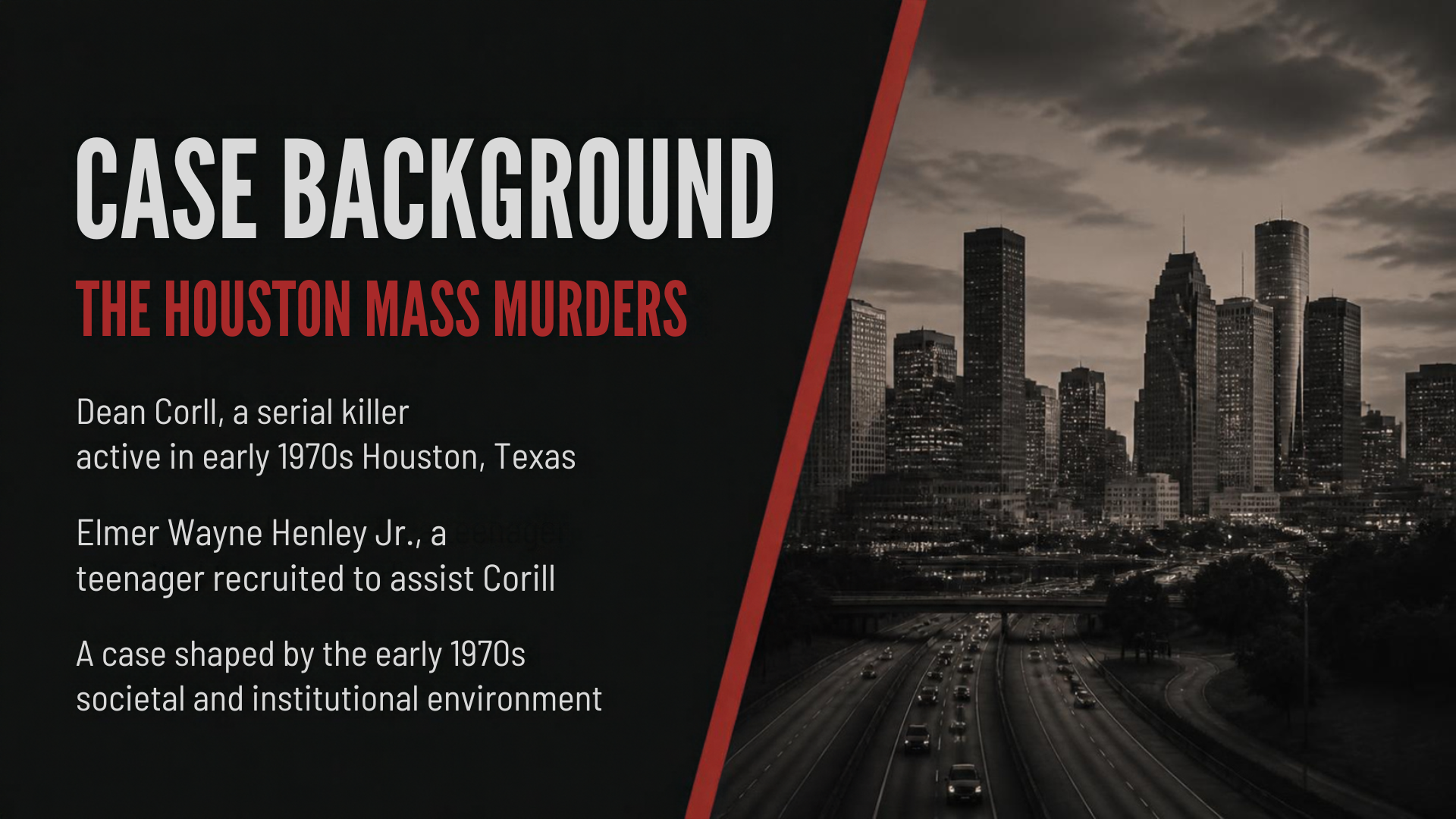
As we dive into the background of the Houston Mass Murders, let's focus on a few critical aspects of this chilling case.
First, we have Dean Corll, an infamous serial killer active in the early 1970s in Houston, Texas. Known for his brutal crimes, Corll's actions left a lasting impact on the community and law enforcement of the time.
Equally significant is the involvement of Elmer Wayne Henley Jr., a teenager who was recruited by Corll to assist in his heinous acts. Henley's role adds a complex layer to the narrative, highlighting the manipulation and influence Corll exerted over him.
Finally, it's crucial to understand the context of the early 1970s, which shaped this case. The societal and institutional environment of that era played a significant role in both the unfolding of events and the subsequent investigation.
Understanding these elements helps us grasp not only the gravity of the crimes but also the broader societal dynamics at play. As we move forward, we'll explore how Henley's vulnerability was exploited and the pivotal moment that led to a dramatic turning point in this case.
Henley was just a teenager when he was drawn into the dark world of Dean Corll. Corll was adept at using grooming and manipulation, which allowed him to gain Henley's trust and control. This is a classic example of how vulnerable adolescents can be, making them more susceptible to influence and coercion.
Henley's actions and loyalty were heavily shaped by psychological coercion. Corll's manipulation tactics were subtle yet powerful, creating a false sense of trust and loyalty in Henley. This tragic situation highlights the significant impact that manipulation can have on young minds, steering them down dangerous paths.
Understanding Henley's age and the methods used in his recruitment is crucial in comprehending the broader context of this case. It sheds light on the complexities of victimization and the blurred lines between victim and perpetrator.
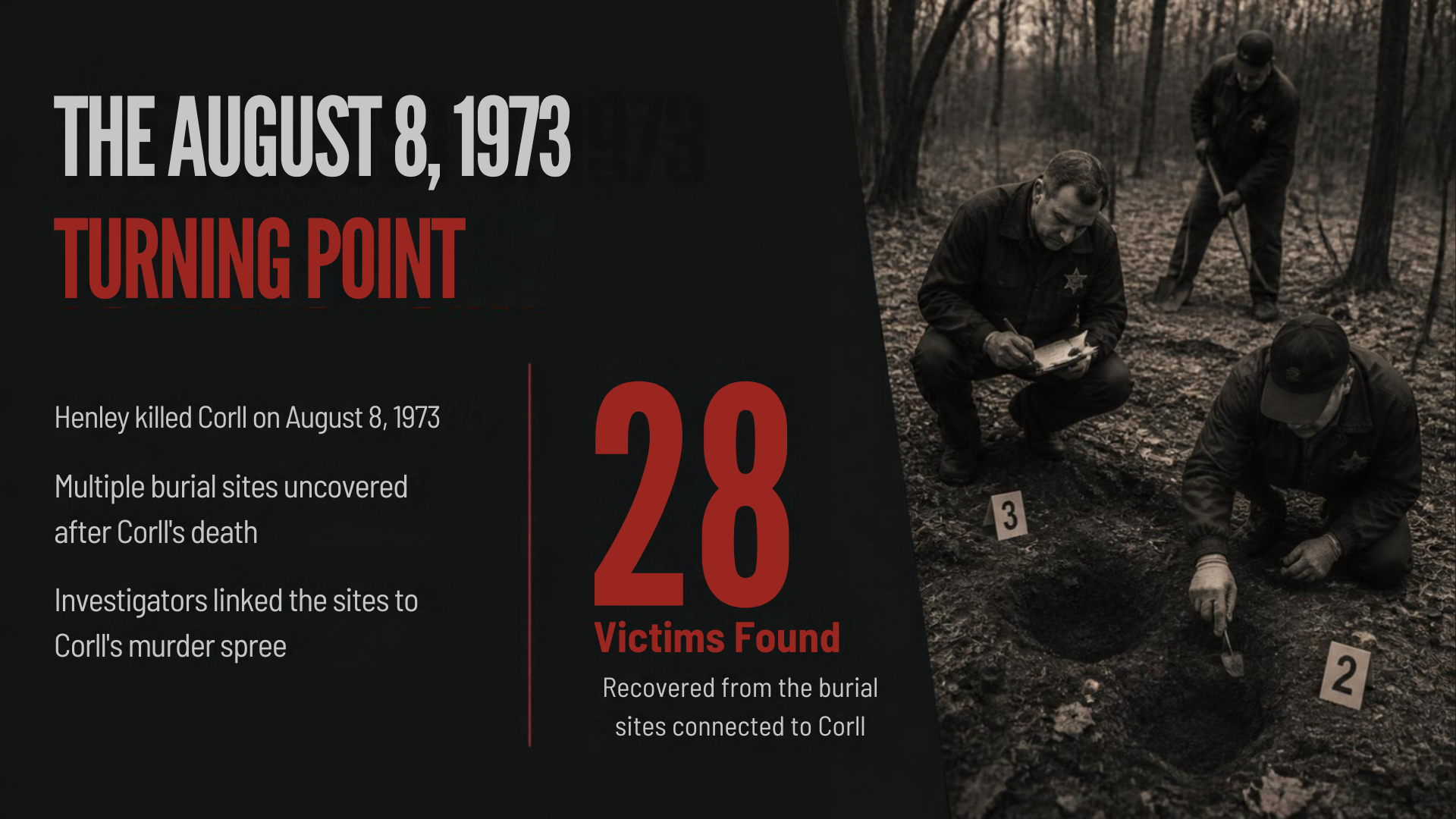
Let's delve into a critical turning point in the case—August 8, 1973.
On this day, Elmer Wayne Henley took a decisive action by killing Dean Corll. This event marked a significant shift in the narrative, ending Corll's reign of terror and leading to the discovery of multiple burial sites. These sites were directly linked to Corll's series of horrific murders.
As a result of Henley's actions, investigators were able to uncover the full extent of Corll's crimes. A total of 28 victims were found, a testament to the scale of the tragedy.
This moment not only brought to light the magnitude of the murders but also highlighted the complexities involved in Henley's role and the broader societal failures that allowed such a nightmare to persist.
In this slide, we're diving into the complex interplay between victimization, manipulation, and responsibility.
First, consider the heartbreaking reality of a teenager groomed into committing violence. While Henley was indeed manipulated, he was also held accountable for his actions. This duality raises essential questions about how we understand responsibility and victimhood.
Next, reflect on the mind's struggle to cope with trauma and guilt. Henley's experience highlights how psychological manipulation often masquerades as loyalty. It's a stark reminder of how deeply one can be influenced when under the sway of a persuasive figure.
Finally, let's acknowledge the systemic failures that allowed these tragic events to unfold. Such failures remind us of the importance of vigilance and intervention to protect vulnerable individuals.
As we move into the next slide, we'll explore these themes further, examining the influence of grooming and coercion on adolescent vulnerability.
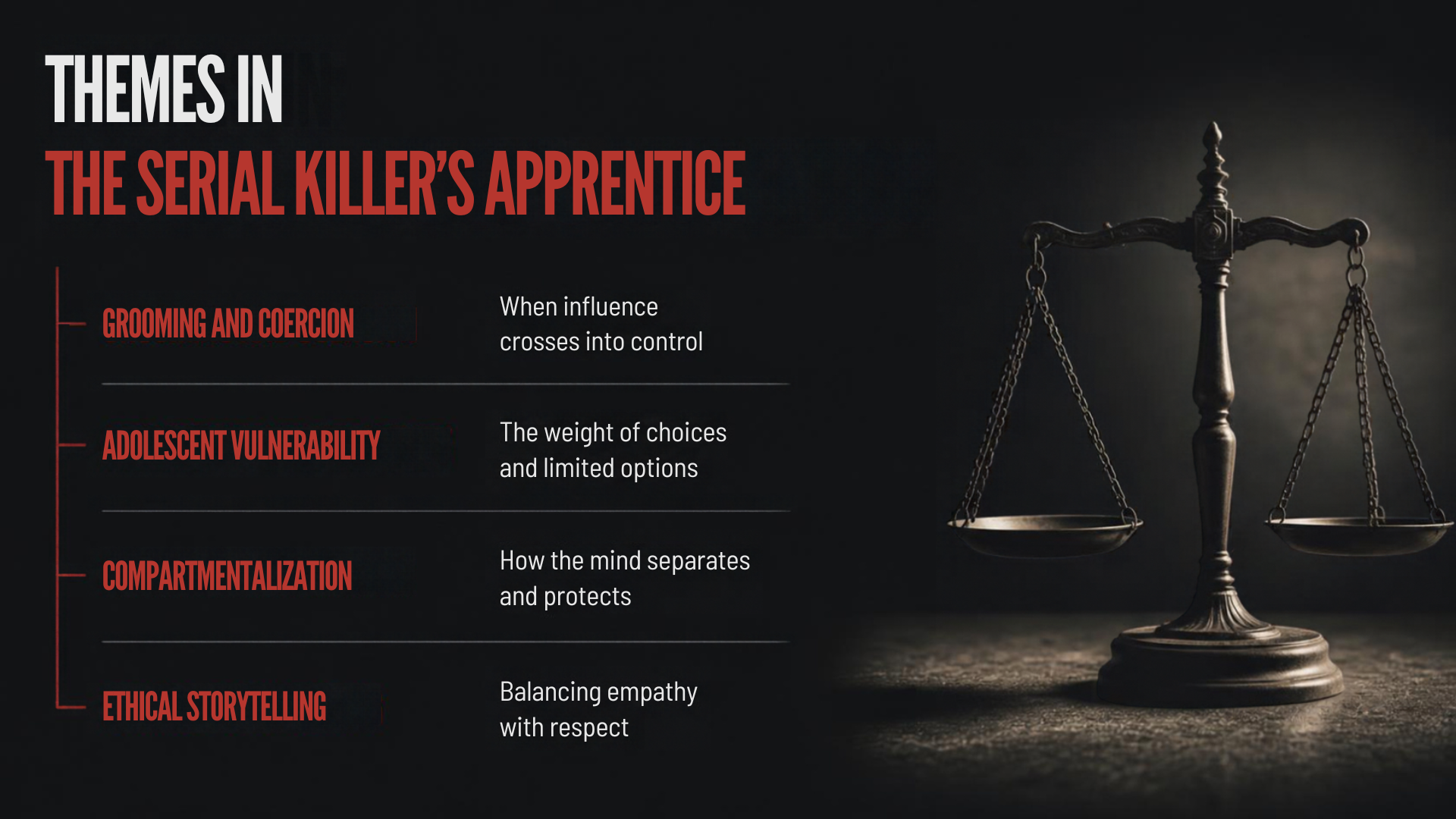
When examining the themes within "The Serial Killer’s Apprentice," we can identify key elements that are crucial for understanding the complexity of this case.
First, let's consider Grooming and Coercion. This theme explores the troubling dynamic where influence crosses into control. In many cases, young individuals are manipulated by those they trust, leading them down a path they might never have chosen on their own.
Next is Adolescent Vulnerability. Adolescents often face a limited set of options and immense pressure, which can heavily influence their decision-making. We need to reflect on how these vulnerabilities can be exploited and what that means for accountability.
Finally, Compartmentalization is a psychological strategy where the mind separates conflicting thoughts and emotions to protect itself. This is particularly relevant in understanding how someone might continue functioning in the face of trauma or wrongdoing.
The last point, Ethical Storytelling, reminds us of the importance of balancing empathy with respect for all individuals involved. It's about telling these stories with sensitivity, acknowledging the victims while understanding the complexities of those involved.
These themes guide us in navigating the intricacies of this narrative, prompting us to consider deeper ethical questions and implications.
As we move forward, keep these themes in mind as they will be pivotal in our upcoming discussion.
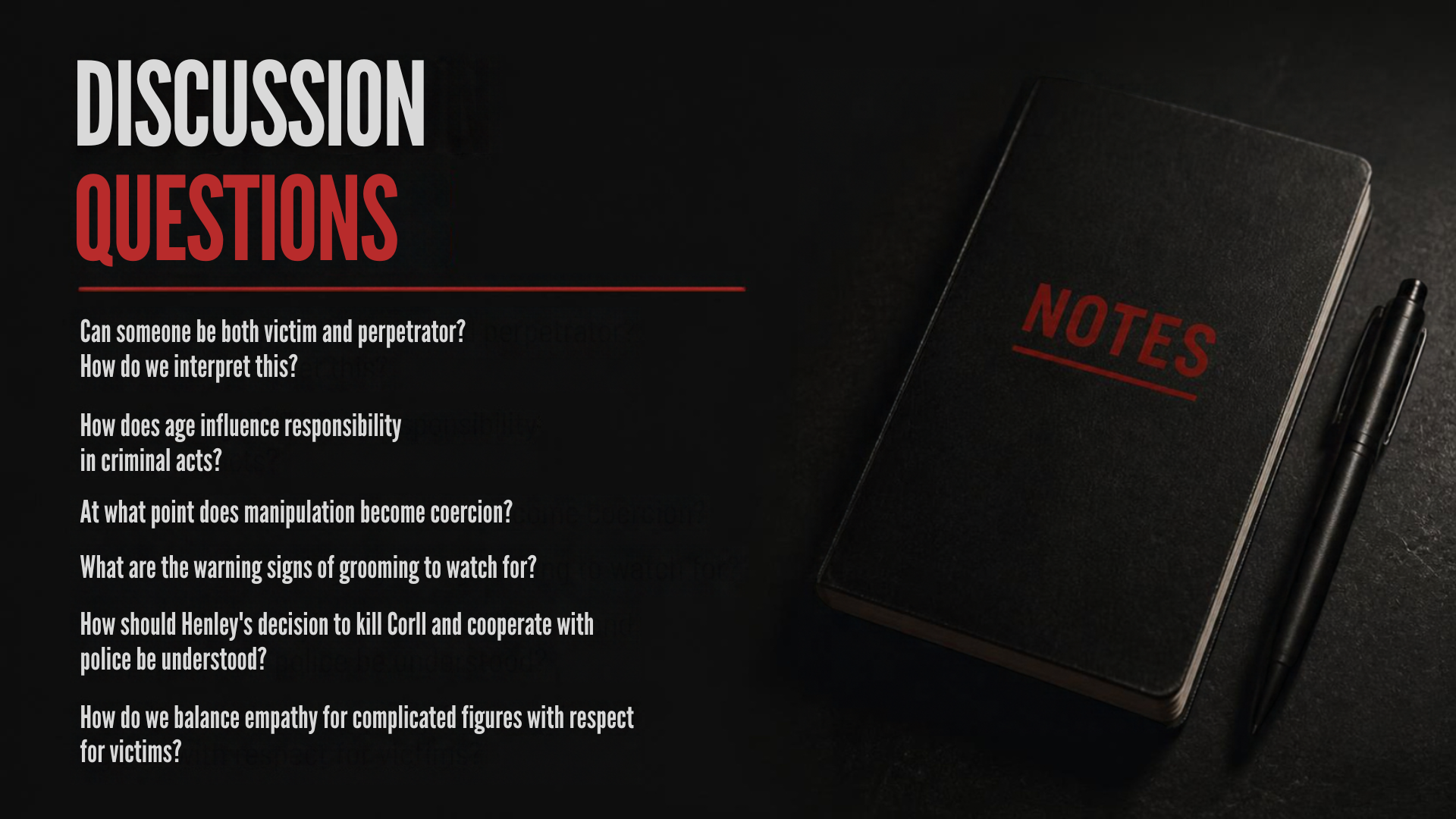
As we move into the discussion portion of our presentation, let's take a moment to delve into some thought-provoking questions.
Firstly, can someone be both a victim and a perpetrator? This duality can be complex to interpret, especially in cases where individuals are manipulated.
Consider how age plays a role in determining responsibility in criminal acts. Younger individuals often face different pressures and influences, which can affect their decision-making.
Another key point is understanding when manipulation crosses into coercion. Recognizing warning signs is crucial, particularly in cases of grooming.
When discussing Henley's decision to kill Corll and then cooperate with the police, we need to explore the nuances of his actions.
Lastly, how do we balance empathy for these complex figures while maintaining respect for the victims?
These questions are not just theoretical—they challenge us to consider broader ethical implications. Let's open the floor to your thoughts and insights.
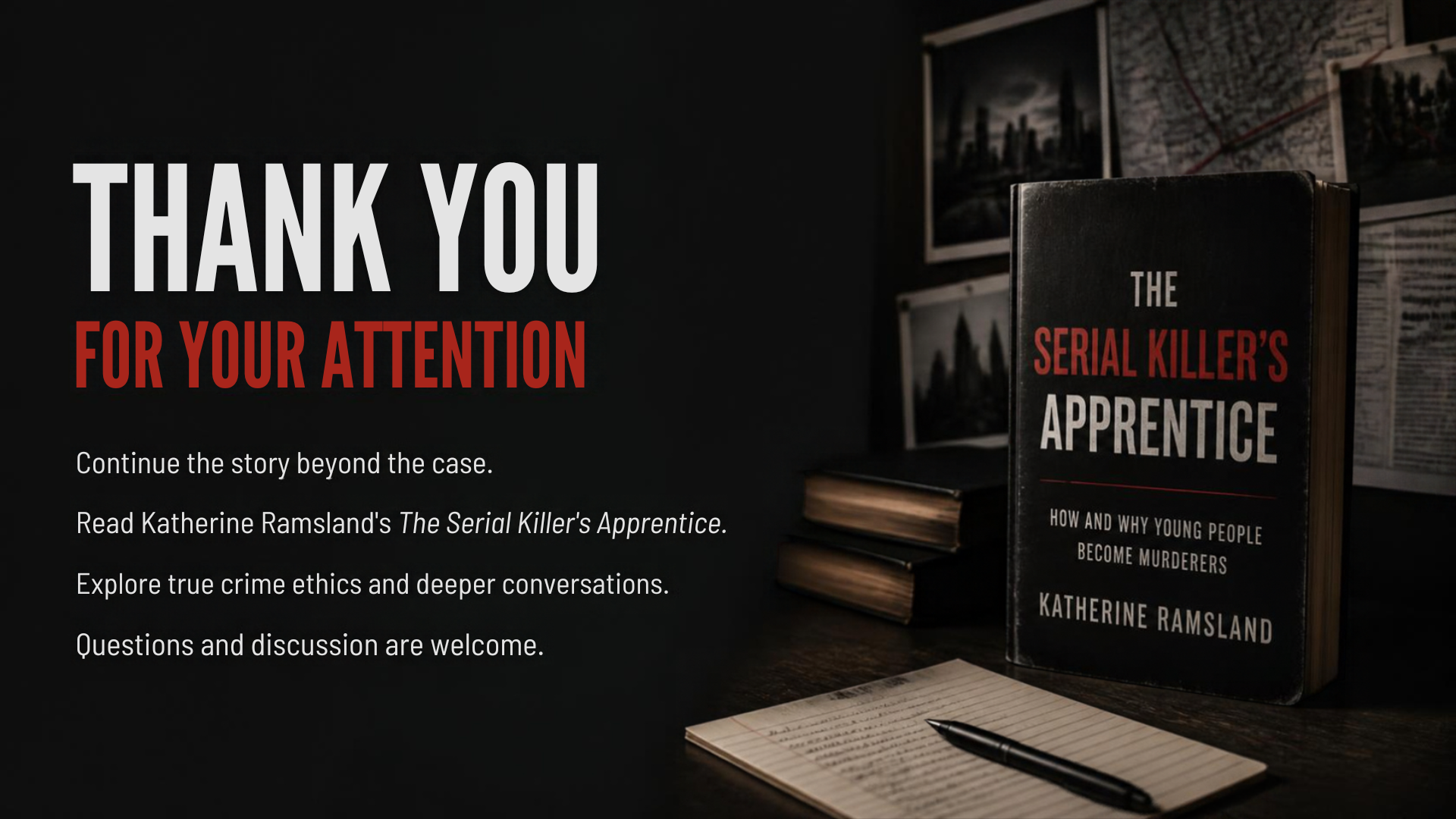
Thank you all for your attention today.
As we wrap up, I encourage you to continue exploring the story beyond this case. Katherine Ramsland's "The Serial Killer's Apprentice" offers an insightful exploration into these complex themes.
Consider delving into the ethics of true crime and engage in deeper conversations about the implications of such narratives.
Please feel free to ask any questions or share your thoughts—this is a topic that thrives on discussion and diverse perspectives.
About the Creator
Kristen Barenthaler
Curious adventurer. Crazed reader. Librarian. Archery instructor. True crime addict.
Instagram: @kristenbarenthaler
Facebook: @kbarenthaler
Enjoyed the story? Support the Creator.
Subscribe for free to receive all their stories in your feed. You could also become a paid subscriber, letting them know you appreciate their work.
Comments
There are no comments for this story
Be the first to respond and start the conversation.