Latest Stories
Most recently published stories in Criminal.
Leonarda Cianciulli: The Soap-Maker of Correggio
The House of Secrets in Correggio In the quiet northern Italian town of Correggio, Reggio Emilia, neighbors remembered Leonarda Cianciulli as a kind woman — generous, maternal, even charming. She ran a small shop, told fortunes, and offered advice to those seeking luck or love.
By Silvia Chiarolanza11 months ago in Criminal
France: daring daytime heist at the Louvre Museum in Paris
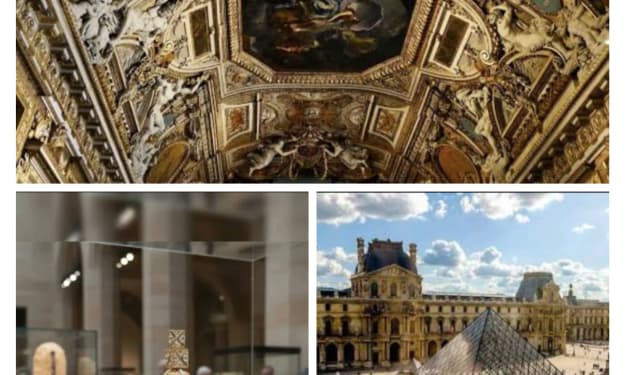
The Louvre Robber The Louvre Museum in Paris is one of the world’s greatest cultural institutions. It holds thousands of priceless artworks and historical artifacts, including masterpieces such as the Mona Lisa and the Venus de Milo. Known for its beauty and significance, the Louvre attracts millions of visitors every year. However, in October 2025, this symbol of art and heritage became the scene of a shocking robbery that left the public and authorities stunned. A group of organized thieves managed to break into the museum and steal valuable Napoleonic jewels, raising serious questions about how such a crime could occur in one of the most secure museums on earth.
By America today 11 months ago in Criminal
The Leap into the Void: The Air Escape Legend That Shook America
On the afternoon of November 24, 1971, the day before Thanksgiving, a man calling himself Dan Cooper approached the Northwest Orient Airlines counter in Portland, Oregon. Cooper was a completely nondescript individual: a calm, middle-aged man in a dark business suit, a crisp white shirt, and a black clip-on tie. Using cash, he bought a one-way ticket for Flight 305, a short, routine hop to Seattle, Washington.
By Alexander Reeve11 months ago in Criminal
The Cruel King and the Silent Village
Long ago, in a kingdom surrounded by golden deserts and deep rivers, there ruled a king whose name made even the wind tremble — King Arvash. His palace shone with diamonds, but his heart was made of stone. He believed that fear was power, and cruelty was control.
By Ghalib Khan11 months ago in Criminal
The “No Kings” Movement — A New American Call for Democracy
The “No Kings” Movement — A New American Call for Democracy** In recent weeks, the “No Kings” movement has emerged across the United States as a powerful social and political statement. The phrase, simple yet deeply symbolic, represents a growing call among Americans to reaffirm democratic values and resist any sign of authoritarianism or excessive concentration of power in the hands of political leaders. Although the slogan is new, the idea behind it is rooted in the very foundation of American history — a nation born out of opposition to monarchy and built on the principles of equality and shared governance. --- ## A Brief Overview of the “No Kings” Movement The “No Kings” movement began as a public response to what many see as the erosion of democratic norms and accountability within government institutions. Protesters, commentators, and ordinary citizens have adopted the slogan as a reminder that the United States was founded on the belief that no one person should have unchecked power. The phrase first appeared on social media and in public demonstrations, often written on signs, shirts, and murals. Soon, it became a unifying expression across different political groups — liberals, moderates, and even conservatives who share concerns about the balance of power. The movement’s central message is that democracy thrives only when leaders serve the people, not the other way around. “No Kings” does not target one individual alone. Instead, it calls for vigilance in defending the democratic system itself. The protests and discussions surrounding it emphasize the importance of transparency, independent institutions, and an informed citizenry that holds its government accountable. --- ## Historical Context The roots of the slogan go back to the American Revolution, when early settlers rejected the rule of King George III and built a republic guided by the principle that leadership should be temporary and earned through consent. The Constitution was written to prevent tyranny — whether by a monarch or by an elected official abusing power. The “No Kings” movement revives this foundational sentiment, reminding citizens that democracy requires constant defense and renewal. In the 21st century, many citizens have grown concerned that political polarization and the concentration of influence in executive offices threaten that original balance. “No Kings” serves as a warning that even democratic nations are not immune to the gradual erosion of freedoms if citizens stop participating actively in governance. --- ## The Message and Its Broader Meaning The movement’s message is not about rejecting leadership; rather, it demands leadership that listens, respects institutions, and operates within constitutional boundaries. Supporters believe that the strength of America lies in its ability to question authority peacefully and to insist that no leader stands above the law. Participants in “No Kings” rallies often emphasize civic engagement — voting, local activism, and open debate — as the true expression of patriotism. The call for “No Kings” is therefore not about rebellion but about responsibility: a reminder that citizens must be guardians of their democracy. --- ## Questions People Often Ask **What does “No Kings” actually mean?** The slogan symbolizes resistance to absolute power and a call to preserve democratic institutions. It reminds leaders and citizens alike that the country was founded on the principle of equality before the law, not rule by one powerful figure. **Is the “No Kings” movement political or nonpartisan?** While it has political implications, the movement presents itself as nonpartisan. It focuses on values — democracy, accountability, and freedom — rather than promoting any particular political party. People from various backgrounds have joined in, united by the belief that government must serve the people. **Why is it gaining attention now?** The slogan has become popular because of growing tensions in national politics and concerns about executive overreach. Many citizens feel the need to restate the country’s founding ideals during a time when trust in institutions has declined. **How are people expressing their support?** Supporters have organized peaceful rallies, written opinion pieces, and shared the slogan online. It appears on handmade posters, digital art, and community events. Some schools and civic groups are also using the phrase as part of discussions about constitutional rights and the importance of participation in democracy. **Could this become a larger movement?** Yes, the potential is strong. The simplicity of the message makes it easy to connect with. If the sentiment continues to resonate with citizens who want fair representation and transparency, “No Kings” could grow into a lasting civic movement encouraging more engagement in democratic processes. --- ## The Broader Implications The “No Kings” movement reveals something fundamental about the American spirit — a refusal to accept complacency in the face of power. Whether viewed as protest or patriotism, it reflects the deep belief that freedom is not guaranteed but earned through continued effort and vigilance. At its heart, “No Kings” reminds people that democracy is not just a system of government; it is a collective promise between citizens and leaders. When that promise weakens, movements like this rise to renew it. The real strength of the United States lies not in the authority of any single leader but in the unity of millions of citizens who care enough to defend their principles. As one observer put it, the phrase “No Kings” is not just a protest cry — it is a declaration of purpose. It reaffirms that the country’s destiny belongs to its people, not to power, and that in every generation, the promise of liberty must be made new again.
By America today 11 months ago in Criminal
The Murder That Changed the Law: The Catina Salerno Case
A promising life cut short On a warm September evening in 1979, 18-year-old Catina Rose Salerno walked across the quiet campus of the University of the Pacific in Stockton, California. She was young, beautiful, and ready to begin a new chapter — college life, new friends, and a future full of dreams. But before the sun set, her life was brutally taken.
By Faeze Gholami11 months ago in Criminal
“The Fall of the Everwoods”
In the heart of Vancouver’s elite hills stood the Everwood Estate — a sprawling mansion of glass and marble, a place where money spoke louder than morality. The Everwood family was the epitome of wealth: private jets, exotic vacations, and champagne mornings. They owned half the skyline, and their name shimmered in every gala. But beneath that glitter, something dark was festering — secrets layered thicker than their fortune.
By Phoenix Knight 11 months ago in Criminal