Latest Stories
Most recently published stories in Criminal.
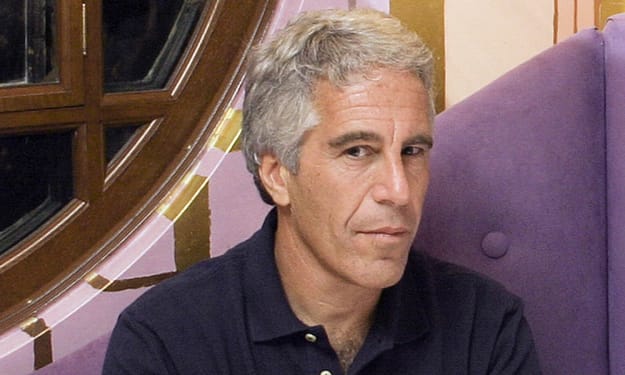
Revisiting Jeffrey Epstein's "Demise": Here's What We Know Now
Every once in a while, a story comes along that refuses to stay buried. Most scandals eventually fade; the news cycle moves on; people lose interest. But the Jeffrey Epstein saga is not one of those stories. It lingers. It mutates. It resurfaces when you least expect it. And the more I try to step away from it, the more I find myself pulled back in.
By Lawrence Lease10 months ago in Criminal
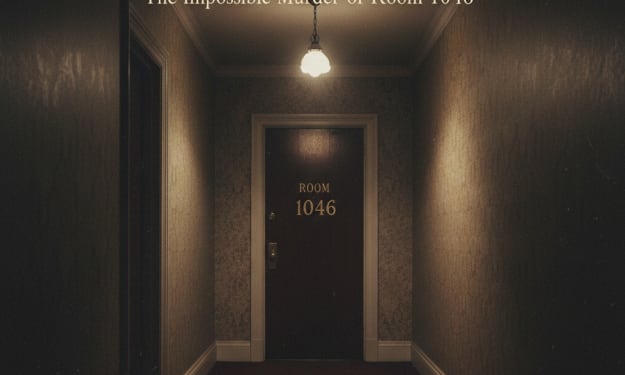
The Man Who Locked Himself In: The Impossible Murder of Room 1046
There are murders that frighten you because they are violent. And then there are murders that frighten you because they make no sense at all. The case of Room 1046 sits firmly in the second category — a story built of contradictions, shadows, unanswered questions, and a victim whose own identity was a mystery. The year was 1935. The place: the President Hotel in Kansas City, Missouri. A tall building, busy enough to feel alive but quiet enough for travelers to disappear in the flow of guests. People checked in. People checked out. Nothing unusual. Until a man calling himself Roland T. Owen walked through the lobby doors and changed the hotel’s history forever. A Man With No Story He arrived with almost nothing: A comb. A toothbrush. A hairbrush. No luggage. No real address. A name that felt like a pseudonym from the moment he spoke it. Witnesses described him as polite but tense, like someone carrying a weight he didn’t want to explain. He requested an interior room — one with no window view — and the clerk handed him the key to Room 1046. That was the last normal moment in the entire case. From here on, the story bends into angles that don’t fit. The First Strange Signs Housekeeping entered his room later and found something odd: Owen was sitting in the dark. All the lights were off, the blinds drawn tight, as if the outside world was an enemy. He seemed nervous. Distracted. He spoke quietly, almost carefully, as if someone else was listening. A maid later recalled his words: “Don’t lock the door — I’m expecting someone.” That sentence became a puzzle piece no one could place. Who was he waiting for? Why in the dark? Why in a nearly empty hotel? The Phone Calls, the Voices, the Fear In the next 24 hours, staff noticed more odd behavior: • Owen kept the room completely dark. • He barely left his bed. • He spoke to someone on the phone in a low, worried voice. • He mentioned a man named “Don” — a name that would become the ghost of the investigation. Witnesses heard fragments like: “I’ll be there tomorrow… I knew that…” “Don, don’t put it off, let’s settle it.” Settle what? Money? Threats? Blackmail? Something darker? No one knows. But the fear in his voice stayed with every witness who heard it. The Night Everything Broke By the second night, the hotel staff noticed the door to Room 1046 locked from the outside — which meant someone had left. But Owen was still inside. That detail alone makes the case feel impossible. How does a man stay inside a locked room… without locking it? Was he hiding from someone? Was someone locking him in? Or was someone entering and exiting quietly, with a key that should not have existed? The answer never came. The Discovery: A Room of Shadows and Blood On the morning of January 4th, a bellboy approached Room 1046 to deliver a message. The door was still locked. He knocked. A weak voice answered: “Come in.” But the door was locked — from the inside this time. When the bellboy reminded the man he couldn’t enter, the voice simply replied: “Turn on the lights.” It made no sense. Finally, worried, staff fetched a master key. And when the door opened, the scene inside looked like something from a nightmare. Owen was on his knees, naked, drenched in blood, his hands bound, his head wounded. The telephone had been ripped from the wall. Towels, sheets, and the carpet were soaked red. Yet he was still alive. Barely. When asked who did this, he whispered something that still haunts police files: “Nobody did this… I fell… against the bathtub.” A man with stab wounds and bindings was trying to protect someone — or something. Minutes later, he collapsed. By that afternoon, Roland T. Owen was dead.
By The Insight Ledger 10 months ago in Criminal
The Silent Twins: A Bond So Deep It Terrified Everyone Who Tried to Break It
There are mysteries made of missing people, strange footprints, or odd camera footage. Then there are mysteries like that of June and Jennifer Gibbons — two girls who never disappeared, never hid, never ran… yet remained unreadable, unreachable, and ultimately unexplainable. Their story feels less like true crime and more like a psychological ghost story written in real time. June and Jennifer were born in 1963 to a Caribbean family living in Wales. From the moment they could talk, something unusual began to show. They didn’t interact with the world the way other kids did. They stayed together, walked in sync, and developed a mirrored behavior that teachers, neighbors, and even psychologists found unsettling. The first red flag came in school: they spoke, but not to anyone else. Not to teachers. Not to classmates. Not even to their own parents. The silence wasn’t shyness. It was an act of exclusion — a deliberate closing of the door between them and everyone else. But the most shocking twist? They talked constantly — to each other. Rapid, fluid, expressive. A private language nobody else could understand. Their secret world had two rules: 1. Trust no one outside the twin bond. 2. Mirror each other’s life exactly, so neither could break the symmetry. For years, the girls were placed in special programs, speech therapy, and counseling. Experts suggested autism, selective mutism, trauma — every explanation except one: maybe the girls simply wanted their world to exist without outsiders. By their early teens, silence hardened into rebellion. June and Jennifer started committing small crimes — shoplifting, petty vandalism, breaking into homes. Their diaries later revealed they didn’t do these things out of thrill, but out of mutual pressure. Each wanted the other to push further. Each wanted to prove loyalty by matching the other’s actions. Eventually, a series of arsons sealed their fate. They were arrested and sent to Broadmoor, a high-security psychiatric hospital in England. It was the kind of place that housed violent offenders… and also two teenage girls who refused to speak. Broadmoor became a prison inside a prison. Not because of its walls — but because the twins’ own bond became suffocating. Their diaries, discovered years later, remain some of the most haunting personal writings ever recorded. Jennifer wrote: “I want to live. But I live through her. We are one. We are two. We are the same.” June wrote: “She is my shadow, and I am hers. Without her, I might live. But without me, she will not.” The twins' relationship was not simply close — it was parasitic, interdependent, and at times violent. They fought physically. They resented each other. They felt trapped inside a partnership they could not leave. The eeriest pattern: whenever one twin grew stronger — more confident, more expressive — the other weakened. It was as if their identities were sharing the same battery, taking turns draining each other. After 11 years in Broadmoor, the hospital finally arranged to move them to a lower-security facility. A journalist who had been following their story visited them days before the transfer. During that meeting, Jennifer said something chilling: “It’s been decided.” The journalist asked, “What has been decided?” Jennifer replied: “One of us has to die.” She said it calmly. Without fear. As if announcing the weather. And then came the moment that turned a psychological case into a supernatural legend. On the day of the transfer, Jennifer suddenly collapsed in the van. She was unresponsive, her eyes half-open. No drugs in her system. No injuries. No poisoning. No signs of trauma. She died hours later. The cause of death? Acute myocarditis — inflammation of the heart. No reason. No disease. No infection. Healthy girl, no medical history, no trigger. Doctors called it “natural,” but privately admitted it made no biological sense. June’s reaction was stranger than the death itself. She didn’t scream, faint, or panic. She simply said: “I’m free.” And then she began to speak — really speak — to doctors, to nurses, to investigators, and later to journalists. Her lifelong selective mutism disappeared as if a spell had been broken. Within months, she was living independently. Within years, she was fully rehabilitated. Today, she lives quietly in Wales, a normal woman with an abnormal past. The world still wonders: Did Jennifer die naturally? Did she choose to die? Did June’s freedom come at the cost of her twin’s life? Was their bond psychological, spiritual, or something beyond explanation? Even June refuses to give exact answers. In interviews, she simply says: “We had a pact. I can’t say more.” The Silent Twins remain one of the most unsettling mysteries in modern psychological history. A case where no monster existed outside them — the monster lived between them, inside a shared identity that broke the moment one heart stopped beating. It’s a reminder that not all mysteries require ghosts or killers. Sometimes, the strangest story is the human mind itself.
By The Insight Ledger 10 months ago in Criminal
Shootouts, Sex & Scandals: Crimes That Forever Haunted Small Towns
Most small towns are known for their peace, routine, and tranquil predictability. But a few become known for something else entirely: dark crimes that unfold behind closed doors and echo for decades. From sexual undergrounds to vigilante justice and catastrophic cult collapses, these are the stories that turned quiet towns into global sensations.
By Chelsea Rose10 months ago in Criminal
The Teen Killers Who Shocked the World
They were not hardened criminals, with no long-standing criminal history. They were just teenagers-kids who should have been thinking about school, friendships, and the future. Yet, behind innocent faces, they carried secrets so dark that the world still struggles to understand them.
By iftikhar Ahmad10 months ago in Criminal
The Shard Heist
Kael hated the deep. Not the kind of surface-dweller’s aversion to dark water, but a primal, bone-deep dread born of too many years wrestling with indifferent currents and crushing pressures. He was a salvage diver, or rather, had been. Now, he mostly nursed a dying sister and paid off debts that piled higher than the wreckages he once plundered. That’s how Silas Thorne found him, a shark circling a wounded fish. Thorne, with his silk suits and eyes like chips of obsidian, offered Kael a job that was less salvage and more sacrilege: retrieve something from Veridia, the Glass City.
By The 9x Fawdi10 months ago in Criminal
Reason First: San Diego May Pay $30M to Family of Black Teen Fatally Shot by Police
When a teen is shot in the back by police, dollar figures tend to tick upward almost always. San Diego is set to pay out $30 million to the family of 16-year-old Konoa Wilson who received a cop’s lethal round in January.
By Skyler Saunders10 months ago in Criminal
The Black Dahlia: The Unsolved Murder That Shocked Hollywood
Los Angeles, 1947: A young woman full of dreams and hope for a Hollywood career was found dead under horrifying circumstances. Elizabeth Short, later nicknamed the "Black Dahlia," had her body brutally mutilated and was left in a vacant lot. The city was shocked, the press went into a frenzy, and the case quickly became one of the most infamous unsolved murders in American history. Even more than seventy years later, the story of the Black Dahlia continues to fascinate people all over the world.
By iftikhar Ahmad10 months ago in Criminal