Latest Stories
Most recently published stories in Criminal.
The Epstein Files: Power, Silence, and the Paper Trail That Refused to Disappear
The phrase “Epstein Files” doesn’t point to a single document or dramatic reveal. Instead, it refers to a sprawling collection of court records, depositions, flight logs, emails, and unsealed testimonies connected to financier Jeffrey Epstein and his network. Together, these files form a disturbing paper trail—one that exposes how wealth, power, and silence collided for decades before the truth began leaking into public view.
By Story Prism8 months ago in Criminal
Shadows in the Desert: Inside the Disappearance of Nancy Guthrie
The desert is quiet in a way that feels deceptive. At first glance, Tucson’s foothills look like the kind of place where nothing truly bad happens — open skies, endless cacti, distant mountains, and sprawling homes set far apart from one another. But standing outside the house of 84-year-old Nancy Guthrie, the mother of Today Show host Savannah Guthrie, that quiet feels heavier now. It feels charged. Tense. Almost fragile.
By Lawrence Lease8 months ago in Criminal
Patients and wounded in Gaza strip
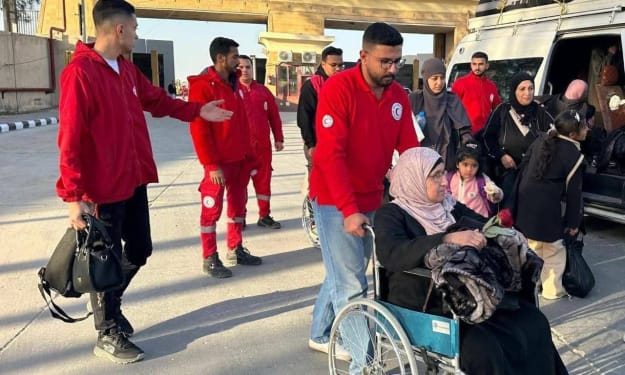
Thousands of patients in the Gaza Strip are facing complex and difficult health conditions, and the lives of a large number of them are threatened, as a result of the continued closure of the Rafah crossing. Despite the increasing talk about the imminent opening of the crossing, hopes in Gaza remain modest, with most expectations indicating that only a limited number of patients will be able to travel daily if the crossing is opened soon. The lives of 20,000 patients are at stake Around 20,000 patients are living in extremely dangerous health conditions, and their lives are threatened. They are waiting for the crossing to be opened so they can travel abroad for treatment. According to information from the Ministry of Health, these patients are distributed among those suffering from critical injuries, kidney patients, cancer patients, children with heart problems, and infants born with congenital deformities. Zaher Al-Wahidi, director of the Health Information Center at the Ministry of Health in Gaza, confirmed that there are more than 20,000 patients on waiting lists for treatment abroad, including 4,500 children, 4,000 cancer patients, and 6,000 wounded, including 440 very critical and urgent cases. Al-Wahidi explained that the Ministry of Health in Gaza has lists ready of the names of patients to travel and receive treatment abroad as soon as the Rafah crossing is opened, adding that we do not have any information or data about the number of patients who will travel in the first batch if the crossing is opened. He stressed that the continued closure of the crossing leads to the loss of patients’ lives daily, as 1,268 patients who were on waiting lists and were not allowed to travel have died so far. These numbers have been recorded since the closure of the Rafah crossing on May 7, 2024 until now. Al-Wahidi explained that before the crossing was closed, about 50 patients out of 200-250 travelers used to travel daily. He pointed out that since the closure of the Rafah crossing due to the Israeli invasion of the city of Rafah in the southern Gaza Strip, only 3,100 patients have been evacuated in 20 months. Meanwhile, Dr. Mohammed Abu Nada, the medical director of the Gaza Cancer Center, confirmed that the cessation of transferring cancer patients for treatment abroad after the closure of the crossing led to the spread of the disease and the deterioration of cases, resulting in death. Abu Nada explained that the medical capabilities in Gaza are very weak, and that the chemotherapy treatment currently available dates back 30 years, with a limited success rate, due to the lack of modern treatments despite the World Health Organization's attempts to introduce them. Death and oppression The baby, Sajoud Alian, breathed her last breaths just 7 days after her birth, after being denied permission to travel abroad for treatment, even though she was supposed to leave the Gaza Strip for treatment abroad immediately after her birth. According to Sajoud’s family, she was suffering from a blockage in the aorta and two holes in her heart, which required urgent medical intervention that was not available inside the besieged sector. If she had been allowed to travel, she could have been treated in specialized centers, but she lost her life because of the siege. Sajoud was not the only one who faced this fate. Thousands of patients have died or are threatened with death as a result of the siege and the closure of the crossings, especially kidney patients, cancer patients, and newborn infants suffering from congenital deformities. According to the director of Al-Shifa Medical Complex, Dr. Muhammad Abu Salmiya, the cessation of bombing has not led to an improvement in the health situation in Gaza, stressing that hospitals are facing a very dangerous stage with the increasing number of patients, a severe shortage of medicines, and the continuation of daily deaths. Abu Salmiya revealed that about 50% of kidney dialysis patients have been lost, with daily deaths continuing to be recorded, due to the absence of more than 70% of their medications, noting that cancer patients are facing a similar shortage that threatens their lives. He pointed out that hospitals are currently operating at more than 150% of their capacity, amid a near-total lack of medicines and medical supplies, describing the current stage as one of the worst health stages that the sector has gone through since the start of the war. Preventing the arrival of medical supplies and delegations The occupation did not stop at preventing travel, as the health sector in Gaza is facing an unprecedented collapse as a result of the continued Israeli restrictions on the entry of medicines, medical supplies, fuel, and specialized delegations, which has led to hospitals going out of service, a severe shortage of up to 70% in basic medical supplies and consumables, the spread of epidemics, and the threat to the lives of thousands of wounded and sick people, especially in Rafah and the southern part of the Strip. Dr. Alaa Halas, Director of Pharmaceutical Care at the Palestinian Ministry of Health in Gaza, confirmed that the large shortage of medicines currently recorded is the highest in two years, exceeding even the most severe periods during the war, which portends serious repercussions for the lives of thousands of patients, especially those with chronic diseases, cancer, kidney and heart diseases. Helles stressed that this unprecedented deficit reflects a rapidly deteriorating health system, given the continued prevention by the occupation of the entry of medical supplies and specialized delegations. He explained that the Ministry of Health is suffering from a severe shortage of essential medicines and medical supplies, as a large percentage of vital medicines have run out, and the shortage of medical supplies has exceeded two-thirds of the list, which has greatly limited the ability of hospitals to provide their basic and emergency services. He pointed out that the impact of this shortage was directly reflected in specialized services, as the capabilities of operating rooms and intensive care units declined, and delicate surgical services, including open-heart surgeries and specialized orthopedic surgeries, were stopped or reduced. Cancer, blood disease and dialysis services were also affected, leading to a reduction or suspension of sessions in some facilities. Helles stressed that the continued prevention of the entry of medicines and medical supplies, along with preventing the entry of specialized medical delegations, represents a form of "indirect killing" of patients in Gaza, where health conditions deteriorate as a result of the forced interruption of regular treatment, and may end in death in some cases. Zaher Al-Wahidi appealed to humanitarian and international organizations to work diligently to open the Rafah crossing urgently and continuously, stressing at the same time the need to bring in specialized medical delegations to support the health personnel in Gaza, with the need to help in repairing what can be repaired of the health facilities to ensure the continued provision of necessary medical services. Israel imposes its control over the crossing The so-called "Coordinator of Government Activities in the Territories" announced that the opening of the Rafah crossing during the past two days was an initial trial phase in coordination with the European mission and Egypt. The coordinator confirmed that actual traffic will begin at the Rafah crossing in both directions as soon as preparations are completed. The "coordinator" in the occupation government indicated that residents would be allowed to enter and exit through the Rafah crossing in coordination with Egypt, following Israeli security approval and under European supervision, noting that the Rafah crossing would operate according to the mechanism implemented in January 2025. The coordinator noted that those who left during the war will be able to return from Egypt to Gaza with Egyptian coordination after Israeli security approval, and that the European mission will carry out the initial examination followed by additional procedures at the axis under the control of the army.
By Pets and animals 8 months ago in Criminal
The New Battlefield: Sovereignty in the Age of Secrets
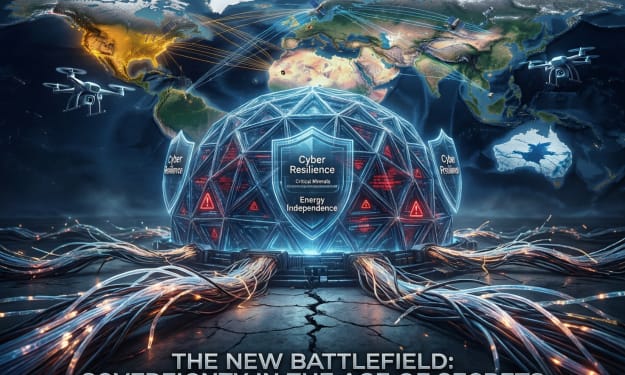
The New Battlefield: Sovereignty in the Age of Secrets As we look deeper into modern global conflicts, it becomes clear that the battlefield has changed. Wars are no longer fought mainly on physical borders or traditional frontlines. Instead, the real fight now happens inside a nation itself, within its financial systems, digital networks, infrastructure, and even public thinking. This internal structure can be compared to a human nervous system. If it is damaged, the entire body becomes weak, even if no physical attack takes place.
By Wings of Time 8 months ago in Criminal
The Banyan Tree Ritual: The Chilling Mystery of the Burari Deaths
The House of Secrets: The Chundawat Family’s Ritual to Nowhere On the morning of July 1, 2018, the Burari neighborhood in North Delhi didn't wake up to its usual rhythm. The Chundawat family, known for their kindness and their thriving grocery shop, hadn't opened their doors. By 7:30 AM, neighbors grew concerned. The shop, which was a cornerstone of the community, was never late. When a neighbor finally climbed the stairs to their home to check on them, he found the front door unlocked. He stepped inside and was met with a sight so horrifying it would traumatize the nation and later become the subject of the chilling Netflix docuseries, "House of Secrets: The Burari Deaths."
By Mayar Younes8 months ago in Criminal
The man who stole the world
M Mehran At first, no one noticed the pattern. People simply woke up to find their lives gone. Bank accounts emptied. Credit ruined. Medical records altered. Even wedding photos deleted from cloud storage. It wasn’t just theft—it was erasure. The media called it the largest identity theft crime in modern history. But they didn’t know the worst part yet. A Crime Without a Face Cybercrime investigator Mila Novak stared at the screen for hours, scrolling through files that didn’t make sense. Over two hundred victims across six countries. Different banks. Different devices. Different habits. One thing was common. Every victim received a single email before their life collapsed. No threats. No malware links. Just one sentence: “You should have protected it better.” Mila had seen hackers before—greedy ones, reckless ones, desperate ones. This one was different. This one was personal. The Victims Who Vanished One victim was a schoolteacher who lost her savings and was declared legally dead after her medical records were altered. Another was a businessman arrested at an airport for crimes committed under his stolen identity. One man took his own life. That was when the case stopped being digital. It became human. Mila couldn’t sleep. She replayed interviews in her head—voices shaking, eyes hollow. “These aren’t just stolen identities,” she told her team. “Someone is destroying people intentionally.” The Hacker’s Signature The breakthrough came from an old technique most criminals had forgotten. Handwriting. The email sentence—“You should have protected it better”—appeared in every case. Same phrasing. Same punctuation. Same cold tone. A signature. Mila cross-referenced old cybercrime forums and found it buried in a decade-old discussion thread. A username: GhostLedger A hacker who vanished after exposing a corrupt tech company years earlier. The forum said GhostLedger didn’t steal money. He took revenge. A Past Rewritten Mila traced the digital trail to an abandoned data center on the outskirts of the city. Inside, among humming servers and dust, she found something unexpected. A bedroom. Photographs lined the wall—families, birthdays, graduations. None of them were his. They were the victims. Pinned beneath each photo was a note. “Lied.” “Cheated.” “Stole.” “Destroyed others first.” Mila finally understood. This wasn’t random cybercrime. It was punishment. The Criminal’s Truth They found him sitting calmly at a terminal, typing as if nothing mattered. His real name was Daniel Weiss—a former cybersecurity engineer fired after reporting massive data misuse. The company buried the scandal. Daniel lost his job, his reputation, his future. And then, his wife. Her identity was stolen years later. Her medical data altered. She died after receiving the wrong treatment. No one was charged. “No law protected her,” Daniel said quietly as Mila confronted him. “So I learned to work outside the law.” “You ruined innocent lives,” Mila replied. Daniel looked at her, eyes empty but steady. “They weren’t innocent,” he said. “They profited from broken systems. I just used the same systems on them.” Justice in the Digital Age Daniel was arrested without resistance. The media called him a monster. Online forums called him a hero. Victims demanded answers. Courts struggled to untangle destroyed identities. Some lives were restored. Some weren’t. Mila testified in court, but her voice shook—not from fear, but from doubt. Because part of her understood him. And that terrified her. The Real Crime Months later, the case closed. But the systems Daniel exploited? Still running. Still vulnerable. Still unprotected. Mila deleted the last email from GhostLedger’s archive. Before closing the file, she noticed something new—an unsent draft. Just one line. “The system was the real criminal.” She shut down the computer and walked away, knowing one thing for certain: In the modern world, crime doesn’t always wear a mask or carry a weapon. Sometimes, it just needs your data. Why This Criminal Story Hits Hard Because identity theft is more than fraud. Because cybercrime creates real victims. Because justice doesn’t always keep up with technology. And because the most dangerous criminals don’t break into homes— They log in.
By Muhammad Mehran8 months ago in Criminal
The Race for Resources: The Final Frontier of Power
The Race for Resources: The Final Frontier of Power As the struggle for influence intensifies, the world is entering a new era of resource competition that will define the next century. While the previous chapters of this story focused on cyber security and political interference, the next major shift is happening on the ground—and under the ice. The "Race for Resources" is no longer just about oil and gas; it is about the rare materials needed for the next generation of technology and the strategic routes that connect the East and the West. As nations like China expand their reach through massive investment projects, the Western world is waking up to a new reality: if you do not own the supply chain, you do not own your future.
By Wings of Time 8 months ago in Criminal
The Silent Struggle for Control
The Silent Struggle for Control In the world we live in today, the lines between business, politics, and our personal safety are starting to disappear. From the government offices in Canada and the United States to the growing power of China, a complex game of control is being played at the highest levels. This is no longer a world where power is only measured by the size of an army. Instead, power is measured by who controls the information, who owns the technology, and who can influence the mind of a nation. To understand our future, we must look closely at the hidden tactics used to influence nations and the digital systems we use every single day. One of the most serious warnings for any modern country is how easily its foundation can be hurt through invisible means. Experts believe that a national collapse does not always start with a physical war or a visible invasion. Instead, it begins quietly within our banking systems and our digital infrastructure.
By Wings of Time 8 months ago in Criminal
The Night a Child’s Name Almost Ruined an Innocent Man
Picture a quiet evening in Pataskala, Ohio, April 28, 2002. A 38-year-old mom named Rhonda Bogs is inside her house on the edge of town, stirring something on the stove while her two-and-a-half-year-old daughter Amanda plays nearby. She’d just talked on the phone with her husband Dave-he’s sitting in jail over unpaid child support, nothing violent, just life being messy. Rhonda glances out the window, sees a dark shape move past, shrugs it off. People walk by sometimes. She goes back to dinner.
By KWAO LEARNER WINFRED8 months ago in Criminal
The Man Who Vanished Into Thin Air: D.B. Cooper and America's Only Unsolved Hijacking. AI-Generated.
The Perfect Crime It was the day before Thanksgiving, 1971. A man who called himself Dan Cooper bought a one-way ticket on Northwest Orient Airlines Flight 305 from Portland to Seattle. He was polite. Unremarkable. Wearing a black tie and a dark suit, he looked like any other businessman. He ordered a bourbon and soda. He lit a cigarette. Then he handed the flight attendant a note. "I have a bomb in my briefcase. I will use it if necessary. I want you to sit next to me." What followed was one of the most audacious crimes in American history — and 50+ years later, we still don't know who did it. The Demands Cooper was calm. Methodical. He showed the flight attendant what appeared to be a bomb: red cylinders, wires, a battery. Whether it was real remains unknown. He never raised his voice. He never threatened passengers. His demands were simple: $200,000 in cash (about $1.5 million today), four parachutes, and a fuel truck waiting in Seattle. The airline complied. They weren't going to risk 36 passengers over money. When the plane landed in Seattle, Cooper released everyone except the flight crew. The cash and parachutes were delivered. Then came the part no one expected. The Jump Cooper ordered the pilots to fly toward Mexico City at the lowest possible altitude, under 10,000 feet, with the landing gear down and cabin unpressurized. Somewhere over the dense forests of southwestern Washington, in freezing rain and pitch darkness, he lowered the rear stairs of the aircraft. And he jumped. Into nothing. Into the night. Into legend. The Air Force scrambled jets to follow the plane. They saw nothing. When the aircraft landed, Cooper was gone. The rear stairs were down, whipping in the wind. On the seat where he'd been sitting: two of the four parachutes and his clip-on tie. That was it. The Hunt The FBI launched one of the largest manhunts in American history. They called it NORJAC — the Northwest Hijacking. Over the following decades, they investigated over 800 suspects. They found nothing definitive. In 1980, a young boy found $5,800 in rotting $20 bills on the banks of the Columbia River — serial numbers matching Cooper's ransom. It raised more questions than answers. Did he die in the jump? Did he bury the money? Did the river carry it downstream from a crash site? The FBI officially suspended the case in 2016. But amateur sleuths, obsessives, and investigators haven't stopped. New suspects emerge every few years. Books get written. Documentaries get made. Why We Can't Let Go D.B. Cooper wasn't a violent criminal. He didn't hurt anyone. He was polite to the crew, even thanking them. In an era of Vietnam, Watergate, and distrust of institutions, he became a folk hero — the little guy who outsmarted the system and disappeared. Some think he was a former paratrooper. Others believe he worked in aviation. A few think he was a Boeing employee who knew the 727's unique rear stairs could be lowered mid-flight. The truth? We may never know. What we do know is that a man walked onto a plane with a briefcase, walked off with a fortune, and walked into the clouds. He's either bones in a forest somewhere, or an old man who occasionally smiles at a secret the rest of us will never share. Did D.B. Cooper survive? If you had to guess, what happened to him?
By Reich Corp8 months ago in Criminal
Wisconsins Overlooked Pattern: How Many Cases Are We Not Talking About?
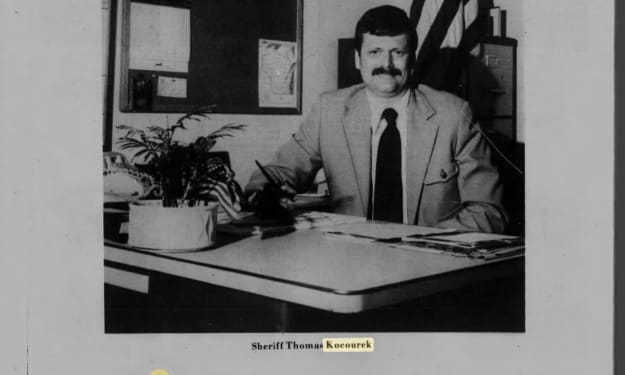
Wisconsin’s criminal history from the 1970s through the early 1990s is often discussed in fragments: a single notorious case, a single wrongfully convicted man, or a single serial offender. What is less frequently examined is the collective landscape—a dense cluster of murders, disappearances, infant deaths, sexual assaults, and investigative failures that unfolded across overlapping geography and time.
By SunshineChristina8 months ago in Criminal
The Epstein Files: Secrets, Power, and the Shadows They Hide
Some stories don’t wait for you to discover them .. they grab you by the throat. The Epstein Files are one of those stories. They reveal not just crimes, but a hidden architecture of influence, privilege, and immunity that few dare to examine.
By Aarsh Malik8 months ago in Criminal