Latest Stories
Most recently published stories in Criminal.
Eyes of Deception
The city of Aramor never slept. Neon lights flickered across rain-soaked streets, shadows stretched thin against brick walls, and voices carried secrets that never belonged to them. For most, it was simply a restless place. For Aric Veyra, it was a chessboard where every piece could kill. Aric was a spy, though the word sounded cleaner than reality. His life was a carefully constructed lie, each identity layered over the last until even he forgot which one was real. Tonight, his cover placed him as a mid-level broker in the East Docks district. His mission was to infiltrate a powerful syndicate, gather intelligence on their network, and disappear without a trace. But nothing in Aramor was ever that simple. From the start, things felt wrong. The fruit vendor he passed each night never blinked when the rain ran down his stall. The café waitress had a gaze too sharp, as if cataloguing every move. Even supposed allies spoke in riddles, offering just enough truth to keep him tethered and just enough lies to lead him astray. In this world, loyalty was an illusion. The only rule was survival. Aric played his role with precision—exchanging coded phrases in smoke-filled rooms, slipping microchips into hidden pockets, smiling at men who would slit his throat if they knew who he really was. Yet the deeper he moved into the syndicate’s web, the more tangled it became. Misinformation spread like wildfire, and his own handlers back at headquarters began feeding him instructions that contradicted one another. Was someone setting him up? The answer arrived in the form of Selene. She appeared at a clandestine meeting in a dimly lit bar, her presence disarming yet impossible to ignore. Dressed in black with eyes that gleamed like sharpened steel, she carried herself with a confidence that suggested she knew more than she ever said. Aric caught her watching him with an intensity that felt like recognition. Later, when their paths crossed again in the alley behind the bar, she spoke first. “You don’t belong here,” she said softly, her voice low enough to be stolen by the rain. Neither did she. Aric knew better than to trust anyone, but something in her tone carried a dangerous sincerity. Selene began appearing at the edges of his assignments—sometimes as an informant, sometimes as a savior when bullets flew. And always, she left behind the same whisper: Trust me. But Aric had learned the cruelest lesson of espionage—trust was a blade disguised as a hand, and it cut deepest when willingly grasped. Still, he let her closer. Against every instinct, he allowed her words to anchor him in the chaos. The final test came when Aric uncovered a file hidden within the syndicate’s archives. It wasn’t just intelligence—it was proof. Proof that someone inside his own agency had been feeding information to the syndicate. Proof that this entire mission had been designed not to dismantle enemies, but to expose him as expendable. Selene was there when he found it. “They’ll kill you for knowing that,” she said, her expression unreadable. “Unless I kill them first,” he replied. But her silence told him more than words ever could. She already knew. Perhaps she had known all along. The next night, they stood in a warehouse thick with shadows, surrounded by men who pretended to be allies but had already drawn invisible lines in the sand. Aric realized then that the game was not about syndicates or agencies. It was about survival. His survival. Selene’s eyes met his across the room. “Choose wisely,” she murmured. The firefight erupted. Betrayals unfolded with each gunshot, identities revealed in the flash of muzzle fire. Aric moved like a ghost, every step fueled by instinct and desperation. By the time silence fell, only he and Selene remained standing. She stepped closer, the file clenched in her hand. “Now you know the truth,” she said. “The question is—what will you do with it?” Aric studied her face, searching for cracks in her mask. But there were none. She was deception embodied, as much a spy as he was, and perhaps more dangerous because of it. He wanted to ask if her kindness had ever been real. If the touches, the whispers, the moments of fragile humanity between them were genuine—or just another part of the game. But in the end, he didn’t ask. Because he knew the answer didn’t matter. In the world they lived in, deception wasn’t a mask you wore. It was the face beneath. And as Aric walked into the night, the file hidden inside his jacket and Selene’s eyes burning in his memory, he realized the cruelest truth of all: The eyes of deception weren’t only around him. They stared back at him every time he looked in the mirror.
By LUNA EDITHabout a year ago in Criminal
Bread, Stones, and Dreams: A Palestinian Childhood
The aroma of freshly baked bread was always the first thing that greeted Youssef every morning. His mother would wake long before dawn, quietly kneading dough in the pale glow of the kitchen light. Their home was small, the walls worn and cracked, but the bread filled it with warmth and a sense of fragile normalcy. For Youssef’s family, bread wasn’t just food — it was life, dignity, and hope.
By Shaheen Khanabout a year ago in Criminal
The Silent Criminal
M Mehran Detective Elena Rivera hated quiet streets. They looked innocent, but in her experience, silence hid the darkest secrets. That night, she stood outside a small bakery on the corner of Maple and Third. The shop’s lights were still on, though it had closed hours ago. Inside, she found the owner, Mr. Keller, tied to a chair, trembling. The register was open, cash missing. Before Elena could speak, he whispered: “It was her. The girl with the violin.” The case baffled the precinct. The suspect wasn’t a gang member, not a desperate thief, not even someone with a record. It was Clara Voss, twenty-two years old, a gifted street musician who often played on that very corner. Witnesses described her as quiet, polite, almost invisible. Yet over the next month, crimes began to form a pattern—small businesses robbed, safes cracked, alarms bypassed. And always, someone swore they saw the same thing: a young woman carrying a violin case. Her nickname spread through the city like smoke. The Silent Criminal. Elena’s captain dismissed it. “Urban legend,” he grunted. “People see what they want. A violin case doesn’t make someone guilty.” But Elena couldn’t ignore the pattern. Every robbery was clean, efficient, no fingerprints. It reminded her of something—music. Each crime unfolded like a score, notes precise, timing flawless. She dove into Clara’s past. A conservatory dropout. Brilliant with strings, but her scholarship vanished after her father’s medical bills drained the family. Clara worked odd jobs, none stable. Somewhere between lost auditions and eviction notices, the gifted musician had disappeared into shadows. Elena knew one thing: talent like that doesn’t vanish. It transforms. One rainy night, Elena set a trap. She convinced the owner of a pawn shop rumored to be next on the list to cooperate. They left the register full, cameras hidden. Then Elena waited in the alley, watching raindrops dance under the streetlights. At 2:14 a.m., she heard it—a faint melody, soft, haunting, carried through the night. A violin. And there she was. Clara, slim figure wrapped in a dark coat, violin case slung over her shoulder. She moved with quiet confidence, slipping inside the shop as though the locks had been waiting for her. Elena followed, heart racing. She expected chaos. Instead, she found Clara kneeling at the safe, fingers moving in rhythm, as if playing invisible strings. Within minutes, the lock clicked open. “Clara Voss,” Elena said firmly. Clara froze. Slowly, she turned. Her eyes were tired, but calm. She didn’t run. She didn’t beg. She simply placed the money back into the safe, closed it, and whispered, “You’re too late.” The arrest shook the city. Newspapers printed her photo: a delicate young woman with the face of a violinist, not a criminal. People argued in coffee shops, in buses, on corners. Some called her a thief. Others called her a hero who robbed only from businesses known for exploitation—landlords, pawn shops, corrupt suppliers. Clara said little. During questioning, she remained polite, her answers clipped. “Why do it?” Elena pressed. “You’re gifted. You could’ve had a career.” Clara looked at her hands. “Music doesn’t pay hospital bills. It doesn’t stop landlords from locking the door. But crime… crime has rhythm. And once you learn the notes, it plays itself.” Elena leaned closer. “But you hurt people.” Clara’s gaze flickered. “I hurt systems. The people were collateral.” At trial, her defense painted her as a modern-day Robin Hood. They brought in professors who spoke of her genius, neighbors who swore she bought groceries for the elderly, children who remembered her lullabies on the street. But the evidence was undeniable—videos, fingerprints finally traced, money trails uncovered. Clara Voss was sentenced to ten years. The day she was taken away, the courthouse was packed. Some jeered, some cried, some even played violins in protest. Clara walked silently between guards, her case left behind. Elena watched from the back, unsettled. She should’ve felt satisfaction. Instead, she felt the same thing she’d felt the night she heard Clara play: the haunting knowledge that silence hides more than noise ever could. Months later, on her commute home, Elena passed the corner of Maple and Third. A young boy stood there, struggling with an old violin. His notes were clumsy, but beneath them, Elena recognized a familiar rhythm. She froze. The song wasn’t just music. It was a pattern—a sequence of notes Clara had hummed during questioning, the same pattern that matched the safe codes she used. And suddenly, Elena understood. Clara hadn’t stopped playing. She had simply changed the audience. For the first time, Elena wondered: had they truly caught the Silent Criminal? Or had Clara composed something larger, a symphony of crime that would play on long after her cell door shut? The boy lifted his bow again, eyes glinting. The melody rose, and the city’s silence deepened.
By Muhammad Mehranabout a year ago in Criminal
The Vanishing of Jennifer Kesse
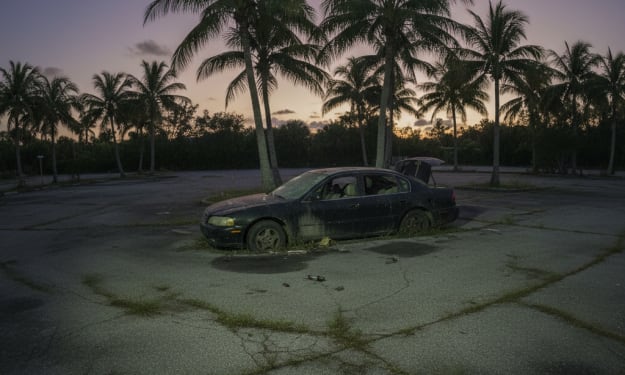
The Last Morning On January 24, 2006, 24-year-old Jennifer Kesse left her Orlando condominium for work at Central Florida Investments, where she had quickly risen as a promising young manager. Jennifer was bright, responsible, and never one to skip a call or a commitment.
By Hassan Janabout a year ago in Criminal
Scared of the forest?
I met someone who told me he was scared of the forest. “Why are you scared of the forest?” I asked with curiosity. “I am scared of the wild animals,” he said. “They can attack you and kill you without a reason. If you tell them “don’t attack me,” they don’t understand. They are not human. They don’t reason."
By Susan Fourtané about a year ago in Criminal
Blind Spots: A Tale of Ambition, Consequences, Redemption
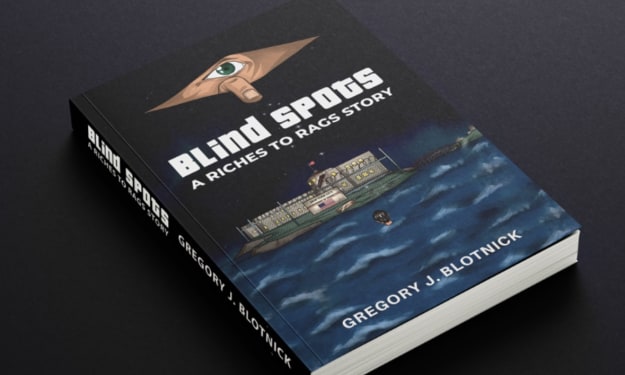
A Trader's Spectacular Fall from Grace Sometimes the most compelling stories come from the darkest places. Gregory J. Blotnick's new memoir, "Blind Spots: A Riches to Rags Story," chronicles a financial collapse and dissects the anatomy of self-destruction with surgical precision.
By Gregory Blotnickabout a year ago in Criminal
15 Things to Know About Charlie Kirk’s Murder
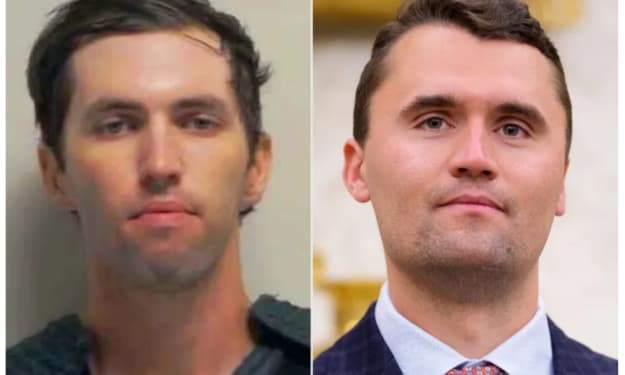
On September 10, 2025, political discourse in America took a dark and deadly turn. Charlie Kirk, the outspoken conservative activist and founder of Turning Point USA, was shot and killed during a live event at Utah Valley University. The news sent shockwaves across the country, igniting a firestorm of debate over political violence, security, and the growing dangers of hyper-partisan rhetoric in America. As authorities continue their investigation and the nation processes the enormity of the moment, here are 15 key facts and insights that paint a clearer picture of what happened—and why it matters.
By Lawrence Leaseabout a year ago in Criminal
Charlie Kirk Fatally Shot at Utah Valley University: A Tragic Turning Point
Introduction On September 10, 2025, conservative activist Charlie Kirk was fatally shot while addressing students and supporters at Utah Valley University (UVU) in Orem, Utah. The incident unfolded during his “American Comeback Tour” stop, which featured his signature “Prove Me Wrong” format. Roughly 3,000 attendees had gathered, making it one of the largest student events of the semester. Kirk’s sudden death has left the nation in shock and raised urgent debates about political violence, security, and free speech in America.
By Narrative Nowabout a year ago in Criminal