
La Bestia: Inside the Mind of Colombia’s Deadliest Serial Killer
The True Story of Colombia’s Most Dangerous Serial Killer

Introduction: The Invisible Monster
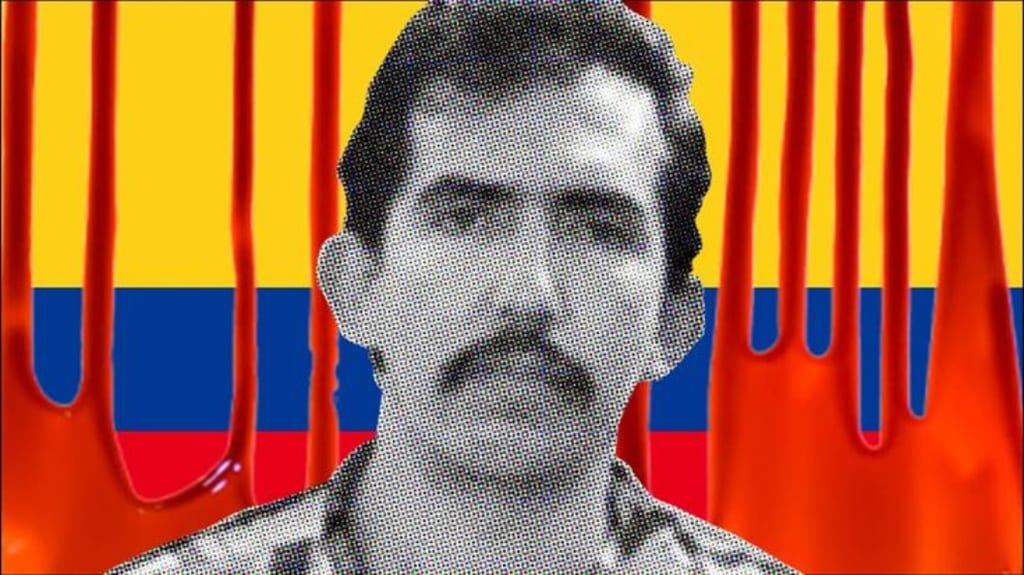
He was like any normal man. Short, wiry, thick glasses, and a limp. A stranger you would help over the street, or someone you would brush past in a busy plaza without even taking a second glance. But beneath that harmless expression was a monster so cold, so monstrous, that his crimes would stain the conscience of an entire nation. Luis Alfredo Garavito, "La Bestia" as he would later become known, is one of the most prolific and sadistic serial killers the world has ever known. His story is not merely about horror but also how evil can lurk right before our very eyes for so long.
A Childhood Born of Violence
Luis Garavito was born in Génova, Colombia, in 1957. He grew up surrounded by trauma. His drunkard and abusive father beat him routinely, and more—Luis was raped repeatedly by various men in his town. These original wounds brewed hot inside of him, developing an inner maelstrom of pain, rage, and humiliation that would one day erupt in inconceivable terms. His own life, as a boy even, was solitary and emotionally broken. No one saw the damage being done—or if they did, they looked the other way.
The Perfect Disguise
As he grew older, Garavito became a master of disguise. He kept on the move, taking on new identities, entering villages undetected. He was a priest, a charity worker, a teacher, even a disabled man in need of help. These personas were not disguises—they were instruments. Methods he used to breach defenses and earn trust, especially from kids. He would pick up boys on streets, near schools, or outside of churches. He would provide them with food, money, work, or just a means to feel loved. And they cooperated with him—because they believed he was a man who cared.
The Method and the Madness
What happened when he took them away is where the horror really begins. Garavito didn't just kill. He prepared. He planned. He packed a small bag with torture and murder equipment—ropes, razors, alcohol, candles, lubricant, clean clothes. He took the boys to the middle of nowhere, miles and miles into hills, fields, or abandoned buildings. There, in the middle of nowhere, he unleashed his true self. He bound their hands, blindfolded them, stripped them, and subjected them to unimaginable torture—physical and psychological. He raped them. He cut them up. He broke bones. Others were stabbed, mutilated, and in the majority of cases, beheaded. Death for some was not immediate. It was drawn out. Methodical. A ritual of pain.
And then, when the child was dead, Garavito would sometimes stay. Drink with the corpse. Smoke above the corpse. Lie down beside it. What he left behind was so repulsive that even hardened police officers were having difficulty facing what they saw. This was not a man who broke down. This was a man who thrived on cruelty, lived on control and pain.
A Nation Oblivious
Between 1992 and 1999, hundreds of boys went missing all over Colombia. But the country, already under the deluge of guerrilla violence, poverty, and narcotrafficking, barely batted an eyelash. Some of the children were from families so destitute they could not notify the authorities, or from areas so remote their vanishing did not get documented. Police, thin on the ground and inadequately equipped, used to mark the cases as runaway boys or attribute them to local gangs. No one believed that one man could be behind it all. And that's what Garavito relied on.
Clues in the Graves
It all began falling apart in 1997. In Pereira town, laborers made a find in an open field: a mass grave containing three young boys' corpses. All their injuries were the same. Several days later, additional graves were found in nearby areas. The pattern couldn't be ignored anymore. Forensic experts noted parallels—the same age group, the same torture scars, the same injuries. The bodies had all been dumped in isolated locations, posed in ritualistic fashion. A profile was emerging. The authorities were dealing with a serial killer. But they did not yet know just how many victims he had murdered.
The Glasses
The lead came from something small. Police discovered a broken pair of glasses at one of the graves. They were not like any others, with an unusual prescription. The lenses led the detectives to an optician—and to a recent customer: Luis Garavito. It was the first thread in a knot of evidence that would soon begin to unravel. Garavito was taken into custody at approximately the same time for attempting to attack a little boy. Once in custody, police began linking him to the murders. They showed him evidence—his DNA, his glasses, and the location of the graves.
The Confession
And then Garavito did speak. He confessed to murdering 147 children. But as he led police to hidden grave sites across the country, as investigators opened up notebooks with names, dates, and scribbles, they found that the actual tally was far, far higher. Estimates placed the number of victims at 200 to 300 young boys. Garavito had recalled nearly all of his victims. He had gone into detail about them. He could recall what they wore, what they said to him before he killed them, even what they smelled like. He had taken souvenirs from some of them—bracelets, shirts, small shoes. These were not trophies. These were morsels of memory, of power. And he had documented it all.
A Sentence That Shocked the Nation
He was convicted of 172 murders and sentenced to 1,853 years in prison. But the Colombian justice system, which had never seen a case like this before, limited the maximum sentence to 40 years. As Garavito had been helpful, and cooperated with police in identifying graves, his sentence was reduced further—to 22 years. There was public outcry in the form of shock. Protests were organized. Citizens demanded reforms in the justice system. The idea that the man who had destroyed so many lives would maybe one day walk around as a free man was unthinkable. Some thought the death penalty should have been reinstated. Others called for special laws for the crime of mass murder. But it was done.
The End of the Beast
Luis Garavito died in 2023 of cancer in prison. No funeral. No mourning. Only the quiet death of a man who frightened a generation. His death brought no peace to the families of children who were lost. There were so many bodies never found. So many names never learned. To those families, the wounds never healed. And the shadows he cast still remain.
Legacy of Fear
Luis Garavito's is not just a true crime story. It is a chilling illustration of how evil does not always come in monstrous form. Sometimes it parades down the street in daylight. Sometimes it smiles. Sometimes it offers a helping hand. He used the chaos of his country to hide, and the kindness of children to hunt them. His crimes were not just violent acts—They were acts of cruelty and control. And for seven long years, he got away with it.
This is not a story that has an ending in justice. This is a story that ends in a question: how many more did no one see? How many more agents of harm wander the streets in the disguise of a stranger, waiting to be believed?
About the Creator
iftaful alam tiham
I’m a curious mind who loves turning ideas into stories. Whether it’s tech, travel, or everyday life, I write articles that connect, inform, and keep readers coming back for more.
Enjoyed the story? Support the Creator.
Subscribe for free to receive all their stories in your feed.
Comments
There are no comments for this story
Be the first to respond and start the conversation.