
Human Nature Comes in Slices
A father's tears cost me millions. The tears were real. So was the betrayal.
In November 2021, an acquaintance dragged me into a lawsuit involving more than 60 million yuan. It was not until January 2025 that it was finally settled.
The settlement cost me several million yuan. Legal fees came to nearly one million more. On the day the confidentiality agreement was signed, the plaintiff required that no further details be disclosed. What I can say is that the lawsuit dragged on for more than three years, across four calendar years.
During those years, the thing I feared most was being asked three questions: What will happen to the money? When will the lawsuit end? Can my life get back on track? I could not answer a single one.
What tormented me more was that the lawsuits came in a chain. Multiple cases proceeded at the same time, and the amounts kept piling up. Just when you thought you had seen the bottom, there was another layer beneath. Just when you had calculated one figure, another pressed down on you. I had no way to estimate how brutally fate could beat me.
Looking back, the mistake was not that I did not understand business. I am a technical entrepreneur. I socialize little and make money from skills. The person who dragged me in was in a completely different field. He was a businessman who lived on connections, always at dinners, knowing many big names. We should not have had much overlap.
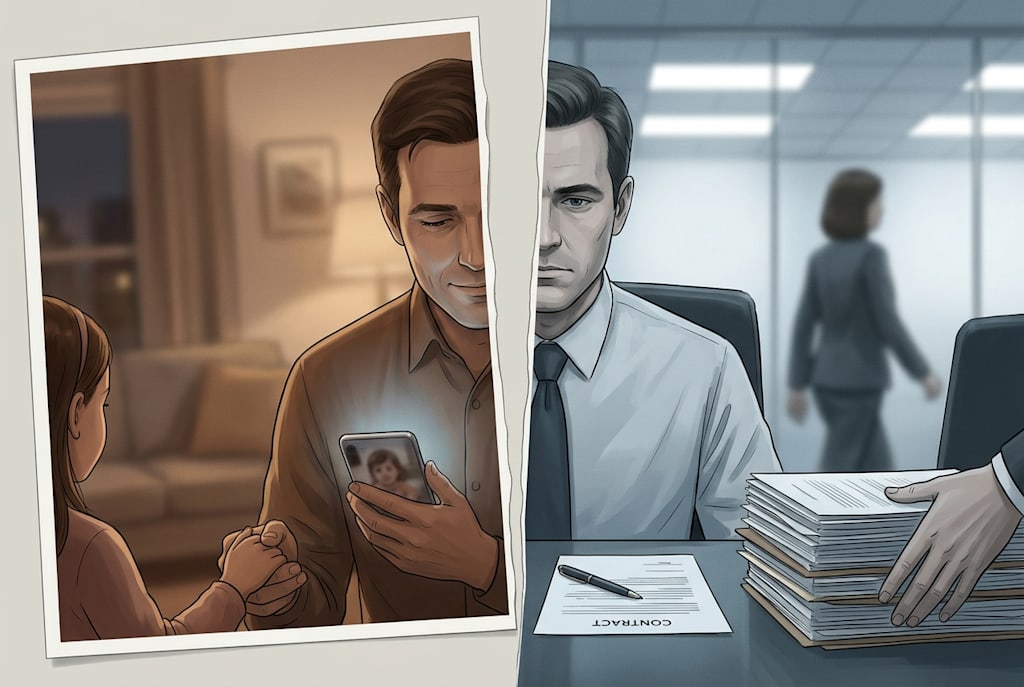
When he came to me, he was a father in pain. He had just divorced and lost custody of his only daughter. He said he wanted to build a maternal and infant brand for her. As he said these things, his phone lock screen was a photo of his daughter. At certain sentences he would pause, look down and swipe the screen a couple of times, then look up again.
I was moved.
I introduced him to the e-commerce and social media resources I knew well: which platforms were suitable for a cold start, which types of influencers converted well for maternal and infant products, which events could be tested first. We also discussed how to promote the product.
I saw a father who cared about his daughter, and I naturally assumed that he would also be a responsible and reliable business partner.
The mistake was precisely that "I assumed."
His love for his daughter was real. His pushing the risk onto me was also real. The two do not conflict.
One
Many people get trapped because the other person looks so good on Side A (family, hobbies, emotions) that they mistake Side B (money, interests, contracts) for equally reliable. But there is no logical relationship between the two.
A person loving his child does not mean he will be responsible toward a business partner. Being warm to friends does not mean he has a bottom line when interests are at stake. And staying with you through a low point? That does not mean he will not drag you into another pit.
We too easily take the goodness on one side of a person as the credit of the whole person. Seeing him gentle when he calls his child, we assume he will also be responsible when signing a contract. He is generous at the dinner table, so we assume he will be decent when splitting money. He sheds tears for you, and we assume he will not push you out when risk arrives.
Human nature is not a single solid slab. It comes in slices. Side A is real, and Side B may also be real. The deep feeling on Side A cannot guarantee Side B.
Back then, I took a father's tears as a business partner's credit. Only later did I learn that the gap in between had to be filled with several million yuan and nearly four years of despair.
Two
After the lawsuit ended, I kept following various scams and came into contact with many victims. Many people's losses begin with someone they trusted most.
This April, within one week, three people contacted me with tip-offs. All of them were AB loan traps designed by acquaintances.
The scenes repeat. A close friend, a colleague, or a relative suddenly comes to you and says he is short of money for renovation and needs a loan. He asks you to help by acting as a third-party recipient. The money will first be transferred to your card, and then you transfer it to him.
You ask, why go around this way?
He says his credit card was overdue last month, his credit record has a small flaw, and he needs someone with good credit to receive the money on his behalf.
He repeatedly assures you: "It's not a guarantee. You won't bear any responsibility. It's just helping run some money through the account."
Then he adds one last line: "Of all my friends, I trust only you. Once several hundred thousand yuan is transferred, you won't take it and not give it to me, right?"
Hearing this, you might even feel a little moved. But he has already factored your credit into his plan.
Here is how the AB loan works. A, who has a bad credit record, is taken by a loan broker to B, who has good credit. The broker falsely claims it is only help, witnessing, or collection on behalf. B cooperates by providing identity information, completing authentication, and following the other party's instructions. Only at the end does B discover that he has been made the borrower. The money enters B's account. B keeps his word and transfers it to A. A takes the money and leaves B to face the debt.
These victims all thought they were helping a friend with short-term cash flow. What got circulated away was their own future life.
The traps of social circles are often more dangerous than scams by strangers. A stranger at least needs several months to build trust. An acquaintance can use one sentence, "What are we to each other?", and it works. He knows where you soften. He knows you are embarrassed to refuse. You are afraid of hurting the relationship. And he knows how to open his mouth in a way that makes refusing feel like a debt you owe.
Strangers deceive you through an information gap. Acquaintances deceive you through an emotional gap.
Three
After the lawsuit ended, I began to follow one principle in relationships: you see a person when something happens. Only when something happens do you see the person.
The word "something" needs defining.
Hanging out. Complaining. Cursing bad men. Even crying together. None of that counts. These are just exchanges of emotional support. In these scenes, no matter how interesting, charming, or understanding the other person is, it is only a low-cost performance.
"Something" must be interest, temptation, loss, conflict. It is how money is split, how responsibility is borne, who steps forward when risk comes, who runs first when loss appears. It is the clause in the contract that no one noticed, whose name was written in the transfer, who still answers your calls after something goes wrong.
As long as nothing has happened, then whenever anyone makes any request that could put your life or wealth at risk, be willing to be a killjoy. At the other person's most affectionate moment, reply coolly: No.
A relationship that has not been tested by conflict of interest is a flower in a greenhouse. Once taken into wind and rain, it rots.
At the moment someone opens his mouth about money, identity guarantees, or shared responsibility, if he has not actively considered a way out for you, if he makes you feel even a trace of discomfort, move him directly from the friend list to the blacklist.
Some will call this cold. I call it the minimum an adult owes his own life.
Four
If I were to turn this understanding into operable boundaries, I would set a few hard rules for myself.
Identity, credit records, guarantees, collection on behalf, co-signing, authorization, facial recognition, verification codes, USB security tokens, and bank cards are all red lines by default. No matter what the other person says ("It's just moving money through the account," "It's just witnessing," "You won't bear responsibility"), as long as your identity is being used to complete a financial action, stop first.
Relationships are relationships; transactions are transactions. When an acquaintance opens his mouth, translate "What are we to each other?" into "What are the contract, the money flow, and the allocation of responsibility in this matter?" No written path, no transaction.
Set a cooling-off period. Any request that moves you on the spot should allow you to say, "Let me think about it tonight and reply tomorrow." People who consider you will not fear you being calm. People who fear you being calm often fear you seeing clearly.
Do not act as a third-party recipient. Do not act as a loan witness. Money entering your account and you transferring it out is itself part of the risk chain.
Keep some lines ready for being the killjoy. For example: "I can't help with this. My principle is not to take part in any loans or collection on behalf." "I can treat you to a meal, but I don't lend out my ID or credit record." "I understand you're in a hurry, but I can't bear this. Let's find another way."
Do not use emotional support as a substitute for credit verification. Tears, family affection, friendship, and companionship through low points cannot replace credit records, contracts, sources of repayment, and boundaries of responsibility.
These words sound cold. But anyone who has been through a chain of lawsuits will understand: after you are dragged in, the other person disappears faster than anyone. That is the cold part.
Five
I am not urging people to become cold. I still believe in goodwill, and I am still willing to help people. I just no longer allow goodwill to skip verification.
I used to think that refusing an acquaintance would hurt the relationship. Now I think: someone who turns against you because you refuse to bear risk was not coming for the relationship in the first place. He was coming for your credit, your account, your name, your ability to cover for him.
Friends will not hate you for holding your boundaries. Partners will not fear you reading the contract clearly. People who consider you will not rush you to sign, authenticate, and transfer before you understand the responsibility.
Do not confuse kindness with having no boundaries. You can still help people within your capacity and with clear responsibility. That is kindness with boundaries.
Back then, I took a father's tears as a business partner's credit. Only later did I learn that the gap in between had to be filled with several million yuan and nearly four years of despair.
If this experience can buy one useful reminder, it is this: do not use the Side A of human nature you have seen to guarantee the Side B you have not verified. You see a person when something happens. Only when something happens do you see the person. Be willing to be a killjoy. Be willing to say no.
This is not coldness. This is the most basic due diligence an adult can do on his own life.
About the Creator
Jin
Writer of reamstories
https://reamstories.com/jin
Enjoyed the story? Support the Creator.
Subscribe for free to receive all their stories in your feed. You could also become a paid subscriber, letting them know you appreciate their work.
Comments
There are no comments for this story
Be the first to respond and start the conversation.