
He Told His Friends He Was in Thailand With His Mom. Then His Phone Went Silent for Five Days.
A Shanghai music teacher's secret gig almost ended at the Myanmar border. His case shows how traffickers now write custom scripts for professionals.
I
September 24, 2026, Thursday, evening.
In the B2 level of the parking garage at Shanghai Pudong Airport, a white Volkswagen Tiguan pulled into a corner space. The driver did not get out immediately after turning off the engine. He pulled out the key, laid it flat on the center console, and glanced at his phone one more time. In the WeChat conversation, his friend's last message read, "Let me know when you arrive." He typed two words: "Will do."
Then he put the phone in his pocket, pushed open the door, and walked toward the elevator. The elevator went up. He pressed the button for the departures level.
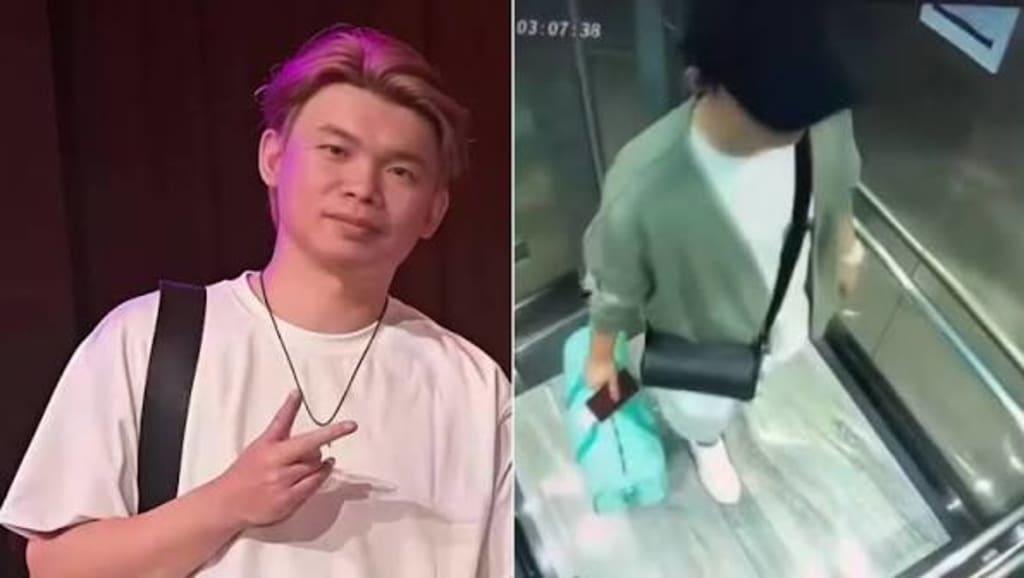
The man was Wang Qi, 33, a music teacher at an international bilingual school in Shanghai and a professional trumpet player. His mother was at home in Shanghai at that moment and had no idea her son had already booked a flight to Bangkok. He had told his friends that he was taking his mother on a holiday to Thailand. Three days before departure, he had emptied the trunk and kept the car key with him. If everything went smoothly, he would be back in four days, and no one would ever know about this trip.
This was his own choice.
II
The music teaching and research group at that international school had only five people. Wang Qi's desk was in the third row by the window. On it sat a pothos with slightly yellowing leaf tips, next to a half-finished bottle of mineral water with a label on it that read "9.22." Colleagues later recalled that Wang Qi had seemed no different from usual those days. He taught his classes, led rehearsals, and on Wednesday afternoon even spent half an hour helping a student adjust the valves on a trumpet.
But one detail was remembered. Around dusk on September 23, the group leader passed by his desk and saw him looking at his phone. On the screen was a conversation, and the other person's profile picture was a golden saxophone on a black background. Wang Qi locked the screen quickly, looked up, smiled, and said, "It's about a performance." The group leader did not ask more.
In that conversation, the other person claimed to be the overseas project manager for a music label and said there was an "Asian Young Musicians Exchange Salon" in Bangkok that needed a trumpet player for two or three days, with a fee of 42,000 yuan, including flights, accommodation, and meals. The person sent several photos from past events, stage, lighting, audience, that looked professional. Then came one final line: "This project is not public yet. Don't tell anyone for now. We'll talk after the contract is signed."
Wang Qi replied, "Understood."
III
September 25 was the Mid-Autumn Festival. At ten in the morning, Wang Qi sent a friend a WeChat message: "Shopping with my mom. It's so crowded." The friend replied with a smiley face. At two in the afternoon, he sent another message: "Just finished lunch. Going back to the hotel to rest." The friend asked how the hotel was. He said, "Not bad. The room is pretty big."
All of it was made up. His mother was at home in Shanghai and did not receive a single call from her son all day. The place Wang Qi actually stayed was a budget hotel near Suvarnabhumi Airport in Bangkok. After he landed, a man who claimed to be the project contact was waiting at the arrival gate holding a sign with the pinyin of his name. The man drove him to the hotel and said, "Rest for now. Tomorrow I'll take you to meet the team."
At five in the afternoon, Wang Qi sent that friend a final message: "My mom is tired. She's asleep now." The friend replied, "Then take good care of her." The message showed as read. After that, Wang Qi's WeChat sent nothing again.
At seven in the evening, his mother called his phone. It was off.
IV
At ten at night on September 26, Wang Qi's Douyin account initiated a voice call to his mother. She did not pick up. At nine the next morning, the same account initiated another voice call, this time to a friend, with the message "Please answer." The friend called back. No one answered.
After that, the account went completely silent.
On September 28, when the Mid-Autumn holiday ended, the school noticed that Wang Qi had not come to work and could not be reached by phone. The group leader contacted his mother. She said, "He told me he went to Thailand, with friends." When the two sides compared notes, they realized neither knew who he had actually gone with. That afternoon, the family went to the police station to report the case.
After checking the records, the police found that Wang Qi's phone IP address had appeared twice in southern Karen State, Myanmar, once on the evening of September 26 and once around noon on September 27. That location is right next to the Moei River on the Thai-Myanmar border. Across the river is Myawaddy.
From Bangkok to Myawaddy, the straight-line distance is more than five hundred kilometers. A man who claimed to be attending a music salon in Bangkok had a phone signal that appeared on the Myanmar border. When the family heard the result, his mother could not stay on her feet.
V
On October 1, a missing-person notice spread across Weibo and WeChat Moments. On October 2, the Chinese Embassy in Thailand said it had received the request for help and had informed the Thai police. On October 3, anti-fraud volunteers on social media analyzed that Wang Qi's phone IP trail matched the typical route of "Bangkok airport pickup, north to Mae Sot, cross-border transfer."
On October 7, the Chinese Embassy in Thailand officially confirmed that Wang Qi had returned safely to Shanghai.
From his departure on September 24 to his return home on October 7, exactly twelve days had passed. For at least five of those days, his phone signal had disappeared into the grey zone along the Thai-Myanmar border. What he experienced during those five days has not been publicly described in detail. But based on known similar cases, what "transfer" along this route usually means does not need to be spelled out.
VI
Several key points had to work at the same time for Wang Qi to come back.
First, his mother reported the case on September 28 and did not wait. Second, after the school found he had not shown up, it contacted the family immediately and did not delay. Third, while reporting the case, the family also called the 12308 consular protection hotline and provided the embassy with Wang Qi's passport information, flight number, and phone IP records. Fourth, after receiving the notification, Chinese and Thai police applied pressure on the grey chain along the Thai-Myanmar border.
If any one of these four points had been missing, the result might have been different.
Practitioners in the anti-fraud rescue industry have said: once a person is sent into a Myawaddy compound, the probability of being rescued safely by outside forces is less than 17 percent. The rest of that statistic is worse: more than 80 percent of people who go in never come out. Wang Qi was stopped before the "handover" was completed. That is an extremely rare situation.
VII
The entry point for this scam was a WeChat group for musicians.
The scammers had lurked for a long time in private communities of Chinese musicians. They chatted about instruments, performances, and industry news in insider language, gradually building trust. Then, targeting Wang Qi's professional background and career situation, they customized an invitation for a "Thailand music salon." The fee was 42,000 yuan, the time was two or three days, and flights, accommodation, and meals were included. For a teacher in the system earning twenty or thirty thousand yuan a month, that number was not a get-rich-quick fantasy. It was "an extra income worth seriously considering."
The added condition did the damage: "It's a confidential project. Don't tell your family or colleagues for now."
That sentence isolated the victim from all possible outside intervention. No family member, colleague, or friend knew the itinerary, the destination, or the contact. Once a person got into the scammer's car alone and walked alone into that transfer pipeline, the outside world did not even know when he had gone missing.
Wang Qi's friend later recalled that before leaving, he had said he was "taking my mom to Thailand," and he had said it without a single flaw, arousing no suspicion. To his mother, he said he was "going with friends." The two sides of information did not match, but neither side pressed further.
That is what "confidential" did.
VIII
Wang Qi was not the first person targeted by this script.
In January 2025, actor Wang Xing saw a casting notice in a WeChat group. The signature was "Yan Shiliu," and the project was called Anti-Drug Policewoman, with filming in Thailand. After landing in Bangkok, he was picked up by an arranged vehicle. The driver, using the excuse of "changing hotels," took him toward Mae Sot in northern Thailand. On the way, Wang Xing sensed something was wrong and sent his girlfriend a prearranged distress signal: "Have you fed the cat?" After his girlfriend reported it, Chinese and Thai police intercepted him at the border.
Two conditions helped save Wang Xing: first, he had told his girlfriend his itinerary before leaving; second, he and his girlfriend had a distress signal. Wang Qi had neither. He flew alone, took the car alone, and entered the pipeline without anyone tracking him.
Wang Xing's case exposed another fact. After being sent into a Myawaddy compound, he was resold three times within four days: from Apollo compound to the black compound next to Huanya compound, and then to Kaixuan compound. He tried to negotiate with the human-trafficking gang, hoping to buy his freedom with money. The answer he got was: "What Myawaddy lacks most is people, not money." According to police disclosures, trafficked people can sell for 100,000 to 200,000 yuan abroad, with the price depending on education level and typing speed.
The syndicates treat people as inventory. Education and typing speed set the price.
IX
A report by the Office of the United Nations High Commissioner for Human Rights shows that at least 300,000 people from about 66 countries in Southeast Asia have been trafficked into scam compounds and forced to engage in online fraud. In Myanmar, Cambodia, and Laos alone, the total number of workers in scam compounds is as high as 300,000.
A 2026 report by the United Nations Office on Drugs and Crime showed that in 2025 alone, losses from telecom and online fraud in East Asia, Southeast Asia, Australia, New Zealand, and other countries and regions reached 88.3 billion to 114.1 billion U.S. dollars. Even at the lowest estimate, that exceeds the annual GDP of many countries in the region.
Behind these numbers are victims in the compounds who are beaten, electric-shocked, and punished in water prisons. The UN human rights report recorded survivors' testimony: "I saw people being beaten and electric-shocked. I realized I had to learn how to scam people to survive." Another survivor said, "The boss told us we had to defraud 300,000 baht every day to avoid punishment or being sold to another company."
The industry puts a price on people. Education and typing speed set it. Violence and fear keep them working.
X
On September 10, 2026, the International Alliance for Combating Telecom and Online Fraud was inaugurated in Lianyungang, Jiangsu. Representatives from 46 founding member states, as well as the United Nations, Interpol, and other international organizations, attended. In August of the same year, the Chinese Ministry of Public Security, the Thai Police Headquarters, the Myanmar Police Headquarters, and the Lao Ministry of Public Security jointly held a launch meeting in Chiang Mai, Thailand, for a special joint operation. They decided to establish a comprehensive coordination center for the special operation and set up joint action points in areas where gambling and fraud are rampant.
In Wang Xing's case, Chinese and Thai police jointly arrested 17 domestic and foreign suspects, including the direct recruiter "Yan Shiliu." One fact remains: as of April 2026, 86 active scam compounds were still identified in Southeast Asia, and only 24 of them had ever been touched by law enforcement. More than 5,300 people were still trapped in scam compounds along the Thai-Myanmar border.
Each enforcement action clears one batch. Another appears. The industry rebuilds faster than police can move.
XI
After Wang Qi returned, his car was still parked in the B2 level of the parking garage at Pudong Airport. Over twelve days, the parking fee had totaled more than one thousand yuan. When his mother went to retrieve the car, she found a half-finished bottle of mineral water in the cup holder beside the driver's seat. The label on it read "9.22."
The pothos was still at his desk. Its leaf tips were yellower than before. A colleague had watered it for him, but one leaf had completely withered.
Wang Qi has not publicly described what happened during those twelve days. The school said he was on leave to rest and recover. His mother conveyed one sentence to the media through family members: "Thank you to everyone who cared and helped. I hope no one else ever has to go through this."
XII
Wang Qi's twelve days left behind a set of numbers that cannot be avoided.
According to anti-fraud rescue industry statistics, after entering a Myawaddy compound, the probability of being rescued by outside forces is less than 17 percent. UN reports show that about 300,000 people work in scam compounds in Southeast Asia. The UNODC report shows that in 2025 alone, fraud losses in the region reached at least 88.3 billion U.S. dollars. More than 5,300 people remain trapped along the Thai-Myanmar border. Eighty-six scam compounds are still operating in Southeast Asia, and only 24 have ever been touched by law enforcement.
None of these numbers is Wang Qi's. He is not in the 83 percent. He is not in the 300,000. He is not in the 5,300. He is not in the 62 compounds that law enforcement has never touched.
He was outside every one of them. This time.
The next person who receives the same invitation may not have four things line up at once.
About the Creator
Jin
Writer of reamstories
https://reamstories.com/jin
Enjoyed the story? Support the Creator.
Subscribe for free to receive all their stories in your feed. You could also become a paid subscriber, letting them know you appreciate their work.
Comments
There are no comments for this story
Be the first to respond and start the conversation.