
He Thought the Window Was Closed. Then a Phone Slid Through the Screen.
A Shanghai court ordered a peeping stranger to pay and the hotel to cover part of the judgment. The case shows how quickly a private room can stop feeling private.
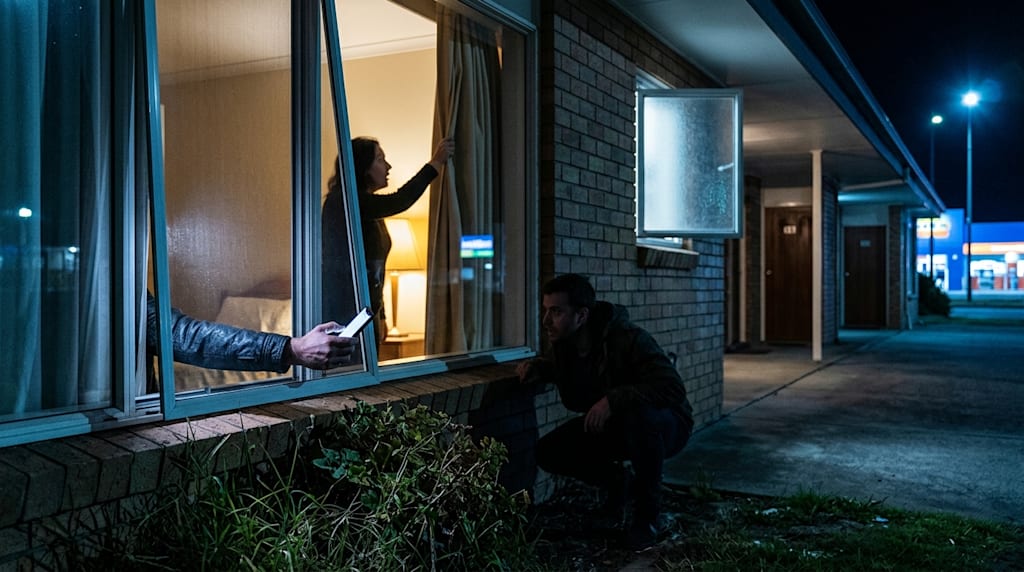
At 11 p.m. on April 16, 2025, Zhang and his girlfriend checked into a first-floor room at a Shanghai hotel. Zhang believed the window was closed. He was not sure whether it was locked. That detail would matter later.
Li had followed them. He told police he wanted to listen. He walked to a storage room on the first floor, climbed out its window, and crouched beside Zhang’s room. He stayed there for about half an hour. Then he reached over, opened the screen a crack, and pushed his phone inside. He recorded for about ten minutes.
Zhang heard the window open. He went to the window and pulled the curtain. He saw someone hiding outside. He shouted. The person ran. Zhang called police.
Police imposed an administrative penalty on Li for invading privacy.
What the court decided
Zhang sued Li and the hotel company. He asked for 26,000 yuan and a written apology. The case went to the Jing’an District People’s Court in Shanghai.
The court found that Li had filmed Zhang inside the hotel room. Li violated Zhang’s right to privacy. Li bore direct tort liability.
The court also examined the hotel’s conduct. Li had been outside rooms on two floors, listening. He moved through a storage room and out a window. Hotel staff did not find him, question him, or stop him. The court found that the hotel company, as the operator of the premises, had a safety obligation. It had not fulfilled that obligation. The hotel bore supplementary liability for Li’s infringement. After paying, the hotel could seek recovery from Li.
The judgment ordered Li and the hotel to issue a written apology to Zhang. The content of the apology had to be approved by the court. Li was ordered to pay Zhang 7,000 yuan. The hotel was ordered to bear 20 percent of Li’s payment obligation as supplementary liability.
Privacy law inside a hotel room
The Civil Code of the People’s Republic of China protects privacy. Article 1032 states that natural persons enjoy the right to privacy. No organization or individual may infringe that right by prying, intruding, leaking, or publicizing private information. Article 1033 lists specific prohibited acts. These include entering, photographing, or peeping into another person’s private space, such as a hotel room. They also include photographing, peeping at, or listening to another person’s private activities.
A hotel room is a private space. A guest pays for the room and receives exclusive use for a set period. The door, the walls, the curtain, and the window form a boundary. A couple’s intimate behavior inside the room is a private activity. The fact that the room is in a hotel does not remove privacy protection. If anything, the hotel room is one of the clearest examples of a space where privacy is expected.
Li described his motive as a voyeuristic habit. The law does not treat that as curiosity. The administrative penalty confirmed the invasion. The court’s judgment added civil compensation and a written apology.
The hotel’s 20 percent
Article 1198 of the Civil Code sets out the safety obligation of business operators. Hotels, shopping malls, banks, stations, airports, sports venues, and entertainment venues must take reasonable steps to protect the safety of people on their premises. If a third party’s act causes harm, the third party bears tort liability. If the operator failed to fulfill its safety obligation, it bears corresponding supplementary liability. After paying, the operator may seek recovery from the third party.
In this case, Li was the direct wrongdoer. He watched. He opened the screen. He inserted his phone. He recorded. The hotel’s failure came before and around that act. Li had been in the hotel for some time. He had been outside multiple rooms on two floors. He had gone through a storage room and out a window.
A patrol could have noticed him. A staff member could have asked what he was doing. A locked storage room window could have blocked his path. A window latch on the first-floor room could have made the screen harder to open.
The court assigned 20 percent supplementary liability to the hotel. On a 7,000 yuan judgment, that share is 1,400 yuan. The hotel does not pay first. Li pays first. If Li cannot pay, the hotel pays up to that amount. Then the hotel can recover from Li. The percentage is small. The ruling still puts hotels on notice.
The money and the apology
Zhang asked for 26,000 yuan. The court awarded 7,000 yuan. The amount included 5,000 yuan for lawyer fees and 2,000 yuan for mental distress. The court used its discretion.
The written apology matters. Money covers a lawyer bill and recognizes mental harm. It cannot undo the moment Zhang pulled the curtain and saw a person outside. An apology is a public acknowledgment that the act was wrong. The court required the apology to be reviewed first. That review prevents the apology from becoming another injury. It keeps private facts out of the statement. It makes the apology fit the harm.
What the hotel missed
The facts describe a series of missed chances.
Li followed a couple to the hotel. He walked to a storage room. He climbed out a window. He crouched by a guest room window. He stayed there for about half an hour. He reached over and opened the screen. He put his phone inside. He recorded for about ten minutes.
Each step took time. A storage room window that opens to the outside is a security gap. A first-floor guest room window within reach of an outside area is a privacy gap. A person lingering outside rooms on two floors is an anomaly. Hotel safety is not just fire exits and door locks. It includes the quiet spaces where privacy can break.
The hotel industry can take concrete steps. Patrol floors at night. Watch for people lingering in corridors. Lock storage rooms and utility rooms. Limit how far windows can open. Check first-floor and street-facing rooms. Train staff to ask questions when something looks wrong. Call police when a guest reports a peeper. These steps cost money and time. They also turn a safety policy into a practice.
What the victim should not be asked
After a case like this, questions often turn to the victim. Why choose a first-floor room? Why not close the curtain completely? Why not check the window lock? These questions shift attention away from the man outside and the hotel that failed to keep him out.
Zhang and his girlfriend were in a private room. They had a reasonable expectation of privacy. A window screen and a closed curtain are not a legal shield the guest must perfect. The law protects privacy even when a curtain has a gap or a lock is loose. The wrongdoer is the person who climbed out a storage room window, crouched outside, opened the screen, and pushed a phone inside. The hotel is the party that missed the signs.
Victims do not need to feel shame. They can call police. They can preserve evidence. They can ask the hotel for camera footage. They can sue. The court in this case listened. It issued a judgment with numbers, names, and a written apology.
The next inspection
The judgment has a set of numbers. Li pays 7,000 yuan. The hotel’s supplementary share is 20 percent, or 1,400 yuan. Both must issue a written apology approved by the court. The hotel can recover from Li what it pays.
The first-floor room still has a window. The window still has a screen. The hotel’s next move is to check whether that screen has a lock.
About the Creator
Jin
Writer of reamstories
https://reamstories.com/jin
Enjoyed the story? Support the Creator.
Subscribe for free to receive all their stories in your feed. You could also become a paid subscriber, letting them know you appreciate their work.
Comments
There are no comments for this story
Be the first to respond and start the conversation.