
Collide
A weekend cabin trip, a plane crash, a life forever changed
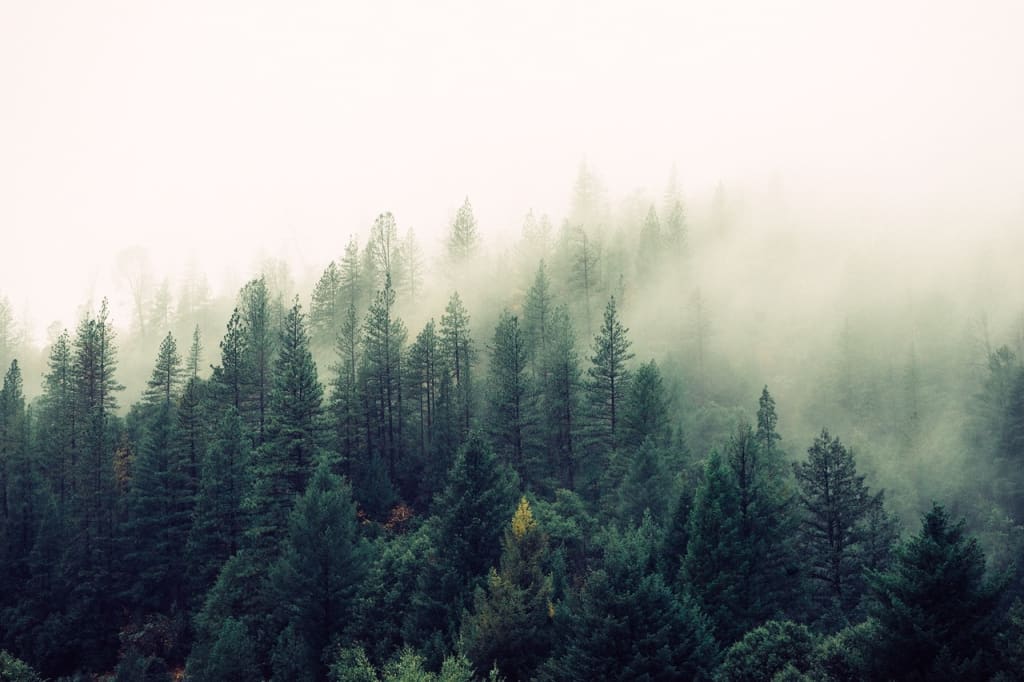
Crawford heard the crash long before he saw the black smoke rising above the trees where the plane had gone down.
He had been sitting on the deck of the weekend rental cabin, drinking his morning coffee and enjoying the view of the mountains when the small plane crossed over the trees in the distance, its engine sputtering just before it took a deep dive, and then he lost sight of it behind the trees. The sound was deafening, though. Trees snapping like gunshots, screeching metal being ripped from its frame, and then a final thud that rumbled through the ground, followed by an eerie silence.
He was on his feet and running across the open field between the cabin and the forest before he even saw the first wisps of black smoke reaching toward the sky above.
The forest ceiling was thick and it reduced the morning daylight substantially, but it was still enough to see clearly. There were no trails here, but the trees were scattered enough that he could weave through them at a good speed if it weren’t for the fallen branches, rocks hidden in the underbrush, and uneven ground that could leave him with a broken ankle before he even reached the crash site.
In his haste, he hadn’t thought to grab his mobile phone, water, a backpack, or anything at all that might actually be useful. The phone had no signal this far from the city, but it at least had working GPS that would keep him from getting lost out here. He was too far out to go back now, though. If there were survivors in the crash, time was critical and he was counting on someone else having seen the crash, the pilot having made a mayday call to a nearby airport, or something that would mean help was on the way. If there were injured people, he didn’t really have a plan to deal with that, either. The extent of his medical knowledge consisted of a first aid class he’d taken in college and whatever random medical tips he’d picked up from dating a nurse for a couple of years. Regardless, there was nothing he could do about any of that at this moment, so he focused on what he could do and that was to keep moving in the direction he had seen the smoke.
The ground rose upward ahead of him, slowing him considerably on the climb, his lungs burning by the time he crested it. He stopped, bent over and planted his palms on his thighs, sucking in the fresh air. His heart was thumping so hard that he could feel it in his chest. The t-shirt underneath his pullover clung to his sweaty body, and the cool air was a relief when he yanked the pullover over his head and tied it around his waist.
He stood on the edge of a ravine overlooking a rocky stream about 40 feet below. The decline was steep and any misplaced step would send him tumbling to the rocks below. He slipped once on a mossy rock, but snatched a tree root protruding from the dirt before hitting the ground. Need to be more careful, he thought. If I get injured, no one even knows to come looking for me.
The stream wasn’t very wide, perhaps five feet across and only a foot or so deep, but the water was cold enough that he could feel it just by standing next to it. His growing thirst was something he’d been ignoring since there wasn’t anything he could do about it, but the running had dried his mouth considerably. He wasn’t an outdoorsman by any measure, so the idea of drinking stream water wasn’t something he was comfortable with. He’d never be able to get to the crash site and back without hydrating, though, and this was his only option. The water was clear and in the middle of the backcountry, so it should be safe, he reasoned. The worst case being that he’d get diarrhea or dysentery or something, and that probably wouldn’t kick in until he was out of the woods and no one died from that these days, right?
The frigid water made his hands ache, but splashing it over his face and the back of his neck was energizing. Crawford cupped his hands, scooped the water to his mouth, and drank. It was surprisingly good, not the mud taste he had expected. He gulped down a few more mouthfuls, then forced himself to stop, just in case it would make him sick later.
The smoke wasn’t visible from the stream, so he picked a tree in the direction he had been walking and navigated toward it. By his estimates, he had been moving around a half hour at least. Once he felt rested enough, he started running again, slowed to a walk as needed, and alternated for what felt like another twenty minutes.
The smell of the smoke brought him to a halt. He couldn’t see it, nor could he hear anything to give him an indication of how close it was, so he continued running in the direction he’d been going.
Sunlight broke through the trees up ahead and as he got closer he could see why: the tops of those trees had been sheared off in a downward trajectory, large branches laying on the ground below, but some dangling precariously above, threatening to drop at any moment. Pieces of glass and metal mingled with the branches on the ground, glinting in the sunlight, almost like a lit path to the crash site. Crawford ran in as fast as he could, and after just a few minutes, black smoke marked the spot about a hundred yards away.
A mangled chunk of one of the wings was the first thing he came upon. The tail of the plane had been severed from the cockpit and lay on its side up ahead. The stabilizers had been shredded, and there was a gaping hole through the tail number on the left side. He pressed on.
Another one of the wings hung in the branches of the trees about fifty yards ahead him, and he had spotted out of the corner of his eye because the white paint was such a contrast to the dark browns and greens of the forest.
The smoke was now so thick that his eyes were watering and he couldn’t stop coughing. The cockpit was engulfed in flames, along with some of the trunks of the trees surrounding it. The heat and smoke here were too intense to get any closer. If anyone had survived the crash, they were no doubt dead now.
Crawford walked a wide circle around the burning cockpit, scanning the ground as he went. He didn’t really know what he was looking for, but he felt helpless and refused to accept that there was nothing else he could do. The underbrush was so thick in some places that he would’ve walked right past the black duffel bag had it not been for the glint of sunlight off a metal buckle on the shoulder strap. Other than a small tear on the side of it, it appeared to be undamaged. It wasn’t until he reached for it that he spotted a man lying face down in the underbrush a few feet away.
It was obvious the man had crawled a safe distance from the cockpit—Crawford could see his path in the dirt—but he was clearly dead now. A huge gash was open on the side of his head as and the back of his shirt was covered in blood from a wound Crawford couldn’t see. The man’s eyes were open and lifeless.
Crawford had never seen a dead person before, at least not like this. At funerals, sure, but not in the aftermath of a horrific accident—and definitely not a plane crash in the middle of nowhere. He had no idea what to do in a situation like this. Even if he’d had his phone, he wouldn’t have had a signal to call for help.
He searched the man’s pockets for some form of identification, but couldn’t find anything. He did find a small black Moleskine notebook in the one of the man’s cargo pockets, though, but there was nothing in it to indicate who he was. Most of the pages contained what looked like coordinates and radio frequencies, with only abbreviations next to them—completely meaningless to Crawford. The last page, however, was blank except for a single address. No description. Just an address. He closed the notebook and slid it into his back pocket.
The duffel contained a change of clothes and a toiletry bag. Nothing out of the ordinary, except for the semiautomatic handgun sitting on top of them, with a fully loaded spare magazine a box of ammunition next to it. It was the stacks of $20 bills lining the bottom of the bag, though, that really made him nervous about what he had stumbled upon.
Crawford sat on the ground for a long time next to the dead man, contemplating what to do next. He wasn’t sure how much time had passed, but the fire had died down considerably, and hadn’t spread too far from the crash site. No one had come. Not so much as a flyover from a rescue helicopter. He was beginning to think that no one else even knew this plane had gone down.
Lying on the ground in front of him were 10 stacks of 100 $20 bills, each wrapped with a violet paper bank strap. $20,000 in cash he had pulled out of the duffel that he now sat staring long and hard at.
Crawford arrived back at the cabin just before nightfall, completely exhausted. Without a clear path back, he had wandered miles out of his way and only found the place because he happened upon a road he recognized from the drive to the cabin. The long walk had been plenty of time for him to think about the duffel slung across his back and what he would do about it, but all he could think about at this moment was sleep. He locked the doors, kicked the duffel underneath the bed, and was asleep shortly after. He’d be on the road in the morning and far away from here soon after.
The drive to the address took just under 6 hours. It was in a neighboring state and, surprisingly, in a middle-class neighborhood—not an abandoned warehouse in a shady industrial district like he envisioned. The house was a modest ranch-style home with a plush green lawn with an older sedan parked in the driveway. A plastic trash bin set out at curb near the street. Nothing remarkable.
Crawford took a deep breath and walked up the walkway to the house. He knocked once, dropped the duffel on the doorstep and hurried back to his car.
He never looked back.
Two weeks later, Crawford sat on a lawn chair in the backyard of his home, drinking a beer and looking at the pink evening sky over the tops of the other houses in the suburb. It all felt so boring now. His life. His job. His engagement to the woman he thought he loved. This view. He’d told no one what had happened at the cabin, but he couldn’t stop thinking about it. He felt a restlessness that he couldn’t shake, a yearning for something more.
The black notebook lay open in his lap and he typed the first of the coordinates written there into the navigation app on his phone. It looked to be a remote wooded location, and he had no idea what he would find there, but it was only a 4-hour drive and he knew it would be a sleepless night before he set off in the morning to find out.
About the Creator
Jamie Wilson
Rebel without a cause.
Enjoyed the story? Support the Creator.
Subscribe for free to receive all their stories in your feed.
Comments
There are no comments for this story
Be the first to respond and start the conversation.