
Andrea Yates
Post Partum Psychosis takes Lives

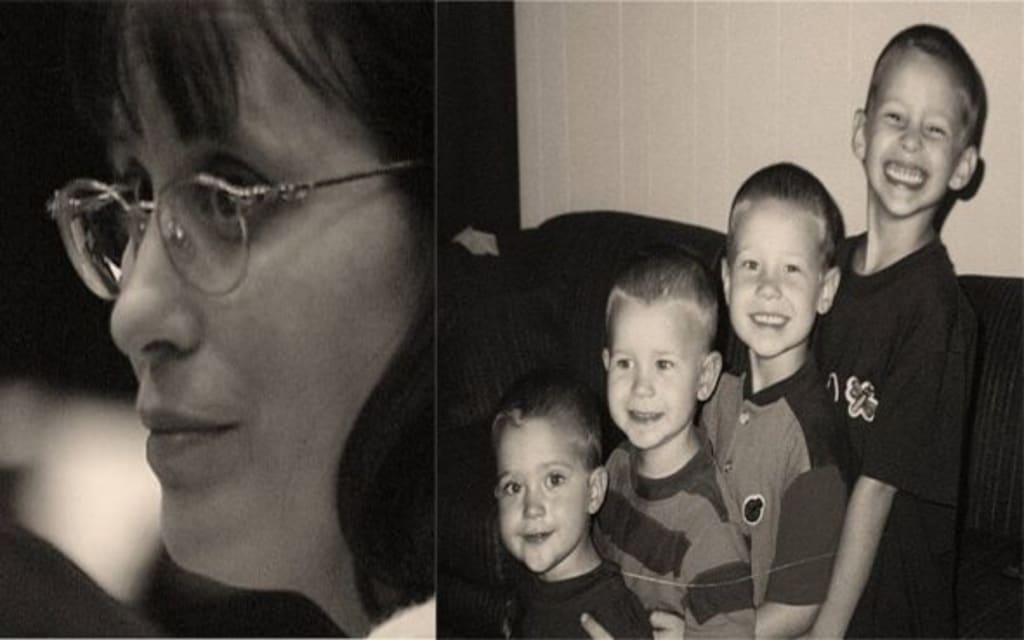
This story is tragic, both for the five children who lost their lives and for the mother who suffered for many years with a severe mental illness. Before going any further, I would like to warn that this story contains talk of suicidal ideation, attempt, and the murder of children.
Andrea was born in Hallsville, Texas into a family of seven. During her childhood she had bulimia and suffered from depression. At the age of seventeen, she had spoken to a friend about suicide. Despite this, she graduated as class valedictorian in 1982. She was also the captain of the swim team and an officer in the National Honor Society.
After high school, Andrea completed a two-year pre-nursing program and then graduated from university as a nurse. From 1986 until 1994 she worked as a registered nurse at the University of Texas MD Anderson Cancer Center.
She met Russel “Rusty” Yates in 1989 and they soon moved in together. The couple were married a few years later in 1993. They were excited to announce that they would try to have as many children as nature would allow and they bought a four-bedroom home in Friendswood, Texas.
Shortly after their first child, Noah, was born in 1994, Rusty accepted a job offer in Florida and so the family relocated to a small trailer in Seminole. The moved back to Houston by the time they had their third child, Paul, and purchased a motor home.
After the birth of their fourth child, Luke, Andrea became depressed. In June 1999, Rusty found her shaking and chewing her fingers. The very next day, Andrea took an overdose of medication in an attempt to end her life. She was admitted to the hospital for the first time and prescribed antidepressants. These didn’t help, however, and it wasn’t long before she made another attempt. This time she begged Rusty to allow her to die as she held a knife to her own throat. She was hospitalized again and given a cocktail of medications, including Haldol, which is an anti-psychotic.
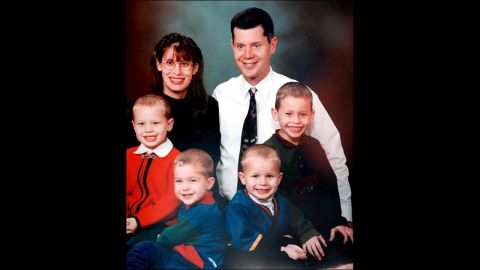
Rusty moved the family into a small home in the hopes of helping Andrea stabilize. The very next month she had a nervous breakdown. After two more suicide attempts and two more hospital stays, Andrea was diagnosed with postpartum psychosis. This mental illness is more than just the ordinary baby blues. A person with postpartum psychosis can suffer from hallucinations, delusions, and swirling highs and devastating lows.
Andrea was seeing psychiatrist Dr. Eileen Starbranch, who warned the couple to not have any more children. She told them that if Andrea were to have more children her psychosis would get worse. Despite this warning, the couple conceived their fifth and final child only seven weeks later. As a result, Andrea stopped taking Haldol in March 2000 and gave birth to little Mary in November that same year.
Andrea seemed to be stable. That is, until the death of her father in 2001. She began to spiral out of control. She stopped taking her medication, mutilated herself, and read the Bible like her life depended on it. She also stopped feeding Mary. Due to the rapid decline of her mental health she was immediately hospitalized. She came under the care of Dr. Mohammed Saeed and she was treated and promptly released. The next month, she regressed and went back into what was described as a nearly catatonic state. She filled the bathtub in the middle of the day but didn’t seem to be getting ready to give the kids or herself a bath. She was hospitalized again the very next day after a doctors visit. Her psychiatrist determined that she was likely suicidal and had been planning to drown herself.
At the time of the murders, the family was living in the Houston suburb of Clear Lake City. In the weeks leading up to the murders, Rusty had began to leave Andrea at home alone with the children for an hour in the morning and an hour in the evening, despite Dr. Saeed’s warning that she needed to be monitored at all times. Rusty’s reasoning was that he wanted Andrea to become less dependent on having someone there at all times and that she just needed a swift kick in the rear to get out of her depression.
On the morning of June 20, 2001, Rusty left for work, leaving her alone to watch the children. His mother, Dora Yates, was due to come to the house within the hour to take over for Andrea. That hour was when tragedy struck.
Andrea filled the bathtub and proceeded to drown all five of her children. She started with John, Paul, and Luke. Drowning them in the bathtub and then laying them on her bed. She then drowned Mary. Noah walked into the bathroom and asked what was wrong with her. Frightened, he tried to run away but Andrea caught and drowned him. She left Noah floating in the bathtub and laid Mary in John’s arms on the bed. She then called the police, telling them she needed an officer but not telling them why. She called Rusty after that and told him that he needed to come home.

Andrea confessed to drowning her children. Rusty got a family friend, George Parnham, to act as her attorney.
She pled not guilty by reason of insanity. In March 2002, a jury rejected the insanity defense and found her guilty. The prosecution sought the death penalty but the jury rejected that option. Instead, she was sentenced to life imprisonment with eligibility for parole in forty years.
In January 2005, a Texas Court of Appeals reversed the convictions, because California psychiatrist and prosecution witness Dr. Park Dietz admitted he had given materially false testimony. During the trial he had stated that shortly before the crime an episode of Law and Order had aired depicting a mother who drowned her children and was found not guilty by reason of insanity. This lie came to light when an author who was covering the trial happened to have been a writer for Law and Order and pointed out that no such episode had ever aired.
The appellate court unanimously agreed that the jury may have been swayed by this false testimony and as a result a new trial would be necessary. In January 2006, Andrea again pled not guilty by reason of insanity. In February she was granted bail on the condition that she voluntarily commit herself to a mental health facility.
In July 2006, after three days of deliberation, the jury found Andrea not guilty by reason of insanity. She was then committed to the North Texas State Hospital- Vernon Campus. In 2007, she was moved to the Kerrville State Hospital, which is a low security mental facility.
To this day, Andrea remains in the mental health facility. She has declined every hearing about her release, preferring to stay where she can get the help that she needs.
Many people failed Andrea during this time. Mental health was not as widely accepted as it is today and, due to that, many of those around her did not take her situation seriously. If Andrea had received the mental health care that she desperately needed, this terrible tragedy could have been avoided.
Sources:
history.com/this-day-in-history/defense-rests-in-andrea-yates-trial
cnn.com/2007/US/law/12/11/court.archive.yates8/index.html
keyt.com/news/2022/06/15/andrea-yates-fast-facts-2/
**Please, feel free to add any topic suggestions in the comments! If you liked this story, please consider leaving a tip or pledge so that I can continue to create more for you all! Don’t forget to like and subscribe.**
About the Creator
Paige Guffey
Just an odd mom obsessed with all things strange, weird, creepy, and true crime. I'm here to share my passion and present to you my research into all things related.
Enjoyed the story? Support the Creator.
Subscribe for free to receive all their stories in your feed.
Comments
There are no comments for this story
Be the first to respond and start the conversation.