
The Psychology of Procrastination
Understanding Why We Delay What Matters Most
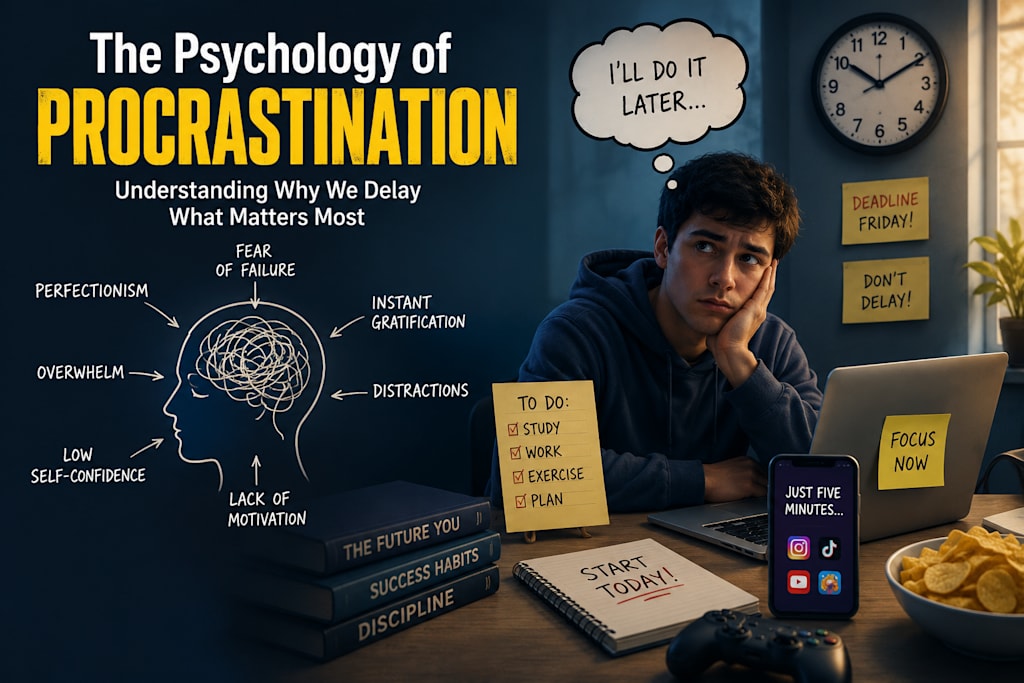
Procrastination is one of the most common human behaviors. Nearly everyone has experienced putting off an important task, whether it is studying for an exam, completing a work project, exercising, paying bills, or making a difficult decision. Despite knowing the consequences of delay, people often find themselves choosing short-term comfort over long-term benefits. This tendency can create stress, guilt, anxiety, and missed opportunities.
For many years, procrastination was viewed simply as laziness or poor time management. However, modern psychology reveals that procrastination is much more complex. It is not merely about being unproductive; it is deeply connected to emotions, self-perception, motivation, and the way the brain processes rewards and discomfort.
Understanding the psychology behind procrastination can help individuals break free from its cycle and develop healthier habits. By examining why people procrastinate, we can better understand ourselves and discover practical ways to overcome this common challenge.
What Is Procrastination?
Procrastination is the voluntary delay of an intended action despite knowing that the delay may have negative consequences. It is different from simply postponing a task for practical reasons. Procrastination occurs when someone intends to do something but chooses to delay it unnecessarily.
For example, a student may know that an assignment is due in a week but spends several days scrolling through social media instead of working on it. A professional may delay starting a major presentation until the night before it is due. In both cases, the individuals understand the importance of the task yet avoid it.
This behavior often creates a cycle of temporary relief followed by increased stress and pressure. The longer a task is delayed, the more overwhelming it may feel.
The Emotional Roots of Procrastination
One of the biggest misconceptions about procrastination is that it results from poor time management. While time management can play a role, researchers increasingly recognize procrastination as an emotional regulation problem.
When people face a task that triggers negative emotions such as boredom, frustration, anxiety, self-doubt, or fear, they naturally seek ways to avoid those uncomfortable feelings. Instead of confronting the task, they turn to activities that provide immediate comfort or pleasure.
For example:
Watching videos may feel more enjoyable than writing a report.
Cleaning the house may seem easier than studying for an exam.
Checking notifications may provide instant stimulation compared to working on a complex project.
The brain often prioritizes short-term emotional relief over long-term goals. As a result, procrastination becomes a coping mechanism rather than a productivity issue.
The Role of Instant Gratification
Human beings are naturally drawn toward rewards. Modern life offers countless sources of instant gratification, including social media, streaming platforms, video games, and online shopping.
These activities provide immediate pleasure, while important tasks often offer delayed rewards. Studying may improve future career prospects, but the benefits are not immediately visible. Exercising may improve health, but the results take time.
Psychologists refer to this tendency as "present bias." People place greater value on rewards available now than rewards available later.
When faced with a choice between immediate enjoyment and future success, many individuals unconsciously choose the option that feels rewarding in the moment. This preference makes procrastination especially tempting in today's digital world.
Fear of Failure
Fear of failure is another powerful driver of procrastination.
Some individuals delay tasks because they worry about performing poorly. They may fear criticism, rejection, embarrassment, or disappointment. By avoiding the task, they temporarily avoid these uncomfortable possibilities.
Ironically, procrastination can become a protective strategy. If someone waits until the last minute and performs poorly, they can blame the lack of preparation rather than their abilities.
For example, a writer may postpone starting a novel because they fear it will not be good enough. A student may avoid studying because they fear discovering their weaknesses.
In these situations, procrastination serves as a shield against threats to self-esteem.
Perfectionism and Procrastination
Perfectionism and procrastination often go hand in hand.
Many perfectionists believe they must produce flawless work. As a result, they may feel overwhelmed before they even begin. The pressure to achieve perfection creates anxiety, making it difficult to take the first step.
Common perfectionistic thoughts include:
"If I can't do it perfectly, there's no point starting."
"I need the perfect plan before I begin."
"My work must be exceptional."
These beliefs can cause individuals to spend excessive time planning, researching, or waiting for ideal conditions instead of taking action.
The pursuit of perfection frequently leads to paralysis. Progress becomes impossible because the standard feels unattainable.
Low Self-Confidence and Self-Doubt
People who doubt their abilities are more likely to procrastinate.
When individuals believe they lack the skills necessary to complete a task successfully, they may avoid the task altogether. This avoidance temporarily protects them from feelings of inadequacy.
Unfortunately, procrastination prevents growth and learning. The less someone practices a skill, the less confident they become. This creates a self-reinforcing cycle:
Self-doubt leads to procrastination.
Procrastination reduces performance.
Poor performance increases self-doubt.
Increased self-doubt leads to more procrastination.
Breaking this cycle requires developing confidence through action rather than waiting to feel confident first.
Decision Fatigue and Overwhelm
Modern life requires people to make countless decisions every day. From responding to emails to managing schedules and responsibilities, mental energy can become depleted.
When individuals feel overwhelmed, even simple tasks may seem difficult. Large projects with multiple steps often trigger procrastination because the brain struggles to determine where to begin.
A task such as "write a business proposal" may feel intimidating because it contains many smaller tasks hidden within it.
The brain tends to avoid situations that feel unclear or overwhelming. As a result, people may choose easier activities that require less mental effort.
The Brain's Reward System
Neuroscience provides additional insight into procrastination.
The brain contains systems that respond strongly to rewards. Activities that provide immediate satisfaction activate these reward pathways, releasing chemicals such as dopamine.
Tasks associated with uncertainty, effort, or delayed rewards often produce less immediate stimulation. Consequently, the brain may steer attention toward activities that feel more rewarding right now.
This does not mean people lack discipline. Rather, it reflects how the brain naturally balances effort and reward.
Understanding this process helps explain why checking social media for five minutes can easily turn into an hour while an important project remains untouched.
Why Procrastination Creates More Stress
Many people procrastinate to avoid stress, but procrastination often increases stress in the long run.
Initially, avoiding a task provides temporary relief. However, the unfinished task remains in the background, creating ongoing mental tension.
As deadlines approach, anxiety grows stronger. Individuals may experience:
Increased worry
Sleep disturbances
Reduced concentration
Feelings of guilt
Lower self-esteem
The pressure of limited time can also reduce the quality of work and make the experience far more stressful than it would have been if the task had been started earlier.
The Link Between Procrastination and Mental Health
Procrastination is associated with several mental health challenges, including anxiety, depression, and chronic stress.
People experiencing depression may struggle with motivation and energy, making tasks feel overwhelming. Those with anxiety may avoid tasks that trigger worry or fear.
Importantly, procrastination does not necessarily cause these conditions, nor do these conditions always cause procrastination. However, they can influence one another in significant ways.
The resulting cycle can be difficult:
Anxiety encourages avoidance.
Avoidance increases stress.
Increased stress worsens anxiety.
Recognizing these patterns can help individuals seek support when necessary.
Strategies for Overcoming Procrastination
Although procrastination is common, it can be managed effectively.
Start Small
Large tasks often feel intimidating. Breaking them into smaller, manageable steps reduces psychological resistance.
Instead of saying:
"Write the entire report."
Try:
"Write the introduction."
Small actions create momentum and make progress feel achievable.
Focus on Progress, Not Perfection
Perfection is often the enemy of completion.
Allowing yourself to produce imperfect work reduces fear and encourages action. Most successful projects improve through revision rather than perfection from the start.
Use Time Blocks
Setting aside specific periods for focused work can improve productivity.
Techniques such as working for 25 minutes followed by a short break help reduce mental resistance and make tasks feel less overwhelming.
Remove Distractions
Reducing access to distractions can make a significant difference.
Simple steps include:
Silencing notifications
Closing unnecessary browser tabs
Creating a dedicated workspace
Limiting social media during work sessions
Making distractions less accessible supports better concentration.
Practice Self-Compassion
Many procrastinators respond to delays with harsh self-criticism. Unfortunately, self-criticism often increases negative emotions and makes procrastination worse.
Self-compassion involves acknowledging mistakes without excessive judgment.
Instead of thinking:
"I always fail."
Try:
"I delayed this task, but I can start now."
This mindset encourages recovery rather than avoidance.
Visualize Future Benefits
Connecting with long-term goals can strengthen motivation.
Consider how completing a task will improve your life, career, health, or personal growth. Making future rewards feel more real helps counter the attraction of immediate gratification.
Conclusion
Procrastination is far more than a simple lack of discipline. It is a complex psychological behavior influenced by emotions, fear, self-doubt, perfectionism, brain chemistry, and the desire for immediate comfort. People procrastinate not because they are lazy, but because they are trying to manage difficult feelings in the short term.
While procrastination may provide temporary relief, it often leads to greater stress, anxiety, and dissatisfaction over time. Understanding its psychological roots allows individuals to approach the problem with greater awareness and compassion.
The key to overcoming procrastination is not waiting for motivation to appear. Instead, it involves taking small actions despite discomfort, focusing on progress rather than perfection, and developing habits that support consistent effort. Every task completed, no matter how small, strengthens confidence and creates momentum.
Ultimately, success is rarely determined by talent alone. More often, it comes from the willingness to begin, continue, and finish important work—even when doing so feels difficult. By understanding the psychology of procrastination, we can learn to replace avoidance with action and move closer to the goals that matter most.
About the Creator
Enjoyed the story? Support the Creator.
Subscribe for free to receive all their stories in your feed.
Comments
There are no comments for this story
Be the first to respond and start the conversation.