
The Price of Always Being Strong
Why hiding your struggles can quietly break you
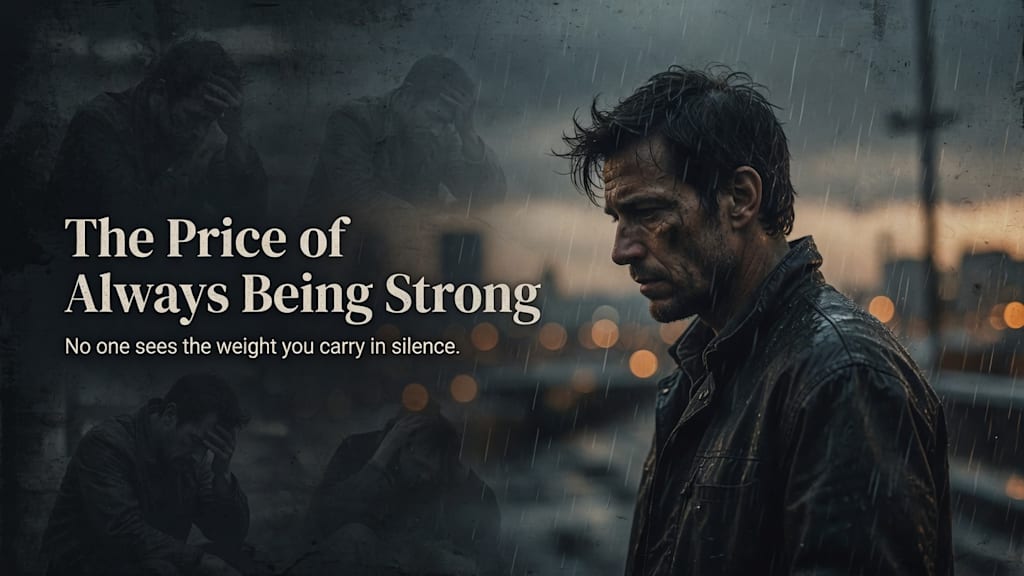
Strength is often admired. From a young age, many of us are taught to “be strong,” to hold ourselves together no matter what life throws at us. We celebrate people who endure hardship without complaint, who keep going even when things fall apart, and who never seem to crack under pressure.
But what if strength, as we commonly understand it, comes at a cost?
What if always being strong is not a sign of resilience—but a quiet form of self-neglect?
The Invisible Burden of Strength
At first glance, being the “strong one” seems like a compliment. You are dependable. People trust you. They come to you for advice, support, and stability. You become the emotional anchor in your relationships.
But over time, this role becomes heavy.
You feel responsible for holding everything together
You avoid sharing your own struggles
You suppress emotions to avoid appearing weak
The world sees your strength—but it rarely sees your exhaustion.
Strength, in this form, becomes less about resilience and more about performance. You are not just coping—you are constantly proving that you can cope.
Why We Learn to Always Be Strong
This pattern doesn’t appear out of nowhere. It is often shaped by life experiences:
Childhood expectations: Being told to “stop crying” or “be brave”
Early responsibilities: Growing up too fast, taking care of others
Past trauma: Learning that vulnerability leads to pain
Social conditioning: Associating emotions with weakness
Over time, you internalize a simple belief:
If I break, everything will fall apart.
So you don’t break. Not in front of others. Not even in private sometimes.
The Emotional Cost
Always being strong means constantly holding things in. And emotions, when suppressed, don’t disappear—they accumulate.
This leads to:
• Silent Burnout
You feel drained, but you can’t explain why. Even rest doesn’t seem to recharge you.
• Emotional Isolation
People rely on you, but few truly understand you. You listen to everyone—but who listens to you?
• Loss of Self
You become so focused on being strong for others that you lose touch with your own needs.
• Delayed Breakdown
What you suppress today often resurfaces later—sometimes more intensely.
Strength, when forced, becomes a slow leak rather than a shield.
The Fear of Being Seen as Weak
One of the biggest barriers to letting go of constant strength is fear.
Fear of disappointing others
Fear of being judged
Fear of losing control
Fear of becoming a burden
So instead of opening up, you tighten your grip.
You smile when you’re struggling.
You say “I’m fine” when you’re not.
You keep going—even when stopping is what you need most.
But here’s the truth: vulnerability is not weakness. It’s honesty.
The Myth of Endless Resilience
We often glorify people who “never give up” or who “handle everything alone.” But this narrative is incomplete.
No one is endlessly strong.
Even the most resilient people:
Feel overwhelmed
Need support
Experience doubt and fear
The difference is not that they never struggle—it’s that they allow themselves to.
True strength is not about carrying everything alone. It’s about knowing when to put things down.
What Happens When You Never Put It Down
When you constantly carry emotional weight without release, it begins to affect every part of your life:
Mental health: Anxiety, overthinking, emotional numbness
Physical health: Fatigue, headaches, sleep issues
Relationships: Feeling unappreciated or misunderstood
Productivity: Burnout disguised as laziness
Eventually, the body and mind force a pause—often in ways you cannot ignore.
Breakdowns don’t happen because you are weak.
They happen because you have been strong for too long.
Redefining Strength
It’s time to challenge the idea that strength means silence.
Real strength looks different:
Saying “I need help” without guilt
Expressing emotions without shame
Setting boundaries without fear
Taking breaks without feeling unproductive
Strength is not about endurance alone—it’s about balance.
It’s the ability to be both resilient and honest.
Learning to Let Go
Letting go of constant strength doesn’t mean becoming fragile. It means becoming human.
Here’s how that shift can begin:
• Acknowledge Your Feelings
Stop dismissing what you feel. Your emotions are valid—even if they’re messy.
• Share, Even a Little
You don’t have to reveal everything. Start small. Let someone in.
• Set Emotional Boundaries
You are not responsible for carrying everyone else’s problems.
• Give Yourself Permission to Rest
Rest is not a reward—it’s a necessity.
• Accept Imperfection
You don’t have to handle everything perfectly to be worthy.
The Strength in Vulnerability
Vulnerability is often misunderstood. It’s not about falling apart—it’s about allowing yourself to be real.
When you open up:
You create deeper connections
You reduce emotional pressure
You allow others to support you
Ironically, showing vulnerability often requires more courage than hiding behind strength.
It’s easier to pretend you’re okay.
It’s harder—but healthier—to admit when you’re not.
You Don’t Have to Carry It Alone
One of the most damaging beliefs we carry is that we must handle everything ourselves.
But humans are not built for isolation. We are wired for connection.
There is strength in:
Leaning on others
Asking for help
Sharing your struggles
You don’t lose your strength by doing this—you expand it.
Breaking the Pattern
If you’ve spent years being the strong one, change won’t happen overnight. But awareness is the first step.
Start noticing:
When you suppress emotions
When you say “I’m fine” automatically
When you take on more than you can handle
Then gently challenge those habits.
You don’t have to stop being strong.
You just have to stop being strong all the time.
A New Definition of Strength
Imagine a version of strength that includes:
Rest without guilt
Honesty without fear
Support without shame
Balance without pressure
This is not weakness.
This is sustainable strength.
Conclusion
The price of always being strong is often paid in silence—through exhaustion, isolation, and emotional suppression. While strength is valuable, it becomes harmful when it turns into a constant mask.
You were never meant to carry everything alone.
You were never meant to be unbreakable.
Sometimes, the strongest thing you can do is:
Admit you’re struggling
Ask for support
Let yourself feel
Because true strength is not about never breaking—it’s about allowing yourself to heal when you do.
About the Creator
Enjoyed the story? Support the Creator.
Subscribe for free to receive all their stories in your feed.
Comments
There are no comments for this story
Be the first to respond and start the conversation.