
The Power of Small Wins
How tiny steps create massive life changes
Introduction
Success is often imagined as a dramatic breakthrough—a sudden moment where everything changes. We picture overnight success stories, big achievements, and life-altering milestones. But in reality, meaningful progress rarely happens in giant leaps. Instead, it unfolds through small, consistent actions—what we call small wins.
Small wins may seem insignificant at first glance. Completing a short task, learning one new idea, or making a tiny improvement might not feel like progress. Yet, these moments carry immense power. Over time, they build momentum, reshape habits, and lead to extraordinary outcomes.
Understanding the power of small wins can change how you approach goals, productivity, and personal growth. It shifts the focus from perfection and pressure to progress and persistence.
What Are Small Wins?
Small wins are minor achievements that move you forward, even if only slightly. They are:
Completing a task you’ve been avoiding
Improving a skill by a small margin
Sticking to a habit for one more day
Taking a step toward a larger goal
Individually, they may not seem impressive. But collectively, they create a powerful ripple effect.
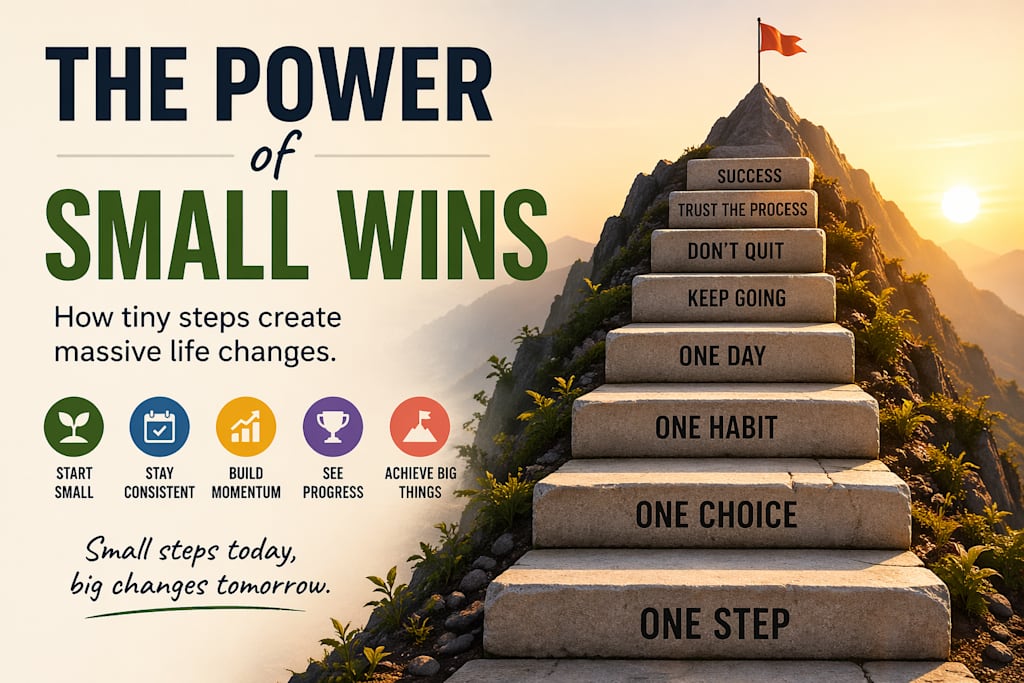
Think of it like climbing a staircase. Each step is small, but together they take you to a higher level. Without those steps, the top remains unreachable.
Why Small Wins Matter
1. They Build Momentum
One of the biggest challenges in achieving goals is getting started. Small wins make starting easier. When you complete a simple task, it creates a sense of progress that motivates you to keep going.
Momentum works like a chain reaction. A single completed action often leads to another, and then another. Over time, this builds a rhythm of productivity.
2. They Boost Confidence
Every small win sends a message to your brain: “I can do this.”
Confidence doesn’t come from thinking—it comes from evidence. When you consistently achieve small goals, you collect proof of your capability. This gradually replaces self-doubt with self-belief.
Instead of waiting for a big success to feel confident, small wins allow you to build confidence daily.
3. They Reduce Overwhelm
Big goals can feel intimidating. Writing a book, starting a business, or changing your lifestyle can seem overwhelming when viewed as a whole.
Small wins break large goals into manageable pieces. Instead of focusing on the entire journey, you focus on the next step.
This makes progress feel achievable rather than stressful.
4. They Strengthen Habits
Habits are formed through repetition, not intensity. Small wins encourage consistency, which is the foundation of lasting habits.
Doing something small every day is far more effective than doing something big occasionally. Over time, these repeated actions become automatic behaviors.
The Psychology Behind Small Wins
Small wins trigger positive emotions. When you accomplish something—even something minor—your brain releases dopamine, a chemical associated with motivation and reward.
This creates a feedback loop:
You take action
You experience a small win
You feel good
You’re motivated to take more action
This loop reinforces productive behavior and makes it easier to stay consistent.
In contrast, setting goals that are too large or unrealistic can lead to frustration and burnout, breaking this cycle.
The Compound Effect of Small Wins
Small wins may seem slow, but they compound over time.
Consider this:
Improving by just 1% every day leads to significant growth over months
Saving a small amount regularly builds financial stability
Practicing a skill daily leads to mastery
The key idea is that consistency amplifies results.
Like interest in a bank account, small efforts accumulate. At first, progress is barely noticeable. But eventually, it accelerates and becomes visible in a big way.
Real-Life Examples of Small Wins
Fitness
Instead of committing to intense workouts immediately, starting with 10 minutes a day creates a sustainable routine. Over time, this builds strength, stamina, and discipline.
Learning
Studying one concept daily may seem slow, but over a year, it leads to deep understanding. Small, consistent learning outperforms cramming or irregular effort.
Productivity
Completing one important task each day may not feel like much, but it keeps projects moving forward. Over weeks and months, this leads to significant achievements.
How to Use Small Wins in Your Life
1. Break Goals into Tiny Steps
Instead of saying, “I want to write a book,” start with:
Write 100 words a day
Outline one chapter
Brainstorm ideas
Small steps make big goals approachable.
2. Focus on Consistency, Not Perfection
You don’t need to do everything perfectly. What matters is showing up regularly.
Missing a day isn’t failure—quitting is. Small wins are about progress, not perfection.
3. Celebrate Progress
Acknowledge your achievements, no matter how small.
Celebration reinforces positive behavior and keeps motivation high. Even a simple “I did it” can make a difference.
4. Track Your Wins
Keeping track of your progress helps you see how far you’ve come.
You can:
Use a journal
Maintain a checklist
Mark a calendar
Seeing a chain of completed actions builds motivation to continue.
5. Start Before You Feel Ready
Waiting for the perfect moment often leads to inaction. Small wins allow you to start where you are, with what you have.
Action creates clarity and confidence.
Overcoming Common Challenges
“It’s Too Small to Matter”
This is one of the biggest misconceptions. Small actions may feel insignificant, but their impact grows over time.
Remember: big results are built on small foundations.
“I Want Faster Results”
In a world of instant gratification, patience can feel difficult. But sustainable success takes time.
Small wins may be slower, but they are more reliable and long-lasting.
“I Keep Losing Motivation”
Motivation isn’t constant. That’s why systems matter more than feelings.
By focusing on small, repeatable actions, you reduce dependence on motivation.
Small Wins vs Big Goals
Big goals are important—they give direction and purpose. But they can also create pressure and fear.
Small wins, on the other hand:
Reduce pressure
Encourage action
Build momentum
The most effective approach is to combine both:
Use big goals for vision
Use small wins for execution
The Ripple Effect of Small Wins
Small wins don’t just impact one area of life—they influence everything.
Completing a small task can:
Improve your mood
Increase your energy
Boost your productivity
Inspire further action
This creates a ripple effect where one positive action leads to many others.
A Mindset Shift
Embracing small wins requires a shift in thinking.
Instead of asking:
“Did I achieve something big today?”
Ask:
“Did I move forward today?”
Progress, no matter how small, is still progress.
Conclusion
The power of small wins lies in their simplicity and consistency. They don’t require extraordinary effort, talent, or resources—just a willingness to take small steps forward.
Over time, these steps build momentum, strengthen habits, and lead to meaningful change. What begins as a tiny action can grow into a major achievement.
Success isn’t about one big moment. It’s about showing up, again and again, and stacking small wins until they become something remarkable.
Start small. Stay consistent. And trust the process.
Because in the end, small wins don’t stay small—they become everything.
About the Creator
Enjoyed the story? Support the Creator.
Subscribe for free to receive all their stories in your feed.
Comments
There are no comments for this story
Be the first to respond and start the conversation.