
The Myth of “Having It All Figured Out”
Why uncertainty is part of every successful journey
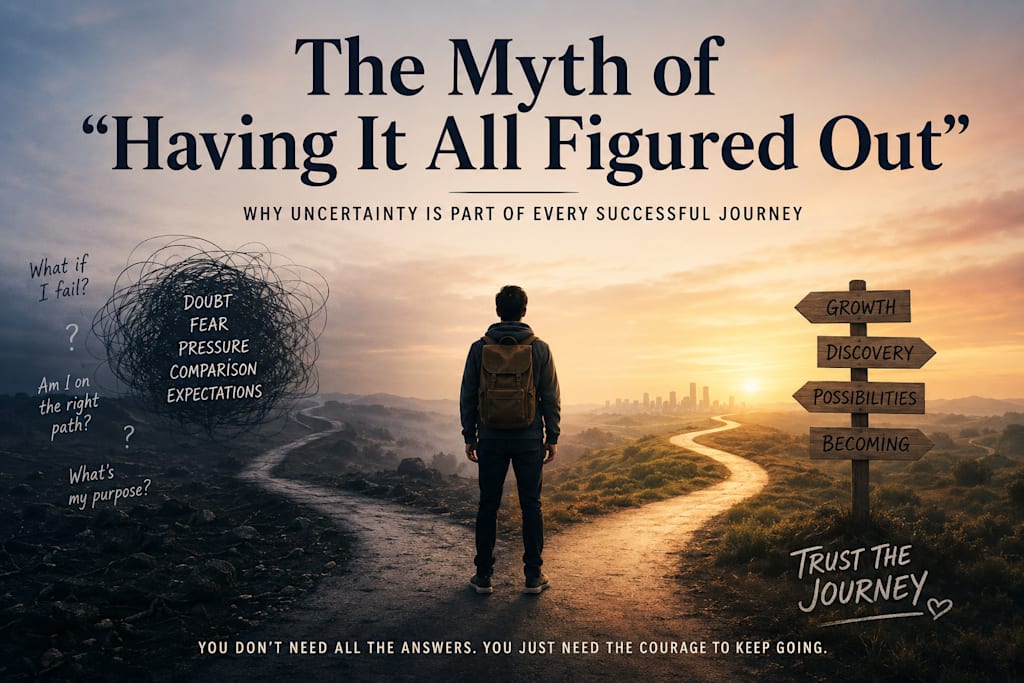
There’s a quiet pressure that follows most of us through life—the belief that at some point, we’re supposed to have everything figured out. A clear path. A stable career. A defined purpose. A confident sense of who we are and where we’re going. We look around and assume others have already reached that point, that they’ve unlocked some secret formula we somehow missed.
But the truth is far less polished—and far more human.
The idea of “having it all figured out” is a myth. It’s a comforting illusion we project onto others while quietly doubting ourselves. And in chasing it, we often create unnecessary stress, self-doubt, and a sense of falling behind in a race that doesn’t actually exist.
The Illusion of Certainty
From a young age, we are conditioned to believe life follows a predictable structure. Study hard, choose a career, build stability, achieve success. The expectation is that clarity will come early and stay consistent. But reality doesn’t work that way.
Life is not linear. It’s unpredictable, filled with detours, setbacks, and unexpected opportunities. People change. Interests evolve. Circumstances shift. What felt right at 20 may feel completely wrong at 30—and that’s not failure, it’s growth.
Yet, we rarely see this side of others. We see outcomes, not the confusion behind them. We see achievements, not the uncertainty that preceded them. This selective visibility feeds the illusion that everyone else has clarity while we alone are still searching.
Why We Believe the Myth
There are a few powerful reasons this myth persists:
1. Social Comparison
We constantly measure ourselves against others. Whether it’s through social media or everyday conversations, we compare our internal struggles to others’ external successes. It creates a distorted reality where everyone seems more certain, more stable, and more accomplished.
2. Fear of Falling Behind
There’s an unspoken timeline society promotes—graduate by a certain age, settle into a career, achieve milestones quickly. When we don’t align with this timeline, we assume something is wrong with us rather than questioning the timeline itself.
3. Desire for Control
Uncertainty is uncomfortable. Humans naturally crave predictability. Believing that there is a point where everything becomes clear gives us a sense of control, even if that belief isn’t grounded in reality.
4. Cultural Narratives of Success
We are often told stories of success in a simplified way—highlighting the end result rather than the messy, confusing journey. This creates unrealistic expectations about how clear and direct our own paths should be.
The Reality: No One Truly Has It All Figured Out
Even the most successful, confident individuals experience doubt and uncertainty. The difference is not that they have everything figured out—it’s that they’ve learned to move forward despite not having all the answers.
Clarity is not something you achieve once and keep forever. It’s something that evolves. Every new stage of life introduces new questions, new challenges, and new uncertainties.
Think about it:
A student unsure about their future becomes a professional unsure about their career path.
A professional becomes a leader unsure about their decisions.
A leader faces uncertainty about impact, purpose, or legacy.
The questions don’t disappear—they change.
And that’s normal.
The Cost of Believing the Myth
Holding onto the idea that you should have everything figured out can quietly harm your mindset and decisions.
1. Paralysis and Overthinking
You may delay decisions because you’re waiting for perfect clarity. But clarity rarely comes before action—it comes through action.
2. Constant Self-Doubt
When you believe others have certainty and you don’t, it’s easy to feel inadequate or behind, even when you’re progressing just fine.
3. Fear of Change
You might stick to paths that no longer feel right simply because you believe changing direction means you’ve failed.
4. Unrealistic Expectations
You set standards that no one can realistically meet, leading to frustration and disappointment.
Embracing Uncertainty as Growth
What if uncertainty isn’t a flaw—but a sign that you’re evolving?
Not knowing means you’re exploring. It means you haven’t settled for something that doesn’t truly fit. It means you’re open to possibilities rather than confined by rigid expectations.
Instead of asking, “Why don’t I have everything figured out?” try asking:
What am I learning right now?
What feels meaningful at this stage of my life?
What small step can I take next?
Progress doesn’t require perfect clarity. It requires movement.
The Power of Taking Imperfect Steps
One of the biggest misconceptions is that clarity comes before action. In reality, action creates clarity.
You discover what works by trying things. You refine your path by making mistakes. You understand yourself better by experiencing different situations.
Waiting until everything makes sense is like waiting for the entire staircase to appear before taking the first step. It doesn’t happen that way.
Instead:
Take the step with partial understanding
Adjust as you go
Learn from outcomes rather than predictions
Each step reveals the next.
Redefining What It Means to Be “Figured Out”
Maybe the goal isn’t to have everything figured out. Maybe it’s to become someone who can handle not having everything figured out.
That means:
Being adaptable instead of rigid
Being curious instead of certain
Being resilient instead of perfect
A “figured out” life doesn’t mean having all the answers. It means being comfortable asking better questions.
Letting Go of the Timeline
Life doesn’t operate on a universal schedule, even though it often feels like it should. People find success, purpose, and happiness at different stages—and through very different paths.
Some discover their passion early. Others take years of exploration. Some change directions multiple times. None of these paths are wrong.
The idea that you’re “late” is usually based on comparison, not reality.
Your timeline is not behind—it’s yours.
The Hidden Advantage of Not Knowing
Surprisingly, not having everything figured out can be an advantage.
It keeps you open.
When you think you have everything figured out, you’re less likely to question your path. Less likely to explore new opportunities. Less likely to grow beyond your current identity.
Uncertainty, on the other hand:
Encourages exploration
Builds resilience
Expands perspective
Creates room for unexpected opportunities
Many people end up in fulfilling careers or meaningful paths they never initially planned—simply because they stayed open to change.
Practical Ways to Navigate Uncertainty
While embracing uncertainty is important, it doesn’t mean drifting aimlessly. You can move forward with intention, even without complete clarity.
1. Focus on Direction, Not Perfection
You don’t need a perfect plan. You just need a general sense of direction.
2. Break It Down
Instead of trying to solve your entire future, focus on the next step.
3. Reflect Regularly
Take time to evaluate what’s working, what isn’t, and what you’ve learned.
4. Stay Flexible
Be willing to adjust your path as you grow and gain new insights.
5. Accept Discomfort
Uncertainty feels uncomfortable—but discomfort often signals growth.
A More Honest Perspective on Life
If more people spoke openly about their uncertainties, the myth of having everything figured out would quickly fade.
The truth is:
People are guessing more than they admit
Paths are less planned than they appear
Confidence often coexists with doubt
What looks like certainty from the outside is often just commitment on the inside—a decision to keep moving forward despite not knowing everything.
Conclusion: You’re Not Behind—You’re Becoming
The pressure to have everything figured out is not a reflection of reality—it’s a reflection of unrealistic expectations.
Life is not about reaching a point where everything suddenly makes sense. It’s about continuously learning, adapting, and evolving.
You are allowed to:
Change your mind
Start over
Feel unsure
Take time to figure things out
In fact, those things are part of the process—not signs that you’re doing it wrong.
So instead of chasing the illusion of certainty, focus on building the courage to move forward without it.
Because the people who seem like they have it all figured out?
They don’t.
They’ve just learned to keep going anyway.
About the Creator
Enjoyed the story? Support the Creator.
Subscribe for free to receive all their stories in your feed.
Comments
There are no comments for this story
Be the first to respond and start the conversation.