
The Mirror of Her Younger Years
Some mistakes look exciting in youth until time turns them into regrets.

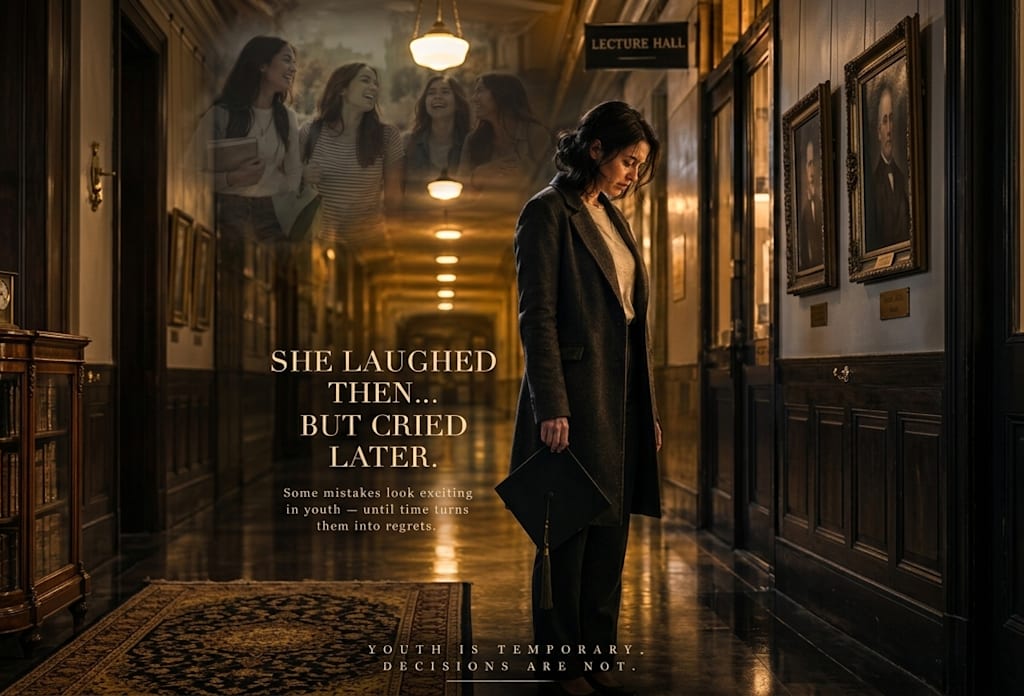
When Alina entered university at nineteen, she believed life was only about freedom.
For the first time, nobody controlled her schedule. Nobody asked where she was going, why she returned late, or whether she had studied for exams. To her, university was not a place for building a future. It was a stage for attention, excitement, trends, and temporary friendships.
She quickly became popular on campus. Her social media was filled with cafe pictures, birthday parties, expensive outfits, and endless selfies with classmates. People called her confident and modern. She enjoyed hearing compliments more than hearing lectures in class.
At first, everything seemed perfect.
Her parents trusted her deeply. Her father worked long hours to pay tuition fees, believing his daughter would become successful one day. Her mother often reminded her softly, These years decide your future.
But Alina always laughed.
Life is not only about studying, she would reply.
And technically, she was right.
Life was not only about studying.
But it was also not only about temporary fun.
That was the part she failed to understand.
During lectures, she barely listened. Assignments were copied. Exams were passed somehow through shortcuts and last-minute preparation. Her circle of friends behaved the same way. They mocked serious students and called them boring.
One day, a classmate named Hira warned her gently.
Four years pass quickly, Hira said. People think youth lasts forever. It doesn’t.
Alina ignored her.
At twenty-one, she felt untouchable.
She believed beauty would always open doors. She believed popularity was power. She believed real life would magically arrange itself later.
Years passed.
University ended.
And reality arrived quietly.
Not dramatically.
Not suddenly.
Quietly.
The friends who once promised lifelong loyalty slowly disappeared into their own lives. Some moved abroad. Some married. Some focused on careers. Social media pictures continued, but the closeness vanished.
Meanwhile, Alina struggled.
Her grades were average. Her skills were weak. Interviews became uncomfortable experiences. Employers asked questions she could not answer confidently. Slowly, she realized that charm could attract attention, but it could not replace discipline forever.
At twenty-seven, she finally found a basic office job. The salary covered survival, nothing more. Every morning she watched younger graduates entering companies with confidence, qualifications, and clear goals.
For the first time in years, she began remembering university days differently.
Not with pride.
With discomfort.
One evening, while cleaning old drawers, she discovered her university ID card.
She stared at the photograph for a long time.
The girl in the picture looked fearless.
But also careless.
Memories flooded her mind skipped classes, wasted weekends, unnecessary drama, shallow relationships, fake popularity, hours spent seeking validation from strangers online.
She suddenly wondered how different life could have been if she had balanced freedom with responsibility.
Not perfection.
Just balance.
That thought stayed with her for years.
By thirty-five, Alina had matured greatly. Life had taught her lessons no classroom ever could. She became quieter, wiser, and more thoughtful. She no longer judged people by fashion, popularity, or attention.
Instead, she admired patience.
Consistency.
Knowledge.
Character.
One rainy afternoon, she visited her old university for an alumni event. The campus looked smaller than she remembered. Students walked through corridors laughing loudly, just as she once had.
Then she noticed a group of girls taking selfies outside the library while joking about skipping lectures.
For a moment, she saw herself in them.
Young.
Confident.
Certain that consequences belonged to future people.
She wanted to walk over and warn them.
Not to stop enjoying life.
Not to become robots.
But to understand something important:
Youth is temporary, but its decisions are long-lasting.
She did not speak to them.
Because she knew wisdom rarely enters ears that are not ready.
Instead, she quietly entered the library.
Inside, she saw Hira the same serious classmate from years ago. Hira had become a respected professor at the university.
They smiled warmly at each other.
After some conversation, Hira asked softly, Do you ever miss those days?
Alina looked around the silent library shelves.
Yes, she admitted.
Then after a pause, she added:
But I miss the opportunities more than the memories.
That sentence stayed in Hira’s mind long after they parted.
As Alina walked toward the university gate, evening sunlight covered the campus in gold. Students hurried past her, carrying dreams they did not yet fully understand.
She realized something deeply human.
Most people do not recognize the value of time while living inside it.
Only later, when years create distance, do they finally understand what was wasted and what truly mattered.
And perhaps that is one of life’s saddest lessons.
Not all girls make these mistakes.
Not all boys do either.
Some young people remain focused, disciplined, and wise early in life.
But others become distracted by attention, trends, pride, and temporary excitement.
And one day, many of them look back at their younger selves like strangers standing in an old photograph wondering how someone with so much time managed to waste so much of it.
About the Creator
Aram
I write what hides behind silence—poetry, stories, and reflections that reveal the unseen. Words are my masks, and truth is my canvas.
Enjoyed the story? Support the Creator.
Subscribe for free to receive all their stories in your feed.
Comments
There are no comments for this story
Be the first to respond and start the conversation.