
The Illusion of Being Busy
Why Constant Hustle Doesn’t Equal Real Progress
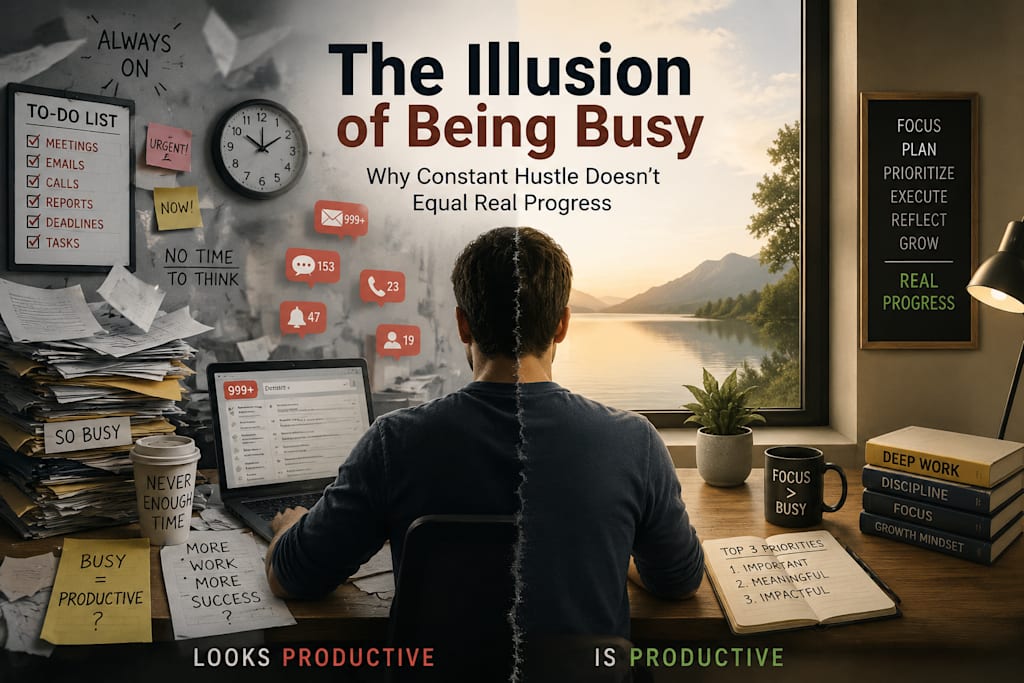
Introduction: Busy ≠ Productive
In today’s fast-paced world, being “busy” has become a badge of honor. People wear packed schedules like trophies, proudly declaring how little sleep they get or how full their calendars are. But beneath this constant motion lies a quiet truth: being busy does not necessarily mean being productive.
The illusion of being busy tricks us into believing we are moving forward when, in reality, we may just be spinning in place. It creates a false sense of achievement while masking inefficiency, distraction, and even avoidance.
The Culture of Hustle
Modern society glorifies hustle. From social media posts showing 5 AM routines to influencers preaching “no days off,” the message is clear: the more you do, the more successful you are.
This mindset creates pressure to:
Fill every hour with activity
Respond instantly to messages
Take on more tasks than necessary
Avoid rest to appear dedicated
However, this constant activity often leads to burnout instead of breakthroughs. Hustle culture rarely emphasizes clarity, focus, or meaningful progress—it simply rewards motion.
What “Busy” Really Looks Like
At first glance, a busy person appears highly productive. Their day is full of:
Meetings
Emails
Calls
Tasks and errands
But if you look closer, many of these activities are:
Low-impact (they don’t move goals forward)
Repetitive (they could be automated or reduced)
Distracting (they prevent deep, focused work)
Being busy often means reacting instead of creating. You’re constantly responding to demands rather than intentionally working toward meaningful outcomes.
The Psychology Behind Staying Busy
Why do people choose to stay busy, even when it’s not effective?
1. Avoidance of Discomfort
Deep work—like writing, strategizing, or building something meaningful—requires focus and can feel mentally challenging. Busywork provides an easy escape.
2. Sense of Control
A full schedule creates the illusion of control. It feels safer to manage small tasks than to face big, uncertain goals.
3. External Validation
Society praises busyness. Saying “I’m so busy” often earns respect, while saying “I’m taking time to think” might not.
4. Fear of Slowing Down
Stillness forces reflection. Many people stay busy to avoid confronting doubts, fears, or lack of direction.
The Hidden Costs of Constant Busyness
While being busy might feel productive, it comes with serious downsides:
1. Burnout
Continuous activity without rest drains energy, leading to exhaustion and decreased performance.
2. Shallow Work
When you’re constantly switching tasks, your focus weakens. You produce more, but with lower quality.
3. Missed Opportunities
Busyness leaves no room for creativity or new ideas. Innovation requires space, not chaos.
4. Lack of Real Progress
You may complete dozens of tasks but still feel stuck because none of them truly matter.
Productivity vs. Activity
A key distinction must be made:
Activity = Doing things
Productivity = Doing the right things
You can spend 10 hours working and achieve very little if your efforts are misdirected. On the other hand, 2–3 hours of focused, meaningful work can create real progress.
True productivity is about:
Prioritizing high-impact tasks
Eliminating unnecessary work
Focusing deeply on what matters
The Trap of To-Do Lists
To-do lists are often seen as productivity tools, but they can also reinforce busyness.
Long lists:
Encourage quantity over quality
Create pressure to check off items quickly
Mix important tasks with trivial ones
As a result, people tend to complete the easiest tasks first, giving the illusion of progress while avoiding the most important work.
A better approach is to focus on:
1–3 high-impact tasks per day
Clear priorities instead of endless lists
The Power of Deep Work
Deep work is the opposite of busyness. It involves:
Intense focus
Minimal distractions
Meaningful output
When you engage in deep work:
You produce higher-quality results
You learn faster
You make real progress toward your goals
However, deep work requires:
Saying no to distractions
Scheduling uninterrupted time
Being comfortable with silence and effort
Why Slowing Down Is Powerful
It may seem counterintuitive, but slowing down often leads to faster progress.
When you pause, you can:
Think clearly
Evaluate priorities
Make better decisions
Stillness creates space for:
Creativity
Strategy
Insight
Many successful individuals intentionally build time for thinking, reflection, and rest into their schedules. They understand that clarity is more valuable than constant action.
Signs You’re Stuck in the Busy Trap
You might be caught in the illusion of being busy if:
You feel exhausted but unfulfilled
Your days are full, but your goals aren’t progressing
You constantly multitask
You struggle to focus on one thing at a time
You equate rest with laziness
Recognizing these patterns is the first step toward change.
How to Break Free from Busyness
1. Redefine Productivity
Stop measuring success by how much you do. Start measuring it by the impact of what you do.
2. Identify High-Impact Work
Ask yourself:
What tasks actually move me forward?
Focus your energy there.
3. Eliminate or Delegate
Not everything needs your attention. Remove unnecessary tasks or pass them on when possible.
4. Schedule Focus Time
Block out uninterrupted time for deep work. Treat it as non-negotiable.
5. Limit Distractions
Reduce:
Social media usage
Notifications
Multitasking
6. Embrace Rest
Rest is not wasted time—it’s essential for:
Recovery
Creativity
Long-term productivity
The Role of Intentional Living
Escaping the illusion of busyness requires intentionality.
Instead of asking:
“How can I do more?”
Start asking:
“What actually matters?”
Intentional living means:
Aligning your actions with your goals
Being selective with your time
Saying no to what doesn’t serve you
Quality Over Quantity
The most impactful work often comes from:
Focused effort
Clear thinking
Strategic action
Not from endless activity.
A single meaningful achievement:
Writing a chapter
Completing a project
Learning a new skill
Is far more valuable than completing dozens of minor tasks.
Conclusion: Choose Progress Over Motion
The illusion of being busy is one of the biggest obstacles to real success. It keeps you occupied but not fulfilled, active but not effective.
Breaking free requires a shift in mindset:
From hustle to focus
From quantity to quality
From activity to impact
True progress is not about doing more—it’s about doing what matters most.
When you let go of the need to always be busy, you create space for meaningful work, deeper thinking, and genuine growth. And in that space, real success begins.
About the Creator
Enjoyed the story? Support the Creator.
Subscribe for free to receive all their stories in your feed.
Comments
There are no comments for this story
Be the first to respond and start the conversation.