
The Hustle Myth
Why Working Smarter Beats Working Harder
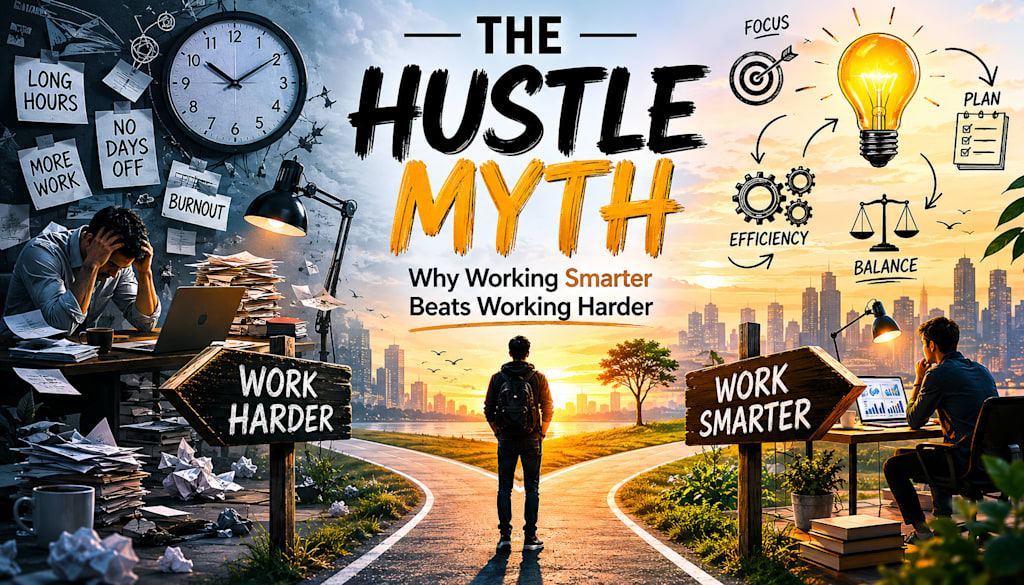
In today’s fast-paced, hyper-connected world, hustle culture has become more than just a trend—it’s a lifestyle. Social media feeds are filled with messages glorifying long hours, sleepless nights, and the constant grind. “Rise and grind,” “No days off,” and “Sleep is for the weak” have become mantras for those chasing success.
But beneath the surface of this relentless drive lies a critical question: Is working harder really the key to success? Or is the hustle culture selling us a myth that leads to burnout rather than fulfillment?
The Rise of Hustle Culture
Hustle culture didn’t emerge overnight. It grew alongside the digital age, where entrepreneurs, influencers, and professionals began sharing their journeys online. The narrative was simple and appealing:
Work harder than everyone else
Sacrifice comfort and leisure
Push beyond limits
Success will follow
This idea became especially popular among young professionals and aspiring entrepreneurs. It promised control over one’s destiny and a fast track to wealth and recognition.
However, what often goes unnoticed is the selective storytelling behind these success narratives. For every visible success story, there are countless untold stories of exhaustion, failure, and mental strain.
The Problem With “Working Harder”
Hard work is undeniably important. But hustle culture takes it to an extreme, promoting the idea that more work always equals better results. This belief has several flaws.
1. Burnout Is Real
Constant overworking leads to physical and mental exhaustion. Burnout is not just feeling tired—it includes:
Loss of motivation
Reduced productivity
Emotional fatigue
Increased stress and anxiety
Ironically, the more you push yourself without rest, the less effective you become.
2. Time ≠ Productivity
Spending more hours working doesn’t necessarily mean you’re achieving more. In fact:
Long hours often lead to mistakes
Focus decreases over time
Creativity suffers when the brain is overworked
A person working 6 focused hours can often outperform someone working 12 distracted hours.
3. It Ignores Efficiency
Hustle culture emphasizes effort over strategy. But success is rarely about doing more—it’s about doing the right things.
Without clear direction, working harder can simply mean:
Repeating ineffective actions
Wasting energy on low-impact tasks
Moving fast in the wrong direction
The Illusion of Constant Productivity
One of the biggest myths of hustle culture is the idea that you must always be productive. This creates pressure to:
Fill every minute with work
Feel guilty during rest
Equate self-worth with output
But humans are not machines. Our brains need downtime to:
Process information
Generate creative ideas
Recharge for future tasks
Some of the best ideas come during rest, not during relentless work.
Working Smarter: A Better Approach
If working harder isn’t the ultimate solution, what is?
The answer lies in working smarter—a concept that focuses on efficiency, strategy, and balance rather than sheer effort.
1. Prioritize High-Impact Tasks
Not all tasks are equal. Some contribute significantly to your goals, while others have minimal impact.
Smart work involves:
Identifying key priorities
Focusing on tasks that bring results
Eliminating unnecessary work
This approach ensures that your energy is spent where it truly matters.
2. Leverage Systems and Tools
Technology and systems can dramatically improve efficiency. Instead of doing everything manually, smart workers:
Automate repetitive tasks
Use productivity tools
Streamline workflows
This reduces effort while increasing output.
3. Set Clear Goals
Working without direction leads to wasted effort. Clear goals provide:
Focus
Motivation
Measurable progress
When you know exactly what you’re working toward, you can align your efforts more effectively.
4. Embrace Rest as Strategy
Rest is not laziness—it’s a performance tool.
Taking breaks helps:
Improve concentration
Boost creativity
Prevent burnout
High performers understand that recovery is part of productivity, not the opposite of it.
The Role of Mindset
Breaking free from the hustle myth requires a shift in mindset.
Instead of asking:
“How can I work more?”
Ask:
“How can I work better?”
This shift changes everything.
From Quantity to Quality
Focus on the quality of your work rather than the number of hours spent. High-quality work:
Produces better results
Builds stronger reputation
Saves time in the long run
From Busy to Effective
Being busy is not the same as being productive. True productivity means:
Achieving meaningful outcomes
Making progress toward goals
Using time wisely
From Sacrifice to Sustainability
Success should not come at the cost of your health or happiness. A sustainable approach ensures:
Long-term growth
Better mental well-being
Consistent performance
Real Success Stories: What They Don’t Tell You
Many successful individuals are often portrayed as tireless workers who never stop. While hard work played a role, their success also involved:
Strategic thinking
Smart decision-making
Delegation
Timing and opportunity
What’s rarely highlighted is that they didn’t just work harder—they worked smarter.
The Hidden Cost of Hustle Culture
Beyond productivity, hustle culture has deeper consequences.
1. Mental Health Struggles
Constant pressure to perform can lead to:
Anxiety
Depression
Chronic stress
2. Strained Relationships
When work takes over life, personal relationships suffer. Time with family and friends becomes limited, affecting emotional well-being.
3. Loss of Purpose
When everything revolves around work, it’s easy to lose sight of why you started in the first place.
Success becomes a chase rather than a meaningful journey.
Redefining Success
Perhaps the biggest flaw of hustle culture is its narrow definition of success—usually tied to money, status, or recognition.
But true success is broader. It includes:
Personal fulfillment
Mental and physical health
Strong relationships
A sense of purpose
Working smarter allows you to pursue success without sacrificing these essentials.
Practical Steps to Escape the Hustle Trap
If you find yourself caught in the hustle cycle, here are some steps to break free:
1. Audit Your Time
Track how you spend your day. Identify:
Time-wasting activities
Low-value tasks
Opportunities for improvement
2. Focus on Results, Not Hours
Shift your mindset from:
“I worked 10 hours today”
to
“I achieved my key goals today”
3. Learn to Say No
Not every opportunity is worth your time. Protect your energy by:
Setting boundaries
Prioritizing what matters
4. Take Intentional Breaks
Schedule rest just like you schedule work. Treat it as essential, not optional.
5. Invest in Learning
Improving your skills can make your work more efficient. The more you learn, the less effort certain tasks require.
The Future of Work: Smarter, Not Harder
As the world evolves, the nature of work is changing. Automation, artificial intelligence, and digital tools are reshaping industries.
In this new landscape:
Efficiency matters more than effort
Creativity beats repetition
Strategy outweighs sheer labor
The individuals who thrive will not be those who work the longest hours, but those who use their time and energy wisely.
Conclusion
The hustle myth has convinced many that success demands constant effort, endless work, and personal sacrifice. But this narrative is incomplete—and often harmful.
Hard work has its place, but it is not the whole story.
True success comes from:
Working with intention
Focusing on what matters
Balancing effort with recovery
Choosing strategy over struggle
In the end, it’s not about how hard you work—it’s about how well you work.
Because the goal isn’t just to succeed.
It’s to succeed sustainably, meaningfully, and intelligently.
About the Creator
Enjoyed the story? Support the Creator.
Subscribe for free to receive all their stories in your feed.
Comments
There are no comments for this story
Be the first to respond and start the conversation.