
The Girl Who Edits Other People's Feelings for a Living
The Bitter Reality

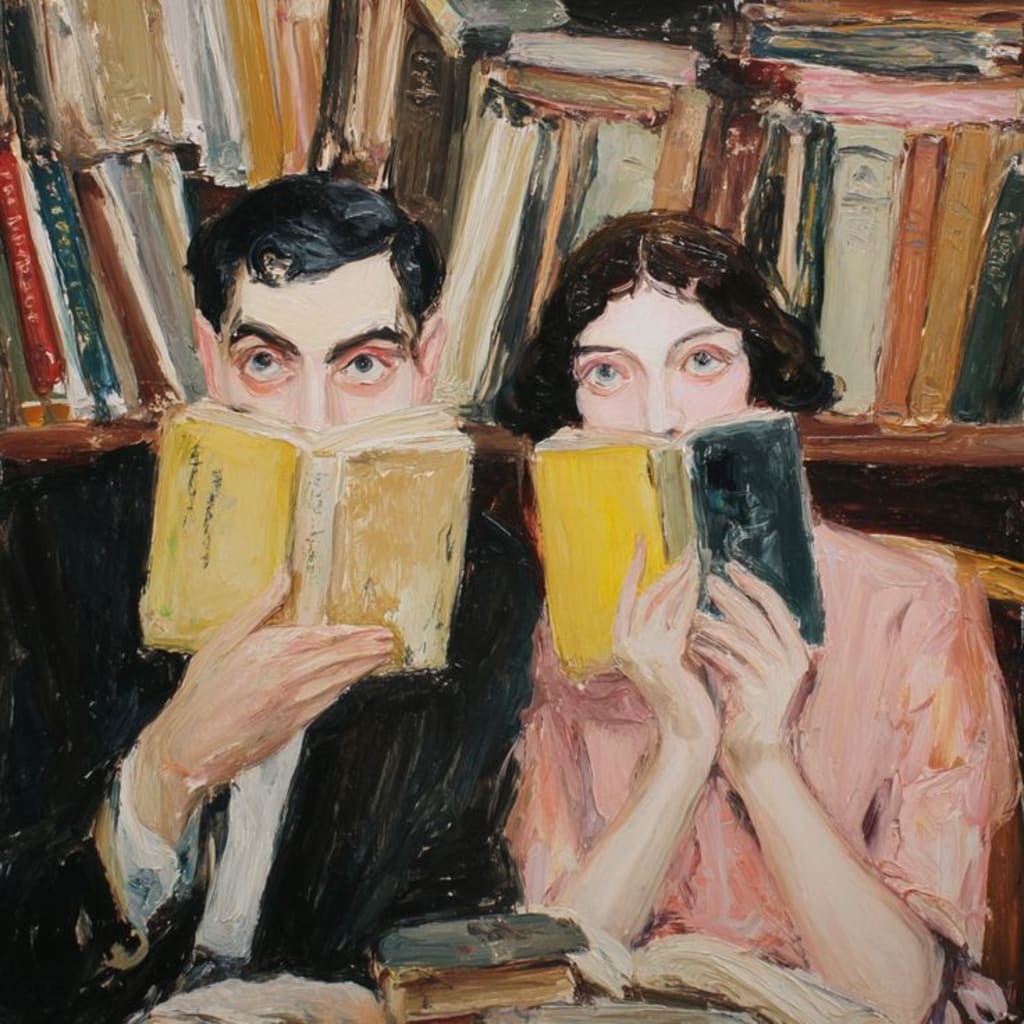
I became an editor the way some people become priests, drawn to other people's confessions, quietly certain the grace I offer was never meant for me.
I do it for a living, or something close to a living. I open manuscripts and I hold someone's grief, deciding if it earns its place on the page. I ask: is this true, or is this the performance of truth? Is this image doing work? Does this sentence know what it wants? I have learned to tell the difference. That is the job.
What nobody tells you about editing is how intimate it is. You are not only reading , but also diagnosing. You are inside a stranger's chest, feeling for where it gives. You learn the particular texture of a writer's fear: the overexplained metaphors, the line break, the paragraph that circles the wound without touching it. You see all of it. You mark it, kindly, and you send it back.
Editing gave me a clinical eye. It also gave me a merciless one. What I didn't anticipate was that it would fundamentally alter the way I experience emotion itself, not just on the page, but inside my own life. Now, even while living something painful, part of me is already at a remove, observing, searching for structure, identifying the metaphor, cutting the excess. Grief arrives and I am grieving and I am also, simultaneously, reading the grief for clarity. Nothing remains untouched by revision for very long. Feelings pass through me the way manuscripts do: annotated, assessed, returned to sender.
I did not choose this. It is simply what happened when I let the editor into every room. I am not sure anymore where she ends and I begin. I am not sure there is still a difference.
I am twenty years old, I edit other people's work, and I have a drafts folder I haven't opened in months. There are poems in there. Essays half-finished. A piece about longing that I wrote at two in the morning and saved and closed and have not looked at since because I am afraid it is good and still not good enough. There is a difference. I know the difference now. That is the problem. I see the same fear in other people's work, and I fix it. I see it in my own work, and I close the document and open someone else's.
I think about Virginia Woolf, who said that a woman must have money and a room of her own to write fiction. I have the room. I have the time. What I do not have, apparently, is the permission. The strangest part is that I am the only one withholding it. I give that permission freely to everyone else. I have red-lined timidity out of other people's work a hundred times. I have written in the margins: “trust yourself.” “Publish this.” “This deserves to be seen.”
But my own margins are empty.
Maybe that is why my own writing sits unfinished while I spend hours resurrecting everyone else's. It is easier to enter another person's emotional landscape than to admit the shape of your own. Easier to sharpen someone else's sentences than to face the possibility that your own deserve to be read.
Knowing what good writing looks like does not make writing easier. It makes it more terrifying. Every sentence I write now has to pass through the part of me that has read a hundred manuscripts and learned to see. That part does not say: this is a first draft, give it grace. That part says: is this earning its place?
Most days, I close the document. And the loneliness of that is being the one who knows what the work needs and still won't give it. The cursor keeps blinking on a sentence that may never become a paragraph. Somewhere else, another writer waits for my notes, my reassurance, my belief in their work. Which is its own kind of irony; that i cannot write these encouragements in the margins of my own page.
About the Creator
Yasmine Lagras
creative writer , poet and researcher.
Aspiring to reach more people.
Enjoyed the story? Support the Creator.
Subscribe for free to receive all their stories in your feed.
Comments
There are no comments for this story
Be the first to respond and start the conversation.