
The Fear of Starting Over
Why Change Feels Scary but Is Often Necessary
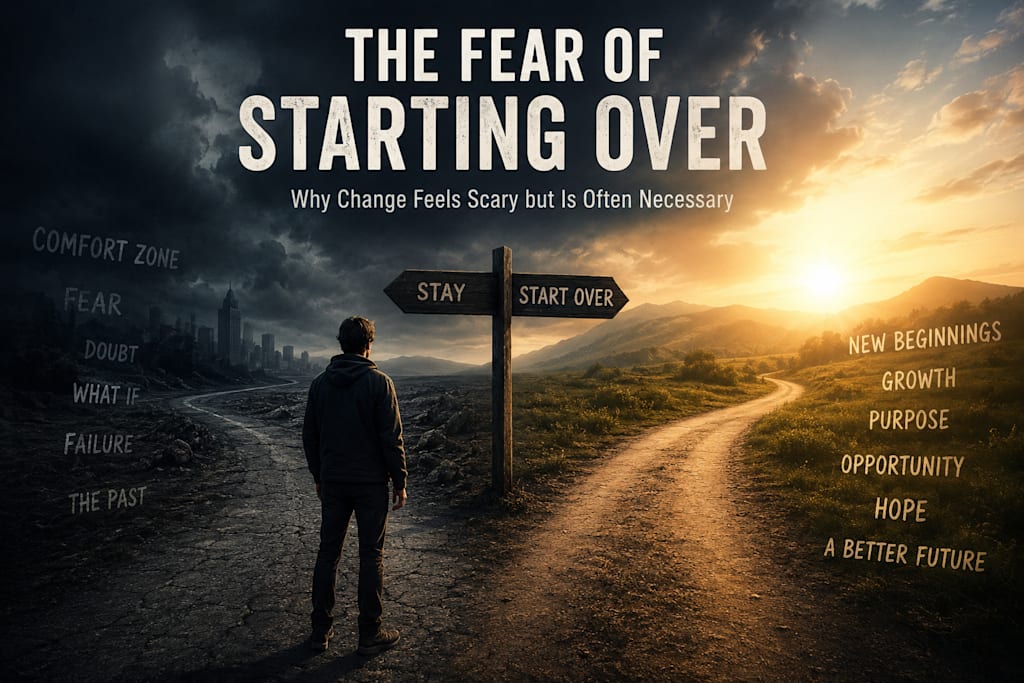
Starting over sounds simple in theory—close one chapter, begin another. But in reality, it can feel like standing at the edge of something vast and uncertain, unsure whether to step forward or retreat to what’s familiar. The fear of starting over is one of the most common yet least discussed emotional barriers people face. It shows up in careers, relationships, personal growth, and even small daily decisions. And while it often disguises itself as caution or practicality, at its core, it is fear—fear of loss, failure, judgment, and the unknown.
One of the main reasons starting over feels so difficult is because of attachment. Humans are naturally wired to seek stability. We build routines, relationships, and identities around what we know. Even when something no longer serves us—a job that drains us, a relationship that limits us, or a lifestyle that feels misaligned—we hesitate to let go. Not because it’s good, but because it’s familiar. Familiarity creates a sense of safety, even when it quietly holds us back.
There’s also the weight of time invested. People often think, “I’ve already spent years on this—how can I just walk away?” This is known as the sunk cost fallacy, where past investment makes it harder to leave, even when staying is no longer beneficial. Starting over then feels like admitting that those years were wasted, which can be painful to accept. But in truth, those years are not wasted—they are lessons, experiences, and growth that prepare you for what comes next.
Fear of failure plays an equally powerful role. When you start over, you return to a place of uncertainty. You may no longer be the expert or the one in control. There’s a risk of not succeeding, of making mistakes, of not reaching the same level of comfort you once had. This can feel like moving backward rather than forward. But growth rarely looks like a straight path. Sometimes it requires stepping back in order to move in a better direction.
Another layer of fear comes from external judgment. Society often praises consistency and stability. People expect you to follow a linear path—study, work, settle, succeed. When you break that pattern, it can invite questions, criticism, or doubt from others. “Why would you leave a stable job?” “Isn’t it too late to start again?” These voices can make you question your own decisions. But what others see as risky might be exactly what you need to feel fulfilled.
Starting over also challenges your identity. Over time, people define themselves by what they do, where they are, and who they are with. When those things change, it can feel like losing a part of yourself. You may wonder, “Who am I without this?” This identity shift can be uncomfortable, but it is also an opportunity. It allows you to rebuild yourself intentionally, based on who you are now—not who you used to be.
Despite all these fears, starting over is often where real growth begins. Staying in a situation that no longer aligns with you may feel safer, but it can lead to stagnation, frustration, and regret. The discomfort of change is temporary, but the cost of staying stuck can last much longer. Growth requires movement, and movement often requires letting go.
It’s important to understand that starting over doesn’t mean starting from zero. You carry your experiences, skills, and knowledge with you. Every mistake you’ve made, every challenge you’ve faced, and every lesson you’ve learned becomes part of your foundation. You are not the same person you were when you first began your journey. You are stronger, wiser, and more prepared—even if it doesn’t feel that way at first.
One way to manage the fear of starting over is to shift your perspective. Instead of seeing it as losing something, view it as gaining an opportunity. It’s a chance to realign your life with your values, explore new possibilities, and create something that feels more authentic. Change doesn’t erase your past—it builds on it.
Taking small steps can also make the process less overwhelming. Starting over doesn’t have to be a dramatic, all-at-once decision. It can begin with small actions—learning a new skill, exploring a different path, or making gradual changes in your routine. These steps build confidence and reduce the fear of the unknown.
Support is another crucial factor. Starting over can feel isolating, but you don’t have to do it alone. Talking to people who understand your journey, seeking guidance, or even reading about others who have taken similar steps can provide reassurance. Many successful stories begin with uncertainty and fear. What makes the difference is the willingness to move forward despite those feelings.
Patience is equally important. Starting over takes time. There may be moments of doubt, setbacks, or frustration. Progress might feel slow, and results may not come immediately. But that doesn’t mean you’re failing. It means you’re adjusting, learning, and growing. Trusting the process is essential, even when it feels uncomfortable.
It’s also worth questioning what you’re truly afraid of. Often, the fear of starting over is not just about change—it’s about what we think that change will mean. Fear of embarrassment, fear of being judged, fear of not being “good enough.” When you break these fears down, you may realize that many of them are assumptions rather than realities. And even if some of them come true, they are rarely as damaging as staying in a situation that makes you unhappy.
There’s a quiet strength in choosing to start over. It takes courage to walk away from what is known and step into uncertainty. It takes honesty to admit that something is no longer right for you. And it takes resilience to rebuild and begin again. These are not signs of weakness—they are signs of growth.
In many ways, life itself is a series of new beginnings. Every stage brings change, whether we choose it or not. The difference is whether we resist it or embrace it. When you resist change, it often feels forced and painful. But when you choose it, even with fear, it becomes empowering.
It’s also important to remember that there is no “perfect time” to start over. Waiting for the right moment can become an excuse to stay where you are. There will always be reasons to delay—uncertainty, responsibilities, fear. But if something inside you is telling you that it’s time for a change, that feeling deserves attention. Ignoring it doesn’t make it go away; it only makes it louder over time.
Starting over can lead to unexpected opportunities. It opens doors you may not have considered before. It allows you to meet new people, discover new passions, and explore new paths. While the beginning may feel uncertain, it often leads to growth that wouldn’t have been possible otherwise.
At the same time, it’s okay to acknowledge the difficulty. Starting over is not easy. It can be emotional, exhausting, and sometimes discouraging. You may miss what you left behind, even if it wasn’t right for you. That’s a natural part of the process. Letting go always comes with a sense of loss, but it also creates space for something new.
Ultimately, the fear of starting over is rooted in the unknown. But the unknown is not always something to avoid—it is where possibility exists. Everything you have now was once unknown. Every success, every relationship, every experience began as something uncertain. The same applies to whatever comes next.
The question is not whether you will feel fear—you will. The question is whether you will let that fear stop you. Growth rarely happens in comfort. It happens when you take a step forward despite not having all the answers.
Starting over is not the end of your story. It is the beginning of a new chapter—one that you have the power to shape. It may not be perfect, and it may not be easy, but it can be meaningful, fulfilling, and aligned with who you are becoming.
In the end, the greatest risk is not starting over. It’s staying in the same place and wondering what could have been.
About the Creator
Enjoyed the story? Support the Creator.
Subscribe for free to receive all their stories in your feed.
Comments
There are no comments for this story
Be the first to respond and start the conversation.