
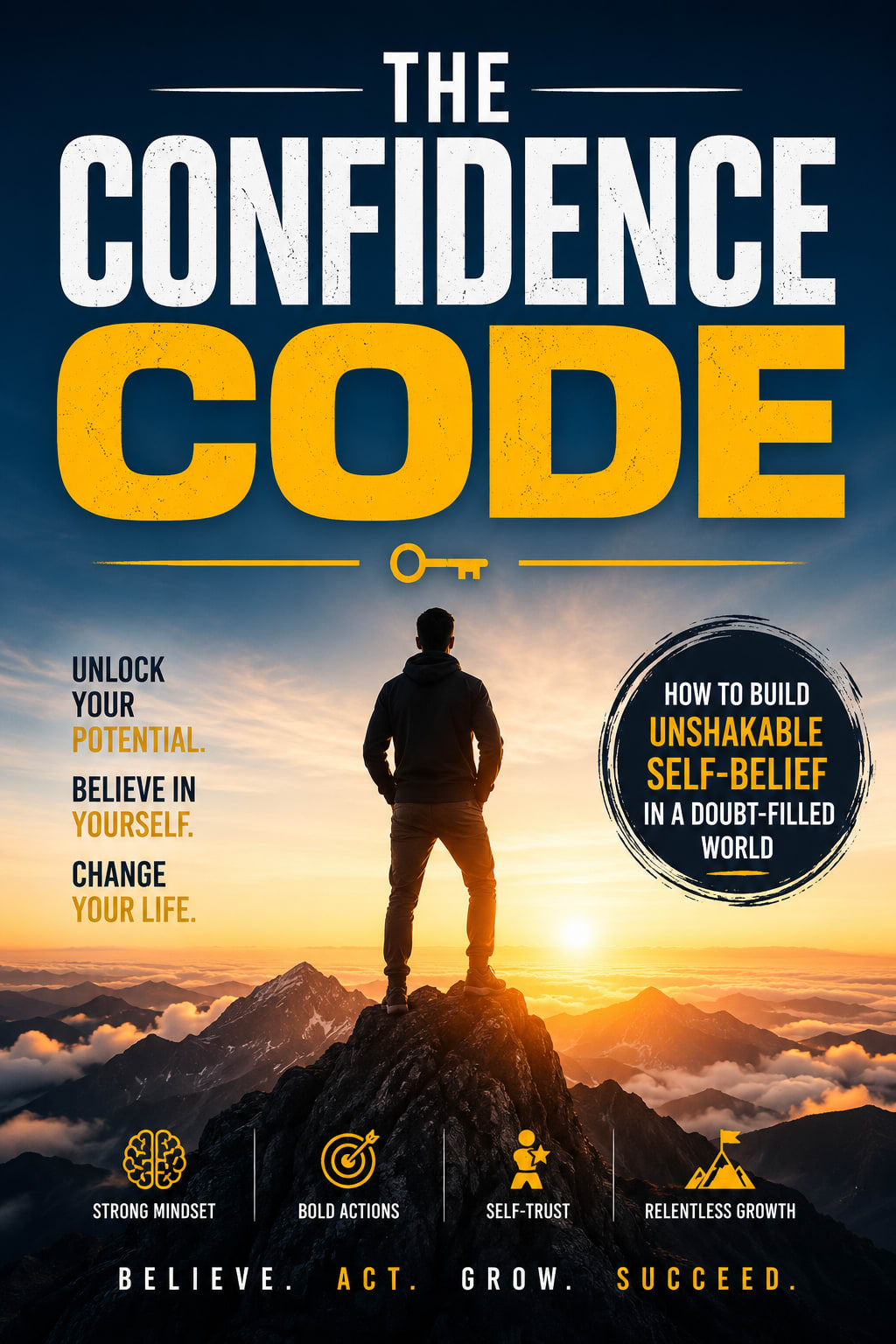
The Confidence Code
How to Build Unshakable Self-Belief in a Doubt-Filled World
Introduction
Confidence is often mistaken as something people are born with—a natural trait reserved for the lucky few. But in reality, confidence is not a gift; it’s a skill. It’s built, shaped, and strengthened over time through consistent effort and mindset shifts.
In a world filled with comparison, criticism, and constant noise, self-doubt has become the default setting for many. Social media highlights perfection, competition is everywhere, and fear of failure quietly controls decisions. Yet, despite all this, confidence remains one of the most powerful tools for personal and professional success.
So, what’s the secret? What is the confidence code?
It’s not about eliminating fear. It’s about acting despite it. It’s about trusting yourself, even when the outcome is uncertain. And most importantly, it’s about building a relationship with yourself that is rooted in belief, not doubt.
1. Confidence is Built, Not Born
No one starts life as a fully confident person. Even the most successful individuals you admire have faced insecurity and self-doubt.
Confidence comes from:
Experience
Repetition
Small wins
Learning from failure
Think of confidence like a muscle. The more you use it, the stronger it becomes. Avoiding challenges weakens it. Facing them—even imperfectly—strengthens it.
Key insight:
You don’t need confidence to start. You build confidence by starting.
2. The Role of Self-Talk
Your inner voice shapes your reality more than any external factor.
If your mind constantly says:
“I’m not good enough”
“I’ll probably fail”
“Others are better than me”
Then your actions will reflect that belief.
Confident people are not free from negative thoughts—they just don’t let those thoughts control them.
Shift your self-talk:
Replace “I can’t” with “I’ll try”
Replace “What if I fail?” with “What if I learn?”
Replace “I’m not ready” with “I’ll figure it out”
Over time, this mental rewiring creates a stronger foundation of belief.
3. Action Creates Confidence
Waiting to “feel ready” is one of the biggest traps.
Confidence doesn’t come before action—it comes after it.
You become confident in speaking by speaking
You become confident in writing by writing
You become confident in business by doing business
Every action you take sends a message to your brain: I can handle this.
Even small actions matter:
Sending that email
Sharing your idea
Trying something new
Each step builds evidence that you are capable.
4. Embrace Failure as Feedback
Fear of failure is one of the biggest confidence killers.
ut here’s the truth: failure is not the opposite of success—it’s part of it.
Every mistake teaches:
What doesn’t work
What needs improvement
How to grow
Confident people don’t avoid failure—they reframe it.
Instead of saying:
“I failed”
They say:
“I learned”
This shift removes the emotional weight from mistakes and turns them into tools for growth.
5. Stop Comparing Yourself to Others
Comparison is one of the fastest ways to destroy confidence.
You see someone else’s success and think:
“They’re ahead”
“I’m behind”
“I’m not as good”
But what you’re comparing is:
Their highlight reel vs your behind-the-scenes
Their chapter 10 vs your chapter 1
Everyone’s journey is different.
Focus on:
Your progress
Your growth
Your path
The only person you need to be better than is who you were yesterday.
6. Body Language Matters
Confidence is not just internal—it’s also physical.
Your posture, eye contact, and movements influence how you feel and how others perceive you.
Simple changes can make a big difference:
Stand straight
Maintain eye contact
Speak clearly and slowly
Avoid shrinking yourself physically
Your body sends signals to your brain. When you act confident, your mind starts to follow.
7. Preparation Builds Certainty
A lack of confidence often comes from a lack of preparation.
When you prepare:
You reduce uncertainty
You increase control
You feel more capable
Examples:
Practice before a presentation
Research before a meeting
Plan before starting a project
Preparation doesn’t guarantee success—but it dramatically increases your confidence.
8. Keep Promises to Yourself
Every time you break a promise to yourself, your self-trust decreases.
“I’ll start tomorrow”
“I’ll wake up early”
“I’ll finish this today”
When you don’t follow through, your mind learns:
I can’t rely on myself.
Confidence is deeply connected to self-trust.
Build it by:
Setting small, realistic goals
Following through consistently
Showing up even when you don’t feel like it
Each kept promise strengthens your belief in yourself.
9. Surround Yourself with the Right People
Your environment shapes your confidence more than you realize.
Negative people:
Criticize
Doubt
Discourage
Positive people:
Support
Encourage
Inspire
You don’t need constant praise, but you do need an environment that allows growth.
Choose people who:
Believe in you
Challenge you
Push you forward
Confidence grows faster in the right environment.
10. Accept That You Won’t Always Feel Confident
One of the biggest myths is that confident people always feel confident.
They don’t.
They feel fear, doubt, and uncertainty—just like everyone else.
The difference is:
They act anyway.
Confidence is not about feeling fearless. It’s about taking action despite fear.
11. Focus on Progress, Not Perfection
Perfectionism is disguised as high standards, but it often leads to inaction.
Waiting for the perfect moment
Waiting for perfect skills
Waiting for perfect results
This delays growth and kills confidence.
Instead:
Take imperfect action
Learn as you go
Improve over time
Progress builds confidence. Perfection delays it.
12. Celebrate Small Wins
Most people wait for big achievements to feel proud.
But confidence is built on small victories.
Completing a task
Trying something new
Overcoming fear
Staying consistent
Recognizing these wins reinforces positive behavior.
It tells your brain:
I’m improving. I’m capable. I’m growing.
Conclusion
The confidence code is not a secret formula. It’s a set of habits, thoughts, and actions repeated consistently over time.
To build unshakable self-belief:
Take action even when you’re unsure
Speak to yourself with intention
Learn from failure instead of fearing it
Focus on your journey, not others’
Keep promises to yourself
Embrace progress over perfection
Confidence is not about becoming someone else. It’s about becoming more of who you already are—without the weight of doubt holding you back.
In a world that constantly challenges your worth, choosing to believe in yourself is a powerful act.
And once you start building that belief, step by step, you’ll realize something important:
Confidence was never something you lacked.
It was something you just hadn’t fully unlocked yet.
About the Creator
Enjoyed the story? Support the Creator.
Subscribe for free to receive all their stories in your feed.
Comments
There are no comments for this story
Be the first to respond and start the conversation.