
The Color of the Water Bottle: What We See When We Look at Two Women Walking
A photo. Two bottles. A thousand assumptions about race, desire, and the bodies we think we already understand.
The Color of the Water Bottle
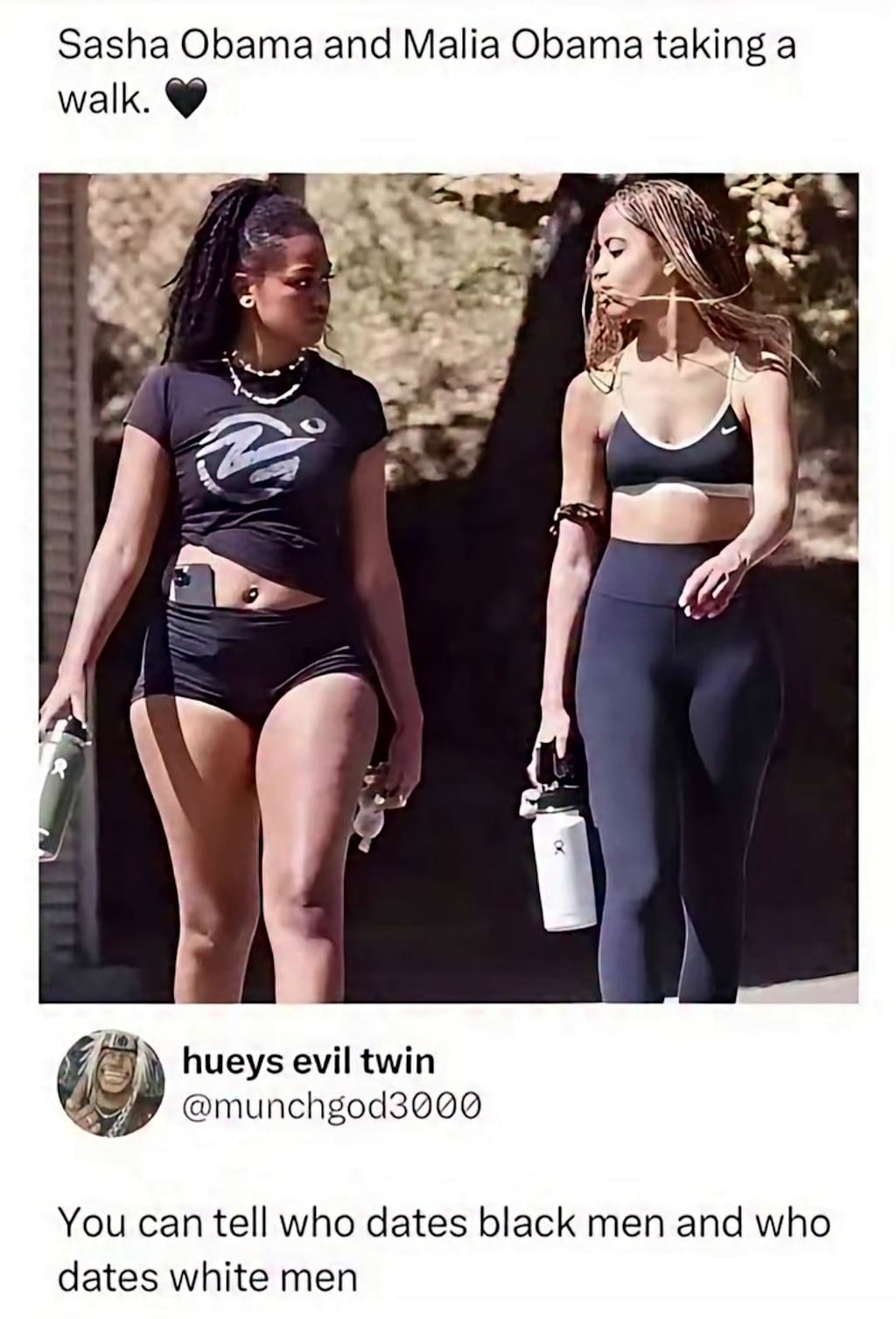
A street photo shows two young women. One wears shorts. The other wears black workout clothes. Each carries a water bottle. One bottle is white, the other black. The shutter clicks. Then the sorting starts.
People read the white yoga pants as a set of cues: gym, salad, an early alarm, the white male gaze. They read the shorts as another set: curves, ease, a night corner, the Black male gaze. The bottles become ballots. White bottle, white partner. Black bottle, Black partner. Any other color, Puerto Rican. Someone laughs. Someone screenshots the line. Someone posts it and waits for likes.
In a coffee shop, a Black man says hello to a white woman. She nods. At home she opens a shopping app and adds salad to the cart. She looks up a workout plan. She sets the treadmill incline to six. She sweats. She eats vegetables. She weighs herself. He did not confess love. He said hello. But the hello turns into a box in her head: he likes thick. She refuses the box. Her body then starts answering a question nobody asked.
Yoga pants are fabric. Shorts are fabric. A bottle holds water. The viewer wants speed. Speed feels safe. A label turns a person into a predictable role. You do not have to know her. You only need her clothes, her bottle, and the person walking beside her. Then you can say you understand.
Then comes the resemblance game. Sasha looks like a young Michelle. Malia looks like Obama in a wig. They have been watched since childhood. Their height, their hair, their boyfriends become public material. They did not choose to be symbols. Once a symbol exists, it grows. People use them to tell their own stories. Knowing them is not required.
A date begins at the door. A handshake. The living room. Tea. The sofa. The former President sits across from the boyfriend. He asks about work, hobbies, parents. The boyfriend wears a suit. The former President wears sneakers. The boyfriend asks if he should take off his shoes. The former President says no. The conversation continues. Secret Service waits outside. Old news sits on a phone. History sits on the coffee table. The date becomes an interview. Father is one title. Power, media, and memory are others.
Beauty changes. In a nineties music video, the so-called big butt looks small today. Thin was the fashion. Then curves. Then gym definition. The body gets pushed by the tide. What was mocked yesterday gets praised today. What gets praised today may be outdated tomorrow. The standard is not natural. It is a temporary deal signed by fashion and power, then torn up.
Back to the photo. The woman on the left unscrews her cap and drinks. The woman on the right tightens hers. At the corner, someone turns a head. Someone does not. Someone saves the image. Someone swipes away. They do not know. Or they know and keep walking. The light turns green. They cross. The photo stays. The labels stay. They are not in the photo.
A comment appears. Another comment. A thread. Someone jokes about bottle colors. Someone replies with a chart. Someone says it is only a joke. Someone says it is not that deep. The photo gets passed around. Each pass adds a layer. By the hundredth viewer, the two women have become a diagram. The diagram explains race, desire, class, and body at a glance. It is wrong. It is useful. It gets shared.
In the gym, the white woman runs. The belt moves. The screen shows calories. She does not look at the screen. She looks at the mirror. She checks her waist. She checks her hips. She does not know what she is checking for. She knows she does not want to be the answer to a stereotype. The stereotype is not hers, but it lives in her, in the room, in the way the Black man looked at her, or did not look, or looked too long, or looked away. She cannot tell. She adds a minute. She adds a mile. She adds a salad. She is not hungry.
On the street, the Black man walks. He does not know he has become a voting machine. He does not know his hello has become a data point. He was saying hello. He likes what he likes. He dislikes what he dislikes. He is not a category. He is a person with a Tuesday. He has a job and a backache. His mother calls too much. He has a favorite song. He has a blue water bottle. According to the chart, that makes him Puerto Rican. He laughs and keeps walking.
The two young women keep walking. The one on the left is Sasha. The one on the right is Malia. They have names, classes, friends, bad days, and private jokes. They did not agree to be a lesson or a mirror. They are walking. The street is a street. The sun is the sun. The water bottle holds water.
The photo is a screen. People project onto it. They project race, desire, politics, memories of the Obama years, fears about the Trump years, their own bodies, their own diets, their own fathers and daughters. The photo holds all of it. It does not complain or correct. It stays.
The boyfriend leaves the house. He walks to his car. He exhales. He checks his phone. No messages. He drives home. He thinks about the sneakers, the tea, the handshake, and the question he did not ask. He did not ask, do you like me. He did not ask, am I good enough. He asked if he should take off his shoes. That was the right question. The former President said no. That was the right answer. The rest is ordinary. He drives home.
About the Creator
Jin
Writer of reamstories
https://reamstories.com/jin
Enjoyed the story? Support the Creator.
Subscribe for free to receive all their stories in your feed. You could also become a paid subscriber, letting them know you appreciate their work.
Comments
There are no comments for this story
Be the first to respond and start the conversation.