
The Art of Becoming Your Best Self
Small daily habits that lead to big life changes
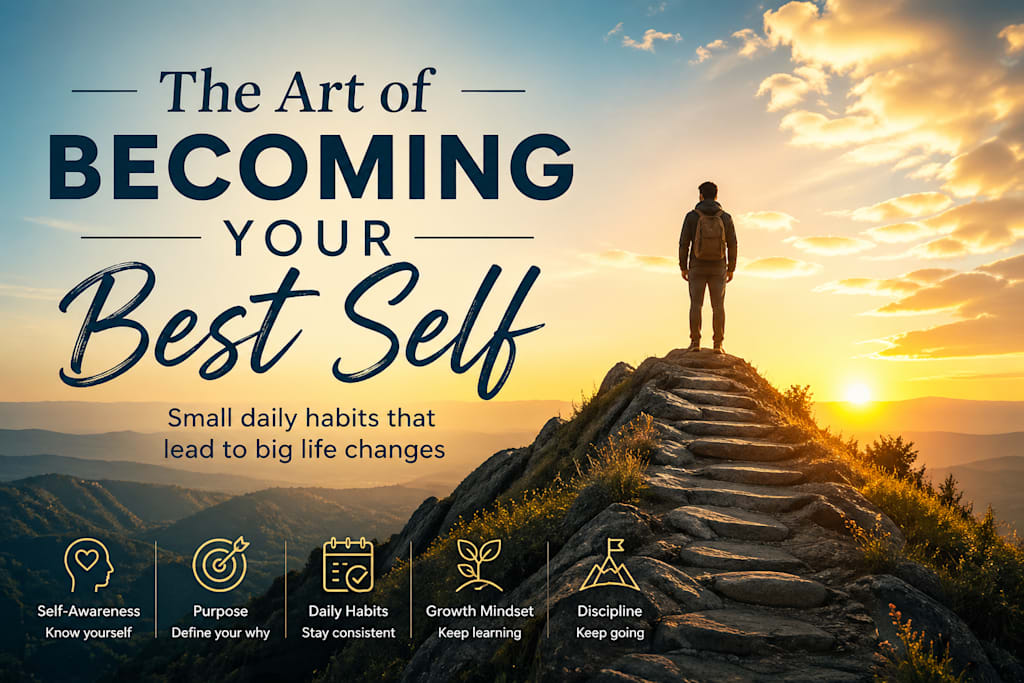
Becoming your best self isn’t a single breakthrough moment—it’s a process. It’s not about perfection, overnight success, or becoming someone entirely different. Instead, it’s about steady growth, intentional choices, and small daily habits that gradually shape who you are.
In a world that often celebrates instant results, the idea of slow, consistent improvement can feel underwhelming. But real transformation doesn’t happen in bursts of motivation; it happens in the quiet, repeated actions you take every day.
Understanding What “Your Best Self” Really Means
Your best self isn’t a fixed destination. It’s not a perfect version of you who never fails, never doubts, and always gets things right. That version doesn’t exist.
Your best self is:
The version of you that keeps growing
The one who learns from mistakes instead of avoiding them
The one who shows up even when it’s hard
It’s personal. Your best self won’t look like anyone else’s. It depends on your values, goals, and the life you want to create.
Why Small Habits Matter More Than Big Changes
People often wait for the “right time” to change their lives—a new year, a new job, a new beginning. But big changes rarely last if they aren’t supported by small, consistent habits.
Think of habits as the building blocks of your identity.
Reading 10 pages a day can turn you into a reader
Saving a small amount regularly can build financial security
Spending 20 minutes learning a skill can change your career path
These actions may seem insignificant in the moment, but over time, they compound into something powerful.
Consistency beats intensity every time.
The Power of Self-Awareness
Before you can improve yourself, you need to understand yourself.
Self-awareness is the foundation of personal growth. It means being honest about:
Your strengths
Your weaknesses
Your habits and patterns
What truly matters to you
Without self-awareness, you risk chasing goals that don’t align with who you are.
How to build self-awareness:
Reflect regularly (journaling helps)
Pay attention to your reactions and emotions
Ask yourself why you do what you do
The more you understand yourself, the better decisions you can make.
Discipline Over Motivation
Motivation is unreliable. It comes and goes depending on your mood, energy, and circumstances.
Discipline, on the other hand, is what keeps you going when motivation fades.
Your best self is built on the days when you don’t feel like trying—but do it anyway.
Practical ways to build discipline:
Start small (don’t overwhelm yourself)
Create routines instead of relying on feelings
Remove distractions that pull you away from your goals
You don’t need to feel motivated to take action. You just need to start.
The Role of Mindset in Growth
Your mindset shapes how you see challenges and setbacks.
A fixed mindset says:
“I’m not good at this.”
A growth mindset says:
“I’m not good at this yet.”
This small shift changes everything.
When you adopt a growth mindset:
Failures become lessons
Challenges become opportunities
Effort becomes valuable, not something to avoid
Your best self isn’t someone who never fails—it’s someone who keeps learning.
Letting Go of What Holds You Back
Growth isn’t just about adding new habits. It’s also about letting go.
To become your best self, you may need to release:
Negative self-talk
Toxic environments or relationships
Fear of failure or judgment
The need for perfection
Holding onto these things creates resistance. Letting go creates space for growth.
The Importance of Consistency
One of the biggest misconceptions about self-improvement is that you need to do everything perfectly.
You don’t.
Missing one day doesn’t matter. What matters is not quitting.
Think long-term:
One workout won’t make you fit
One healthy meal won’t transform your body
One productive day won’t change your life
But repeating these actions over months and years will.
Consistency isn’t about being perfect—it’s about not giving up.
Building Habits That Stick
Not all habits last. The key is to make them simple and sustainable.
Tips for building strong habits:
Start with one or two habits at a time
Make them easy to follow
Attach them to existing routines (habit stacking)
Track your progress
For example:
Read after brushing your teeth
Write for 10 minutes before bed
Stretch right after waking up
The easier a habit is to start, the more likely you are to stick with it.
The Role of Environment
Your environment shapes your behavior more than you think.
If you want to become your best self, design your environment to support your goals.
Keep distractions out of reach
Surround yourself with people who inspire growth
Create spaces that encourage focus and creativity
You don’t rise to the level of your goals—you fall to the level of your environment.
Patience: The Missing Ingredient
One of the biggest reasons people give up is because they don’t see results quickly.
But real change takes time.
You won’t notice progress every day. Sometimes it feels like nothing is happening. But beneath the surface, small changes are adding up.
Patience is what keeps you going when progress feels invisible.
Balancing Growth with Self-Acceptance
There’s a fine line between wanting to improve and constantly feeling like you’re not enough.
Becoming your best self doesn’t mean rejecting who you are right now.
It means:
Accepting yourself as you are
While working toward who you want to become
Growth and self-acceptance can exist together.
You don’t need to hate your current self to improve it.
Taking Responsibility for Your Life
At some point, growth requires accountability.
Blaming circumstances, other people, or bad luck may feel justified—but it keeps you stuck.
Your best self takes responsibility:
For actions
For decisions
For how you respond to challenges
This doesn’t mean everything is your fault. It means you choose how to move forward.
The Ripple Effect of Small Changes
Small habits don’t just improve one area of your life—they create a ripple effect.
Exercising regularly improves energy, mood, and focus
Reading expands knowledge and perspective
Practicing gratitude improves mental well-being
These changes connect and reinforce each other.
That’s how small actions lead to big transformations.
Conclusion: Becoming Is Better Than Arriving
There’s no final version of your best self. Growth doesn’t end.
The goal isn’t to “arrive” at perfection—it’s to keep becoming.
Every day is an opportunity to:
Learn something new
Improve slightly
Make better choices
You don’t need a dramatic life overhaul. You don’t need to have everything figured out.
Start small. Stay consistent. Be patient.
Because in the end, becoming your best self isn’t about changing your life overnight—it’s about changing it, one day at a time.
About the Creator
Enjoyed the story? Support the Creator.
Subscribe for free to receive all their stories in your feed.
Comments
There are no comments for this story
Be the first to respond and start the conversation.