Stream of Consciousness
5 Signs Your Job Is Not the Right Fit for You
Have you ever found yourself feeling uninspired at work? If so, you're not alone. Research suggests that as many as 80% of workers are dissatisfied with their jobs. While it's normal to have occasional dissatisfaction, chronic unhappiness can signal that your job is not the right fit for you.
By LaMarion Zieglerabout a year ago in Confessions
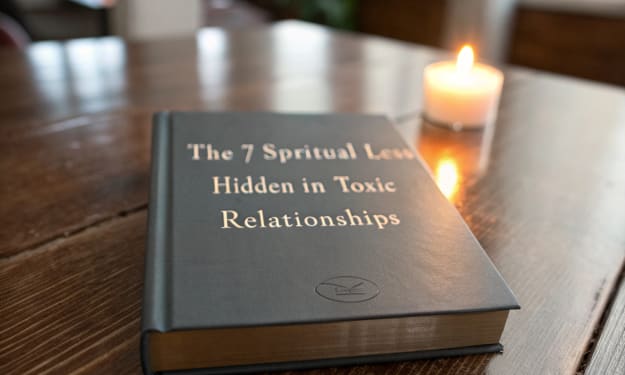
The 7 Spiritual Lessons Hidden in Toxic Relationships
We don’t talk enough about the sacred purpose of pain. When it comes to love, we’re taught to chase the fairy tale—the soulmate, the twin flame, the “forever.” But often, the most transformative relationships aren’t the soft ones. They’re the ones that crack us open.
By Great pleasureabout a year ago in Confessions
Sleep Less, Build More: Inside the Obsessive Mind of Elon Musk
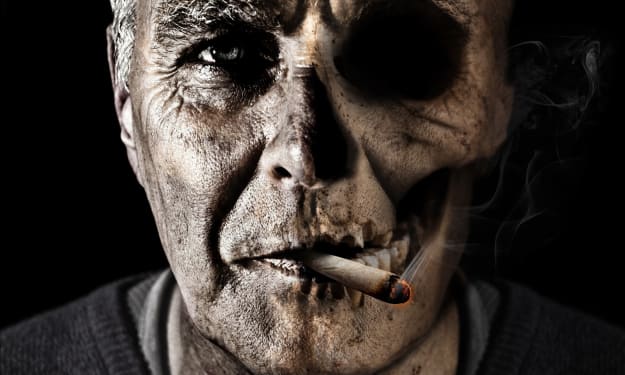
Sleep Less, Build More: Inside the Obsessive Mind of Elon Musk Genre: Inspirational / Confessional I thought I knew what hard work was. I thought staying up until 2 a.m. editing video or hitting "send" on emails during lunch breaks made me some kind of hustler. But then I decided—on a dare and a bit of delusion—to follow Elon Musk’s 80–100 hour workweek schedule.
By waseem khanabout a year ago in Confessions
The Day My Father Looked Weak for the First Time
Growing up, I always saw my father as a symbol of strength. He was the kind of man who could fix anything — from a broken bicycle to a leaking faucet — without breaking a sweat. To me, he was invincible. His presence filled the house with a sense of security and calm. No matter how hard life got, my father was always there, steady and unshakable. He worked as a carpenter, and every day, I watched him return home with tired hands but a proud smile. He never complained about the long hours or the hard labor. I remember him telling me once, “Son, a real man never shows his pain. He carries it silently and keeps moving forward.” Those words stayed with me throughout my childhood. But one day, everything changed. It was a cold autumn afternoon when I came home from school earlier than usual. The sky was dull and grey, and the wind was whispering through the dry leaves. I opened the door to our small house and called out, “Dad? I’m home.” But the silence that answered back was unusual. Normally, the house buzzed with the sound of his radio or the hammering of nails, but now, everything was still. I walked toward the living room and found him sitting on the old wooden chair by the window, staring blankly outside. His shoulders were slumped, and his hands were trembling. For the first time, I saw something in his eyes that I had never noticed before — vulnerability. He looked weak. My heart tightened. “Dad?” I whispered, stepping closer. He looked at me and forced a small smile, but it didn’t reach his eyes. “Hey, son,” he said softly. “What’s wrong?” I asked, my voice shaking. He sighed deeply and looked away, as if unsure how to explain. Then, with a heavy voice, he said, “I... I’m not feeling well.” That was all he said. But I could see it — the pain that he had been hiding for weeks. His face was pale, and there was a sadness that seemed to weigh down his entire being. Over the next few days, I stayed by his side, watching as this strong man struggled with something invisible but powerful. He was diagnosed with a heart condition that required immediate surgery. The news hit our family like a storm. The man who had always been my pillar of strength was suddenly fragile and scared. During his hospital stay, I saw a side of him no one else had. He cried quietly in the night, afraid of what the future held. I held his hand and told him, “It’s okay to be scared, Dad. You don’t have to be strong all the time.” He nodded and whispered, “Thank you, son.” That moment changed everything for me. I realized that strength wasn’t about never showing weakness. It was about courage — the courage to face fear and pain head-on, even when it felt overwhelming. My father’s weakness that day wasn’t a sign of failure; it was a sign of humanity. When he came back home after the surgery, he was slower, weaker, but still fighting. He needed help to walk and do simple tasks. It was hard for him to accept at first. He had always been independent and proud. But gradually, with my support and love, he learned to lean on others when needed. I learned to appreciate him even more — not because he was perfect, but because he was real. Because he showed me that being strong doesn’t mean you never fall. It means you get up, again and again, even when the weight of the world is on your shoulders. Years have passed since that day, but I remember it vividly. It taught me empathy, compassion, and the true meaning of strength. Now, whenever I face challenges, I think of my father — the man who looked weak for the first time but showed me what it really means to be strong.
By Misbah about a year ago in Confessions
His Secret Changed Everything
How One Man’s Hidden Life Destroyed a Family and Shattered a Small Town’s Trust Crestwood was the kind of town where everyone knew everyone—or at least, they thought they did. Neighbors waved from their porches. The baker knew your favorite pastry. And secrets? They didn’t last long.
By Hamad Haiderabout a year ago in Confessions
A Day in my Life
As I put the laundry into the dryer and then put another load into the washer, I realize I still need to put up the leftovers from supper. The cat(the fat one that always wants food) meows loudly in protest as I put our food away. I smile down at him, "Ok, Macaroni, I'll feed you before bed." My daughter, Elizabeth, stands there waiting for me to come to bed. She has that thumb in her mouth again and her blanket/bear in her hands, and I've about given up hope of her ever stopping that thumb sucking. She is 10 years old and she'll be 11 in the Fall, and I swear she still acts like a 6-year-old sometimes. Hell, who am I kidding? That's most days. "I'm coming," I tell her as I finish feeding Macaroni and the other cats who decided to join in on the late-night snack. My life is chaotic, hectic, and I never get a moment to myself. I'm exhausted. I'm a single mom to a beautiful 10-year-old who just got diagnosed with autism, and a highly intelligent 17-year-old young man with ADHD. I keep two jobs just to make ends meet, and even that isn't enough sometimes. I've started back at college. I want to become a therapist someday, a crisis counselor. I should've done this long ago, and maybe I wouldn't be struggling so much right now. I can't lie because, for one, I'm not very good at it. My face tells the story. Life has not been an easy street for me. I don't have a savings account, I count pennies at the drive-through just to give my kid some lunch or to pay for gas for the car, and lying is not the only thing my face shows, it also shows the years. My children's father has never been very supportive, but we did love each other once upon a time. That feels like another lifetime now. Then, there was the toxic romance that about took everything from me. Now, I have tried to find love again, but it seems that the tank is empty. I'm happier and safer alone. Honestly, I don't have the energy for anyone else. My daughter needs me almost every second of the day and wants to know where I am down to the minute. I'm exhausted to the point my bones hurt. To the point, I cry. I keep pushing through each day by just saying, "Just do this one last thing and you can take a break," but the truth is? It never ends. I hope one day it does, but right now that day feels so far away. My beautiful baby girl, whom her father barely knows. She's so creative, smart, and she has such big dreams. I worry about her anxiety and social phobias. She is so extremely attached to me, and I am glad we are close, but I wish she felt comfortable enough with herself and the world around her to explore and figure out things for herself without having to hold my hand every step of the way. I'm angry to have to do this alone. I'm upset that I'm having to do this with no help from their father. He helps financially every once in a while. To be honest, what he gives me barely makes a dent in what it takes to raise these children. I'm doing it, though, and I'll do it again and again. Every damn day. Why? Because to me they are worth it. They are so worth it! And I am pissed that he doesn't feel the same! I'm pissed that I have to always be the strong one. I have to hold everything together because no one else will. The world is on my shoulders, and I feel every single bit of it. It is so heavy, and there is no one to help bear that weight at the end of the day. The sad thing is that I don't even trust anyone to help at this point because I feel like I'll owe them if they help. Everything comes at a price. Everyone wants something. Another little piece of me. I wonder as I lie watching my daughter sleep, my biggest fear and constant worry, "When will there be no more pieces of me left to give?"
By Lindsey Altomabout a year ago in Confessions
Unspoken
I’ve always believed that the most powerful stories are the ones no one ever hears. They live quietly, tucked inside us — in half-written journals, in unfinished letters, in the moments when we stare at the ceiling and wonder what if. They never make it to stages or bookshelves. They don’t go viral. But they shape us more than any story we tell out loud. This is one of mine. I met her in the quietest winter of my life. I was 21. Lost, like most people are in their early twenties — pretending I knew who I was, what I wanted, what healing looked like. I had dropped out of university the semester before. Depression doesn’t ask for permission — it just shows up and stays until you forget who you were before it arrived. I’d spend most of my days sitting on the park bench at the corner of Fifth and Willow, clutching a notebook I rarely opened. Writing had always been my release, but at that time, even words felt too heavy to carry. And then she sat down next to me. No introduction. No small talk. Just a soft, tired sigh and the unwrapping of a chocolate bar. I glanced at her. She looked… ordinary. Messy bun, oversized coat, sneakers with worn-out laces. But her eyes — her eyes held storms. Not the kind that scared you. The kind that said, I’ve been there too. She offered me a piece of chocolate. I shook my head. "You look like you need it more than me," she said, half-smiling. That was the beginning. Her name was Safiya. We never exchanged numbers. We never asked for last names. But for the next 27 days, she showed up. Same bench. Same time. Two strangers sitting in silence, sometimes sharing chocolate, sometimes stories. She once told me, “People always want to fix you. They throw advice like bandaids. But sometimes, you just need someone to sit in your sadness without trying to solve it.” I didn’t say anything then. But I wrote it down when I got home. On the 10th day, she brought her journal. Not to read from it — just to show me it existed. “I call it The Book of Things I’ll Never Say Out Loud,” she said. I nodded, then slowly handed her mine. She didn’t open it. Just held it like something sacred. We sat that way — two people with matching scars, holding each other’s silence. On the 20th day, she cried. No warning. Just tears falling quietly as the wind pushed against the trees. I didn’t ask why. I just handed her a tissue and sat closer. “I thought I was getting better,” she whispered. “But grief has no expiration date.” Still, I said nothing. That was our language — understanding without questioning. On the 27th day, she didn’t come. I waited. For hours. The next day, I waited again. And the next. She never came back. I don’t know where she went. I don’t know if she moved, relapsed, healed, disappeared. I never saw her again. But sometimes, I imagine she’s sitting on another bench, in another city, handing someone else a chocolate bar and listening to stories they’ll never tell anyone else. Sometimes I think I was just a pause in her journey. A safe corner in the chaos. And maybe that’s enough. A year later, I opened the journal she gave me. I hadn’t dared to until then. There were only two pages filled. Page 1: To the stranger on the bench: Thank you for not asking me why I’m broken. Thank you for just sitting with the pieces. Page 2: If you’re ever brave enough to write again, write the story of us. Not for the world. For yourself. To remember that even on your worst days, someone saw you and stayed. I wept. Not loudly. Not dramatically. The kind of weeping that feels like cleansing — like finally letting go of everything you’ve held too tightly. I’m writing this now, years later, because she was right. Some stories deserve to be written even if no one reads them. Some connections, even nameless, are more real than lifelong friendships. Some moments live longer in memory than entire years. This is not a love story. It’s not a tragedy either. It’s just… human. Two people. One bench. A borrowed journal. Twenty-seven days of unspoken healing. So here it is, Safiya. I finally wrote the story. And if you ever find it… Thank you. For sitting beside me when I couldn’t carry my story alone.
By Muhammad Abuzar Badshah about a year ago in Confessions
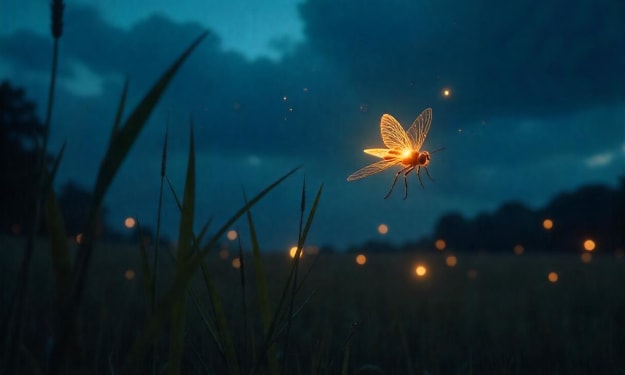
The Firefly That Refused to Fade
Story: On the edge of a quiet village, nestled in tall blades of grass, lived a firefly unlike any other. His name was Lumo, and unlike most fireflies who blinked their lights for brief moments of courtship or instinct, Lumo carried a different fire—one not just in his abdomen, but deep within his soul. Every night, as the stars blanketed the sky and clouds drifted lazily over the moon, Lumo emerged. Where others flickered for moments and faded into the shadows, he chose to shine longer, brighter, and with purpose. The other insects often whispered, “Why does he burn so bright?” But Lumo never answered. His light was not for them. He had a dream. --- A Fire Born in Silence Lumo was born on a humid summer night. His first memory wasn’t of flight or freedom—it was of stillness. He remembered the suffocating darkness, a world where not even the stars dared peek. But then, for the first time, he felt it—a flicker inside him, warm and glowing. It wasn’t just biology or instinct. It was a calling. That night, he watched as the other fireflies rose for a brief mating flight. They danced, flickered, and faded. But Lumo stayed grounded. He asked himself, “Is my light meant only for survival—or something more?” --- The Path Less Glowed Unlike others, Lumo wandered further than the fields. He soared over rivers, glided through valleys, and even hovered above the rooftops of sleeping villages. Children in their beds would sometimes catch a glimpse of his glow and smile in their dreams. To them, he was a tiny wish flying in the dark. But every journey had its price. There were nights when storms raged, and his fragile wings felt like tearing. Clouds would swallow the stars, leaving him alone in a sky without guidance. At times, his light would dim—not from exhaustion, but from doubt. Why was he the only one still flying? Why did no other firefly share his path? --- The Firefly and the Boy One evening, after a heavy rain, Lumo rested on a blade of wet grass near a small hut. Inside, a little boy sat by the window, silent and sad. His mother had been sick for days, and the boy hadn’t smiled in what felt like forever. Lumo saw him. He knew that sadness. That lonely silence. So, for the first time in many nights, Lumo flew close—not high in the sky, but low, where the boy could see him. He circled the window gently, leaving a soft glowing trail in the misty air. The boy looked up, and for a moment, hope lit his eyes. Lumo didn’t need words. His light said it all: “You’re not alone.” That night, the boy placed a glass jar outside the window—not to catch Lumo, but to invite him. A tiny gesture of trust. Lumo never entered the jar, but he danced around it every night, giving the boy something to wait for. Over time, the mother recovered. The boy smiled more. And Lumo? He kept flying. --- Why Fireflies Don’t Shine in the Day Some ask, “Why don’t fireflies shine during daylight?” Lumo would say, “Because their light isn’t meant to compete with the sun—it’s meant to guide in darkness.” And maybe that’s the most beautiful thing about them. They glow when no one else does. They remind us that even in the deepest night, something soft and small can still be beautiful, powerful, and real. --- Legacy in the Night Lumo became a quiet legend in that village. No one could prove he existed, but stories passed from child to child. "The flying light that healed sadness." "The night flame who never left." "The firefly that refused to fade." Old now, Lumo still glows. His wings slower, his trails shorter—but his light, oh his light—it burns like the first night he felt it awaken inside. He knows now: It was never about being seen. It was about being true. --- Final Thoughts Lumo’s story is not just about a firefly. It’s about all of us—those who feel different, who shine in quiet ways, who carry light when the world turns dark. In a time where people often chase attention, noise, and brightness, maybe we should all learn something from a tiny firefly who chose to glow not for applause—but for purpose. We don’t always need to shine the brightest. We just need to shine when it matters most.
By Ihsan Ullah LLCabout a year ago in Confessions