Stream of Consciousness
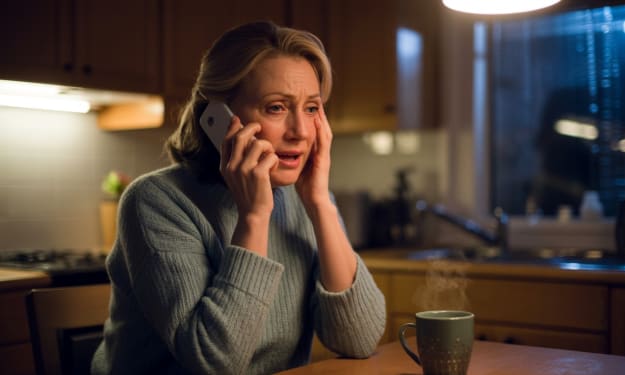
“The Phone Call That Changed My Mother Forever”
It was just an ordinary Tuesday night. My mom stood at the kitchen counter, chopping onions for her famous lentil soup. I was helping her toast bread, the smell of garlic and butter swirling in the air. The radio played quietly in the background—one of those stations that always seemed stuck in the 90s. It felt like one of those rare, calm moments when everything was just… right.
By Aliabout a year ago in Confessions
Why I Blocked My Crush Without Saying a Word — And Slept Better That Night
I didn’t say goodbye. I didn’t offer an explanation. I didn’t leave a dramatic paragraph for closure. I just hit “block” — and then, for the first time in weeks, I slept through the night.
By Abdushakur Mrishoabout a year ago in Confessions
The Lie I Told at My Mother's Funeral
The scent of lilies was suffocating. It clung to the heavy air of the chapel, mingling with the damp wool of black coats and the faint, metallic tang of grief. I stood at the podium, the polished wood cool beneath my sweating palms, staring out at a sea of faces blurred by my unshed tears. My father sat in the front row, his shoulders slumped, a picture of devastated widowhood. My sister, Sarah, clung to his arm, her face a mask of raw pain. And then there was him. Robert. Standing discreetly near the back, his expression carefully neutral, but his presence screamed betrayal louder than any words.
By Ziafat Ullahabout a year ago in Confessions
When I Chose Peace Over Pleasing: The Day My Silence Stopped Serving Everyone but Me
I used to be proud of how “easygoing” I was. The one who didn’t make waves. The one who could be counted on to “understand.” I became the friend who always said yes, the partner who never argued, the daughter who swallowed her pain with a smile. People praised me for being mature, calm, and emotionally intelligent—but really, I was just quiet. Quiet because I thought peace meant avoidance. Quiet because I believed being loved meant being agreeable. Quiet because I thought being needed was the same as being valued. But that wasn’t peace. That was suppression dressed up as serenity. And the cost? My peace. My voice. And eventually, every relationship that was built on the condition that I stay silent. --- It started small. The friend who always vented to me but never asked how I was. The coworker who took credit for my ideas. The partner who made jokes at my expense and told me I was "too sensitive" when I flinched. I let it go. Every time I felt the sting of a crossed boundary, I brushed it off. “It’s not worth a fight,” I’d tell myself. “Pick your battles.” But I never picked any battles—not because they weren’t worth it, but because I didn’t believe I was. I was terrified that if I spoke up, people would leave. I thought love was fragile, something that only existed if I played the part that others needed from me. The accommodating friend. The chill partner. The daughter who didn't talk back. So I silenced myself for peace. But it was never peaceful inside me. --- Then one day, I cracked. It wasn’t some dramatic blowout. No shouting, no tears. Just a quiet, firm decision. I was on the phone with a friend I’d known for years. She was in the middle of another hour-long rant about her boyfriend, her job, her mother. She didn’t ask about me—not that she ever really did. But that day, I needed her to. I had just gone through something painful, and I was raw. “I actually have something I need to talk about too,” I said softly. There was a pause. Then she sighed. “Can it wait? I’m really overwhelmed right now.” And I realized—it would always have to wait. My feelings. My voice. My needs. Unless I changed the rules. So I said no. “Actually, it can’t wait anymore.” It wasn’t just a conversation. It was a turning point. --- One by one, the relationships fell away. Not because I was cruel. Not because I became unkind. But because I started showing up differently. I began saying “no” without guilt. I started expressing when I was hurt instead of stuffing it down. I stopped apologizing for having boundaries. And the people who had loved my silence? They didn’t know what to do with my voice. Some called me “difficult.” Others said I’d “changed.” They were right. I had. I was no longer interested in relationships that required me to disappear in order to be accepted. --- It was lonely at first. The silence after losing people is different from the silence you choose for yourself. It’s louder. Heavier. At times, I questioned whether I had made the right choice. But over time, the emptiness became space. Space for honesty. Space for alignment. Space for people who weren’t just comfortable with my silence—but honored my voice. And most importantly, space for me to hear myself. --- Here’s what I’ve learned: Peace isn’t the absence of conflict. It’s the presence of truth. Love that depends on your silence is not love. It’s control. And your voice—even if it shakes—is a revolution in a world that teaches you to be small. --- I used to think that speaking up would destroy the relationships I cared about. And it did. But only the ones that were never real in the first place. Because anything that crumbles when you stop betraying yourself wasn’t built on love. It was built on silence. And that’s no foundation worth keeping. So yes—my peace cost me relationships. But losing them gave me back myself. And I’ve never been more whole. Thank you for reading ❤️.
By Azmat Roman ✨about a year ago in Confessions
I'm Not Who I Was. And That's the Whole Point
I used to bend until I broke. If you knew me five years ago, you’d remember the girl who always smiled, said yes when she wanted to scream no, stayed quiet when she should’ve spoken up, and made herself small just to keep the peace. That version of me was easy to love—at least for everyone else. But she nearly killed me. I don’t say that for drama. I say that because it’s true. Back then, I lived my life like a performance. Always trying to be the “right” kind of person: polite, agreeable, non-confrontational. I kept my real thoughts tucked away, like they were dangerous secrets. I was afraid of making people uncomfortable. Afraid of being too much. Too emotional. Too complicated. So I became what they wanted. And they loved me for it. But I hated myself. I hated how I’d apologize just for existing. How I’d laugh at jokes that hurt me. How I’d overthink every text message, every outfit, every silence. I spent years trapped in my own body, wearing masks, speaking in voices that didn’t belong to me. The turning point came on a Tuesday. Funny how the biggest changes don’t always start with fireworks—sometimes they begin in the quiet. I was sitting in my car outside my apartment after another long day of pretending. My hands were shaking, and I couldn’t even pinpoint why. I looked in the rearview mirror, and I didn’t recognize the person staring back at me. I whispered out loud, “I can’t do this anymore.” Not “I don’t want to.” Can’t. That was the day I decided to start over—not by moving cities or changing my hair or deleting people from my phone—but by finally choosing myself. Choosing myself looked nothing like I expected. It looked like crying in the middle of the grocery store because I was grieving the girl I used to be. It looked like saying “no” and watching people walk away. It looked like sitting alone on Friday nights instead of going to places where I didn’t feel seen. It looked like messy journals, therapy sessions, long walks without music, and hard conversations. It looked like learning to love silence. Learning to love solitude. Learning to love me. People noticed the change. Some didn’t like it. “You’ve changed.” “You’re not as fun anymore.” “Why are you so distant?” “You used to be nicer.” No, I used to be more useful to them. I used to be easier to manipulate. Easier to guilt. Easier to keep in place. But growth has a way of making you harder to control. And I wasn’t changing for applause. I wasn’t changing for validation. I was changing because I had finally realized: my peace matters more than their comfort. Now, I speak up. Now, I walk away from anything that doesn’t feel aligned. Now, I say what I mean, and I mean what I say. I’m still kind, but not at my own expense. I still care, but I don’t chase. I still love, but I don’t beg. And some people still miss the old me—the version of me that tolerated disrespect, made excuses for others, and put herself last. But she’s gone. And that’s the whole point. I didn’t come this far to be dragged back into who I was just because it made someone else more comfortable. If you loved the version of me that kept quiet so you could be loud, I understand why you’re confused. But I won't apologize for evolving. I’m not bitter. I’m just clear. Clear about who I am. Clear about what I deserve. Clear about the kind of life I want to live. So if you’re reading this and you feel like you’re losing people because you’re changing—let them go. The ones who love your growth will stay. The ones who don’t were only ever in love with your compliance, not your core. I’m not who I was. And that’s the whole point. Because survival taught me how to shrink. But healing taught me how to expand. And I’m never going back.
By Azmat Roman ✨about a year ago in Confessions
How to Stop Comparing Yourself to Everyone Online.
You’re waiting for your coffee to brew, or you’re ticking off the time before bed, and suddenly you’re ten minutes into someone else’s highlight reel. A wedding in Bali. A promotion announcement. Perfectly styled kids in spotless homes. She just had her third child and still looks like she stepped out of a fashion ad. He’s buying his second home at 28. They’re building a life you never dreamed possible.
By Echoes of Lifeabout a year ago in Confessions
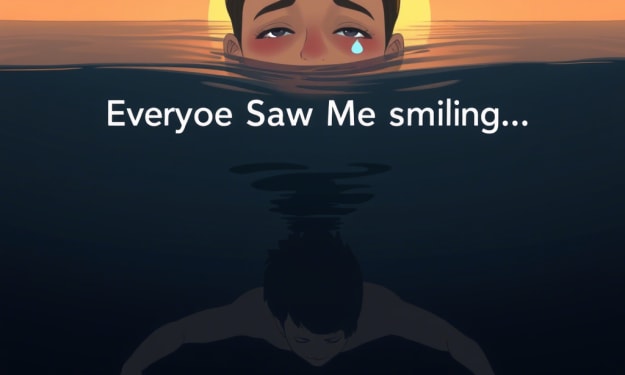
Everyone Saw Me Smiling. No One Saw Me Drowning.
Everyone thinks they know the strong ones. The ones who always smile. The ones who show up. The ones who laugh the loudest in the room and make others feel better. The ones like me. But no one ever stopped to ask how I was really doing. Not once. --- I remember the day it all started — or maybe, the day it started breaking. I was twenty-four, working at a creative agency, managing campaigns, juggling tight deadlines, and saying "I'm fine" like it was my birthright. People called me dependable. Energetic. A real "ray of sunshine." What they didn’t know was that I barely slept. What they didn’t see were the panic attacks in the office bathroom. What they couldn’t hear was the silence I went home to — the kind that makes your chest feel like it's caving in. --- Every morning, I applied my mask with precision: Smile? Check. Humor? Sharp as ever. Optimism? Overcompensated. And God forbid anyone see me struggle — vulnerability was a luxury I couldn’t afford. I answered “How are you?” like it was a rhetorical question. “Good, you?” “Doing great!” “Living the dream!” Lies. Polished, rehearsed, Instagram-filtered lies. The truth was darker than I wanted to admit: I felt like I was drowning in plain sight. And the scariest part? No one noticed. --- I didn’t want attention. I wanted connection. I wanted someone to see me — not the version of me I projected, but the one screaming silently behind the smile. But we’ve been taught to fear being “too much.” So I shrank. I became what everyone needed me to be: the helper, the listener, the cheerleader. Meanwhile, no one asked me if I needed saving. --- One night, after another long day of pretending, I sat on the edge of my bed staring at my phone. I was about to text a friend. I typed, “I don’t think I’m okay.” Then I deleted it. What would they even say? Would they be uncomfortable? Would I regret saying anything at all? Instead, I posted a story on Instagram of my dinner — some artsy shot of a salad and wine glass with the caption: “Self-care night.” It got 32 likes. Everyone saw me smiling. No one saw me drowning. --- It wasn’t one big event that broke me. It was a slow erosion — little moments of invalidation, months of ignoring myself, years of believing that being “strong” meant being silent. But burnout doesn’t arrive like a storm. It sneaks in like a leak in the ceiling, dripping quietly until one day — everything collapses. And collapse, I did. --- The day it all unraveled, I was in a meeting. My manager asked me about a campaign delay, and I couldn’t even form a sentence. My hands shook. My throat tightened. My vision blurred. I excused myself to the bathroom and cried in a stall like I was five years old again. Except I wasn’t a child. I was a grown adult who had run out of emotional credit. That night, I didn’t post anything. No curated shots. No witty captions. Just silence. And that silence — terrifying as it was — became the beginning of honesty. --- I started therapy. I deleted the “smile through the pain” playbook. I began telling the truth, even when my voice trembled: “I’m not okay right now.” And slowly, I found people who didn’t run from my mess. They leaned in. They held space. Turns out, I wasn’t alone. Most of us are drowning in one way or another — but we’ve been taught to tread water with a grin. --- If you’re reading this and you feel the same way — like you’re smiling on the outside and crumbling on the inside — please know: You don’t have to keep pretending. You are allowed to say, “I’m not okay.” You are allowed to need help. You are allowed to be human. Because strength isn’t in the smile you force. It’s in the truth you share. It’s in asking for a hand when you feel yourself sinking. --- Everyone saw me smiling. No one saw me drowning. But now, I speak before I sink. And maybe, just maybe — so can you. Thank you for reading.
By Azmat Roman ✨about a year ago in Confessions
Being the ‘Strong One’ Nearly Destroyed Me
They called me the “strong one.” It was meant as a compliment, I think. I was the one everyone leaned on. The one who stayed calm in a crisis. The one who didn’t cry at funerals. The one who offered advice, gave rides, picked up the pieces. I was the dependable one. The helper. The fixer. And I wore that label like armor. I convinced myself that being strong meant being silent. That my emotions were a burden no one else should have to carry. So I smiled while I was hurting. I cracked jokes when I felt like screaming. I became so good at pretending that even I started to believe the lie. But let me tell you something they don’t say out loud: Being the “strong one” is lonely. Exhausting. And sometimes, it breaks you. --- It started subtly. I was tired, sure—but wasn’t everyone? I had headaches that wouldn't go away, but I blamed my screen time. My sleep was a disaster. I’d lie awake, mind racing through other people’s problems while ignoring my own. Then came the anxiety. The random crying spells I’d hide in the bathroom. The sudden moments where I felt completely numb, surrounded by people who loved me but didn’t really see me. Because when you’re the strong one, people don’t ask if you’re okay. They assume you always are. And the worst part? I let them. I didn't know how to say, "I can't keep doing this." --- I hit my breaking point in the middle of a grocery store. I was standing in the produce aisle, trying to remember if I needed lemons or limes, and suddenly—everything felt too loud. Too bright. My chest tightened. My hands shook. I couldn’t breathe. Right there, between the cucumbers and the carrots, I had my first panic attack. And no one knew. Not the strangers shopping nearby. Not the cashier. Not my family. Because I pushed my cart to the side, walked out the door, sat in my car, and cried until I couldn’t anymore. Then I wiped my face, drove home, and made dinner like nothing happened. That’s what being the strong one looks like. --- Eventually, my body refused to cooperate with the façade. The burnout became physical. I got sick. I stopped caring. I isolated myself. I canceled plans. I withdrew. And still, no one really asked why. Because strong people don’t unravel. Strong people don’t quit. Strong people keep going. Right? --- Here’s the truth I wish someone had told me earlier: Strength isn’t about enduring pain in silence. It’s about knowing when to speak. When to rest. When to let others help. I started therapy. Not because I had the time, but because I couldn’t afford not to. I learned how to set boundaries. How to say no without guilt. How to disappoint people in order to save myself. It wasn’t easy. People didn’t understand at first. They thought I was “changing” or “not being there like I used to.” And they were right. I wasn’t. Because I couldn't be that person anymore. --- Now, I choose softness over stoicism. I choose rest over martyrdom. I cry when I need to. I ask for help—even when it’s uncomfortable. I let people see me, messy and human and flawed. And the people who truly love me? They didn’t walk away. They leaned in. Turns out, they just didn’t know I needed them—because I never let them see I did. --- If you’re reading this and you’re the “strong one” in your circle, let me say this as clearly as I can: You deserve care, too. You’re allowed to be tired. You’re allowed to stop pretending. Being strong isn’t about carrying everyone else’s pain at the cost of your own peace. Sometimes, the bravest thing you can do… is to finally put it down.
By Azmat Roman ✨about a year ago in Confessions
They Still Don’t Know Who I Really Am — And I’m Done Explaining
I spent most of my life explaining myself. Justifying my decisions. Smoothing over my rough edges to keep everyone comfortable. I’d rehearse conversations in my head before speaking — making sure my tone wasn’t too sharp, my words not too bold, and my presence not too much. Because when you’re someone like me — a little too honest, a little too different, and a little too unapologetic — the world doesn’t take you as you are. They try to edit you. Soften you. Translate you into something easier to swallow. And for years, I let them. I wore the masks they handed me. The “good girl” mask, the “play-nice” mask, the “don’t-rock-the-boat” mask. I wore them until they molded into my skin, until I couldn’t tell where they ended and I began. I was praised for being agreeable. For being accommodating. For dimming my light just enough to make everyone else feel brighter. But I was exhausted. There’s a particular kind of loneliness that comes from being surrounded by people who only know the version of you you’ve edited for their comfort. You laugh at their jokes that don’t make you laugh. You agree with opinions that suffocate your soul. You become a mirror, reflecting back what they want to see — until you forget what your own face looks like. That was me. A human mirror. A master of code-switching. Fluent in the language of pretending. But the truth? The real me? I am not soft around the edges. I am fire and storm and inconvenient truths. I cry when I’m angry, and I get angry when I’m hurt. I am deeply empathetic but not endlessly patient. I love fiercely, but I won’t beg for a seat at any table where my presence is a problem. And still — they don’t get it. They still think I’m being dramatic when I express my boundaries. They still say I’m “too sensitive” when I stand up for myself. They still try to reduce me to their version of acceptable. But here’s what’s changed: I’m done explaining. I’m done offering disclaimers before I speak. I’m done padding my truth with pleasantries to make it more palatable. I’m done pretending that their inability to understand me is my burden to carry. Because the truth is — I’m not here to be understood by everyone. I’m here to live my truth, loudly and without apology. There’s a dangerous narrative in our culture that tells us we must earn our place. That we must contort ourselves to be liked, accepted, loved. That if someone doesn’t “get” us, we need to explain more, try harder, be nicer. But no one ever told me what it costs. It costs your voice. Your fire. Your sanity. Your self. And I refuse to pay that price anymore. If my honesty offends you, that’s your discomfort to unpack. If my silence makes you nervous, maybe you were relying on my agreeability too much. If my choices confuse you, ask yourself why you thought you had the right to understand them in the first place. I’m not a puzzle for you to solve. I’m not a story you’re entitled to read in full. Some parts of me will remain unreadable, not because I’m hiding, but because they were never yours to access. And maybe that’s what liberation really looks like — not shouting your truth from rooftops for everyone to hear, but whispering it to yourself in the quiet, and knowing that’s enough. So yes — they still don’t know who I really am. They don’t know that I dance alone in my kitchen to songs that saved my life. That I cry at sunsets because beauty reminds me I’m still here. That I’ve survived things I’ve never spoken of — and maybe never will. That I love deeper than my silence implies, and feel more than I show. They don’t know. And they may never. But that’s no longer my problem to fix. Because finally, for the first time in my life, I’m not seeking their understanding. I’m standing in my own. And that — that is enough.
By Azmat Roman ✨about a year ago in Confessions
How I Rebuilt Myself After a Mental Burnout. Content Warning.
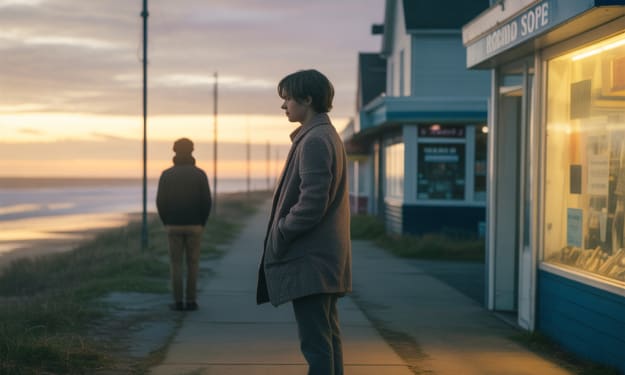
The town hadn’t changed much—same chipped-paint bookstore on the corner, same ocean breeze carrying salt and pine through the cracked windows of my rented apartment. I was back after six years, not to find anything or anyone, but to lose the noise. The city had been too loud, both inside and out. And I was tired. Bone-tired. Burnt out in the way no sleep could fix. I hadn’t planned on seeing her again. I was standing in line at a tiny record store that somehow still existed, flipping through the jazz section when I heard her laugh. Low, familiar. Like a warm echo I hadn’t realized still lived inside me. My fingers froze on a Chet Baker sleeve. I turned before I was ready, and there she was—Claire. Older, of course. Her hair a little shorter. Still wearing that threadbare leather jacket I once told her made her look like a film noir detective. “Hey,” she said, soft and cautious, like we were both standing at the edge of thin ice. “Claire,” I said, and for a moment, that was all I could manage. My throat tightened. “Wow. It’s been…” “Too long,” she finished. Awkward silence. One beat. Two. I felt the air between us fill with old memories we couldn’t name out loud. The argument outside that coffee shop. The note I never responded to. The time we danced to a scratched Nina Simone record until the power went out. “What are you doing here?” she asked, breaking the silence. “Trying to remember how to breathe,” I said before I could stop myself. It sounded more poetic than I intended, but it was the truth. She didn’t laugh. Just nodded. We walked down the boardwalk together without deciding to. The sea air was cold on my cheeks, the wind stiff with the kind of silence only ex-lovers know. My fingers tingled with the sting of winter air. I shoved them deeper into my coat. Claire kicked a pebble with her boot. “You still write?” I hesitated. “I stopped for a while. Burned out, I guess.” “Burned out from writing?” “No. From trying to live like I wasn’t falling apart.” We paused near the old diner that used to be our weekend ritual. It looked smaller now. Or maybe we’d just outgrown it. I thought about that night we sat in the corner booth, mapping out our futures on napkins. None of it came true. Not the shared apartment. Not the Paris trip. Not the novel I swore I’d finish by 27. “I kept one of your stories,” Claire said quietly. “The one about the lighthouse keeper who forgot how to sleep.” I smiled faintly. “That one was about me.” “I know.” The sky was turning the color of bruised plums. We stood there in the fading light, and I realized how much I’d changed—and how much I hadn’t. There was still that part of me that wanted to apologize for everything I did and didn’t do. But what would it matter now? “You seem better,” she said gently. “Some days, yeah. Others… I just fake it a little better.” She looked at me the way she used to, like she saw past the words I said into the ache behind them. “I should go,” she said, and there was no bitterness in it. Just a quiet resignation, like a page being turned. “Yeah,” I said. “Me too.” We didn’t hug. Just nodded, like two people who had survived something together—even if it wasn’t enough to keep them from breaking. That night, I sat by the window of the apartment, knees pulled to my chest, sipping cheap tea and listening to the muffled crash of waves. I didn’t feel fixed. Not even close. But for the first time in months, I didn’t feel entirely lost either. Sometimes, rebuilding doesn’t look like a grand gesture. Sometimes it’s just showing up in your own life again—one small moment at a time. And sometimes, it’s running into someone who once knew you, and realizing they still do… just enough to remind you that you’re still in there, somewhere.
By Abdu ssamadabout a year ago in Confessions