Humanity
The Phone That Stole My Sister’s Life
The Phone That Stole My Sister’s Life BY:Khan Kiran woke Noor one morning with a scolding she meant as affection. “Kiran, get up — it’s morning. You stay up on your phone all night and then pretend you don’t hear the alarm. What do people even talk about on the phone all night? It’s nonsense, a waste of time.” Noor rubbed her eyes, used to Kiran’s teasing. They were only two daughters at home now; their father had died and their mother worked long hours cleaning houses to make ends meet. Kiran was restless by nature. She called late-night phone chatter “time-pass” and said it made people foolish. Noor worried about her sister — she prayed after each of the five daily prayers for Kiran’s safety. Noor kept the house in order and watched the bills while Kiran joked about romance and rebellion. “If only you had a boyfriend,” Kiran said one morning, “you’d be awake talking to him all night, whispering love vows. Life would be so much sweeter.” Noor only shook her head and asked her to eat breakfast. Two days later Kiran told Noor she would go out to celebrate a friend’s birthday and stay overnight. Noor’s eyes filled with tears. “If you don’t come back at night, I don’t want you to go at all,” she said bluntly. Kiran pushed back fiercely. “I’m not a child. This is my life and I’ll live it how I want. Please stop interfering.” Noor’s fear was not pious prudery; it was a sister’s worry. Their mother was ill and needed care. They had no brothers, no one else to rely on. Noor tried to reason, to remind Kiran that the world could be cruel, that strangers who praised could later hurt. “Once a woman’s honor is lost, it’s very hard to recover,” Noor murmured, prayers mixing with heartbreak. “If you go, be careful. Protect yourself.” Kiran laughed it off — till the night she met Samir. Samir was everything Noor had warned about: charming, well-dressed, used to winning trust and then vanishing. He was the kind of young man who courted girls on their phones, spent hours on flattery and promises, then discarded them when he was done. To Kiran, desperate for affection and excited by the secrecy, his attention felt like validation. At a five-star hotel where Kiran thought she was going to celebrate a friend’s birthday, Samir waited and smiled when she arrived. He wrapped her hand in his and whispered declarations. “You belong to me,” he told her, and Kiran, under the spell of sudden romance, believed him. They ate, they laughed, and later they left for a room where the storm outside seemed to make everything cinematic. Samir’s words were like a promise made to a gullible heart: “I’ll never leave you.” Kiran believed that, too. What happened that night was not spoken of in explicit detail, but it was enough. Samir took advantage of Kiran’s trust. He used her vulnerability and treated her like an amusement, then vanished when morning came. He left her ashamed and alone. He disconnected his number, and Kiran’s calls went unanswered. The texts stopped. It was the pattern of a predator: connect, consume, disappear. Kiran returned home with downcast eyes and a wounded conscience. Noor saw the shame in her sister’s face, but it was only when Kiran’s health began to fail that the full tragedy unfolded. Weeks after that night, Kiran grew weak and pale. She fell ill and when she was taken to the hospital, doctors discovered a pregnancy — and, shockingly, they found the baby had already died inside her. Emergency surgery was required. The surgeons warned Noor that Kiran’s life might be at risk. Noor prayed until her voice broke. She begged God to spare her sister. In the operating room, Kiran spoke with halting sincerity. “Forgive me,” she said to Noor. “This is my punishment. I ignored you. I thought I knew better. I was wrong. I am so sorry.” After hours of waiting, the surgeon emerged with the worst possible news: Kiran had not survived. The life that had caused so much grief, the girl who had been reckless and bold, who wanted to seize her freedom, was gone. Noor collapsed, grief swallowing her like an ocean. People murmured around her; she kept repeating only one thought, a single bitter, futile question: “If only she had not had a phone. If only she had listened.” The tragedy of Kiran and Noor is not just a private sorrow; it is a portrait of how social media and instant, intimate connections can be manipulated. Kiran trusted a voice on the phone and the warm glow of attention. Samir used that access to take advantage of her. Their story shows how easy it is for predators to present themselves as lovers, friends, or saviors online and then disappear when there are consequences. This is also a plea to families to talk — honestly, without shame — about risks and boundaries. Noor’s warnings were rooted in love, not control. Her sister’s defiance sprang from loneliness and a hunger for belonging. Social media, with its flattering comments and private chats, can make lies feel like truth. It can isolate the young from the protection of those who care, and it can turn a private betrayal into a catastrophe. Noor stayed behind to care for their mother, carrying the weight of loss and the bitter lesson that came too late. She became quieter, more protective of the people around her. She spoke up at neighbors’ gatherings about caution and compassion, asking families to watch their children’s late-night habits and to help rather than scold. She asked communities to teach young people how to spot false affection, how to value their bodies and choices, and how to seek help before a secret becomes a tragedy. Kiran’s story is a warning and a grief at once: the promise of connection can be a trap when it replaces real human anchors. Phones and social apps are tools — they can bring good, but in the wrong hands they can put lives at risk. Noor’s prayer did not save her sister, but her voice can still save others: speak to your loved ones, keep lines of trust open, and remember that no glowing screen is worth a human life.
By Khan about a year ago in Confessions
The Silent Widow: A Village Heiress Who Sacrificed Her Life for Others
The Untold Tale of a Village Heiress BY:Khan In the heart of a vast village during the days of the British Raj lived Raisa Khalid Ahmed, a man of immense wealth and influence. His presence commanded respect; he owned nearly half the agricultural lands of the village and two lush orchards filled with trees heavy with fruits of every season. God had blessed him with fortune, land, and prestige. Yet, despite these worldly blessings, there was a void in his life—he had no son to inherit his legacy. The village spread far and wide, its fields blooming with crops of every variety. His land alone was enough to sustain his entire family’s needs. But those were times when education, especially English education, was frowned upon by the Muslim community, more so in rural areas. Schools did not exist for boys, let alone for girls. Girls were usually taught only to recite the Quran and perform prayers. Medical facilities were equally absent—no clinics, no hospitals. Women rarely traveled to the city for treatment, for there were no proper roads, no transport. A patient often perished on the way in a bullock cart before reaching any doctor. Ahmed Sahib lived with his wife and daughters, holding tightly to the traditions of his time. He was blessed with six daughters, though tragedy struck early—four of them died in childhood. Only two survived: the elder, aged fifteen, and the younger, just nine years old. Like most men of his generation, Ahmed Sahib believed that educating girls was unnecessary. Instead, he prepared them for domestic life and looked for suitable matches when they came of age. When proposals began arriving, suitors often expressed preference for the younger daughter, but since she was too young, the proposals were politely declined. Eventually, an excellent match was found for the elder daughter. She was married into a respectable family, leaving the younger still a child at home. Not long after, another proposal came—this time for the younger daughter. It was from a wealthy family in the same village. The patriarch of that household had passed away, leaving behind vast lands and a young widow raising their only son. The boy, just fifteen, was studying in a prestigious school in the city. His mother wished for him to be married in name only, with the actual wedding delayed until he grew older. Given the wealth and honor of the family, Ahmed Sahib accepted the match, and the two children were bound together in a simple marriage contract. For a while, life went on peacefully. But fate had other plans. When the girl turned eleven, tragedy struck. Her young husband, still studying in the city, fell gravely ill and passed away. The shock reverberated through both families. The boy’s mother, devastated by the loss of her only child, soon followed him to the grave. At the very same time, Ahmed Sahib’s wife gave birth to another baby girl. Their home, once full of anticipation, was suddenly drowned in sorrow. Amid this chaos, the eleven-year-old widow could not even comprehend what had befallen her. When her bangles were broken and she was forced into white garments, she resisted in tears, screaming that she would not give up her colorful clothes or her beloved ornaments. She was too young to understand widowhood but old enough to feel its cruelty. Her mother too shared in her grief, breaking her own bangles in mourning. Life in the household grew somber. The younger sister, as she grew older, was married into a highly educated and prestigious family. Her father-in-law was a barrister trained in London, and her husband held a prominent government position. After Ahmed Sahib’s death, she took her widowed sister into her home. The young widow never remarried, for in their family, second marriages were considered improper. Instead, she devoted herself entirely to raising her sister’s children. Though she had been deprived of the joys of her own marriage, she poured her love and affection into her nieces and nephews. They grew up calling her “Ammi,” treating her with the same respect and love as their real mother. Her wealth remained intact, but she never sought luxury. Instead, she embraced a life of service and sacrifice. Her existence became a testament to quiet resilience—the story of a woman denied her own happiness yet giving boundless love to others. She lived a long life, reaching nearly ninety years of age. In 1975, she finally departed from this world. She was laid to rest from her sister’s home, the same home where she had spent decades nurturing generations that were not her own. Her story is not one of romance or grandeur, but of sacrifice, endurance, and silent strength. In an era when girls were seldom given choices, she bore the weight of her fate with dignity. While the world saw her as a wealthy heiress, in truth, she was a woman whose greatest legacy was not land or riches but the love she left behind in the hearts of those who called her “mother.” May God grant her eternal peace and the highest place in His mercy. Amen.
By Khan about a year ago in Confessions
The New Time
Introduction This is a five year old post from my Seven Days In blog with my thoughts on getting older and why time might seem to go much faster, also with a couple of books that you might like to sample, which also touch on the nature of time.
By Mike Singleton 💜 Mikeydred about a year ago in Confessions
Spicy Burrito Bowl
On paper, it was nothing unusual: an al pastor burrito bowl, warm with roasted pork, peppers, rice, and spice. But in the moment, it became something far more than dinner. It became a mirror. A container for the feelings I hadn’t yet named and the questions I was almost afraid to ask.
By The Kind Quillabout a year ago in Confessions
The Gift of Friendship
The Gift of Friendship BY:Ubaid Daniyal Hassan Shoukat went to visit his friend Nasir at his home one afternoon. When he knocked on the door, it was Nasir’s younger brother who came out and told him politely, “Bhai isn’t home right now.” Shoukat and Nasir lived in the same neighborhood and were both students at the same college. They spent a lot of time together and shared many interests. Alongside them, there was another friend, Tanveer, who lived in a different neighborhood. However, Shoukat had been upset with Tanveer for a while, and because of that, their friendship had grown cold. Nasir, being the peacemaker of the group, had tried several times to mend the broken bond between the two, but his efforts always ended without success. On his way back home, as Shoukat turned into the next street, he suddenly saw Nasir coming from the opposite direction. They both noticed each other at the same time. After exchanging greetings and asking how the other was doing, Shoukat said, “I came to see you earlier, but you weren’t home. Where had you gone?” “I went to see Tanveer,” Nasir replied calmly. The mention of Tanveer’s name instantly changed Shoukat’s expression. His face tightened, and he looked away, but Nasir continued before he could say anything. “He’s very worried these days.” “Worried? Why, what happened?” Shoukat asked, his curiosity overcoming his irritation. Nasir hesitated for a moment and then explained, “His father is very ill. The doctors say he needs surgery, but…” His voice trailed off, and he stopped. “But what?” Shoukat pressed. “They don’t have the money,” Nasir finished with a sigh. Shoukat’s face grew serious. “How much will it cost?” Nasir told him the amount, and Shoukat simply said, “Oh… may Allah make things easier for him, InshaAllah.” “Yes, and you should also pray for him,” Nasir added. “May Allah improve their condition.” With that, the two friends said goodbye, and Shoukat walked back toward his own home. Yet, the news of Tanveer’s situation troubled him deeply. On the way, he kept thinking about his friend. Despite their disagreements, he could not ignore Tanveer’s hardship. By the time he reached his home, Shoukat had already made up his mind: not only would he reconcile with Tanveer, but he would also help ease his burden. Shoukat belonged to a well-off family. His father owned a sugar mill, and their household was blessed with wealth and comfort. His father, known to all, was a generous and kind-hearted man. The moment Shoukat stepped inside, he went straight to his father’s room and sat down beside him. “What’s the matter, son?” his father asked after noticing his worried face. “You look troubled. Is everything alright?” Shoukat told him everything—about Tanveer, his father’s illness, the operation, and the financial struggle they were going through. Finally, he explained his intention of helping their friend. After hearing the whole story, Shoukat’s father smiled with contentment. “You are doing a very good thing, my son. Stay here for a while; I’ll be back.” He walked into his bedroom, and after a short while, he returned holding a sealed envelope. Handing it to Shoukat, he said warmly, “Take this, and may Allah accept your good deed.” Shoukat held the envelope with both hands, thanked his father, and left for Nasir’s house. When Nasir opened the door, Shoukat said, “Come with me to Tanveer’s house.” Nasir’s eyes widened in surprise. “Do you mean… you want to reconcile with him?” “Yes,” Shoukat replied with a smile. “Reconciliation and charity.” “What do you mean?” Nasir asked in confusion. Shoukat then explained, “I was upset with him, that’s true. But after hearing about his problems, I couldn’t just sit and watch. I want to help him. Allah has blessed me with the chance to do something good, and I’m grateful for that. Now let’s go.” Together they walked to Tanveer’s modest home. Though Tanveer belonged to a poor family, he was dignified and hospitable. He welcomed them warmly and, with whatever little he had, tried to serve them respectfully. Shoukat noticed the worry hidden behind his friend’s smile. His eyes betrayed the burden he was trying to hide. “Tanveer,” Shoukat finally said, “I’ve come to put an end to our quarrel. I want to be friends again.” Tanveer’s face immediately lit up with joy. Being a generous-hearted person, he accepted the reconciliation without hesitation, and the three of them began talking like old times. After a while, Shoukat quietly pulled the envelope from his pocket and extended it toward Tanveer. “What’s this?” Tanveer asked in surprise. “This is some money for your father’s treatment,” Shoukat explained. Tanveer looked at the envelope, stunned. “But… how can I… I don’t know if I can accept this…” He hesitated, unable to speak clearly. “Keep it, Tanveer,” Nasir encouraged him. “Allah has given Shoukat the chance to do a good deed. Don’t refuse and let this blessing go to waste.” Tanveer hesitated again, his hands trembling. But finally, with tears brimming in his eyes, he accepted the envelope. “Shoukat, I thank Allah for blessing me with such friends,” he said, his voice breaking. As he spoke, tears rolled down his cheeks and soaked into his clothes. Shoukat, equally moved, replied softly, “I too thank Allah for granting me the opportunity to help. It is my good fortune. In this world, very few people are chosen by Allah for acts of goodness.” “You’re right,” Nasir said with a nod. After spending some more time together, Shoukat and Nasir left Tanveer’s house and made their way back home. That night, Shoukat felt a deep sense of peace in his heart. He silently thanked Allah for giving him the chance to reconcile with his friend and to serve humanity in a meaningful way. For Shoukat, the lesson was clear: true friendship was not just about laughter and shared moments but about standing beside each other in times of trial. And above all, real wealth lay not in money, but in the ability to use it for kindness.
By Ubaid about a year ago in Confessions
Scattered Thoughts of a 36 Year Old Woman
I’ve always been a woman with so much love to give, and so much love in my heart, I’ve just never known where to direct it. People don’t notice someone like me in the grand scheme of things, but maybe I think if I can at least touch one person’s heart, the world could be better. If only it were that easy.
By Slgtlyscatt3redabout a year ago in Confessions
Confessions of a Former Alcoholic Part 22
It is definitely a lesson for people to learn about the awful facts of life. I can honestly tell that the social experiment I performed on myself and my findings regarding the causes of alcoholism caused me a great deal of suffering.
By TheNaethabout a year ago in Confessions
Speculation Swirls
Will Donald Trump Resign Amid Mounting Political Pressure? Rumors of Donald Trump’s potential resignation have dominated political chatter in the United States and abroad, despite no official confirmation from the White House or the former President himself. The speculation, amplified by online betting markets and viral social media posts, has left both supporters and critics scrambling to interpret what it might mean for America’s political future.
By Wings of Time about a year ago in Confessions
True Friendship: The Story of Zaman Ali’s Sacrifice
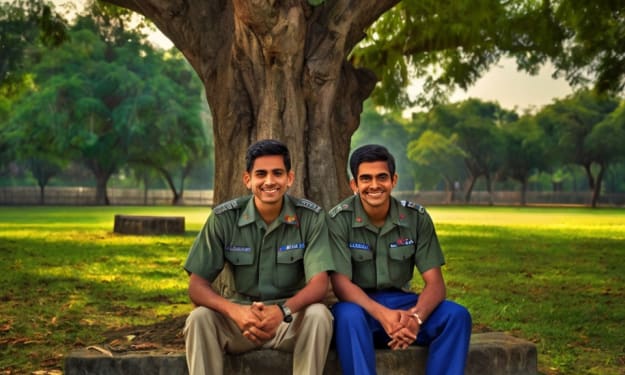
True Friendship: A Bond Beyond Time BY:Khan Friendship is a five-letter word, yet within these letters lie countless mysteries, secrets, and values. Only those who have experienced true friendship can truly understand its depth. Genuine friendship is not merely a bond; it is a sacred relationship that often surpasses ties like those of siblings, parents, or even children. When hearts are bound with the pure essence of friendship, even the most difficult tasks become easier. In such a relationship, there is no space for greed, jealousy, deceit, or malice. Instead, it paves the way to success and makes strangers feel like family. The story I am about to share is not a figment of imagination but a reality that I lived. It is about me and my dearest friend, Zaman Ali. We grew up in the same neighborhood, our homes standing side by side. His father was a respected government officer, known for his honesty and integrity. Among his five siblings, Zaman was the youngest, the most cherished child of his family, loved dearly by everyone. From childhood, Zaman and I were inseparable. We studied at the same school, passed our matriculation exams together, and even enrolled in the same college. Our bond was so deep that everything we owned seemed like a reflection of each other—our uniforms, our school bags, and later our college belongings. Even our favorite foods and flowers were the same. In school, we used to ride matching bicycles, pedaling side by side on our way to classes. Later, when we joined college, we would take the same bus. Our classmates often looked at our friendship with admiration, some even with envy, for such loyalty and purity were rare. During breaks, we would bring food from home. Sometimes, Zaman would bring something prepared by his mother, and other times, I would bring a dish from my house. Together, we would sit beneath an old, majestic tree in the college garden, sharing our meals and our dreams. That tree became our special place—a silent witness to our laughter, secrets, and studies. Zaman was not only a cheerful soul but also a kind-hearted person. He treated everyone around him with love and respect. The poor neighbors of our community adored him because he always greeted them warmly. Often, he helped needy families secretly, never seeking recognition or praise. His compassion was genuine, and his sincerity touched every life he encountered. Outside academics, Zaman had a deep passion for sports. He excelled in horseback riding, archery, swimming, and martial arts like judo and karate. Wherever he participated, he returned with the first prize. Over the years, he collected numerous awards, each a testament to his talent and dedication. Among all these sports, swimming fascinated him the most. He would dive into the deepest parts of the river or pool, staying underwater for long stretches of time. I often warned him about the risks, urging him not to push his limits, but he would always smile and say, “My dear friend, the day of death is already written. When the time comes, no one can stop it. Until then, let us live with courage.” One day, Zaman arrived at my home, his face glowing with excitement. After greeting my family, he came straight to my room and handed me an envelope. Inside, I found a letter—it was an interview call from the Pakistan Air Force. My eyes lit up with pride as I told him how wonderful it would be if he became an Air Force officer. But Zaman, in his usual way, added a condition: “Moazzam, I will only go for this interview if you come with me.” Naturally, I agreed. The next morning, we both went to the Air Force office. Dozens of candidates were waiting, each with dreams in their eyes. Zaman’s turn came fifteenth. After a while, he emerged from the interview room with a bright smile, announcing his success. My heart swelled with joy at his achievement. Soon after, Zaman received his official training letter. Before leaving, he came to see me. With a serious tone, he said, “Promise me, Moazzam, that you will write to me every single day.” I promised him wholeheartedly and reminded him that he too must reply to my letters. We embraced tightly, both of us unaware that it would be our last farewell. For almost two years, our friendship lived through letters. Each day, we wrote to each other, sharing our thoughts, experiences, and hopes. Then, one day, a devastating piece of news reached us. During a training exercise, Zaman’s aircraft crashed. He embraced martyrdom in the line of duty. The shock shook me to my very core. My childhood companion, my truest friend, was gone forever. His family was heartbroken, and I too felt as though a piece of my soul had been torn away. I often recalled his words: “The day of death is fixed; it will come when it must.” Even today, years later, I feel his presence around me. Sometimes I visit that old tree in the college garden, the one under which we shared our meals and dreams. Sitting there, I relive our memories, letting my heart find comfort in the echoes of our laughter. Zaman’s friendship was pure and selfless. He was more than a friend—he was a brother chosen by destiny. Though his body rests in the earth, his spirit lives on in my heart. May Allah grant my dearest friend, Zaman Ali, the highest place in paradise. Ameen.
By Khan about a year ago in Confessions
To Charlie
Your death was something that wasn’t seen coming. The way your life was taken for boldly standing for what you believed in had seared a fear in myself at first. A fear that I didn’t want to face. A fear of speaking up and living boldly for Christ, as you did.
By Cerina Galvanabout a year ago in Confessions