Friendship
She Chose Male Validation Over a 13-Year Friendship — And Lied Her Way Through It All
When Loyalty Becomes One-Sided: The Story of a Friendship Torn by Lies, Obsession, and Manipulation For 13 years, I thought I had a best friend. The kind of ride-or-die friendship you’d expect to outlast any crush, breakup, or phase of life. But then came the obsession. Then the lies. Then the betrayal. And I was left realizing that sometimes, the people closest to you can hurt you the most — especially when they crave male attention more than real loyalty.
By sez miguelabout a year ago in Confessions
I Lied to Protect Someone I Loved—and I Still Regret It
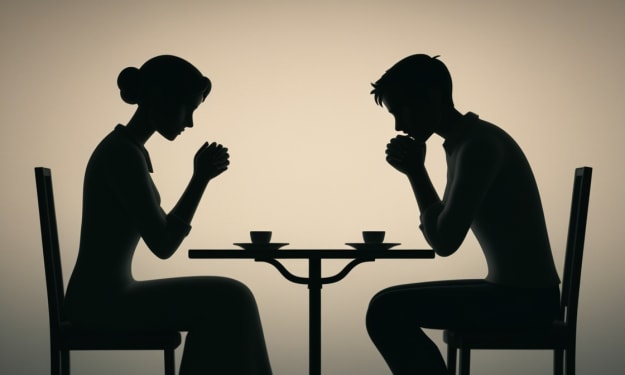
When I think back to that night, the words I lied with still echo painfully inside me. It wasn’t a lie spoken lightly or without weight. It was born from a desperate place—a mix of fear, love, and a desperate need to protect someone I cared about. I remember sitting across from them, feeling the heavy silence press down on us. Our eyes met, searching, and I knew that speaking the truth would hurt deeply. So instead, the lie slipped out almost effortlessly: “I didn’t see anything.” It was a moment that shattered something inside me, even as it seemed to preserve the fragile calm between us.
By Muhammad Asimabout a year ago in Confessions
The Silent Tragedy on the Highway
Introduction: A Sudden Turn of Fate It only takes a few seconds. A moment of distraction, a speeding vehicle, a missed signal—suddenly, lives are changed forever. Road accidents are among the leading causes of death and injury around the world. Every day, thousands of people leave their homes expecting to return safely, only to find their lives shattered by a crash. This article explores the causes of road accidents, their devastating consequences, and what we can do to prevent them. --- A Real-Life Tragedy On a rainy evening in March, 23-year-old Daniel Carter was driving home from work. The roads were wet, visibility was low, and he was slightly tired after a long day. Just two miles from his house, a speeding truck jumped a red light and collided with his car at an intersection. Daniel died on the spot. His parents lost their only child. The truck driver survived with minor injuries but later admitted he was distracted by his phone. This tragic story is not unique. It's repeated in various forms across the globe—every single day. --- Common Causes of Road Accidents Road accidents can happen for many reasons, but some are more common and preventable than others: 1. Speeding: Driving above the speed limit reduces the driver’s ability to react quickly and increases the force of impact during collisions. 2. Distracted Driving: Using a mobile phone, eating, or adjusting the radio while driving are common distractions that lead to accidents. 3. Drunk Driving: Alcohol and drugs impair judgment, reflexes, and vision, making the driver a serious risk to others. 4. Reckless Driving: Ignoring traffic rules, tailgating, or aggressive overtaking are signs of reckless behavior. 5. Weather Conditions: Fog, rain, and snow can reduce visibility and make roads slippery, increasing the chance of losing control. 6. Poor Road Conditions: Potholes, missing signs, and lack of lighting can contribute to dangerous driving environments. 7. Mechanical Failures: Worn-out brakes, tire bursts, or engine failures also play a role in many crashes. Most accidents are caused by human error—and therefore can be avoided. --- Impact on Victims and Families The consequences of road accidents are devastating and long-lasting. Victims may suffer from: Injuries: These can range from minor cuts to permanent disabilities or traumatic brain injuries. Emotional Trauma: Survivors and family members often suffer from anxiety, depression, or post-traumatic stress disorder (PTSD). Financial Burden: Hospital bills, car repairs, and legal fees can be overwhelming. Many victims are unable to work for months or even years. Loss of Life: The most tragic outcome. According to the World Health Organization, over 1.3 million people die each year in road traffic accidents. Behind every number is a person—a loved one, a parent, a friend. --- Road Accidents Around the World The rate of road accidents varies from country to country. Developing countries, where traffic regulations may be poorly enforced, often face higher fatality rates. In contrast, countries with strict traffic laws, proper infrastructure, and awareness campaigns tend to have fewer accidents. According to global data: India has one of the highest road accident rates in the world. United States records over 35,000 fatalities each year. Sweden and Norway, known for their safety policies, have some of the lowest accident rates. This proves that policy, education, and enforcement can make a huge difference. --- Preventing Road Accidents: What Can Be Done? Preventing accidents requires a combined effort from individuals, communities, and governments: 1. Education and Awareness: Teaching drivers about safe driving habits, especially young and new drivers. 2. Strict Law Enforcement: Heavy penalties for speeding, drunk driving, and mobile use behind the wheel. 3. Better Road Design: Proper lighting, clear signs, speed bumps, and pedestrian crossings can reduce accidents. 4. Vehicle Maintenance: Regular servicing and checks for brakes, tires, and engines ensure safety. 5. Public Transport Improvement: Fewer private cars on the road can lead to less congestion and fewer accidents. 6. Use of Technology: Advanced Driver Assistance Systems (ADAS), lane departure warnings, and automatic braking in modern vehicles can reduce human error. Every small step—like wearing a seatbelt or not using a phone—adds up to save lives. --- Role of the Community and Media Community-based campaigns and media can play a vital role in spreading awareness. Stories of accident survivors, advertisements about responsible driving, and road safety programs in schools can deeply influence behavior. Non-profit organizations often run campaigns, distribute helmets, or conduct workshops to promote safer roads. Governments must support these efforts and work with citizens to make roads safer for everyone. --- Conclusion: Roads Should Connect, Not Destroy Roads are meant to connect people—not take them away. Every driver, passenger, and pedestrian has a role in making the roads safer. It is not just about obeying laws; it’s about caring for the lives around you. The road accident that claimed Daniel Carter’s life was not fate—it was preventable. If the driver had paused, if the speed was lower, if the phone was kept aside, he might be alive today. Let this be a lesson. The next time we step into a vehicle, let us drive with caution, patience, and empathy. Because behind every wheel is the power to save—or take—a life.
By Faizanabout a year ago in Confessions
He Said "It's Just a Phase"
When Nora met Evan, she wasn’t looking for anything serious. She was the kind of woman who’d been through enough to know that promises were cheap, and love—even cheaper. But Evan was different. Or so she believed. He found her at a bookstore, her nose buried in a novel with a cracked spine and coffee-stained corners. She didn't look up when he said, “That’s a good one,” but she smiled. That was the start. They began with small things—shared lattes, long walks where silence wasn’t awkward, texts that turned into midnight calls. Evan was magnetic in that soft, unintentional way. Not a man who shouted for attention, but one who held it naturally. He listened when she talked, asked about her writing, and made her feel like her dreams weren’t silly. Still, there was something about Evan that always felt just out of reach. Like a door slightly ajar, but never fully open. One night, after they'd been seeing each other for nearly six months, Nora asked, “What are we?” Evan blinked slowly, as if startled by the question. “What do you mean?” “I mean… this. Us. Are we something real? Or just something for now?” He exhaled, rubbing the back of his neck the way he always did when he was buying time. “Nora,” he said, “I like you. I really do. But… maybe this is just a phase.” She felt the words settle in her chest like ice. A phase. He said it with such calm—no malice, no apology. As if she’d asked about the weather. As if feelings were something to be outgrown, like a childhood obsession with dinosaurs. “A phase?” she echoed. “Yeah, you know… sometimes people come into your life for a season. Maybe you’re not the person I’ll end up with. Maybe I’m not that guy for you either.” She didn’t respond. Not then. She simply nodded, stood up, and left without another word. --- In the months that followed, Nora threw herself into her writing. She poured her heartbreak into pages, turning the sting of Evan’s indifference into something tangible, something beautiful. Her short story, Phases of the Heart, went viral online. A small indie publisher reached out. A book deal followed. Meanwhile, Evan stayed in the same city, the same job, the same bar on Thursdays with the same friends. He dated on and off, swiping through strangers who never quite made him forget the way Nora’s eyes lit up when she talked about her characters, or how she’d curl into him on rainy mornings. He told himself she’d been right to walk away. They had different goals. She wanted roots; he wanted freedom. It wouldn’t have worked. Right? One rainy afternoon, almost a year later, Evan found himself in a bookstore. Her book was there, right on the shelf. Her name, Nora Valen, in bold print. Curious—and maybe a little desperate—he bought it. The dedication read: > To the one who said it was just a phase — thank you for being wrong. He read the entire book that night. Her words were raw, beautiful, gutting. He saw himself in the pages—not the man he thought he was, but the version of him reflected through her pain. And in that moment, he realized something terrifying. She hadn’t been a phase. She had been the turning point. --- Two weeks later, he saw her at a literary event. She was radiant, confident, with people lining up to meet her. He waited until the end. When she saw him, she gave a polite smile. That was all. “I read your book,” he said quietly. “Most people have,” she replied, folding her arms. “I was wrong,” he admitted. “It wasn’t a phase.” She nodded, her face unreadable. “No,” she said softly, “it was a lesson.” And with that, she walked away—this time, without looking back.
By Azmat Roman ✨about a year ago in Confessions
I Left My Toxic Relationship Without Saying Goodbye
I Left My Toxic Relationship Without Saying Goodbye I never planned to leave without a word. In fact, I had written countless goodbye messages, drafted tearful speeches in my head, even rehearsed them in the mirror. But when the moment came — I walked away in complete silence. No drama. No explanations. No turning back.
By Zaheer Uddin Babarabout a year ago in Confessions
My Honest La-date Review: Can You Find Someone on This Platform?. AI-Generated.
In an age where digital connections are the norm, finding a platform that feels both genuine and grounded can be a challenge. Enter La-date, a space designed for those ready to dive into emotionally resonant interactions. Whether you're looking to break free from the monotony of daily routines or yearning for something more meaningful, La-date promises to be a refreshing change.
By Tracy Larsonabout a year ago in Confessions
True Love Always Supports You in Difficult Times
The soft drizzle of rain tapped against the windowpane, a quiet rhythm that matched the heaviness in Maya’s heart. The gray sky outside mirrored the storm within her — a storm that had been building for weeks.
By Mahayud Dinabout a year ago in Confessions
The Man My Husband Called Brother
Whispers in the Silence It started with a laugh. Not mine. His. Jason’s laugh had always been distinct — low, raspy, like a secret being whispered in a crowded room. I heard it from the kitchen, floating in through the open glass doors that led to our backyard. I was slicing lemons for Daniel’s iced tea, barefoot, hair messy, wearing one of his oversized shirts. Just another Saturday afternoon in the quiet suburb of Stamford.
By Lacey Morganabout a year ago in Confessions
Distance Made Us Closer. AI-Generated.
Love doesn’t always grow through touch. Sometimes, it blooms in the silence between phone calls, in thye waiting, and in the miles between two hearts. This is the story of how distance didn’t break a bond—it strengthened it.Ayan and Sara met online during the early months of the pandemic. What began as a simple comment on a photography post turned into hours of texting, late-night video calls, and shared dreams. They were from two different cities—Ayan lived in Lahore, while Sara was based in Karachi. At first, neither of them thought it would go anywhere serious. But love has its own plans.The more they talked, the more they connected. From discussing their favorite books to dreaming about future travels, they began to see a future together. But the distance was real. They had never met in person. They relied on video calls, messages, and voice notes to keep the bond alive. While others enjoyed coffee dates and hand-in-hand walks, Ayan and Sara held onto promises and hope.There were tough days too. Days when they wished for a simple hug or a shared sunset. Sometimes, doubts crept in. Would it last? Could a love based on digital connection survive real-world pressures? But every time fear knocked, love answered. They never went to bed angry. They celebrated birthdays through midnight video calls. Even during fights, they never stopped talking.After one year of long-distance love, they decided it was time to meet. Ayan planned a surprise visit to Karachi. The moment he saw Sara waiting at the airport, everything felt right. The connection they had built through screens was even stronger in real life. There were no awkward silences—just smiles, laughter, and a deep sense of comfort.Their first real date was simple: a walk on Clifton Beach, followed by chai from a roadside stall. But to them, it was magical. Because after a year of waiting, every moment felt precious. That short visit proved what their hearts already knew—this love was real.The distance had taught them patience, trust, and emotional intimacy. They had learned to communicate, to listen, and to value the little things. While many couples struggle with understanding each other, Ayan and Sara already knew how to connect beyond the physical.Eventually, Ayan got a job offer in Karachi. It was the sign they had been waiting for. Within months, he moved closer to Sara. And though they were finally in the same city, they never forgot what distance had taught them.Today, they are engaged, planning a wedding that celebrates not just their union—but their journey. A journey that began miles apart and led them right into each other's arms.Their story is proof that sometimes, distance doesn't break love—it builds it. It teaches you to treasure moments, to hold onto faith, and to love with your whole heart—even when your hands are empty.Because when love is true, even miles can’t keep it apart.Distance didn’t keep them away; it brought them closer than ever.They say distance weakens bonds, but for us, it did the opposite. Though miles apart, our hearts grew stronger each day. Every call, message, and video chat became a treasure. We learned to communicate deeply, to trust without seeing, and to love without touching. While others had presence, we had purpose. The longing taught us patience; the silence taught us strength. And when we finally met, it wasn’t like meeting someone new—it was like coming home. Distance didn’t break us. It built us, brick by brick, into something unshakable. Truly, distance didn’t divide—it made us closer than ever.
By Sophia Graceabout a year ago in Confessions
The Day My Silence Screamed .
The clock ticked softly in the background, its rhythmic click clack the only companion to the stillness of my room. I sat cross-legged on the cold floor, staring at the wall as though it held answers. Outside, the world buzzed with life—cars honking, children laughing, neighbors yelling. But inside me, there was only silence. It wasn’t always like this. There was a time when my voice was vibrant, when words danced out of me like music. But years of being told to “be quiet,” to “not make a scene,” to “just listen,” wore that voice down to a whisper, and eventually, to nothing. At home, my thoughts were often dismissed. My mother, a perfectionist with an iron tongue, corrected every sentence before it left my lips. My father, always preoccupied, nodded through my words without hearing them. In school, I was the quiet one in the corner—brilliant, perhaps, but invisible. So I stopped speaking. Not in a dramatic, conscious protest. It happened gradually, like a winter that sneaks up on a warm autumn. One day, I realized I hadn’t spoken out loud in three days. No one noticed. But silence isn’t always peaceful. Sometimes, it screams. It happened on a Thursday. I remember the exact color of the sky—bruised purple with streaks of orange from the setting sun. The day had dragged like a weary old man, heavy and slow. At school, we had a new literature teacher, Mr. Halden. He was young, sharp-eyed, and different. He didn’t just teach the curriculum—he challenged us. That day, he asked each student to share something they feared. One by one, voices filled the room. “Spiders.” “Being alone.” “Dying.” “Not being good enough.” When he called my name, the room fell silent. Every head turned toward me. My heart pounded so hard I was sure the walls could hear it. I opened my mouth, but no sound came. The silence stretched, uncomfortable and raw. Mr. Halden didn’t rush me. He simply looked at me, not with pity, but with something gentler—understanding. “I’m afraid,” I said finally, my voice hoarse from disuse, “that I’ll disappear completely—and no one will notice.” A hush fell over the class. Even the ones who mocked me for being quiet didn’t have words for that. I saw it then—the shift. The flicker of recognition in their eyes. Because we all carry something. Some just bury it deeper. After class, Mr. Halden asked if he could walk with me to the courtyard. I agreed. “You have a lot to say,” he said. “Even in your silence, I can hear it.” I didn’t reply, but something opened up in my chest—a strange, painful kind of relief. Over the next few weeks, things began to change. I started keeping a journal. Not for anyone else, just for me. At first, it was just a few lines a day. Then, entire pages. I wrote about the quiet rage, the loneliness, the aching desire to be seen. I wrote poems, confessions, dreams, and fears. And the more I wrote, the more I started to speak. Not all at once. Not perfectly. But enough. It’s funny how people listen more when you’ve been quiet for a long time. When I finally began to speak up in class, my words landed like thunder. The things I said—half poetry, half raw truth—turned heads. I joined the debate club. I wrote an essay that was published in the school journal. My parents noticed, too. My mother tried to correct me once, but I told her, firmly and without apology, “Please let me finish.” It wasn’t easy. There were days when the silence came back, curled up like a cat at my feet. But I learned to choose when to embrace it, and when to stand up and scream. That Thursday—the day my silence screamed—wasn’t a moment of breakdown. It was a moment of breakthrough. It was the day I stopped being a shadow in the corner and started becoming the person I was always meant to be. Sometimes the loudest screams aren’t heard with the ears. Sometimes, they’re heard with the heart. And on that day, my silence screamed louder than any words ever could.
By Azmat Roman ✨about a year ago in Confessions