Friendship
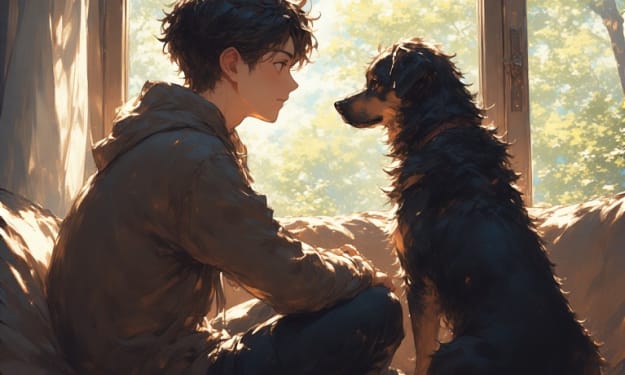
My dog didn’t just fill the silence—he became my voice
There was a time in my life when silence wasn’t peaceful—it was painful. The kind of silence that gets into your bones. The kind that, after loss, after loneliness, after life, takes away those few voices that used to make you feel seen.
By Echoes of Lifeabout a year ago in Confessions
The Clock Strikes Her Name
The old grandfather clock stood in the corner of the dimly lit parlor, its wooden case scarred by decades of neglect. It hadn’t worked for years—no one in the Hawthorne family had bothered to wind it since the accident. But tonight, as midnight approached, something stirred inside the ancient mechanism.
By ATTAULLAH SHAHabout a year ago in Confessions
I Am A Winner
Introduction I joined Vocal for the big prize money. That never happened. I have two challenge placements, an "honourable" mention, some Top Stories and a couple of Resource pieces, but Vocal and a lot of creators see me as a thorn in Vocal's side.
By Mike Singleton 💜 Mikeydred about a year ago in Confessions
Whispers in the Rain
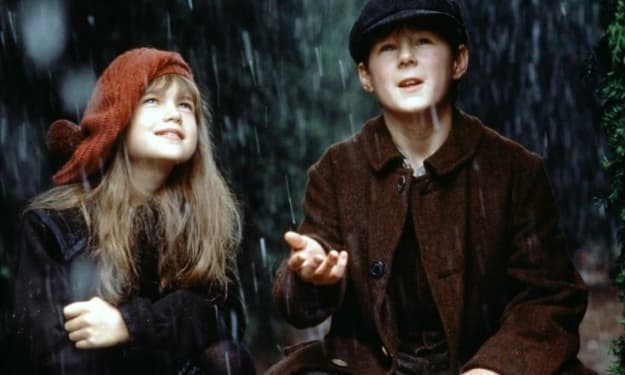
The rain fell gently on the cobbled path, each drop like a whisper from the sky. Emily pulled her woolen red cap tighter as she looked up, her eyes shimmering with curiosity. Beside her, Thomas reached out his hand, letting the raindrops collect on his palm. They weren’t bothered by the cold or the wet. To them, the rain was magic — a curtain that separated the real world from their secret one. They were just children, no older than ten, yet their minds carried the weight of dreams too big for their small village. Emily had always believed the rain could speak if you listened close enough. Thomas, more practical, thought it just made the world quiet enough for you to hear your own heart. That day, they listened together, sitting near the edge of the forest where stories were born and forgotten. Thomas had found a letter the night before, buried in the floorboards of the old barn. It was stained and torn, but it spoke of treasure, promises, and a past neither of them understood. He showed it to Emily that morning, their eyes wide with a new kind of wonder. They promised each other to find the truth, not for gold or glory, but for the mystery that made their hearts race. Their world was a hard one — muddy boots, worn clothes, and empty cupboards. But they had imagination, and in that, they were the richest souls for miles. Emily would often write poems and tuck them in tree hollows, pretending the wind was her messenger. Thomas would draw maps in the dirt, chasing invisible paths through forgotten places. Together, they built a universe bigger than their own. That day, as the rain fell heavier, they followed the clues from the letter. "Where the ivy climbs the sleeping stone, and whispers call the brave alone." It led them to the graveyard at the edge of the forest. Most children were afraid of the place, but not them. The rain felt like a shield, hiding them from any ghosts that might linger in the mist. Emily knelt before an old, crumbling tomb, half-covered in moss and ivy. She brushed the leaves aside to reveal the carved name: “E. Marlowe — 1851.” Thomas read the name aloud, something stirring inside him. His grandfather once spoke of the Marlowes — travelers, poets, and rebels. They weren’t from the village, but they left stories behind, like footprints waiting to be followed. Behind the tomb was a crack in the stone wall, just wide enough for a small hand to fit. Emily hesitated, then reached in. Her fingers brushed against something cold and wrapped in cloth. She pulled it out — a small wooden box, damp but intact. Inside was a pendant shaped like a compass, and a faded sketch of a man and woman holding hands beneath the rain. On the back, it read: “To those who still believe.” It wasn’t treasure in the usual sense, but to them, it was everything. Proof that dreams left behind could still be found. Thomas clutched the pendant like it was a key, and Emily smiled, knowing they had just opened a door to something bigger than both of them. The rain slowed, and sunlight peeked through the clouds, as if nature itself had been watching and waiting. They walked back through the village, hearts full, hair soaked, and spirits untouchable. No one asked where they'd been or what they found — the adults were too busy with real-world worries. But the children knew they had touched something eternal. A memory wrapped in time. A whisper answered. A promise kept. In the days that followed, they returned to the forest, leaving notes and poems in secret places. The pendant remained with Thomas, a reminder of belief. Emily wrote about the man and woman in the sketch, imagining their story — lost lovers, or maybe kindred spirits from another time. Each word she wrote felt like an echo of the rain that day. Years passed, and the rain never stopped being magical for them. Even as they grew, life pulling them in different directions, they would meet beneath the same tree where the journey began. Sometimes they’d speak of the letter, the tomb, and the box. Other times they’d just sit in silence, letting the rain do the talking. One day, Thomas left for the city, carrying the pendant in his pocket, while Emily stayed behind, her words filling pages of journals. They promised to return, no matter how far life took them. And every year, on the same rainy afternoon, they met again, beneath the ivy-covered stone. They were no longer children, but their hearts still carried the same light. The kind that only comes from believing in more — more than the eye can see, more than the world can explain. Their bond, forged in childhood rain, remained unbroken. And so the legend of the compass, the tomb, and the whispering rain lived on — not just in their hearts, but in the stories Emily began to share with others. Stories of wonder, hope, and the treasures we find when we truly listen.
By The Pen of Farooq about a year ago in Confessions
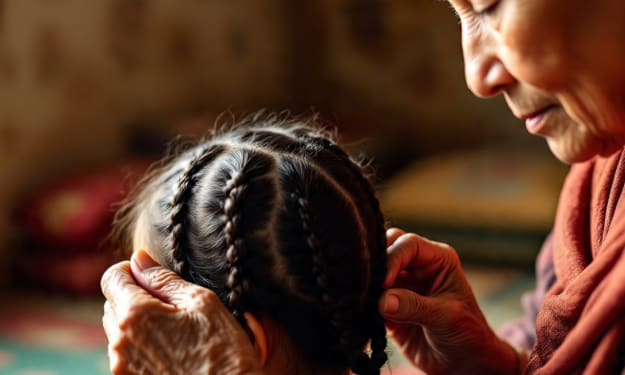
The Hands That Braided My Hair
When I was a child, Daadee’s hands were magic. They could soothe any fever, find anything I lost, and braid my hair so perfectly that not a strand dared fall out of place. She wasn’t loud, like Dada. She didn’t tell jokes or command attention at family dinners. But her presence filled the room in quieter, stronger ways. She was the one who remembered everyone’s favorite dishes, who never missed a prayer, who sewed little patches inside our old school uniforms so they’d last another year. Her wisdom wasn’t in books. It was in the way she spoke, slow and thoughtful, as if every word deserved its time. --- As I grew older, I started to forget how powerful her silence was. Life got louder — school, friends, phones, college applications. I’d visit her on weekends, sit for tea, take pictures for Instagram. She’d still braid my hair when I let her, her hands slower now, her fingers trembling just a little more each time. Then one day, she stopped braiding altogether. --- We first noticed something was wrong when she began forgetting names. Nothing alarming at first — she’d call my cousin “Beta” instead of his name. But then she forgot birthdays. Forgot she had already eaten. Forgot she had told a story just an hour ago. “She’s just tired,” Ammi said. But tiredness doesn’t explain confusion. It doesn’t explain getting lost in your own home. --- The doctor’s words came gently, but hit like thunder: "It’s the early stages of dementia. Possibly Alzheimer's." It was like a slow unraveling of the woman we thought would never change. Her world began to shrink. The house she had lived in for 40 years became unfamiliar. Mirrors confused her. She once screamed at her own reflection, thinking a stranger had entered her room. It broke us. But somehow, even in her decline, she remained soft. Not once did she raise her voice. Not once did she forget to say "Shukriya" when we helped her. She still called me to her room sometimes, asked me to sit by her, and gently touched my hair like she used to. Her eyes no longer remembered me — but her hands did. --- One winter morning, I visited her alone. She was wrapped in a shawl, looking out the window, mumbling a lullaby I hadn’t heard in years. I sat next to her, quietly, and placed her hand in mine. After a few minutes, she turned to me and whispered, “I had a granddaughter… she had thick black hair like yours.” Tears burned my eyes. “I’m right here, Daadee,” I said. She looked at me for a long moment. Then smiled. “I know.” I don’t know if she really did. But that smile was enough. --- Her last days were peaceful, in a strange, aching way. She stopped eating much. Slept more. Talked less. Sometimes she hummed songs from her youth. Sometimes she stared at the ceiling and laughed softly, like someone was telling her a private joke. We tried to prepare ourselves. We prayed, took turns sitting with her, combed her hair gently. I would read aloud from her favorite book, even though I knew she didn’t follow the words anymore. One night, I stayed over. She was breathing slow and light, like the air itself didn’t want to disturb her. I held her hand and told her all the things I should’ve said earlier. I told her how her hands raised a whole family. How her food tasted better than any restaurant. How her lullabies still echoed in my dreams. And how I would never let my daughter grow up not knowing her name. She didn’t respond. But her fingers tightened slightly around mine. Just once. --- She passed away the next morning. There were no hospital lights. No tubes. No machines. Just family, quiet sobs, and the scent of rosewater in the air. We buried her beside Dada, under the same tree where they once used to sit every evening. The house felt colder after that. The walls seemed too quiet. Her chair remained untouched for weeks. But her presence — it was everywhere. In the prayer mat she had embroidered. In the spices she blended herself. In the braid that I still make in my own daughter’s hair. --- Grief doesn’t end. It softens, then resurfaces, then softens again. But love — especially the kind Daadee gave — becomes the thread that stitches us back together.
By Muhammad Usamaabout a year ago in Confessions
The Day I Forgot How to Smile
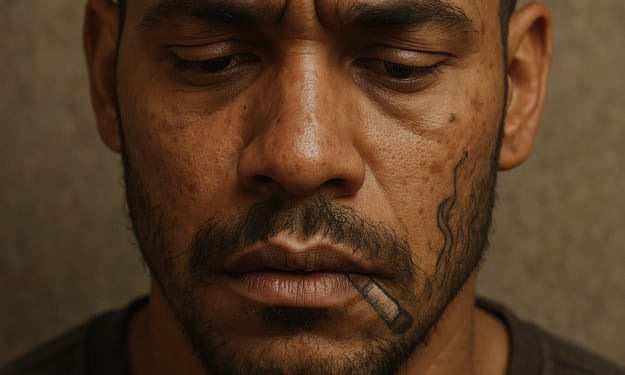
🌥️ “It wasn’t a breakdown. It was more like a quiet fading.” I don’t remember the exact day I forgot how to smile. There wasn’t a thunderclap or a sobbing breakdown on the bathroom floor. Just one morning, brushing my teeth, I caught my reflection and thought: You look... empty.
By Asif Shah Zahidabout a year ago in Confessions