Friendship
Cabin on the Lake
I had come to the cabin to write and was left alone. It was the last month of fall, the kind of weather that smelled like stale wood smoke and wet pine. I had six weeks of vacation, a suitcase, five unread novels, and every intention of going back to my old self. No phone. No internet. Just books and silence.
By Echoes of Lifeabout a year ago in Confessions
The Day I Stopped Apologizing for Existing. AI-Generated.
Title: The Day I Stopped Apologizing for Existing For as long as I can remember, I apologized for simply existing. It started small. “Sorry for bothering you.” “Sorry for asking.” “Sorry, I didn’t mean to take up space.” At first, it just seemed like good manners. A way to be polite. A way to avoid making people uncomfortable. But over time, it became something deeper—something more damaging. By the time I was a teenager, it was automatic. I apologized when someone bumped into me. I said sorry for expressing my feelings. I apologized for asking for help. I stayed quiet in rooms where I should’ve spoken up, where I had something to say. All because deep down, I believed I wasn’t enough—that my voice wasn’t worth hearing, and my presence was a burden. The worst part? I thought shrinking myself made me kind. I thought if I took up less space, I’d be more likable. I thought being silent made me safer. But it didn’t. Playing small doesn’t protect you. It erases you. It took me years to see that. Years of being overlooked, dismissed, or walked over. And I wondered why I always felt invisible—like I was fading out of my own life. Then one day, the truth showed up—quietly, like it always does. It wasn’t some big dramatic moment. It didn’t happen during a breakdown or a major life event. It happened in a plain conference room, during a regular team meeting at my job. Everyone was tossing around ideas—some bold, some bizarre, some brilliant. People laughed, debated, interrupted each other without hesitation. No one apologized. No one seemed scared to speak. Then it was my turn. I started with, “Sorry if this sounds dumb, but…” Before I could finish, my manager stopped me—calmly but firmly. “Hey,” she said, “stop apologizing for thinking. Your ideas matter. Speak like you believe that.” It was such a small moment. Barely a sentence. But something cracked open inside me. It was like someone held up a mirror, and for the first time, I saw myself clearly. I saw how often I dimmed my own light before anyone else had a chance to notice it. How I silenced myself before the world even had to try. And how all those tiny apologies added up to one big lie: that I wasn’t good enough. That night, I went home and just sat with the feeling. No distractions. Just me, sitting with the weight of years of false apologies. Then I made a quiet promise to myself: No more apologizing for existing. Not for speaking. Not for thinking. Not for being here. Not for wanting more. Not for being human. The next day, I began to practice. At first, it felt awkward. Like learning a new language. I’d catch myself slipping into “Sorry,” pause, and rephrase. Instead of “Sorry I’m late,” I’d say, “Thanks for waiting.” Instead of “Sorry to ask,” I’d say, “I have a question.” Over time, something inside me shifted. I stood taller. My voice became clearer. And slowly, I started to believe what I was saying. It wasn’t about arrogance. It wasn’t about being loud or taking over. It was about belonging. It was about self-worth. And guess what? People noticed. People respected me more—not because I demanded it, but because I respected myself. I wasn’t hiding behind apologies anymore. I was just… showing up. I stopped tying my value to how small I could make myself. And I started tying it to how honest I was willing to be. I still catch myself sometimes—about to apologize for something that doesn’t need one. Old habits take time to break. But now, when I feel it coming, I stop. I take a breath. I remind myself: You belong here. You always have. No apology necessary. We don’t have to shrink to be accepted. We don’t have to stay silent to be safe. And we don’t have to say “sorry” for showing up as we are. You are allowed to take up space. You are allowed to be seen. You are allowed to speak your truth—even if your voice shakes. And maybe, just maybe, the world doesn’t need a quieter you. Maybe it’s been waiting for the real one all along.
By Straylightabout a year ago in Confessions
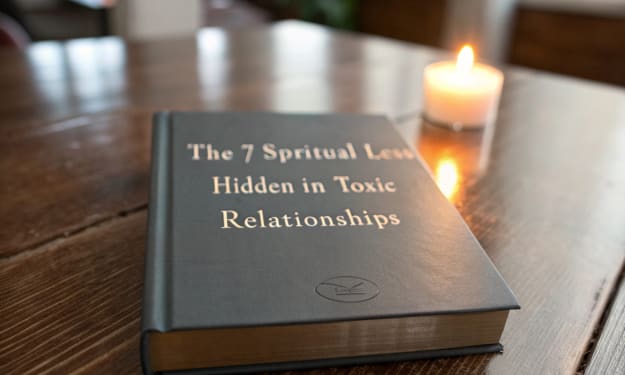
The 7 Spiritual Lessons Hidden in Toxic Relationships
We don’t talk enough about the sacred purpose of pain. When it comes to love, we’re taught to chase the fairy tale—the soulmate, the twin flame, the “forever.” But often, the most transformative relationships aren’t the soft ones. They’re the ones that crack us open.
By Great pleasureabout a year ago in Confessions
He Said I Was His World — But He Meant It Temporarily
I loved him like a child loves the first rain — with all my heart, without understanding its danger. We met at a university orientation. He wasn’t the most handsome or the loudest guy in the room. But there was something about him — the way he spoke, the calm in his voice, the ease in his smile — it drew me in like gravity. He made me feel seen in a world that often looked past me. The first few months were magical. Every morning started with a “good morning, beautiful,” and every night ended with an “I wish you were here.” He would text me constantly — “You’re my whole world,” “Don’t ever leave me,” “I’ve never felt this way before.” And I believed every word. Because I wanted to. When you’re starved for affection, even breadcrumbs feel like a feast. We would go on late-night drives, talk about our childhoods, our dreams, our fears. He told me about how he was “never lucky in love” and how I was “the one who changed everything.” He held my hand like he meant forever. So I started imagining one with him. I began molding my world around his. I canceled plans with friends, changed my routines, even let go of opportunities — all for love. All for him. But slowly, things started to change. The messages became shorter. The replies slower. He started missing our calls. Stopped sharing his day. Laughed less. Smiled less. Touched me less. I asked him once, “Are we okay?” He said, “You overthink too much.” I blamed myself. Maybe I was too emotional. Too needy. Too sensitive. But my gut knew something I wasn’t ready to accept. One weekend, he completely disappeared. No calls, no texts, no updates. His last message was “I’ll call you in 10 minutes.” That was two days ago. Worried, I reached out to a mutual friend — someone who had always been close to him. What she told me shattered everything. He had been seen with someone else. At a party. Holding hands. Whispering things in another girl’s ear that he used to say to me. And he wasn’t hiding it. It wasn’t a mistake. It was a replacement. When I confronted him, he didn’t even flinch. He said, “Look, things were good. But people grow. You’ll be fine.” That was it. No apology. No closure. Just… detachment. I sat there in silence, tears welling up in my eyes, heart pounding so hard I thought it might explode. “You said I was your world,” I whispered. He smiled faintly and said, “Yeah, back then.” Back then. How quickly someone can go from “forever” to “back then.” --- The weeks that followed were a blur. I couldn’t sleep. Couldn’t eat. I kept replaying every conversation, every moment. I wondered what I did wrong. Why I wasn’t enough. Why love wasn’t enough. But the truth is: love isn’t supposed to hurt like this. It isn’t supposed to make you doubt yourself. It isn’t supposed to make you feel like you're hard to love. --- Eventually, I realized something important. He didn’t lie when he said I was his world. I was. But only temporarily. Only until he got bored. Only until he needed a new escape. Only until I stopped being convenient. And people like him don’t love you — they love the way you love them. They feed on it. Until there’s nothing left of you. But I refuse to let him take the last piece of me. --- Healing isn’t quick. It’s messy. It’s crying on the bathroom floor at 2 AM. It’s writing messages you’ll never send. It’s deleting pictures, only to stare at the recycle bin. But slowly, I’m learning. I’m learning that I deserve someone who chooses me every day — not just on the days it’s easy. I’m learning that my heart is still capable of love — even after being broken. And most importantly, I’m learning to love myself enough not to settle for someone who only meant it temporarily.
By The Pen of Farooq about a year ago in Confessions
Learn How to Sign in to Funchatt. AI-Generated.
If you're curious about platforms that promise meaningful conversations in a positive environment, you've probably come across Funchatt. In this article, I’ll walk you through my experience with the platform, from Funchatt login to exploring its main features. I’ll also talk about security, user experience, and how to resolve issues like Funchatt forgot password. This Funchatt review is based on hands-on usage and aims to provide an unbiased and clear perspective on what the platform is and what you can expect.
By Tracy Larsonabout a year ago in Confessions
astronomer company
In a stunning twist blending the worlds of tech leadership and pop culture, Astronomer Company CEO Andy Byron finds himself under an intense media spotlight—not for a groundbreaking innovation, but for a personal scandal that played out on the most unexpected stage: a Coldplay concert.
By Saboor Brohi about a year ago in Confessions
Unspoken
I’ve always believed that the most powerful stories are the ones no one ever hears. They live quietly, tucked inside us — in half-written journals, in unfinished letters, in the moments when we stare at the ceiling and wonder what if. They never make it to stages or bookshelves. They don’t go viral. But they shape us more than any story we tell out loud. This is one of mine. I met her in the quietest winter of my life. I was 21. Lost, like most people are in their early twenties — pretending I knew who I was, what I wanted, what healing looked like. I had dropped out of university the semester before. Depression doesn’t ask for permission — it just shows up and stays until you forget who you were before it arrived. I’d spend most of my days sitting on the park bench at the corner of Fifth and Willow, clutching a notebook I rarely opened. Writing had always been my release, but at that time, even words felt too heavy to carry. And then she sat down next to me. No introduction. No small talk. Just a soft, tired sigh and the unwrapping of a chocolate bar. I glanced at her. She looked… ordinary. Messy bun, oversized coat, sneakers with worn-out laces. But her eyes — her eyes held storms. Not the kind that scared you. The kind that said, I’ve been there too. She offered me a piece of chocolate. I shook my head. "You look like you need it more than me," she said, half-smiling. That was the beginning. Her name was Safiya. We never exchanged numbers. We never asked for last names. But for the next 27 days, she showed up. Same bench. Same time. Two strangers sitting in silence, sometimes sharing chocolate, sometimes stories. She once told me, “People always want to fix you. They throw advice like bandaids. But sometimes, you just need someone to sit in your sadness without trying to solve it.” I didn’t say anything then. But I wrote it down when I got home. On the 10th day, she brought her journal. Not to read from it — just to show me it existed. “I call it The Book of Things I’ll Never Say Out Loud,” she said. I nodded, then slowly handed her mine. She didn’t open it. Just held it like something sacred. We sat that way — two people with matching scars, holding each other’s silence. On the 20th day, she cried. No warning. Just tears falling quietly as the wind pushed against the trees. I didn’t ask why. I just handed her a tissue and sat closer. “I thought I was getting better,” she whispered. “But grief has no expiration date.” Still, I said nothing. That was our language — understanding without questioning. On the 27th day, she didn’t come. I waited. For hours. The next day, I waited again. And the next. She never came back. I don’t know where she went. I don’t know if she moved, relapsed, healed, disappeared. I never saw her again. But sometimes, I imagine she’s sitting on another bench, in another city, handing someone else a chocolate bar and listening to stories they’ll never tell anyone else. Sometimes I think I was just a pause in her journey. A safe corner in the chaos. And maybe that’s enough. A year later, I opened the journal she gave me. I hadn’t dared to until then. There were only two pages filled. Page 1: To the stranger on the bench: Thank you for not asking me why I’m broken. Thank you for just sitting with the pieces. Page 2: If you’re ever brave enough to write again, write the story of us. Not for the world. For yourself. To remember that even on your worst days, someone saw you and stayed. I wept. Not loudly. Not dramatically. The kind of weeping that feels like cleansing — like finally letting go of everything you’ve held too tightly. I’m writing this now, years later, because she was right. Some stories deserve to be written even if no one reads them. Some connections, even nameless, are more real than lifelong friendships. Some moments live longer in memory than entire years. This is not a love story. It’s not a tragedy either. It’s just… human. Two people. One bench. A borrowed journal. Twenty-seven days of unspoken healing. So here it is, Safiya. I finally wrote the story. And if you ever find it… Thank you. For sitting beside me when I couldn’t carry my story alone.
By Muhammad Abuzar Badshah about a year ago in Confessions