Family
Dunky: The Afghan Dream to Europe
Introduction Dear readers, what I am about to share is not fiction—it is a heartfelt truth, a cry from the soul of an Afghan youth. In this story, you will hear not only his voice, but also the silent pain of his mother and family left behind. It is the real account of an Afghan boy’s migration to Europe through the “Dunky” system, driven by hardship, sacrifice, and love for his family.
By Akhtar Gulabout a year ago in Confessions
The Letter She Never Sent
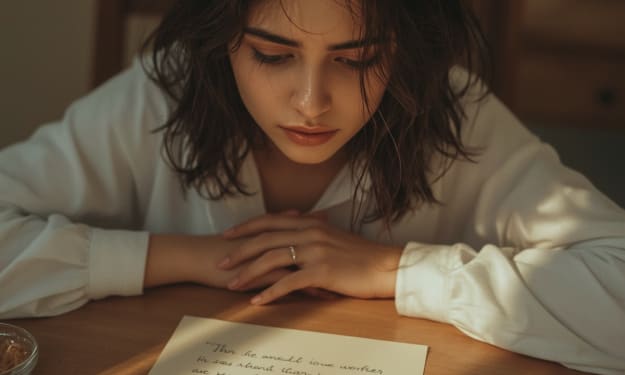
I found the letter three weeks after she passed. It was tucked inside the old shoebox she kept beneath her bed—the one I was never allowed to touch. It smelled faintly of rosewater and dust, the scent of my childhood. The envelope was yellowed at the edges, unsealed, and addressed to me in her careful handwriting: "To my daughter, when the time is right." The irony twisted like a knife. The time was never right, and now it never would be. I sat on the carpet of her bedroom floor, legs numb, eyes raw. I traced each letter of my name with trembling fingers before pulling the paper out. Her words spilled into my hands. --- “My dearest Maya, If you're reading this, it means life has already done what life does best—move forward, whether we are ready or not. There are things I could never say while I was alive. Not because I didn’t want to, but because I didn’t know how. I was always better with silence, wasn’t I?” --- I paused. That line alone brought tears. Yes. She had been better with silence. Conversations with my mother were often measured in nods and glances, not words. I spent most of my teenage years trying to crack her like a code, only to give up and assume she was simply cold. Detached. But now, her voice on the page felt warmer than any memory I had of her. --- “You always thought I didn’t understand you. Maybe I didn’t—at least not the way you wanted me to. But I watched. I watched you build a world out of stories when real life felt too sharp. I saw you stare out the window longer than a child should, searching for places your feet hadn’t been yet. I saw your pain, Maya, even when you tried to bury it behind books and sarcasm.” --- There was a lump in my throat. I remembered those long, lonely summers — when I would lock myself in my room and write in cheap spiral notebooks until my hands cramped. I had always thought she never noticed. That she didn't care. But she did. --- “I never learned how to say ‘I’m proud of you’ without my throat tightening. I never learned how to tell you that I, too, used to write poems under my pillow. That I, too, once believed that if I vanished, no one would notice. We were more alike than I ever let on.” --- I closed my eyes. Maybe the silence between us wasn’t empty—it was heavy. Weighted with everything unsaid, everything we were afraid to say. I had resented her for not opening up, but perhaps she had always been trying, in her own quiet way. --- “But motherhood isn’t a mirror. It’s a window. And sometimes I was too afraid to look in.” --- Her handwriting began to waver slightly, like the tremble of an old voice. I imagined her writing this at night, maybe sitting at the kitchen table with a cup of tea gone cold. Did she cry while writing it? Did she hesitate before sealing it away? I would never know. --- “If I could ask you for anything now, it would be this: be kinder to yourself than I ever was to myself. Forgive more quickly. Let love surprise you. And write, Maya. Write even when it hurts. Especially then.” “With all the love I didn’t know how to show, Mom.” --- That letter changed everything. It didn’t bring her back. It didn’t undo years of distance or erase the silences between us. But it gave me something I never knew I needed—a door into her world. A bridge between her silence and my noise. That night, I sat at my own kitchen table, the letter beside me, the shoebox still open. I picked up a pen after months—maybe years—and opened a fresh journal. I didn’t write a story. I wrote to her. I told her about the funeral. About how her sister cried harder than I thought possible. How I’d stood still like a statue. I told her about the yellow sweater I found in her closet, the one I remember wearing to school one day when I was sick. I told her how I finally understood why she always cut the crusts off my sandwiches without asking. I wrote for hours. Pages and pages. My handwriting messy, my eyes swollen, my heart somehow lighter. When I finally stopped, I placed the original letter in a new envelope and wrote three words on it in my own handwriting: "I forgive you." Then I slid it into the shoebox, closed the lid, and whispered into the quiet room, "I'm writing again, Mom." And for the first time in a long time, I didn't feel alone.
By Hazrat Bilalabout a year ago in Confessions
Chasing Peace, Not Perfection: My Journey to Letting Go
For as long as I can remember, I’ve been chasing perfection. Perfect grades. Perfect appearance. Perfect timing. Perfect everything. I lived by to-do lists, spreadsheets, color-coded calendars, and a voice in my head that said, “You’re not enough until it’s perfect.” I thought perfection was peace — that once I got it just right, I’d finally be allowed to rest. What I didn’t realize was that I was sprinting on a treadmill that never stopped, and I was the one controlling the speed.
By Aiman Shahidabout a year ago in Confessions
The Day I Walked Away from Everything
I didn’t pack a suitcase. I didn’t leave a note. I didn’t cry. I simply stood up from the life I had built for ten years, turned the key in the door behind me, and walked away. There was no dramatic blowout, no final straw. Just a moment of stillness so loud it felt like a scream in my chest. For months—maybe years—I had been waking up with a knot in my stomach, waiting for the motivation to return. Waiting to feel something other than numb. But it never came. It wasn’t always like that. Once, I was the person who chased dreams with fire in my veins. I had a vision for my life, for my relationship, for who I wanted to become. But somehow, in the process of trying to meet everyone’s expectations—my partner’s, my parents’, society’s—I stopped meeting my own. I was thirty-two and living a life that looked great on paper. A stable relationship. A well-paying corporate job. A decent apartment in a respectable neighborhood. But beneath the surface, I was drowning. Every conversation felt like performance. Every day felt like a copy of the last. I started dreading Mondays, then Tuesdays. Eventually, I dreaded waking up altogether. The relationship had long gone stale. We stopped laughing. We stopped touching. We stopped caring. He was a good man, but not the right man—for me, or maybe for anyone. We were roommates pretending to be lovers, sharing meals but not moments, passing each other like ghosts in the same haunted house. One morning, I looked at myself in the mirror and didn’t recognize the eyes staring back at me. They were tired. Not just physically, but spiritually exhausted. I heard a quiet voice in my head say: You don’t have to stay. It was the first honest thing I’d allowed myself to think in a long time. So I didn’t. That afternoon, I walked to the edge of my old life and didn’t look back. I didn’t have a plan, just a backpack, my journal, and a bank account that could stretch if I was careful. I took a bus to a small town three hours away where no one knew my name. I checked into a modest inn and slept for fifteen hours straight. The first few days were terrifying. I questioned everything. Had I made a huge mistake? Was I selfish? Irresponsible? A quitter? But somewhere between morning walks and quiet cups of coffee, I started to breathe differently. For the first time in years, I wasn’t performing for anyone. I didn’t have to smile unless I meant it. I didn’t have to explain myself. I was just me—messy, uncertain, raw—and that was enough. I found a part-time job at a local bookstore, the kind with creaky wooden floors and handwritten staff recommendations on every shelf. The owner, a woman in her sixties named Marla, took me in without questions. She seemed to understand that I needed space more than sympathy. At night, I wrote. Not emails or reports—real writing. I poured the truth onto the page. The anger. The fear. The grief. But also the hope. The tiny seeds of self-trust that were beginning to sprout. Three months passed. I made friends. I learned how to be alone without being lonely. I stopped checking my phone every five minutes. I stopped apologizing for things that didn’t require apologies. I stopped shrinking myself to fit into a life that had outgrown me. One afternoon, I returned to the place I once called home—not to stay, but to say goodbye properly. I gathered my things, hugged the version of me that had survived so much, and left a simple note on the kitchen table: Thank you for the lessons. I’m ready now. Walking away from everything was the hardest thing I’ve ever done. But it was also the most honest. Sometimes, healing doesn’t look like fighting harder to keep it together. Sometimes, it looks like letting go—with no guarantees of what comes next. I don’t have all the answers. I still have days where I doubt myself. But I know this: I am no longer afraid of beginning again. Because the day I walked away from everything was the day I finally walked toward myself. Thank you for reading this 🥰.
By Azmat Roman ✨about a year ago in Confessions
In the Fog: My Journey Through Xanax Withdrawal
I never imagined that something prescribed to help me would end up stealing nearly a decade of my life. When I was first diagnosed with Generalized Anxiety Disorder, I was desperate for relief. I couldn’t sleep, I couldn’t eat, and daily life felt like an impossible mountain. So when my doctor prescribed Xanax, I welcomed it. I didn’t question the dosage, didn’t hesitate. I just wanted the fear to stop.
By Saeed Ullah about a year ago in Confessions
The Last Bench We Sat On
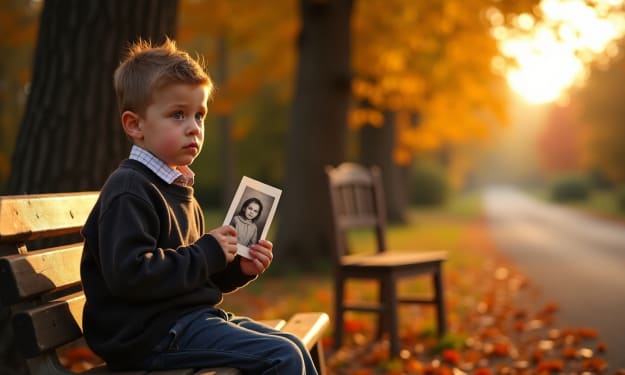
There’s a wooden bench outside our village school. It’s old — the paint is chipped, the legs are slightly bent, and one side creaks when you sit. Most people don’t even notice it anymore. It blends into the background like a forgotten photograph on a dusty shelf.
By Muhammad Kaleemullahabout a year ago in Confessions
Call Me By Your Name Again
Luca remembered the summer when everything changed. He was only seventeen when he met Adrien — a visiting French artist who arrived in Luca’s small Italian town to work on a mural for the local museum. Adrien had curly hair, sun-warmed skin, and a laugh that made strangers smile. Luca never believed in love at first sight until Adrien stepped off that train.
By Solene Hartabout a year ago in Confessions
Venus Buried
The girl in the graveyard is your best friend, so you take her home. The night is a bruise between you, a blotch of rogue in the passenger window; the colour of fruit left out to fester. The body pries at her seatbelt, a finger, then two. The radio echoes static, the body shuffles in her seat. You study the face; the similar slice of jaw, the nose humped from where a baseball had hit her at twelve, just slightly off centre. The skin like a rain-licked plastic bag. The stink of musk and sulphur. You want to look away but you cannot. She's so beautiful, even like this. Your headlights rake warbled slits through the dirt road, a yellow like jaundice. Your hands are stiff from the cold, your lips cracked. The girl beside you is dead and you are bringing her home.
By Muhammad Sabeelabout a year ago in Confessions
Full of feelings and questions. Top Story - August 2025.
Who is my mother? And what has she become? Sometimes it feels like a completely different person stands before me—heartless, distant, cruel. What turned her into this? Money? Time? Boredom? Or something much deeper that I’ll never understand?
By Anna about a year ago in Confessions
The One Mistake From My 20s That Still Haunts Me.
In my memory, my twenties are a collection of sun-drenched, overexposed photographs. They smell of cheap beer, instant noodles, and the intoxicating, reckless optimism that we were on the verge of something incredible. At the center of almost every one of those snapshots is Maya.
By Enes Özabout a year ago in Confessions
Don’t Forget to Check on the Strong Ones
They say I’m the strong one. The dependable one. The one you call when you need to cry, need a ride, need advice, need anything. I’ve worn that label like armor for as long as I can remember. “You’re so resilient,” they tell me. “You always seem to have it all together.” And I smile. Nod. Offer reassurance.
By Nadeem Shah about a year ago in Confessions