Family
"How to Spot Someone's Love Language in the First Five Minutes" - relationship insights
Picture this: You're sitting across from someone at a coffee shop, and within the first five minutes, you already know whether they crave physical touch, desperately need words of affirmation, or feel most loved through thoughtful gestures. Sounds like magic? It's actually science—mixed with a healthy dose of observation skills that anyone can master.
By Muhammad Sabeelabout a year ago in Confessions
Whispers of Winter
The children had once ruled the hill as kings and queens of winter. Laughter echoed through the cold air, snowballs flew like comets, and sleds carved winding trails down the icy slopes. Among them were Sam, Elsie, and little Kip — inseparable companions who shared their joys with a small, curious red fox they named Ember.
By Solene Hartabout a year ago in Confessions
Healing Out Loud: Why Telling My Story Set Me Free
There was a time when silence felt safer than truth. When I carried pain like a secret folded in the pages of a journal no one would read. I believed that if I didn’t speak it, it wouldn’t define me. But the longer I kept my story hidden, the more it festered in the dark, shaping my self-worth, decisions, and relationships in ways I didn’t understand. It wasn’t until I began to heal out loud—to say the quiet parts out loud—that I truly began to feel free.
By Aiman Shahidabout a year ago in Confessions
The House I Grew Up In Doesn’t Remember Me
The porch steps creaked under my weight, though not out of familiarity. It was the kind of groan that old wood gives to strangers, not to long-lost children coming home. I hadn’t stood on this porch in over twelve years. And yet, every crack in the concrete walkway, every wind chime clinking in the dry summer air, every flake of peeling paint on the door had been preserved in my memory. I knocked anyway. Out of habit, maybe. Or respect. Or just fear. No one answered, of course. The house had been sold two years ago, shortly after my mother passed. I wasn’t able to come back for the funeral—work, distance, the messy nature of grief—but I told myself I’d visit soon. And now, finally, I had. The woman who now owned the house wasn’t home, or at least hadn’t responded to the letter I mailed weeks ago asking if I could come by. So I just stood there, tracing my fingers along the faded grooves in the doorframe where I used to measure my height with a pencil. A hundred tiny lines—proof that I had once existed here. But the pencil marks were painted over now. Gone. The tree in the front yard was still there, though taller, casting a wider shadow. I remembered tying a rope to one of its limbs and swinging wildly as a kid, daring gravity to knock me off. The swing was gone. The rope too. But the ghost of my laughter felt caught in the wind. I stepped back and looked at the house from the sidewalk. From this angle, it looked like a stranger’s home. The color had changed—from sunflower yellow to a tasteful gray—and the windows wore modern blinds that made it feel colder, cleaner, emptier. The flower bed where my mother used to plant daisies had been replaced with gravel and mulch. More efficient, I suppose. I didn’t cry. Not yet. Instead, I walked to the side of the house and peered into the backyard. The wooden fence, once sagging and marked with cartoonish graffiti from my teenage years, had been replaced. The cracked patio was now a sleek wooden deck with clean railings and a barbecue grill that gleamed in the sun. This wasn’t my backyard. This wasn’t my house. I sat on the curb out front and watched the sunlight shift slowly across the face of the building. It was strange. I had spent seventeen years inside those walls, but now I couldn’t even remember the exact sound the kitchen floor made when someone walked across it at night. I used to know that sound intimately. I used to hear it in my dreams. When I left home at seventeen—angry, idealistic, desperate to become someone else—I thought I’d never miss this place. I packed my bags and barely looked back. I told myself I’d been confined. That the town was too small, the house too loud, the people too controlling. I didn’t understand back then that you can’t really escape your past. You only delay the day you have to look it in the eye. And now that day had come. And the house didn’t know me. I think that’s what hurt the most. It had moved on. Just like I had. A soft voice broke through my thoughts. “You okay?” I turned. A teenage girl stood at the edge of the yard, holding a leash attached to a golden retriever. She must’ve lived nearby. “Yeah,” I said, clearing my throat. “Just… remembering.” She nodded, as if she understood, then added, “You used to live here?” “Yeah. A long time ago.” “My mom said the lady who lived here before us used to make the best lemon pies.” I smiled. “That was my mom.” “She sounds cool,” the girl said. Then she smiled politely and kept walking, the dog trotting beside her. Cool. My mom would’ve liked that. She used to bake lemon pies on Sundays, always leaving one to cool on the windowsill—like we lived in a storybook. The neighborhood kids would sneak bites, and she always pretended not to notice. Maybe that was the point. Maybe this house wasn’t supposed to remember me. Maybe houses aren’t built to hold onto people. Maybe they’re meant to carry new lives, new laughter, new memories in the same spaces where old ones faded. Still, as I stood up to leave, I noticed something near the base of the mailbox—a small crack in the concrete where I had once etched my initials with a rock. I bent down, brushed away some dirt, and there it was: L.W.—faint, but there. Proof. Maybe the house didn’t remember me. But it didn’t forget everything. Thank you for reading this ♥️.
By Azmat Roman ✨about a year ago in Confessions
The Letter I Never Sent to My Estranged Parent
The Envelope That Never Left My Desk I sat in my childhood bedroom, the air thick with dust and memories, holding a pen that felt heavier than it should. It was a rainy Tuesday in October, the kind where the world feels gray and endless. In front of me lay an envelope, its edges curling from weeks of hesitation. Inside was a letter I’d written to my estranged father—a letter I’d never send. The words were raw, jagged, a confession of pain I’d buried for years. I traced his name on the front, my handwriting shaky, and wondered if I’d ever find the courage to mail it.
By Hewad Mohammadiabout a year ago in Confessions
He Was My Brother… Until He Chose to Be a Stranger
“He Was My Brother… Until He Chose to Be a Stranger” A story of love, betrayal, and the painful silence that tore our bond apart. We grew up in the same house, under the same roof, with the same mother’s warmth and father’s discipline. We shared secrets, dreams, and plans for a future that somehow always included each other. My brother, Elijah, was my first best friend, my protector, and my partner in crime. If there was one person I thought would never leave my side, it was him. But that was before everything changed. Before adulthood complicated things. Before choices drew a line neither of us dared cross again. Growing up, Elijah had always been the one who stood up for me. When I got picked on in middle school, he walked three miles after football practice just to show up and walk me home. When Mom was sick and Dad was working double shifts, he cooked dinner, helped with homework, and made sure I never felt alone. He wasn’t perfect, though. Elijah had a temper. He struggled with authority, and as we got older, he began hanging out with a crowd that made me uneasy. I voiced my concerns, but he brushed them off. “I got this,” he’d always say. I wanted to believe he did. When I left for college, we didn’t talk as much. I was busy navigating a new life, and he was still back home, working odd jobs and trying to find his place. The distance wasn’t just physical—it was emotional, too. Calls became texts. Texts turned into silence. Still, I believed the bond was unbreakable. We were family, after all. Then came the breaking point. It started with a phone call from our cousin, Maya. She told me Elijah had been involved in something serious. Police. Arrest. Drugs. My stomach twisted. I didn’t want to believe it, but deep down, I knew it wasn’t entirely out of the blue. I flew home, desperate to see him, to help him—only to be met with coldness. “Elijah doesn’t want to see anyone,” our mother told me, eyes red and weary. “I’m not anyone,” I whispered, stunned. But he didn’t budge. Not even a text. Not a word. Weeks passed. Then months. I reached out again and again, but the silence was louder than any argument we could have had. I later found out from mutual friends that he’d cut off almost everyone, retreating into himself and the choices he’d made. I used to think people drifted apart gradually, like autumn leaves falling one by one. But this? This was different. It was as if he’d built a wall overnight, tall and final, and I was on the outside trying to peek in. What hurt the most wasn’t that he made mistakes. It wasn’t the bad decisions or even the cold shoulder. It was that he chose not to let me in. He chose silence over explanation. Distance over reconciliation. It wasn’t just a matter of growing apart—it was abandonment. I grieved him as if he had died. But mourning someone who is still alive is its own kind of hell. You keep hoping they’ll call. You imagine what you’ll say if they walk through the door. But the door stays closed, and your words rot inside your chest. Over time, I learned to let go—not of the love, but of the expectation. I stopped checking my phone hoping his name would appear. I stopped telling myself that “maybe tomorrow” he’d come around. I made peace with the idea that the brother I once knew might never return. Still, I think of him. When I hear a song we used to play in the car. When I walk past our childhood home. When someone asks if I have siblings. “I had a brother,” I sometimes say, quietly. “He chose to be a stranger.” Some days, I wonder if he ever thinks about me. If he regrets shutting the door. If he remembers the kid who used to sneak out of bed just to play video games with him at midnight. But I’ll never know. And maybe that’s the hardest part. --- Author’s Note: Sometimes, people you love will choose a path that doesn’t include you. That doesn’t mean the love wasn’t real. It just means healing sometimes comes without closure. And peace sometimes looks like letting go of what could have been. Thank you for reading this 🥰.
By Azmat Roman ✨about a year ago in Confessions
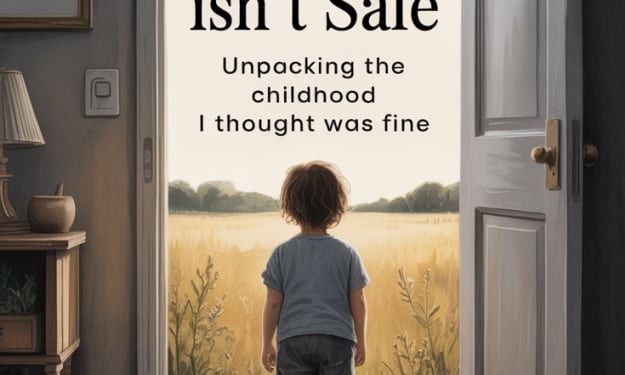
When Normal Isn’t Safe: Unpacking the Childhood I Thought Was Fine
I used to think every house had rules that changed depending on someone’s mood. I thought it was normal to tiptoe through your own home, careful not to breathe too loudly, careful not to laugh too hard. I thought everyone’s parents went silent for days after a fight, punishing with absence instead of words. I thought love looked like tension. Like guessing games. Like fear you couldn’t quite name. It wasn’t until I left that house that I began to realize it wasn’t normal—it was survival. Growing up, my childhood didn’t look dramatic from the outside. We weren’t on the news. There was no police tape, no one talked in whispers. We were the “quiet family” on the block. My mom made dinner every night, and my dad worked long hours. I got good grades. We smiled in pictures. But inside that house, the air was always heavy. Like walking through fog and hoping no one noticed how lost you were. My father wasn’t a bad man. He wasn’t violent. But he was cold. Withdrawn. Impossible to predict. His silence could fill a room, and it terrified me more than yelling ever could. He’d go days without speaking to me if I said the wrong thing. I learned quickly how to read the air, how to walk on eggshells that no one else seemed to see. My mother was always on edge. Kind, but anxious. She spent most of her energy trying to keep things calm—especially when my father’s mood darkened. She called it “keeping the peace,” but I realize now it was just appeasement. We never spoke openly about feelings. Emotions were considered private, almost shameful. If I cried, I was being “dramatic.” If I got upset, I was “ungrateful.” So I grew quiet. I internalized everything. I got good at pretending. It wasn’t until I moved out—first to college, then into my own apartment—that I began to see the cracks. I remember the first time a roommate raised their voice during a disagreement and then… apologized. I waited for the silence to follow. For days of tension. For passive-aggressive remarks or cold shoulders. But instead, she said, “Hey, I didn’t mean to snap. I was stressed. Can we talk about it?” I was stunned. That was it? No emotional hangover? Little moments like that kept happening. Friends who checked in after tough conversations. Partners who asked how I felt, not just what I thought. Therapists who helped me realize that what I experienced had a name: emotional neglect. It wasn’t abuse in the traditional sense. But it was the absence of safety. The absence of being seen. And that leaves its own kind of scar. What I once believed was “just how families are” turned out to be deeply dysfunctional. It’s disorienting, honestly. You grow up thinking you had a relatively normal childhood—because it was all you knew. Then you’re out in the world, and you realize other people weren’t constantly afraid of disappointing their parents. Other people didn’t flinch at the sound of a door closing. Other people grew up safe. And safety, I’ve learned, isn’t just the absence of harm. It’s the presence of warmth. Of validation. Of knowing you can mess up and still be loved. I still struggle with this. I still freeze when someone is upset with me. I still feel like love is something I have to earn by being small, quiet, agreeable. But I’m unlearning it—slowly. Therapy has helped. Writing has helped more. So has surrounding myself with people who know how to love out loud. Sometimes, I mourn the childhood I didn’t have. I mourn the version of me who could’ve been louder, freer, sillier. The kid who didn’t have to grow up so fast just to keep the peace. But I also try to honor the kid I was. She was smart. She was resilient. She kept herself safe the only way she knew how. And now, as an adult, I get to offer her something better. I get to rewrite what “normal” means. Not silence. Not fear. Not walking on eggshells. But softness. Openness. Safety. That’s my new normal. Thank you for reading this 🥰.
By Azmat Roman ✨about a year ago in Confessions
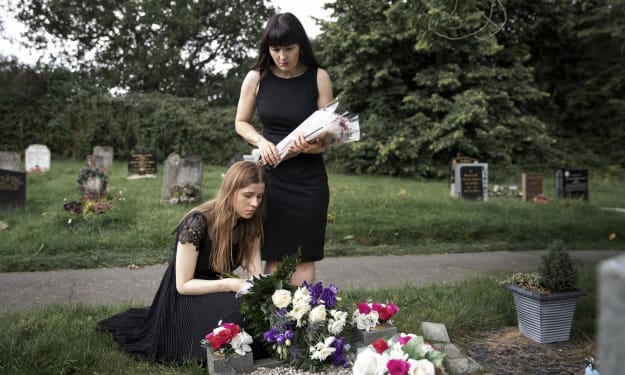
I Disowned My Father Before He Died
“Some wounds don’t bleed. They echo.” I was 21 when I told my father I never wanted to see him again. It wasn’t during some explosive family fight. It wasn't even a moment soaked in tears. It was quiet. Final. I said the words over the phone with shaking hands and a voice that didn’t sound like mine. And he — perhaps out of pride or pain — simply said:
By Zulfiqar Khanabout a year ago in Confessions
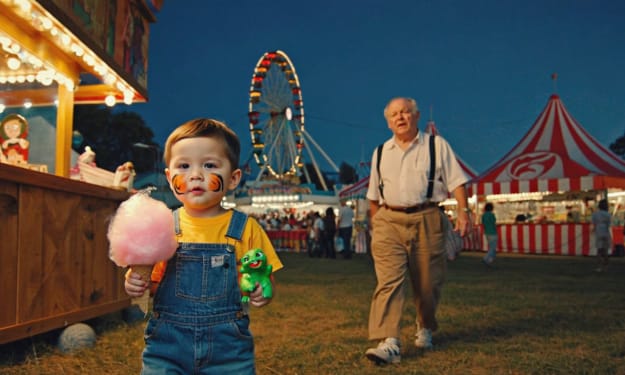
Even the Cutest Kids Get Lost Sometimes
When I was little, everyone in the family used to call me “the cute one.” I had chubby cheeks, a bowl haircut, and a giggle that could melt the grumpiest uncle’s heart. My grandfather adored me the most. He was the kind of grandpa who wore suspenders, kept mints in his pocket, and had a warm laugh that made you feel safe.
By Solene Hartabout a year ago in Confessions
Why Does the Universe Ask more of me than most?
What I survived one does not talk about out of curtesy of others. It is socially inapriprate and one must cage the situation with caution because of social norms I soppose. People naturally can only handle so much. But naturally as a neurodivergent person I struggled to understand a social ques. Problem? I have no filter, and I am as bizarre as they come. I know people judge me to be quite odd or eccentric, for being to open. However, having cerebral palsy in the early 2000's made me a social outcast and I had zero social skills and no impulse control. When you are born with cerebral palsy there is damage to the frontal lobe and that really affects who you become in regards to your personality. I blame this reason alone for being such a bold person, Also people with disabilities ( I am sorry to be so honest) are stronger than the rest of population by the laws of the survival of the fittest. They have more tenacity and grit then you could ever imagine. You dont know how strong you have to be in life until you are given no choice or alternative. Naturally as a result, we face life fearlessly and with a kind of strength and courage no one could define unless they had a disability.Please keep in mind that I am very aware that everyone has a disability of certain severity, and in reality we are all disabled. However, it seems to be the case that more more "soul strength" is required of the people that are severely disabled and have very heavy bodies more sickly bodies with limited mobility. I was contently frustrated ands in a state of mental and physical exhaustion and still you must do what the world demands of you. I cannot tell you how many times I have pleaded in complete mercy to God, " Why are you asking me to do the impossible everyday- I'm tired."People always assumed I lived with my parents, live in a group home or some institution- and were shocked to learn I live on my own. When I am in a hospital, I feel helpless at times because the doctor and nurses assume I am incompetent regarding my care and condition of my health. They also talked to me and treated me differently. I remember them begging to treat my skin infection on my foot before it naturally enntered my bloodsteam and I found myself bedbound again due to extreme weakness. No one listened and I was asked to take anibiotics for weeks untuil the problem spiralled out of control and required hospitalization. Sometimes I arrived so overwelmed by the inflection I was no longer able to walk with my walker. I was using everything I had to make it to the ER in hopes I would be nursed back to health. But they always discharged me and I was always worried if my body was strong enough to make it home. These were dark times, it really did make me belief that my life had lost all of its quaility and I lived in a constant state of suffering and agony. I did not have my motorized wheelchair at the time and all I had to make it in the world was my walker. But due to illness I could no longer walk safely, and it seemed to also rob me of my balance and stability. But still I was told to take the antibiotics that were not working and sent home only to decline rapidly over time over and over requiring hospitalization. I had lost complete and utter hope and honestly thought I would showily die of an infection over a long sufferuing time period.But I had always been a fighter and suviver, I was not the type to just lay down and die, I was young and still had a life to live! I learned through research that the simple act of putting vasicine on my toes would end my horrific wounds and elevate the problem. I worked with specialists, wound care nursews and endless doctors and no one offered a solution or an answer to why it was happening. They only threw pills at me. Meanwhile the wound nurses were making the problem worse my putting thick bandages on my feet that only caused them to rub together more. It honestly stabs me in the heart recalling this time in my life. I felt subhuman to the healthcare system and neglected terribly.
By Julia Stellingsabout a year ago in Confessions
When I Wronged My Brother. AI-Generated.
🧩 Introduction: The Silence That Spoke Too Loud Not every sin is loud. Sometimes, we hurt people not through shouting or insults, but through cold silence — through a heart that chooses pride over love. This is the story of how I wronged my younger brother, and how Allah taught me the value of humility, forgiveness, and family — before it was too late. --- 🧱 A House Divided It started with something small. I honestly can’t recall the exact issue — maybe it was about household chores, or a missed promise. What I do remember is the anger. The frustration that made me walk away and say nothing. I didn’t shout. I didn’t fight. I simply stopped speaking to him. At first, it felt like a victory. He was confused, quiet, trying to make eye contact during meals, but I would look away. Days passed. Then a week. Then two. He stopped trying. And that, oddly, felt like I’d won. But the house changed. My mother’s smile faded. My father became quieter. The air between us all grew heavier. One evening, my mother said gently, “Don’t let silence grow into hate. He's your brother, not your enemy.” But I was too arrogant to listen. Pride is a disease — silent, but destructive. 🕋 A Prayer in the Dark Then came the night that shattered me. I returned home unexpectedly early. The house was quiet. As I passed by my brother’s room, I heard his voice — low, soft, trembling. He was praying. I stopped. > “Ya Allah… I don’t know what I did. Please make my brother speak to me again. I miss him. I just want things to be okay.” His words stabbed through my pride. I leaned against the wall, paralyzed. Here I was thinking I had power by ignoring him, while he was turning to Allah — broken, confused, and still full of love. My chest tightened. I had become the oppressor without realizing it. 🤝 The Power of an Apology I didn’t knock. I walked straight into his room. He looked up, startled, his eyes red. He wiped his tears quickly, embarrassed. I sat beside him. “I was wrong,” I whispered. “You didn’t deserve my silence. I was arrogant… and I am sorry.” He stared at me for a second — and then hugged me like he had been waiting for years. We cried together. I felt something pure return to my heart — something I had lost in the noise of my ego. That night, I opened the Quran, searching for peace. And I found this verse: > “And lower to them the wing of humility out of mercy…” (Surah Al-Isra, 17:24) Though the verse speaks of parents, I understood something deeper: humility is the root of all healthy relationships. Without it, even love turns bitter. 🧠 Reflection: What My Brother Taught Me He never argued. He never insulted me. He never defended himself. Yet, his patience, his du‘a, and his quiet sadness taught me more than any lecture. I was reminded of the Hadith: > “Whoever humbles himself for the sake of Allah, Allah will raise him in status.” (Muslim) My brother’s humility became his strength — and my pride became my weakness. 🕊️ What I Would Say to You If you're holding on to a grudge — especially with a family member — ask yourself: Is it worth it? Are you going to let silence eat away your bond? Will your ego comfort you when they’re gone? Will your heart be at peace knowing someone cried in sujood because of you? Seek forgiveness. Say sorry. Even if you weren’t 100% wrong. Because on the Day of Judgment, Allah won't ask who won the argument. He will ask who was merciful. Who fixed the bond. Who humbled themselves. 🌿 Moral of the Story The greatest strength lies not in winning arguments, but in winning hearts. A sincere apology can heal wounds that even years couldn’t. Never underestimate the pain caused by your silence. Never delay a kind word. And never allow pride to break what Allah has blessed: family.
By Kaleem Ullahabout a year ago in Confessions