Childhood
The Letter I Never Sent to My Estranged Parent
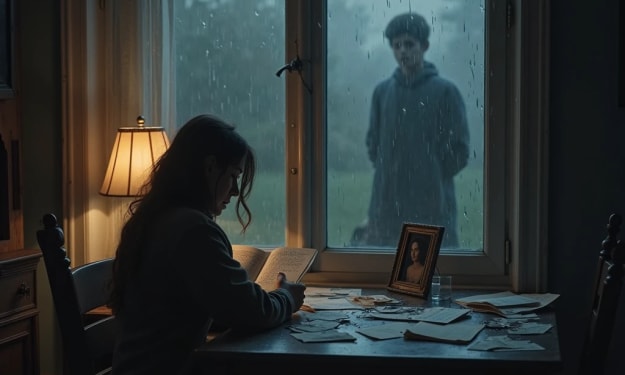
The Envelope That Never Left My Desk I sat in my childhood bedroom, the air thick with dust and memories, holding a pen that felt heavier than it should. It was a rainy Tuesday in October, the kind where the world feels gray and endless. In front of me lay an envelope, its edges curling from weeks of hesitation. Inside was a letter I’d written to my estranged father—a letter I’d never send. The words were raw, jagged, a confession of pain I’d buried for years. I traced his name on the front, my handwriting shaky, and wondered if I’d ever find the courage to mail it.
By Hewad Mohammadiabout a year ago in Confessions
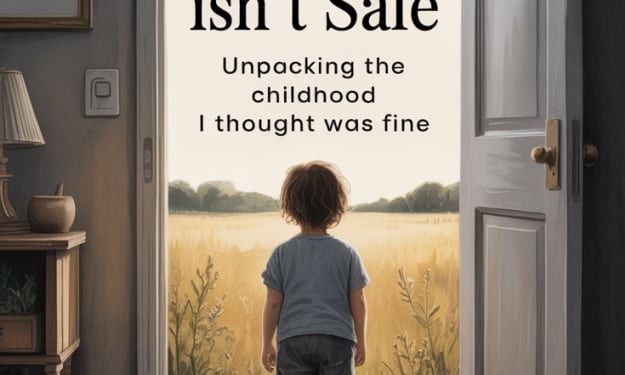
When Normal Isn’t Safe: Unpacking the Childhood I Thought Was Fine
I used to think every house had rules that changed depending on someone’s mood. I thought it was normal to tiptoe through your own home, careful not to breathe too loudly, careful not to laugh too hard. I thought everyone’s parents went silent for days after a fight, punishing with absence instead of words. I thought love looked like tension. Like guessing games. Like fear you couldn’t quite name. It wasn’t until I left that house that I began to realize it wasn’t normal—it was survival. Growing up, my childhood didn’t look dramatic from the outside. We weren’t on the news. There was no police tape, no one talked in whispers. We were the “quiet family” on the block. My mom made dinner every night, and my dad worked long hours. I got good grades. We smiled in pictures. But inside that house, the air was always heavy. Like walking through fog and hoping no one noticed how lost you were. My father wasn’t a bad man. He wasn’t violent. But he was cold. Withdrawn. Impossible to predict. His silence could fill a room, and it terrified me more than yelling ever could. He’d go days without speaking to me if I said the wrong thing. I learned quickly how to read the air, how to walk on eggshells that no one else seemed to see. My mother was always on edge. Kind, but anxious. She spent most of her energy trying to keep things calm—especially when my father’s mood darkened. She called it “keeping the peace,” but I realize now it was just appeasement. We never spoke openly about feelings. Emotions were considered private, almost shameful. If I cried, I was being “dramatic.” If I got upset, I was “ungrateful.” So I grew quiet. I internalized everything. I got good at pretending. It wasn’t until I moved out—first to college, then into my own apartment—that I began to see the cracks. I remember the first time a roommate raised their voice during a disagreement and then… apologized. I waited for the silence to follow. For days of tension. For passive-aggressive remarks or cold shoulders. But instead, she said, “Hey, I didn’t mean to snap. I was stressed. Can we talk about it?” I was stunned. That was it? No emotional hangover? Little moments like that kept happening. Friends who checked in after tough conversations. Partners who asked how I felt, not just what I thought. Therapists who helped me realize that what I experienced had a name: emotional neglect. It wasn’t abuse in the traditional sense. But it was the absence of safety. The absence of being seen. And that leaves its own kind of scar. What I once believed was “just how families are” turned out to be deeply dysfunctional. It’s disorienting, honestly. You grow up thinking you had a relatively normal childhood—because it was all you knew. Then you’re out in the world, and you realize other people weren’t constantly afraid of disappointing their parents. Other people didn’t flinch at the sound of a door closing. Other people grew up safe. And safety, I’ve learned, isn’t just the absence of harm. It’s the presence of warmth. Of validation. Of knowing you can mess up and still be loved. I still struggle with this. I still freeze when someone is upset with me. I still feel like love is something I have to earn by being small, quiet, agreeable. But I’m unlearning it—slowly. Therapy has helped. Writing has helped more. So has surrounding myself with people who know how to love out loud. Sometimes, I mourn the childhood I didn’t have. I mourn the version of me who could’ve been louder, freer, sillier. The kid who didn’t have to grow up so fast just to keep the peace. But I also try to honor the kid I was. She was smart. She was resilient. She kept herself safe the only way she knew how. And now, as an adult, I get to offer her something better. I get to rewrite what “normal” means. Not silence. Not fear. Not walking on eggshells. But softness. Openness. Safety. That’s my new normal. Thank you for reading this 🥰.
By Azmat Roman ✨about a year ago in Confessions
Even the Cutest Kids Get Lost Sometimes
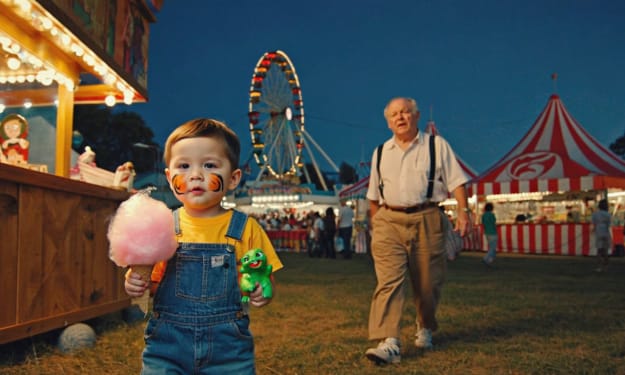
When I was little, everyone in the family used to call me “the cute one.” I had chubby cheeks, a bowl haircut, and a giggle that could melt the grumpiest uncle’s heart. My grandfather adored me the most. He was the kind of grandpa who wore suspenders, kept mints in his pocket, and had a warm laugh that made you feel safe.
By Solene Hartabout a year ago in Confessions
Why Does the Universe Ask more of me than most?
What I survived one does not talk about out of curtesy of others. It is socially inapriprate and one must cage the situation with caution because of social norms I soppose. People naturally can only handle so much. But naturally as a neurodivergent person I struggled to understand a social ques. Problem? I have no filter, and I am as bizarre as they come. I know people judge me to be quite odd or eccentric, for being to open. However, having cerebral palsy in the early 2000's made me a social outcast and I had zero social skills and no impulse control. When you are born with cerebral palsy there is damage to the frontal lobe and that really affects who you become in regards to your personality. I blame this reason alone for being such a bold person, Also people with disabilities ( I am sorry to be so honest) are stronger than the rest of population by the laws of the survival of the fittest. They have more tenacity and grit then you could ever imagine. You dont know how strong you have to be in life until you are given no choice or alternative. Naturally as a result, we face life fearlessly and with a kind of strength and courage no one could define unless they had a disability.Please keep in mind that I am very aware that everyone has a disability of certain severity, and in reality we are all disabled. However, it seems to be the case that more more "soul strength" is required of the people that are severely disabled and have very heavy bodies more sickly bodies with limited mobility. I was contently frustrated ands in a state of mental and physical exhaustion and still you must do what the world demands of you. I cannot tell you how many times I have pleaded in complete mercy to God, " Why are you asking me to do the impossible everyday- I'm tired."People always assumed I lived with my parents, live in a group home or some institution- and were shocked to learn I live on my own. When I am in a hospital, I feel helpless at times because the doctor and nurses assume I am incompetent regarding my care and condition of my health. They also talked to me and treated me differently. I remember them begging to treat my skin infection on my foot before it naturally enntered my bloodsteam and I found myself bedbound again due to extreme weakness. No one listened and I was asked to take anibiotics for weeks untuil the problem spiralled out of control and required hospitalization. Sometimes I arrived so overwelmed by the inflection I was no longer able to walk with my walker. I was using everything I had to make it to the ER in hopes I would be nursed back to health. But they always discharged me and I was always worried if my body was strong enough to make it home. These were dark times, it really did make me belief that my life had lost all of its quaility and I lived in a constant state of suffering and agony. I did not have my motorized wheelchair at the time and all I had to make it in the world was my walker. But due to illness I could no longer walk safely, and it seemed to also rob me of my balance and stability. But still I was told to take the antibiotics that were not working and sent home only to decline rapidly over time over and over requiring hospitalization. I had lost complete and utter hope and honestly thought I would showily die of an infection over a long sufferuing time period.But I had always been a fighter and suviver, I was not the type to just lay down and die, I was young and still had a life to live! I learned through research that the simple act of putting vasicine on my toes would end my horrific wounds and elevate the problem. I worked with specialists, wound care nursews and endless doctors and no one offered a solution or an answer to why it was happening. They only threw pills at me. Meanwhile the wound nurses were making the problem worse my putting thick bandages on my feet that only caused them to rub together more. It honestly stabs me in the heart recalling this time in my life. I felt subhuman to the healthcare system and neglected terribly.
By Julia Stellingsabout a year ago in Confessions
In the Fog: My Journey Through Xanax Withdrawal
I never imagined that something prescribed to help me would end up stealing nearly a decade of my life. When I was first diagnosed with Generalized Anxiety Disorder, I was desperate for relief. I couldn’t sleep, I couldn’t eat, and daily life felt like an impossible mountain. So when my doctor prescribed Xanax, I welcomed it. I didn’t question the dosage, didn’t hesitate. I just wanted the fear to stop.
By Saeed Ullah about a year ago in Confessions
The Last Bench We Sat On
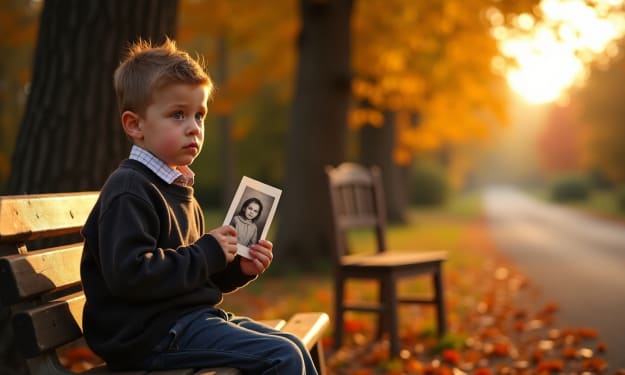
There’s a wooden bench outside our village school. It’s old — the paint is chipped, the legs are slightly bent, and one side creaks when you sit. Most people don’t even notice it anymore. It blends into the background like a forgotten photograph on a dusty shelf.
By Muhammad Kaleemullahabout a year ago in Confessions
The Stranger’s Notebook
The Stranger’s Notebook On a quiet afternoon, Maya wandered through the park, hoping the familiar rustle of leaves and distant laughter would calm the restless thoughts in her mind. Her world had felt heavy lately—filled with memories she couldn’t shake and questions with no answers. As she passed the old oak tree, something caught her eye: a small, worn notebook resting on a bench, its leather cover cracked and soft with age.
By Furqan Elahiabout a year ago in Confessions
Call Me By Your Name Again
Luca remembered the summer when everything changed. He was only seventeen when he met Adrien — a visiting French artist who arrived in Luca’s small Italian town to work on a mural for the local museum. Adrien had curly hair, sun-warmed skin, and a laugh that made strangers smile. Luca never believed in love at first sight until Adrien stepped off that train.
By Solene Hartabout a year ago in Confessions
Full of feelings and questions. Top Story - August 2025.
Who is my mother? And what has she become? Sometimes it feels like a completely different person stands before me—heartless, distant, cruel. What turned her into this? Money? Time? Boredom? Or something much deeper that I’ll never understand?
By Anna about a year ago in Confessions
From Jealousy to Gratitude. AI-Generated.
For years, I was at war — not with the world, but with my own heart. On the outside, I lived a quiet life. I greeted others with a smile, said “MashaAllah” when someone shared good news, and nodded during reminders about being thankful. But inside, I was burning with silent jealousy — not because I hated others, but because I couldn't understand why their lives were moving forward while mine remained still. I didn’t envy wealth or fame. What hurt was watching people around me receive the very things I made dua for — a peaceful marriage, stable income, health, ease, barakah. My best friend got married to someone she loved. My cousin received a scholarship abroad. My neighbor opened her second business. And me? I felt left behind, like I was in a room full of doors — each one opening for someone else while I sat quietly, waiting for mine to unlock. Every unanswered dua felt like a rejection. Every scroll through social media reminded me of how much I didn't have. I tried to stay silent. I didn’t want to be ungrateful. But my heart grew heavy. Sometimes I would cry after making dua, not because I had no hope — but because I feared Allah was displeased with me. That perhaps, I wasn’t worthy of His favors. Then, one day, something small — yet powerful — changed everything. At a family gathering, my young niece came running to me with a wide smile. She handed me a poorly drawn flower on a crumpled piece of paper and said, “I made this for you, Khala!” It was uneven, childlike, and simple — but it was hers, and it was from love. I smiled, hugged her tightly, and thanked her again and again. Her eyes lit up, and she skipped away happily. That night, I sat alone thinking: I accepted her small gift with so much joy — not because it was perfect, but because of the love behind it. And then it struck me — What if Allah accepts our duas the same way? Not because they are eloquent or perfectly timed, but because they come from sincerity. And just like I didn’t compare her flower to professional art, maybe Allah doesn’t compare our journey to someone else’s. That single moment opened my heart. That night, I prayed two rak’ahs of Salat-ul-Tawbah, with real tears. I asked Allah to cleanse my heart from the jealousy that was eating away at my peace. I made dua for my friends’ happiness. I thanked Allah for things I had been ignoring — clean water, a roof, a healthy body, the ability to pray. I started keeping a small gratitude notebook. Every night before bed, I wrote five things I was thankful for — even if they seemed small: My mother’s warm chai. The fact that I could walk without pain. A quiet, undisturbed fajr. A friend who checked in. The sweetness of a ripe mango. At first, it felt like I was just going through the motions. But within a week, I noticed something: my heart was lighter. The tightness in my chest, that invisible burden, started to lift. I was beginning to see beauty even in stillness. Jealousy had narrowed my vision, but gratitude widened it. And then something else happened — Allah opened a door. I was offered a small opportunity to work from home doing something I loved — nothing glamorous, but enough to bring peace and purpose. I realized it wasn’t just a job — it was an answer. Not to what I had asked, but to how I had changed. It wasn’t that shukr brought me success — it brought me sukoon. And in that sukoon, I found the strength to do more, to try harder, to love deeper, and to trust fully. 🌿 What I Learned Jealousy is like a shadow. You may not see it clearly, but it follows you, weighs on you, and makes even blessings look dull. Shukr is like light. It doesn't just brighten your path — it shows you that the path itself is a gift. The Prophet Muhammad ﷺ said: > “Look at those below you, and do not look at those above you, for this is more likely to keep you from belittling the blessings Allah has bestowed upon you.” (Sahih Muslim) And in the Qur’an, Allah promises: > "If you are grateful, I will surely increase you." (Surah Ibrahim 14:7) I had spent so much time asking why them, that I forgot to say Alhamdulillah for me. But Allah, in His mercy, didn’t punish me for that. He guided me through it — softly, gently, beautifully. Today, I still make dua for things I desire — but I no longer carry jealousy in my hands. I carry trust. I no longer compete silently in my heart. I rest in the belief that whatever is meant for me will come — in Allah’s time, not mine. And until then, I will say: Alhamdulillah. Always.
By Kaleem Ullahabout a year ago in Confessions
The Dream I Hid for 10 Years. AI-Generated.
For a decade, I lived two lives. To my family, I was the obedient son — quiet, responsible, always saying "In shaa Allah" to their plans. I studied what they asked, attended the family shop when needed, and never questioned their decisions. But behind closed doors, I was someone else — a silent dreamer, sketching designs at night with trembling hands. My heart belonged to architecture, to blueprints and buildings, to dreams taller than the rooftops of our modest home. But I never dared speak of it. Not because my family was cruel — no, they were simple people. Loving, kind, but afraid of the world’s uncertainties. They believed in "secure paths": get a degree, join the shop, get married early, live a quiet life. Dreams like mine, they thought, were distractions. Even selfish. So, I hid mine. For 10 years, I drew silently in the dark. I designed imaginary cities while helping my father stack inventory. I watched online lectures with the volume off. I enrolled secretly in an online diploma, paying through freelance gigs, all without ever telling anyone. I thought I was being wise — avoiding conflict, staying respectful. But deep inside, guilt grew like a shadow. Every time I smiled at my mother, knowing she believed I had given up the “silly” dream, my heart felt heavy. Was I being dishonest? Was this a sin? One night, my younger sister found one of my sketches. She stared at it with wonder and said, "Why do you hide this?" That question pierced me. It wasn’t just about the paper she held. It was about the burden I’d carried. Hiding a gift Allah had given me — not because it was haram, but because I feared rejection. That night, I couldn’t sleep. I got up, prayed two rak'ahs of Salat-ul-Istikhara, tears soaking my sajdah. I asked Allah: "Ya Rabb, agar ye khwab mere liye theek nahi, to ise mere dil se nikaal de. Aur agar ye mere naseeb mein hai, to mere liye asaniyan paida farma." The next morning, I made a decision. I gathered the courage to show my parents my designs, certificates, and work. I expected anger, disappointment — maybe silence. Instead, my father looked at me with sadness and said, "Why didn’t you tell us earlier?" I was stunned. He didn’t shout. He didn’t scold. He just said, “Beta, hum ne kabhi mana nahi kiya tha khwab dekhne ko. Hum to sirf darte thay... ke duniya na torh de tumhara dil.” And that broke me. All those years, I had assumed rejection. I had feared disappointing them. In reality, they were only trying to protect me — in their own imperfect way. Since that day, everything changed. My family didn’t fully understand architecture, but they started asking about my projects. My mother began praying for my "design work" in her duas. Even my little nephew started calling me “Engineer chachu”. Today, I work for a mid-sized firm. Not famous, not rich — but peaceful, content, and still learning. I share my designs openly now, with my family as my cheerleaders. And every time I feel fear again, I remind myself of the verse: > “And whoever puts their trust in Allah — then He is sufficient for them.” (Surah At-Talaq 65:3) 🌿 Reflection: This story isn’t just about career choices. It’s about fear, communication, and trust — both in family, and in Allah. Dreams don’t have to be loud or rebellious. If they are rooted in halal intentions and built with patience and dua, they blossom in the most unexpected ways. We are not meant to betray our families — but hiding ourselves out of fear can become a slow betrayal too. Real izzat (honor) lies in niyyah, in choosing sabr, in asking Allah’s help before anyone else.
By Kaleem Ullahabout a year ago in Confessions