Childhood
New York rapper who joined Trump campaign rally sentenced for attempted murder | AP
## What is the case about? This news concerns a New York City rapper known professionally as **Sheff G**, whose legal name is **Michael Williams**, and his sentencing for **attempted murder** and **conspiracy**. The rapper, who previously joined **Donald Trump** onstage during a campaign rally in 2024, admitted to using proceeds from his music to fund gang-related violence in Brooklyn. ([AP News][1]) The case stems from a broader federal and local investigation into a gang network operating in Brooklyn. More than 30 individuals associated with the **8 Trey Crips** and an affiliate gang known as **9 Ways** were implicated. At least 23 of those charged have pleaded guilty, while others remain under criminal proceedings. ([AP News][1]) --- ## What was the outcome and sentencing? Sheff G was sentenced to **five years in prison**, followed by **five years of supervised release** once his prison term is completed. ([AP News][1]) When he pleaded guilty earlier in the year, prosecutors had sought a significantly harsher penalty, pushing for a **20-year sentence**. ([AP News][1]) However, the judge and defendant agreed on a lesser term, perhaps reflecting pleas, cooperation, or mitigating factors presented by the defense. ([AP News][1]) Brooklyn’s District Attorney, **Eric Gonzalez**, commented after the judgment: > “This defendant had talent and opportunity, but chose to use them to fuel violence instead of building a better future.” ([AP News][1]) ---
By America today about a year ago in Confessions
The Last Promise of a Mother on the Burning Train
The Last Trust of a Mother BY: Ubaid It was nearly two years ago when I, Professor Dr. F.H. Farooqi, was traveling by train from Karachi to Lahore with my son after attending a wedding ceremony. The train crossed Rohri station, and after having our meal, we both lay down on our berths to rest. The rhythmic motion of the train was soothing, but suddenly, a wave of panic spread through the coaches. People began shouting hysterically—“The train is on fire!” The flames had erupted in two coaches near the engine. Because the train was moving at high speed, the fire rapidly spread from one carriage to another, growing more ferocious with every second. People desperately pulled the emergency chain, and after a violent jerk, the train screeched to a halt. Chaos broke loose. Passengers were jumping from the burning coaches to save their lives, while others rushed to help the weak and those trapped inside. Despite the horror, humanity shone bright in that moment—strangers helping strangers, risking their own lives to save others. My son and I, too, joined in the rescue efforts. Fortunately, our coach was farther from the engine, so the heat and smoke were less severe. Soon, villagers from nearby settlements also rushed to the site, bringing water and helping the injured. The night echoed with cries of pain and fear, but amidst that turmoil, my eyes fell upon a sight I could never forget. Near the corner of a coach lay an elderly woman, pinned under a heavy trunk. Her body was bleeding badly, her face pale, and her breath weak. I quickly rushed to her side and, with great effort, removed the trunk from her fragile body. She opened her eyes slightly and, in a faint whisper, gestured toward me. “Son,” she said weakly, “there is a black bag… It is my daughter’s trust. Please deliver it to her.” Her words were broken, her voice trembling. I tried to ask for her daughter’s full name and address, but all she managed to say was: “My daughter… her name is Razia… she lives in Multan… She is a school teacher…” Before she could say more, her breathing slowed, and in the very next moment, she passed away in my arms. I stood frozen, holding her last words in my heart. Turning to my son, I instructed him to keep the black bag safe among our belongings. “If the police come, they will not allow us to take anything,” I said. We carefully hid it, intending to fulfill the promise made to a dying mother. When we returned home to Lahore, I was determined to find Razia and hand over her mother’s belongings. But the address was incomplete—just a name, a city, and the fact that she was a teacher. Despite the odds, my son and I traveled to Multan, visiting different schools in search of a teacher named Razia. Each visit brought disappointment. Nobody knew of her. After exhausting our efforts, we returned to Lahore, but my heart remained restless. Months later, fate brought us to Multan again. This time, with renewed determination, we started asking people in neighborhoods if they knew of a woman named Razia whose mother had died in a train accident. Finally, someone told us, “I don’t know her name, but in our locality lives a woman whose mother died in that terrible train fire.” Guided by that man, we reached a modest house near a school. There, we met Razia. Upon speaking with her, we discovered the truth. Her mother had been traveling to deliver some savings and jewelry she had been keeping for her daughter. The accident had robbed Razia of her mother’s life, but the precious belongings were still missing—until now. Before handing over the bag, my son asked her to show a picture of her mother for confirmation. What Razia did not know was that during the chaos of the accident, my son had secretly taken a picture of the dying woman on his phone. When Razia showed us her mother’s photograph, we compared it to the image on my son’s device. The faces matched perfectly. Tears welled up in Razia’s eyes. Her voice trembled as she said, “Yes, this is my mother.” We then brought out the black bag. Until that moment, neither I nor my son had dared to open it. In Razia’s presence, we unzipped it for the first time. Inside were bundles of currency notes and carefully wrapped gold jewelry—her mother’s lifetime savings, preserved for her daughter. As we handed it over, Razia broke down in tears. Those tears were not just of grief for her mother’s loss but also of relief and gratitude that her mother’s final trust had been safely delivered. For me, the incident was more than just about returning money or jewelry. It was about honoring the dying words of a helpless mother, about fulfilling a promise when it seemed almost impossible. It was about faith—that even amidst tragedy, humanity can shine, and a trust can be preserved across fire, chaos, and death. That day, I realized something profound: wealth can be replaced, and lives eventually end, but the trust of a loved one—once fulfilled—becomes eternal. Razia may have lost her mother, but she gained back her mother’s last gift, and with it, the assurance that kindness and honesty still exist in this world. And for me, the memory of that burning train will forever be linked with the image of a mother’s love, stronger than death itself.
By Ubaid about a year ago in Confessions
The Hidden 20s: A Lesson Beyond Textbooks
The Test Beyond the Textbooks By Sadiq ur Rehman Shah, Sargodha When I stood first in my school examination, joy overwhelmed me like never before. My parents were delighted, showering me with praise, and even arranged a grand family dinner in my honor. Being the youngest and much-loved son, my achievements were always celebrated, but this time it was different. Despite the expensive tuition classes my parents had invested in, despite their countless sacrifices, I had rarely brought them the kind of success that filled them with pride. Yet this time, with a first position, it felt like I had finally justified their hope in me. On the appointed evening, the house was full of relatives—uncles, aunts, cousins—everyone smiling, congratulating, and treating me like a rising star. I could see the respect in their eyes and feel the warmth in their voices. I basked in the glow of this newfound admiration. But not everyone was impressed. Among all the cheers, one person remained unmoved—my elder sister, whom we all lovingly called Api. Unlike others, she did not see my position as a mark of brilliance. To her, my success was less about intelligence and more about rote memorization. Her opinion struck me like a slap across the face. I had expected pride and admiration, but instead, she dismissed my victory as ordinary. Her indifference stung me deeply. Anger bubbled inside me, and I challenged her openly. “If you think I don’t deserve this,” I said, my voice firm, “then ask me anything—about my textbooks or even outside them. I’ll answer.” This was partly bravado, partly frustration. You see, Api had always complained that I limited myself to schoolwork, never thinking beyond what was in the syllabus, never exploring the wider world of knowledge. “Fine,” she said calmly, almost too calmly. “I’ll test you this evening. But only in front of Amma and Abbu.” That moment changed the entire atmosphere. My cousins giggled. My parents looked at me with surprise. And Api simply walked away to the rooftop, leaving me alone with my pride. All day long, my heart raced. What kind of test would it be? Would she ask me to write? Would she question me about history, geography, or science? Or would she test my general knowledge? I did not know. For the first time, I felt unprepared—despite being the “topper.” In desperation, I opened magazines and books that had never interested me before. I flipped through pages of stories, articles, and random facts, hoping something would stick. My mind, however, was restless. I could not focus. Finally, evening arrived. The “examination hall” was our living room. Amma and Abbu sat to one side, watching silently. Api was already seated, upright, and composed, like a stern judge awaiting the accused. My heart pounded in my chest. “I will ask you only one question,” she said. “What? Only one?” The words burst out of my mouth, echoed immediately by Amma and Abbu, who were equally astonished. “Yes,” she replied firmly. “Only one.” I leaned forward, bracing myself. “Here is the question,” she said. “Every day, you receive a twenty-rupee note as pocket money. On that note, how many times is the number ‘20’ written?” For a moment, I almost laughed. Of all the things I had worried about, she had chosen this—such a silly, trivial question. Confidently, I answered, “Eleven times!” I knew this because I had once played this very game with my friends. I had counted the “20” written in digits, in English as ‘Twenty,’ and even in Urdu as ‘Bees.’ After turning the note upside down and inside out, I had never found more than eleven instances. But to my surprise, Api shook her head. “Wrong.” Her voice carried the weight of a verdict. My smile faded. How could I be wrong? I had counted carefully before, multiple times. “Look again,” she said, pulling out a note. She pointed not to the large visible numbers but to the faint lines across its surface. “Do you see these? They are not just lines. Under a magnifying glass, you’ll find hundreds of tiny 20s shimmering like hidden jewels.” Skeptical, I borrowed a magnifier from Abbu and held it against the note. My eyes widened in disbelief. The so-called “lines” were indeed rows of miniature ‘20s’ printed across the note—too small for the naked eye to notice. There were far more than I had ever imagined. Api leaned back and smiled, her point made without the need for further words. In that moment, I felt both humbled and enlightened. My sister had not asked a question from textbooks, nor one requiring memorization. Instead, she had challenged me to observe, to think, to look beyond the obvious. Her question was unconventional, even strange, yet it revealed a truth about me that no exam result could hide: I was excellent at rote learning but had never trained my mind to look deeper, to think critically, or to explore beyond the surface. That evening, the applause and admiration of my relatives faded into the background. What remained with me was the quiet smile of my sister and the realization that she had taught me my greatest lesson yet—one that no textbook, no tuition, and no exam could ever provide. Sometimes, the smallest question holds the biggest truth.
By Ubaid about a year ago in Confessions
Dump Truck Tire Puncture on the Road
Dump Truck Tire Puncture on the Road The sun was only beginning to rise when I started my drive that morning. The road stretched out like an endless ribbon of gray, and the air was cool enough that I had my window cracked just to feel the breeze. Driving a dump truck isn’t glamorous, but there’s something calming about being on the highway before most people are awake. The world feels quieter, slower, and for a while, it’s just you and the road.
By Fareed Ullahabout a year ago in Confessions
Hysterectomy
Tamara tapped her coffee mug nervously with her pointer finger. The matte black nail polish on her fingers were chipped and her nail edges were jagged, sharp from repetitive biting. Her foot tapped the linoleum floor the way a woodpecker hammers a tree. The kitchen was dim, only a single bulb on the three-bulb ceiling fan was lit, and the light was weak but reflected off the lavender colored walls shone like gold. Tamara could hear the cat’s water fountain echoing sound fading into the distance. Her mind was far from easy. “I never wanted kids anyway,” she silently reminded herself as she read over the procedure guidelines for her upcoming hysterectomy. “1. Read and follow all pre-operative instructions. 2. Drink plenty of water and fluids. 3. Get all your prescriptions filled. 4. Shop for any necessary food. (Try to get prepared meals that just need to be placed in the oven.) 5. Choose an advocate.” Choose an advocate, it says. Well Tamara knew right away who that advocate would be. Her younger sister, Lottie. The Skelling sisters were best friends, and they were always each other's advocates. Her tapping stopped and a slight, momentary smile came to her face. Almost like a smirk but without sarcasm. Tamara was looking forward to spending the few days with her. And as if summoned by her sister's thoughts, Lottie’s car pulled into the driveway. She grabbed her gym bag, water bottle and keys then walked out of her house, locking the door behind her.
By Theresa M Hochstineabout a year ago in Confessions
The Last Dawn Before the Fire
The Last Dawn Before the Fire The world woke up not to the sound of birds, but to the echo of sirens and the trembling of the earth. For months, the signs had been clear: broken negotiations, rising tensions, armies massing along borders. Yet, humanity still clung to the fragile hope that reason would prevail. But when the first missile pierced the night sky, that hope shattered like glass.
By Wings of Time about a year ago in Confessions
The Self-Proclaimed Captain Who Learned a Hard Lesson
The Self-Proclaimed Captain BY:Khan “Listen, friends! I’m the best cricket player among all of you. That’s why I should be the captain of our team!” Amir stood proudly on a raised platform in the middle of the playground, looking down at his group of friends. His tone was firm, his chest puffed out with self-confidence, and his eyes glittered with the satisfaction of his own words. The group of boys sitting in a circle on the grass exchanged doubtful glances. They knew Amir well—his voice was always louder than his performance, his confidence always bigger than his contribution. But Amir didn’t notice their silence. He was too busy repeating the same line over and over again, as if sheer insistence would turn his claim into an undeniable fact. “I play the best cricket,” he declared again, “and because of that, I must be the captain!” The boys hesitated. None of them wanted an argument, and truthfully, they were tired of Amir’s endless speeches. Finally, one of his closest friends shrugged and said, “If Amir insists this much, let’s just make him the captain. Maybe then he’ll prove what he says.” “Fine! Fine! Let’s make Amir the captain,” the others echoed in unison. Some of them smiled secretly at each other, as if waiting to see what would happen next. And just like that, Amir became the captain of his cricket team. --- The First Challenge The very next day, a match was arranged against the team from a neighboring street. For the boys, this wasn’t just a game; it was about pride, respect, and the right to claim themselves as the better players in the neighborhood. Amir, wearing his newly found authority like a crown, walked toward the pitch for the toss. He tried to appear calm, as though leadership came naturally to him, but luck was not on his side. He lost the toss. The rival team chose to bat first, and Amir had to send his bowlers in. “Don’t worry,” Amir said confidently, “I’ll take care of this. I’ll show them how a real captain bowls.” But the ground soon echoed with the sound of boundaries. Ball after ball, Amir’s deliveries were punished by the batsmen. His friends bowled well, keeping the runs under control, but Amir alone gave away 52 runs in six overs without taking a single wicket. Each hit against his bowling felt like a hammer striking his inflated pride. By the time the innings ended, Amir’s team was already under pressure because of his poor bowling performance. --- The Fall of a Captain Now it was Amir’s turn to shine with the bat. He placed himself in the opening position, believing that a captain should lead from the front. He walked toward the pitch with his bat held high, imagining cheers that weren’t really there. The first few balls went by cautiously. Then came a delivery that clipped the stumps perfectly. Amir’s bat missed, and the bails flew into the air. He had scored only two runs before being bowled out. The walk back to the pavilion felt longer than any distance Amir had ever covered. His teammates avoided meeting his eyes. He sat down quietly, watching the rest of the match unfold. Though some of his friends fought hard, the target was too high, and eventually, the team lost. --- Whispers After Defeat The boys were quiet as they walked home together, dragging their bats and balls behind them. Defeat always stung, but this one hurt more because it could have been avoided. As they reached the corner of the street, Amir overheard two of his friends whispering. “Did you hear how Amir kept praising himself before the match?” one said. “Yes,” the other replied with a small laugh. “But when the time came, his performance was zero. He was just making himself a hero in words.” Amir felt his face burn. The pride he had worn like a crown now weighed heavy like a stone. He wanted to shout, to defend himself, to remind them of all the chances he might have if he played again. But deep down, he knew they were right. --- The Lesson That night, Amir couldn’t sleep. He replayed every moment of the match in his mind—the lost toss, the boundaries off his bowling, the stumps flying after his mistake. His friends’ words echoed like a drumbeat: all talk, no proof. For the first time, Amir admitted to himself that confidence without effort meant nothing. If he truly wanted to be the captain, he had to earn it. Not through speeches, not through insistence, but through performance, discipline, and hard work. The next morning, Amir woke up early. Instead of making another speech, he picked up his bat and ball and walked to the empty ground. The sun was just rising, and the field was silent except for the sound of his footsteps. This time, he didn’t tell anyone that he was the best. He just practiced quietly, promising himself that one day, when he spoke about being captain again, his game would speak louder than his words. --- Moral of the Story Leadership is not claimed by words; it is earned by actions. Amir’s experience shows us that overconfidence without preparation leads to disappointment. True respect comes not from demanding authority but from proving oneself through dedication and performance.
By Khan about a year ago in Confessions
Timeless Stories of Allama Iqbal: The Poet Who Inspired Nations
The Timeless Stories of Allama Iqbal BY: Ubaid Allama Muhammad Iqbal, the national poet of Pakistan, was more than just a poet. He was a philosopher, thinker, visionary, and above all, a man of deep humility and spiritual strength. His life was filled with remarkable incidents that continue to inspire generations. Here are some timeless stories from his life that reflect his wisdom, simplicity, and greatness. --- The Deer Skins at Raja Narendra Nath’s House Once, Raja Narendra Nath invited Allama Iqbal to a gathering at his residence. When Iqbal entered the room, he noticed that deer skins were spread across the floor. Instead of walking over them, he carefully stepped aside and avoided touching them. Puzzled, the Raja asked why. Iqbal smiled and replied, "Sitting or walking upon deer skins unknowingly instills arrogance in man." The Raja was astonished by the depth of this remark and stood silently, deeply moved by Iqbal’s insight. --- The Famous “Complaint” Poem In 1911, during the annual session of the Anjuman-e-Himayat-e-Islam in Lahore, Iqbal recited his famous poem “Shikwa” (The Complaint). His father, Sheikh Noor Muhammad, was also present, silently watching his son’s brilliance and rising fame. The hall echoed with applause. Overcome with admiration, a devoted admirer, Khawaja Safdar, placed his expensive shawl over Iqbal’s shoulders. Yet Iqbal, in his humility, immediately handed the shawl to the organizers of the Anjuman, requesting them to auction it for charity. The shawl was sold to the highest bidder, and the proceeds were donated to the Anjuman. --- The Nobel Prize Question One day, a group of students came to meet Iqbal and curiously asked, "Why were you never awarded the Nobel Prize?" Their reasoning was simple—if Rabindranath Tagore, the great Bengali poet, could receive the Nobel, why not Iqbal? Iqbal listened patiently and then replied with a smile, "If I had received the Nobel Prize, people would have questioned what I had done to deserve it. But since I did not receive it, that question does not even arise." His answer left no room for further debate, reflecting his wisdom and detachment from worldly honors. --- The Cigarette as a Relic Once, while traveling by train to Lahore, Iqbal met an elder from the Kakayzai family. Overjoyed at meeting the Poet of the East, the elder accepted a cigarette from Iqbal but instead of smoking it, he carefully put it in his pocket. Surprised, Iqbal asked why. The elder replied, "This cigarette is a sacred relic. I will preserve it for my family." Iqbal smiled warmly and offered another one, but the elder placed that too in his pocket instead of smoking it. Iqbal chuckled and let the moment pass. --- A Meal with a Mughal Prince During his visit to Hyderabad Deccan, Iqbal stayed as a guest of Maharaja Sir Kishen Pershad. While there, a Mughal descendant, dressed in old-fashioned attire, came to meet him. He humbly invited Iqbal to his modest home for a meal. Despite the simplicity of the invitation, Iqbal graciously accepted. When he arrived, the prince welcomed him at the door and, overwhelmed with emotion, recited a poignant verse of Mirza Zauq: "At the moment of death, to see one’s beloved is like Eid." Hearing this, Iqbal’s eyes welled with tears as he reflected on the fallen grandeur of the Mughal dynasty. --- A Poet in Simplicity One day, Iqbal sat in his verandah dressed in a simple vest and dhoti, smoking his huqqa while chatting with friends. Two tall soldiers, likely from northern Punjab, entered quietly and sat down. After some time, one of them whispered to a guest, asking, "Where can we find the great poet and philosopher, Sir Dr. Allama Iqbal?" At this, the entire gathering burst into laughter, including Iqbal himself. The soldiers were astonished to realize that the great philosopher they sought was the very man sitting humbly before them in such simplicity. --- Standing Before the Viceroy Before the creation of Pakistan, the rulers of princely states were under the authority of the British Viceroy. Once, the Nawab of Bahawalpur sought Iqbal’s legal help against a Prime Minister imposed on his state by the British. Iqbal agreed to represent him and traveled to Delhi. When he reached the Viceroy’s office, the secretary asked him to register his name in the visitor’s book. Iqbal refused, saying, "If the Viceroy wishes to meet me, he will do so after seeing my card. If not, I will return." The secretary had no choice but to present the card. The Viceroy agreed to meet Iqbal. With great logic and courage, Iqbal persuaded him to remove the Prime Minister and appoint someone acceptable to the Nawab. So impressed was the Viceroy that he invited Iqbal to dinner. But Iqbal politely declined, saying he must return to Lahore that very day. Such was his confidence and independence, even before the British rulers. --- The Mysterious Midnight Guest Iqbal’s loyal servant, Ali Bakhsh, once shared a strange incident. Late one night, he noticed Iqbal restless in bed. Suddenly, Iqbal got up and opened the door facing McLeod Road. To Ali Bakhsh’s astonishment, a noble-looking man in shining clothes entered. Iqbal respectfully seated him on his bed and began pressing his feet. When asked what he would like, the guest requested a glass of buttermilk. Ali Bakhsh was confused—where could he find buttermilk at midnight? Yet as he stepped outside, he saw a market he had never seen before. A milkman handed him fresh buttermilk, saying, “Our accounts with Allama Sahib are settled.” Ali Bakhsh returned, and the guest drank two glasses before asking Ali Bakhsh to drink the third himself. Soon after, the mysterious guest left. When Ali Bakhsh followed, both the guest and the entire market had vanished. Later, Iqbal revealed to him that the noble guest was none other than Hazrat Khwaja Moinuddin Chishti (R.A.), and the milkman was Hazrat Data Ganj Bakhsh Ali Hujwiri (R.A.). --- A Legacy Beyond Words Allama Iqbal’s life was not just about poetry or philosophy. It was a reflection of humility, spirituality, and courage in the face of power. His simplicity inspired those around him, while his wisdom left even rulers speechless. These stories are more than historical anecdotes—they are reminders of a man who lived with dignity, loved his nation, and continues to inspire generations across the world.
By Ubaid about a year ago in Confessions
The Prison
The cell was small, barely wide enough for the iron cot and the chipped wooden table that leaned against the wall. A single barred window allowed a narrow sliver of light to filter through, dust particles dancing like ghosts in the dimness. For most, this room was punishment—stone, silence, and steel. For Daniel Carter, it was something far more complicated.
By Saqib Ullahabout a year ago in Confessions
Once Upon a Time in Dubai A Journey Down Memory
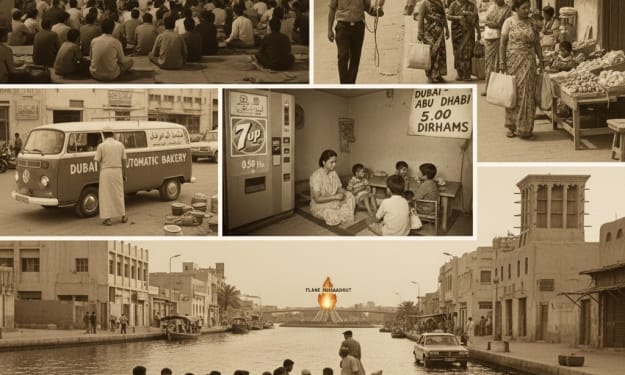
There was a time when bread was sold unsliced, and crossing the creek from Bur Dubai to Deira meant sitting in a rowing boat, long before engine Abras became common. On Thursday nights, the Indian Association would bring families together with free Hindi movies shown in the open-air theatre opposite the Dubai Museum. The community was small, but it felt like one big family.
By Izhar Ullahabout a year ago in Confessions
The Cost of Ignoring a Mother’s Advice
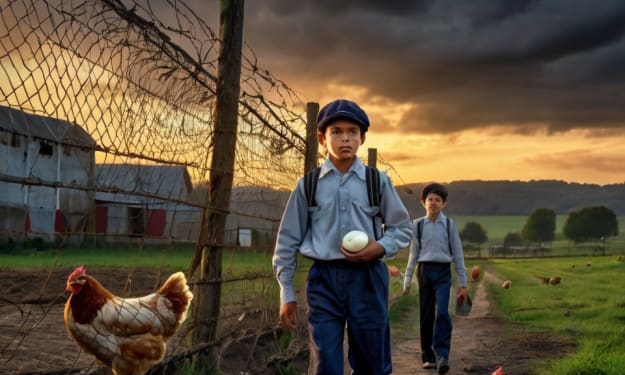
The Cost of Ignoring a Mother’s Advice BY:Khan “Osman, my dear son, don’t play with Nasser,” Mama said firmly one afternoon. “He is not a good boy. I’ve heard he steals, skips school, and spends his time wandering with bad company.” “But Mama,” Osman protested, “he is my classmate and, more than that, he’s my cousin. I meet him every day.” Mama’s face grew serious. “My son, never underestimate the influence of bad company. A person is shaped by the people he spends time with.” Osman tried to reassure her. “Don’t worry, Mama. Your son will never do wrong. I’ll even try to guide him and make him understand.” She shook her head in doubt. “Stealing and roaming the streets have become his habit. Do you really think you can change him?” “Mama, don’t stress yourself. I’ll handle it.” Osman kissed her hand and left the house. Both boys were in seventh grade. During school recess, when students went out to eat snacks, Nasser was always the most active among his group of friends. Four or five boys followed him like shadows. They would devour spicy chickpeas, crispy gol gappas, or cold ice cream—and Nasser was the one who always paid. Osman was puzzled. Sometimes he joined in, sometimes he used his own allowance, but he kept wondering: Where does Nasser get all this money from? Osman only received ten rupees a day, barely enough for a small snack. He knew Nasser’s parents weren’t wealthy enough to give him fifty or sixty rupees every day. Finally, his curiosity overcame him. “Nasser,” he asked one afternoon, “tell me honestly, where do you get all this money?” Nasser lifted a finger to the sky and said, “From the One above.” “That’s true,” Osman replied, “but He gives to everyone. I mean, really, where from?” With a sly smile, Nasser snapped his fingers. “Eat the mangoes, don’t count the trees, brother.” But Osman pressed him. “No, tell me. I want to know.” Nasser narrowed his eyes. “You’re too soft-hearted. You won’t have the courage to do what I do.” “Why not? I also want to spend freely like you.” “It costs nothing to wish,” Nasser laughed. “Look, Nasser, please. I want to be your partner. I want to make money too.” After a pause, Nasser leaned closer. “Are you sure? Think carefully. Once you’re in, you can’t back out.” “I’m sure,” Osman said eagerly. The next day, Osman met Nasser at the appointed place. Together they headed toward a poultry farm at the edge of the village. Nasser carried a sack. He crawled through a broken section of wire fencing and disappeared inside. Moments later, he emerged with the sack full of eggs. Handing it to Osman, he said, “Take this to Sheru’s grocery store. He’ll give you cash. Then go home. Don’t worry, he already knows.” Osman’s heart pounded as he sneaked through the fields, clutching the sack. At the store, Sheru handed him the money. As Osman felt the crisp notes in his hand, his fear faded into excitement. Within half an hour, the boys had earned two hundred rupees. Osman’s hesitation melted quickly. After several trips, he was the one climbing through the fence, filling the sack, and running off boldly. The thrill of easy money drowned his mother’s voice in his memory. But as the saying goes, “The goat’s mother cannot celebrate forever.” One day, the poultry farm’s owner came to inspect. He noticed the egg count was lower than usual. Suspicious, he decided to watch the next day. The following afternoon, just as the boys slipped inside with their sacks, the owner hid nearby. Osman filled his sack and left while Nasser stayed to grab more. Suddenly, the owner appeared. He caught Nasser red-handed. Meanwhile, Osman was on his way back from Sheru’s store with the money when he saw a motorcycle approaching. On it sat the furious owner, gripping Nasser tightly. Osman froze. The owner pounced on him too. Both cousins were beaten severely before being dragged to the police station. A theft report was filed. News spread quickly. At school and in the neighborhood, children mocked them, crowing like roosters whenever they passed: “Cock-a-doodle-doo!” Both boys burned with shame. Osman’s parents rushed to the station, pleaded with the farm owner, and paid compensation to secure their son’s release. Nasser’s family did the same. But for Osman, the humiliation cut deep. He remembered his mother’s warning: “Don’t play with Nasser. Bad company corrupts.” If only he had listened. That day, Osman learned the hardest truth: ignoring wise advice—especially from parents—can lead to disgrace and regret.
By Khan about a year ago in Confessions