Bad habits
She Forgave Me, But I Couldn’t Forgive Myself"
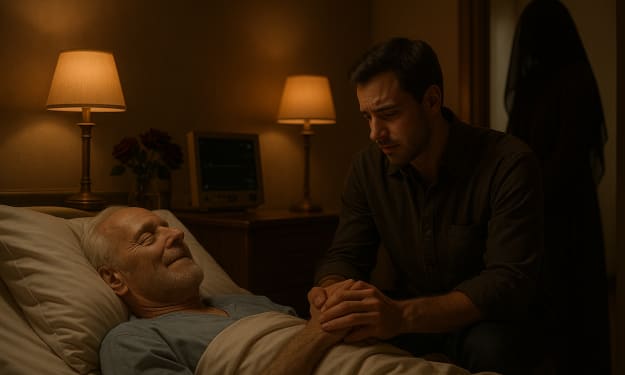
me. Zainab was the light in my life. She was soft-spoken, kind-hearted, and loved with a depth that I never truly appreciated—at least not when it mattered most. We met in college, in those days filled with laughter, long walks, and hopeful dreams about the future. We talked about growing old together, building a life, and chasing goals side by side. But all it took was one mistake, one selfish decision, to tear it all apart. I still remember the day I got my first real job. Everything changed. The new environment, the praise, the attention—it inflated my ego. Among my coworkers was Asma, confident, charming, and always around. I started enjoying the attention she gave me. It made me feel important in a way I hadn’t felt in a while. Zainab trusted me. That was her strength, and maybe her biggest vulnerability. She noticed the changes—how I started coming home late, how my phone was always on silent, how I avoided eye contact when she asked simple questions. But she never confronted me. She just kept smiling, kept believing in me. One afternoon, she surprised me at work. She brought lunch—my favorite—and was standing at the door of the meeting room with a warm smile. But I was sitting with Asma, laughing, our heads a little too close, our body language saying more than words ever could. Zainab saw everything. She didn’t say a word. She just turned around and left. That was the moment everything started crumbling. That evening, she was calm. Too calm. She served dinner, talked about her day, and kissed my forehead before going to sleep. But I couldn’t eat. Her silence was screaming now, and it echoed in every corner of the house. Days passed. She didn’t accuse me. Didn’t cry. She just kept living like nothing happened. But I knew I had broken something inside her. A week later, she handed me a letter. > "I saw everything. But I’ve seen you too—truly, deeply. I know this isn’t who you are. I’ve loved you through your best and your worst. And yes, I forgive you—not because you deserve it, but because I deserve peace. I deserve to let go of the pain. You may not love me the way I loved you, and that’s okay. But don’t carry this guilt forever. Let it teach you, not destroy you." She left the next morning. No drama. No tears. Just quiet footsteps and a closed door. I never saw her again. People say time heals. But some wounds don’t want to heal. They stay open to remind you of what you lost, what you ruined. I’ve tried to move on. I’ve had other relationships. I’ve even tried reaching out to Zainab once or twice, but I never had the courage to press ‘send’ after typing the message. What would I even say? “I’m sorry” seems too small. I see her sometimes in my dreams—still smiling, still gentle. And every time, I want to ask her, “Why did you forgive me?” But I know the answer. Because she was Zainab. Because she had a heart made of something purer than mine could understand. She forgave me. But I can’t forgive myself. And maybe that’s the price I have to pay. Not for cheating. But for not seeing her worth when she was standing right in front of me—loving me when I didn’t even love myself.
By Movies Channelabout a year ago in Confessions
The Greedy Monkey
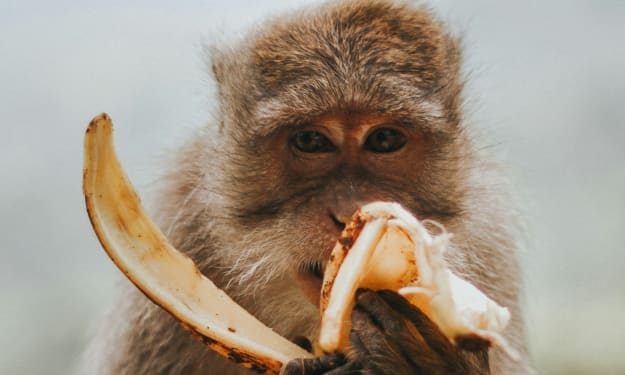
In the heart of a vast green jungle, far away from the noise of cities and machines, lived a clever monkey named Kiki. Kiki was young, full of energy, and known among the animals for his daring leaps and playful nature. He had built his little home high on a coconut tree, where the breeze was cool, and food was always in abundance. Every morning, Kiki would wake up with the sunrise, stretch his arms, and leap from branch to branch, enjoying the freedom that only a jungle could offer. His days were spent playing with other monkeys, chasing butterflies, and most importantly, cracking coconuts. He loved the sweet water and soft white flesh inside. The tree never failed him; it gave him food, shade, and shelter. But like many who have everything, Kiki began to feel bored. “Coconuts, coconuts, coconuts... every day the same thing,” he sighed one afternoon. “Is there nothing else delicious in the world?” His curiosity soon turned into desire when he overheard a bird talking about a nearby human farm filled with exotic fruits—mangoes, papayas, bananas, and pineapples. The last one caught his attention. “Pineapple?” he wondered. “I’ve never tasted one. I must try it!” The next morning, with the sun glowing golden above, Kiki decided to venture out of the jungle. Ignoring the wise old owl who warned him, “What lies beyond the trees is not meant for us, dear Kiki,” the monkey set off on his greedy adventure. He reached the edge of the jungle and saw it for the first time—a wide field, neat rows of plants, and golden-yellow pineapples glowing under the sunlight. The sweet aroma danced in the air, tempting him more than ever. There were no animals around, no jungle sounds—just silence and temptation. “I’ll just take one and run,” Kiki told himself. He carefully crept into the field, looking left and right. Finally, he grabbed the biggest pineapple he could find and tried to pull it out of the ground. But just then—“Hey! What do you think you’re doing?” a deep voice roared. It was the farmer, a tall man with a big stick in his hand, running straight toward Kiki. In panic, Kiki dropped the fruit and tried to flee, but he slipped in the wet mud and crashed hard into the ground. His leg twisted, and pain shot through him like lightning. Terrified, Kiki dragged himself toward a nearby tree and barely managed to climb up before the farmer reached him. Hiding behind the leaves, breathing heavily, he watched the farmer walk away muttering angrily. That night, Kiki didn’t sleep. The pain in his leg, the shame in his heart, and the emptiness of his stomach kept him wide awake. “Why did I leave my tree?” he asked himself. “I had coconuts, I had friends, I had everything.” Days passed, and Kiki couldn’t swing or play. He watched his friends from afar, unable to join them. Some brought him fruits, and the jungle doctor—an old turtle—came to check his leg. “You went chasing what you didn’t need,” the turtle said. “And you forgot to value what you already had.” Kiki lowered his head in silence. He knew the turtle was right. Weeks later, when his leg healed, Kiki returned to his coconut tree. But this time, something had changed. He didn’t complain about coconuts. Instead, he felt grateful. Every sip of coconut water reminded him of the lesson he had learned. From that day, Kiki became the wisest monkey in the jungle. He shared his food with others, told his story to the young ones, and often sat quietly watching the sunset with a peaceful smile on his face. He no longer wished for pineapples, or mangoes, or anything beyond his tree. Because now, he understood a simple truth: --- 🧠 Moral of the Story: “Greed blinds us from the blessings we already have. Gratitude opens the door to true happiness.” Start writing...
By Afzal khan dotani (story uplode time 10:00 PM)about a year ago in Confessions
The House of Cards
My entire life is built on one colossal lie. One gust of truth, and everything I cherish could vanish like smoke. The House of Cards My entire life is built on one colossal lie, and I live in constant dread that it will all come crashing down. Every achievement, every loving word from my wife, every proud glance from my parents — they're all tainted by the deception that has been the foundation of my existence for the past fifteen years. I built this beautiful house of cards, and now the slightest breeze of truth could send it tumbling into irreparable ruin. It all began in my final year of university. I was a mediocre student, drifting aimlessly, burdened by the immense expectations of my family. My older brother, Omar, was a brilliant academic — the golden boy destined for medical school. I, on the other hand, was barely scraping by, plagued by anxiety and a pathological fear of failure. The thought of disappointing my parents, especially my father who had sacrificed so much, was a crushing weight. As graduation approached, the pressure became unbearable. My grades were abysmal. I knew, deep down, that I wouldn't graduate with the honors my parents expected — I might not even pass some of my crucial final exams. The shame was suffocating. Then, in a desperate moment born of panic and self-preservation, a terrible idea took root. It happened during the final exam for "Advanced Calculus" — a subject that had consistently baffled me. The exam hall was packed. Proctors paced the aisles. My mind was blank. Just as despair took hold, I noticed him — a student in the row ahead, hunched over his paper, writing furiously. He was a known genius, always acing every exam. And in that moment of sheer, unfiltered panic, fueled by fear of disgrace, I did the unthinkable. I cheated. Not subtly. Not carefully. I risked everything. I craned my neck, copied answers when the proctor wasn’t looking, praying I wouldn’t be caught. I wasn’t. Against all odds, I passed. Not just passed — excelled. It was the turning point. That single act of deception opened a floodgate. I realized I could fake it. I could mimic success. I graduated with a respectable GPA — not stellar like Omar’s, but enough to please my parents. They were ecstatic. They threw a celebration. They praised my "hard work." I swallowed every compliment like a bitter pill, each one adding another brick to my wall of lies. The deception grew. I used a falsified transcript to gain admission into a prestigious master’s program, where I continued to scrape by — relying on charm, avoiding difficult coursework, skating through on strategy and surface. I eventually landed a job at a respected firm, again through exaggeration and luck. I became adept at talking the talk, even if I couldn’t walk the walk. My shattered confidence transformed into a polished, confident façade. Then I met Sarah. She was everything I wasn’t — honest, grounded, sincere. She admired my supposed ambition, intelligence, and drive. I fell deeply in love with her. And with her love, the lie became heavier. How could I tell her that the man she loved — the man she planned a future with — was a fabrication? That his life was built on sand? Our wedding was a beautiful, joyous day. My parents beamed. Omar, now a successful surgeon, toasted my "meteoric rise." Every word of praise felt like a shard of glass in my soul. I looked at Sarah, her eyes shining with love and trust, and nausea gripped me. She deserved the truth. But by then, the lie had grown too big — too deeply woven into our lives. It wasn’t just mine anymore. It was the foundation of our shared future. Now, fifteen years later, the fear is constant. It lurks in every casual conversation about the past. Every time someone mentions university. Every time my parents brag about my “achievements.” I live with a permanent knot of anxiety, terrified of being exposed — by an audit, an old classmate, a misplaced document. Just last week, a former university acquaintance joined our firm. I vaguely recognized him — couldn’t quite place him — but he’s there, in meetings, in the cafeteria. Every glance from him makes my heart pound. Has he recognized me? Does he remember who I really was? The mediocre student? The cheat? Is he waiting for the right moment? I have nightmares — vivid dreams where I stand naked in a lecture hall, my fraudulent transcript projected on a giant screen. I wake up drenched in sweat, the fear so real it takes minutes to remember it was only a dream. I’ve imagined the conversation with Sarah countless times. Her expression when she finds out. The hurt. The betrayal. The look in my parents’ eyes. The shame that would haunt Omar. If I confess, everything unravels — the life I built, the love I cherish, the respect I’ve earned. All gone. My house of cards would fall, leaving nothing but dust and regret. I’ve thought about confessing. Truly. I long for relief. But how do you admit to a lifetime of lies without destroying everything? How do you tear down a false identity without erasing yourself entirely? So I continue. I smile. I accept praise I don’t deserve. I tell myself it’s for their sake — to protect them from the truth. But in my heart, I know it’s for me. I’m a prisoner in a golden cage, trapped by my own deceit. And every day, I pray the wind doesn’t blow too hard — that the truth stays buried. That my house of cards stands one more day. Because if it falls… I fall with it. And there will be no one there to catch me.
By Noman Afridiabout a year ago in Confessions
The Unexpected
Introduction This is just a stream of consciousness about things that have happened unexpectedly over the last couple of days. These are, actually, in my opinion, positive things, just things that were unplanned or I didn't expect to happen, and I suppose that most of the time, life is like that.
By Mike Singleton 💜 Mikeydred about a year ago in Confessions
We’re More Connected Than Ever, But Lonelier Than We’ve Ever Been: A Day in 2025
This morning, I woke up to 134 notifications. Messages from group chats I barely participate in, app updates, news alerts about a wildfire on the other side of the world, and a reminder from a mental health app that I haven’t “checked in” for four days. A part of me smiled at the digital buzz — a small, addictive rush of relevance. But another part of me, the quieter, honest part, sighed. Because despite the constant pings, replies, and virtual thumbs-ups, I haven’t had a real, meaningful conversation in person for over a week. And I know I’m not the only one. A Hyperconnected World with Disconnected Hearts It’s 2025, and technology has officially won the race for our attention. We live in a time where you can FaceTime your cousin in Australia while ordering groceries through an app, all while streaming a show recommended by an algorithm that knows you better than your closest friends. We carry tiny glass rectangles in our pockets capable of connecting us to anyone, anywhere, anytime. And yet — statistically and emotionally — people have never felt more alone. A recent global study showed that nearly 45% of young adults report feeling lonely most of the time, despite spending upwards of 7 hours a day on social media and messaging platforms. How did we get here? And more importantly, how do we find our way back? The Illusion of Connection I remember when technology was supposed to bring us closer together. Back in the early 2010s, apps like Facebook and WhatsApp promised to bridge oceans and time zones. And for a while, it felt like they did. We reconnected with old school friends, shared pictures of our pets and plates of food, and sent each other silly voice notes just because we could. But somewhere along the way, something changed. What began as a way to nurture friendships turned into an endless competition for attention. The highlight reels replaced honest conversations. People started measuring their worth in likes, followers, and story views. We became performers on a stage with no intermission. And in this constant performance, something vital got lost — authenticity. Now, I scroll through my feed and see people I used to know posting motivational quotes about growth and gratitude while I know they're struggling in silence. I see perfect selfies with captions about "good vibes only," while their eyes tell a different story. It’s a digital masquerade, and most of us are too tired to take our masks off. Always Online, Always Lonely The irony of this hyperconnected world is that while we have more ways to reach each other than ever before, we rarely actually connect. A friend leaves you on 'read' for hours, and you assume they’re busy. But deep down, you wonder if you’re annoying, irrelevant, or easy to ignore. You get tagged in memes instead of receiving phone calls. Birthdays get a generic "HBD 🎉" on your Facebook wall rather than a warm hug or a meaningful message. We’ve replaced depth with convenience, vulnerability with curated images, and conversations with emojis. And while these tiny interactions keep us superficially tethered, they rarely nourish us in the way true human connection does. The Rise of Digital Companionship In 2025, loneliness has quietly become an epidemic. Mental health professionals warn that prolonged social isolation — even when you're technically surrounded by people online — is just as damaging as smoking 15 cigarettes a day. The situation is so severe that AI companionship apps are exploding in popularity. Programs designed to mimic friendship, romance, or mentorship are topping app store charts because people desperately need someone to talk to. An AI that never judges, always listens, and remembers your favorite color might sound comforting, but it’s also a tragic commentary on where we are as a society. When artificial relationships feel safer than human ones, we have to ask ourselves: what went wrong? When Everything Is Performative, Nothing Feels Real Another unsettling truth about modern connection is its performative nature. I remember last month, scrolling through TikTok, I came across a woman sobbing about her breakup. It was raw and emotional — until I realized it was staged content for followers. In the very next video, a man pretended to find an abandoned puppy on the street for likes, even though it was his own pet. Social media incentivizes drama, vulnerability, and human moments — but only when they’re packaged, edited, and filtered for public consumption. As a result, many people now struggle to recognize or engage in genuine connection. We hesitate before sharing a tough moment with a friend, wondering if it’s “oversharing.” We downplay joy in case it seems boastful. And so we drift, further and further apart. The Quiet Return of Small, Real Moments And yet — in the middle of this digital noise, there are still flickers of hope. The other day, my elderly neighbor left a basket of lemons from her tree at my door. No text, no Instagram story, no public display. Just a small, human gesture. At the park, a little boy sold painted rocks for $1.50 each. I watched strangers stop to admire his work and actually talk to one another — not about politics or algorithms, but about how their week was going. These moments reminded me that the human instinct for connection is still alive. It’s buried under push notifications and doomscrolling, but it’s there. And perhaps that’s our way back. Choosing to Be Present If there’s one thing this year has taught me, it’s that presence is a choice. You can scroll for hours and feel emptier than before. Or you can meet a friend for coffee, even if you both just sit quietly. You can put your phone on silent during dinner. You can ask someone how they’re really doing — and wait for the real answer. Because while the world profits off our distraction, what we really crave is attention — not the kind you get in likes or retweets, but the kind where someone looks at you and says, “I see you. You matter.” Final Thoughts 2025 will likely bring even smarter gadgets, AI friends, and virtual worlds. But the most precious thing we’ll ever have is still each other. So maybe it’s time to rebel. Talk to someone in person today. Notice the sky. Leave your phone behind for a walk. Compliment a stranger. Check in on your quiet friend. Because in a world addicted to performance and connection on-demand, choosing real, unfiltered human moments might be the most powerful thing you can do.
By Muhammad Ilyasabout a year ago in Confessions
The Community Garden
Leo, a quiet man who found more solace in the soil than in human conversation, spent most of his evenings tending his plot at the community garden. His hands, calloused and earthy, created beauty from barren ground, but his heart remained a tangled mess of unexpressed feelings. For years, he had carried a secret, a small act of betrayal against his childhood friend, Maya, that had festered into a deep-seated regret. He’d never confessed, and the silence between them had grown into an uncomfortable chasm.
By Momin Shahabout a year ago in Confessions
The Unsent Letter
Eleanor lived a life meticulously constructed around unspoken truths. Her art, vibrant and expressive, was the only place where her true feelings dared to surface, a stark contrast to the calm, composed exterior she presented to the world. A successful architect, she designed buildings that soared, yet her own emotional foundations felt perpetually shaky, built on a secret she had carried since her youth.
By Momin Shahabout a year ago in Confessions
WMYHUSWAH. Content Warning.
Hino. A last name so common it doesn’t register much thought to many people. To me, that last name was my world for five months. Compared to a lifetime, five months may be absolutely nothing, but six years later and here we are writing an essay about it. WMYHUSWAH (What Made You Have Unprotected Sex With A Hino)? The question was originally presented as a lighthearted joke to ease the tension of some horrible past mistakes. It is now a staple to the Goo Goo Dolls song, “Iris.” At first, my chest filled with laughter, but I never thought of an actual answer in a respectful manner. Why did I do it? Let’s travel back to the 2018 Rachel mindset. This man, dare I say his name, my dearest Jonah, was my dark knight wrapped in a cape ready to save the day. My dearest Jonah was a passionate man who expressed interest in the hobbies I really cared about, was a great performer in bed, and foolishly discussed having a future with me.
By Rachie Iris about a year ago in Confessions