Bad habits
What If Social Media Disappeared Overnight?
A Silent Night, a Disconnected World Imagine waking up tomorrow to find your phone buzzing—but there are no Instagram stories, no TikTok videos, and no Facebook updates. Just silence. No notifications. No hashtags trending. Social media has vanished. Sounds impossible? Maybe. But what if, just overnight, every major platform shut down forever? What would that mean for our lives, our emotions, our businesses, and even our identities? --- 💔 The Emotional Whiplash For many, social media is more than entertainment—it's validation, routine, and identity. Suddenly losing that could trigger a wave of emotional confusion. Young people, especially Gen Z, might feel lost without the constant feedback loop of likes and comments. Anxiety and withdrawal symptoms—similar to quitting a drug—could affect millions. A large chunk of people might experience a deep fear of missing out (FOMO), even though there’s nothing to miss. Ironically, in the silence, we might begin to hear our own thoughts again. --- 📈 Businesses Would Panic Social media has become the lifeline of marketing. Small businesses thrive on Instagram. Content creators earn full-time incomes on TikTok. Without these platforms: Influencers would lose income overnight. Brands would have to go back to email marketing, websites, and physical ads. Customer engagement would become much harder, especially for startups. It would feel like traveling back to the early 2000s—but without the preparation. --- 👥 A Generation Disconnected Entire generations have grown up online. Without memes, viral trends, or online challenges, a major part of youth culture would be erased. Events like political protests and social movements that gained power through online momentum (like Black Lives Matter or MeToo) would slow down or vanish. Friendships formed through DMs or comments might fade. We’d return to face-to-face communication, but would we even remember how? --- 🌞 The Unexpected Positives Strangely, there’s beauty in disconnection too. Mental health might improve as comparisons with filtered lives disappear. Sleep cycles could return to normal. Productivity at work and school would likely go up. People might reconnect with hobbies, reading, or spending time in nature. And imagine going to dinner with someone—without checking your phone once. Bliss, right? But beyond the personal benefits, society as a whole could also undergo a subtle revolution. Imagine a world where people are no longer forming opinions based on viral outrage, where public discourse isn't driven by a trending hashtag or a controversial influencer. We might finally begin to value real-life conversations, in-depth journalism, and long-form thinking once again. In schools, students might spend more time engaging in creative writing, critical thinking, and hands-on learning instead of scrolling through social platforms during breaks. Teachers could regain students' full attention, and learning environments might become more focused. Families could also become closer. Instead of sitting in the same room, each person glued to their own screen, they might actually talk to one another. Mealtimes would be about sharing stories, not selfies. Relationships might become more genuine, based on time spent and memories made, rather than emojis and story reactions. Even government systems and democracy could change—for the better. Politicians would need to communicate directly with the people through real-world platforms, town halls, and community radio rather than 280-character tweets. The disappearance of social media might force us to reimagine how we build awareness, unity, and collective action in a more grounded, meaningful way. In this disconnected world, art could flourish again in physical spaces—murals, performances, handwritten letters, community storytelling. Instead of sharing our creativity with algorithms, we’d be sharing it with neighbors. So while the silence might be scary at first, it might become the very breath of fresh air that society needs to find itself again. ⚠️ But Not All is Sunny Not everyone benefits. For those who work online, this change is devastating. Millions in developing countries use Facebook as their only internet—to read news, stay updated, and find jobs. Freelancers and content creators might lose years of hard work and content, with no way to recover their audience. The world might feel quieter, but also lonelier for many. --- 🕵️ Information Would Become Scarce Social media is now our primary news source. In its absence: People would need to rely on TV or newspapers again Fake news might become harder to detect—or easier, depending on your perspective Local businesses and communities might struggle to reach audiences Ironically, less information might actually lead to more confusion. --- 🔄 Would We Ever Go Back? If social media vanished once, would we build it again? History says yes. Humans crave connection. Platforms like Friendster, MySpace, Facebook—all rose and fell. Something new would rise. Maybe it would be simpler, healthier, or maybe even more addictive. But for a brief moment, we’d have a chance to pause, reset, and rethink. --- 💭 Conclusion: Who’s In Control? In the end, the question isn’t what would happen if social media disappeared. The real question is: “Are we using social media — or is it using us?” Sometimes, losing something helps us understand its grip on our lives. A world without social media might be scary, silent, and confusing—but also honest, peaceful, and free.
By Abid Ali Khanabout a year ago in Confessions
Six Thoughts That Always Hit You in the Shower
It’s strange, isn’t it? How a place meant for getting clean becomes a temple for your dirtiest thoughts. Not “dirty” as in scandalous — but the tangled, unfiltered, existential chaos that suddenly shows up when the warm water hits the back of your neck.
By L.M. Everhartabout a year ago in Confessions
My Husband's Hidden Letter Revealed a Truth That Shattered Our Perfect Marriage
I always believed marriage was built on trust. My husband and I had been married for ten years — a full decade of what I thought was love, laughter, and loyalty. Our friends called us the “perfect couple.” People envied how we still held hands at dinner, how we laughed over silly things, how we always looked like we had each other’s backs. But sometimes, the prettiest pictures hide the darkest truths. It was a quiet Sunday morning. The kind where the house smells like coffee and the air feels calm. My husband, Ryan, was out buying groceries. I decided to clean out the storage drawers in our bedroom — something I’d been putting off for weeks. That’s when I found the letter. Tucked away at the back of his drawer, underneath old receipts and expired credit cards, was a faded envelope. The paper had yellowed with time, and the handwriting was unmistakably his. My first thought? A forgotten birthday note. Ryan used to write me small love notes in our early years, and my heart swelled at the idea of finding one of them again. But what I opened was not a love note. --- The Letter From Another Life It was addressed not to me, but to someone named Elena. I froze. The letter wasn’t dated, but the words inside cut deep. Ryan wrote with passion, with honesty — emotions I hadn’t seen in him in years. And the worst part? He spoke of a love I didn’t recognize. > "You were always the one I couldn’t forget, even when I tried. I thought marrying her would fix me, would erase you. But I was wrong." “Her.” Was that me? My heart began racing. I kept reading, even though each word was a punch to my chest. > "There are days when I look at her and feel guilty. She loves me in ways I never deserved. But my heart was never truly hers. It was always yours." --- The Walls Crumbled Tears blurred my vision. I sat on the floor, clutching the letter, feeling like the walls of my life were collapsing around me. Ten years of memories — the vacations, the anniversaries, the cozy nights on the couch — they suddenly felt like scenes from someone else’s life. Who was Elena? And how long had she been a part of my husband’s world? I tore through the drawer, and soon I found more — more letters, hidden photographs, and even a phone I didn’t know he had. It was all there. Evidence of a second life. One I had been completely unaware of. --- The Confrontation When Ryan returned home that evening, carrying two bags of groceries and wearing that familiar smile, I felt numb. I didn’t scream. I didn’t cry. I simply handed him the letter. His face dropped the moment he saw it. No words. No excuses. Just guilt. He sat down slowly, like the weight of ten years had finally caught up to him. He confessed everything. Elena was his ex. They had been together before me, but things didn’t work out. A year into our marriage, she reappeared. They reconnected. He didn’t intend to fall back into old patterns — but he did. And he never stopped. --- I Was the “Safe” Choice What hurt the most was what he said next: > “You were the life I needed. She was the life I wanted.” How do you come back from a sentence like that? I had built our home, stood by him through job losses, through his mother’s cancer, through the ups and downs of life. And yet, somewhere in his heart, I had always been second. The woman he married was not the woman he loved. --- The Choice I Made The next day, I packed my bags. Not because I stopped loving him — but because I finally started loving myself. I didn’t yell, didn’t seek revenge. I simply walked away from a lie that had lasted a decade too long. He begged me to stay. Promised therapy, change, tears — everything I once would’ve clung to. But something in me had changed. That letter didn’t just reveal a secret. It woke me up. --- Starting Over I moved into a small apartment. The first few weeks were hard. The silence was unbearable. The nights felt longer. But with each day, I began to heal. I went back to painting — something I had given up years ago. I traveled alone for the first time. I reconnected with friends. I started therapy. And slowly, I realized that while my marriage had ended, my life hadn’t. That letter shattered me, yes. But it also saved me. --- A Message to Anyone Reading You might think you know your partner. You might believe in the life you’ve built. But if your heart is whispering that something feels off — listen. Don’t wait for a hidden letter to confirm your doubts. Trust your instincts. And most importantly, trust your worth. Because the truth, no matter how painful, will always set you free. --- ❤️ If this story touched your heart, please leave a ❤️ and share it. There’s someone out there who needs the courage to walk away from a lie and step into their truth.
By Abid Ali Khanabout a year ago in Confessions
The Path Not Take
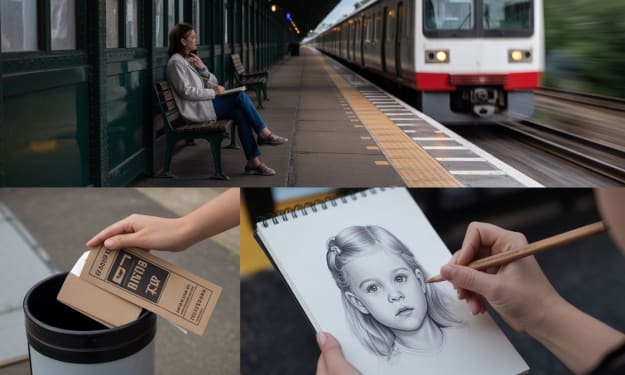
The Path Not Taken Lena sat on a rusted bench at the edge of the quiet train station, her fingers tracing the creases of a return ticket she hadn’t yet used. It was late, the sky smeared with deep gray clouds and a drizzle falling like a whisper. The lights flickered above her head, casting long shadows on the pavement. She had arrived two hours ago, but hadn’t moved. The train would come soon. She had to decide.
By lony banzaabout a year ago in Confessions
Love and Trust Messages for Distance Relationship
Mia sat by her window, watching the rain slide down the glass like silent tears. It had been three weeks since she’d last seen Ryan in person, and the ache of distance weighed on her chest like a stone. She picked up her phone for the hundredth time that day, hoping for a message, a sign, anything to remind her that love could survive the miles.
By Muhammad Saeedabout a year ago in Confessions
The Last Letter I Never Sent. AI-Generated.
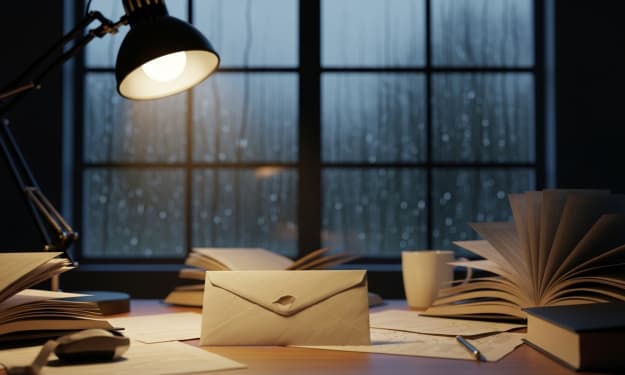
The Last Letter I Never Sent The aroma of stale coffee and forgotten dreams clung to the air in my small apartment. Rain lashed against the windowpane, mirroring the tempest brewing inside me. On my cluttered desk, amidst a mountain of unopened bills and takeout menus, lay a single, cream-colored envelope. It was thick, slightly dog-eared, and bore no address. It was the last letter I never sent.
By Shah Nawazabout a year ago in Confessions
The Day I Climbed Over Fear
For as long as I can remember, I’ve been terrified of heights. Mortified. Even the thought of standing near a ledge makes my knees do that weird wobble thing. If heaven and hell really are in the sky and underground, I think I know which one I’d rather be closer to—and it’s not because of fire or damnation.
By ArshNaya Writesabout a year ago in Confessions
The House at the Edge of the Woods. AI-Generated.
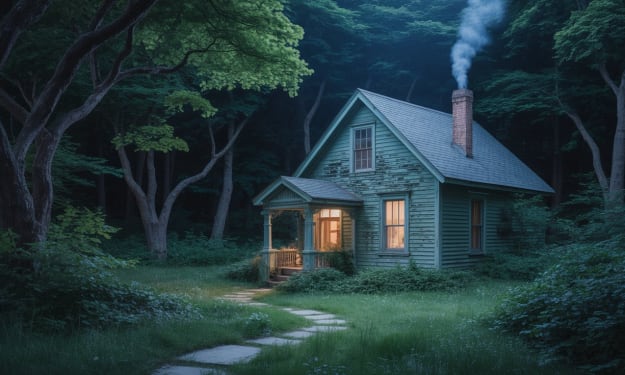
I didn’t expect anyone to answer when I knocked on the door of the old house. It had been empty for as long as I could remember, the roof sagging, the porch half-rotted through. My friends dared me to go up, but they didn’t follow.
By Aliabout a year ago in Confessions
The Borrowed Sorrow
borrowed grief to survive—but the sympathy I stole became my prison. The Borrowed Sorrow I pretended to be someone else – a grieving widow, a shattered orphan – to gain sympathy and financial aid, and now I'm trapped in a web of borrowed sorrow. Every kind word, every compassionate glance, every dollar received, feels like another thread tightening around me, pulling me deeper into a lie that has become my terrifying reality. The fear of exposure is a cold, constant companion, far more real than any of the fabricated tragedies I peddle. It started innocently enough, or so I convinced myself. I was adrift, barely making ends meet after a series of bad choices and worse luck. My small apartment was a suffocating box, my bank account a barren wasteland. Desperation gnawed at me. One evening, while scrolling through social media, I saw a crowdfunding campaign for a family who had lost everything in a house fire. The outpouring of support, the sheer volume of donations, struck me. Not with empathy, but with a cynical thought: If only I had a story like that. The idea took root, ugly and insidious. Not a fire, no, too easily disproved. Something more personal, more tragic, something that tapped into the deepest wells of human compassion: grief. My first foray was small. I created a fake profile on a lesser-known forum, claiming to be a young woman whose husband had just died suddenly in a tragic, freak accident. I spent hours reading real obituaries, researching the language of grief, learning to mimic the raw pain of loss. I posted a few carefully crafted updates, describing my "despair," my "loneliness," my "struggle to cope." I never explicitly asked for money, just for "prayers" and "support." The response was overwhelming. Messages of sympathy poured in. People offered advice, comfort, and yes, small monetary donations, "just to help you get by during this difficult time." The ease of it was shocking. The warmth of their compassion, undeserved as it was, was intoxicating. It wasn't just the money; it was the attention, the validation, the feeling of being seen and cared for, even if it was for a fabricated persona. The lie quickly escalated. The "young widow" became a more elaborate character. I crafted a fake backstory for my "late husband," giving him a noble, slightly heroic profession, ensuring maximum sympathy. I started posting on larger platforms, sharing tearful "memories" and heart-wrenching "photos" (stock images, carefully edited to look personal). The donations grew. It became a lucrative venture, a twisted game where the more profound my "grief," the greater the reward. But the real power lay in the personal connections. People wanted to help. They offered me comfort over the phone, sent me care packages, even offered a place to stay. I had to learn to cry on demand, to lower my voice with a tremor of sorrow, to look perpetually on the verge of tears. It was exhausting, a constant performance, but the fear of returning to my previous life of poverty was a powerful motivator. The "widow" narrative, however, had its limitations. It required too much emotional investment, too much upkeep. So, I diversified. I became a "struggling orphan," whose parents died in a car crash, leaving behind younger siblings I was trying to raise. Then, a "war veteran" suffering from severe PTSD, unable to work, his heroic past contrasting with his current destitution. I researched these roles meticulously, watching documentaries, reading testimonials, ensuring every detail of my fabricated suffering was convincing. I even shaved my head for the veteran role, claiming chemotherapy for a phantom war injury. The lengths I went to were extreme, but the pay-off was immense. I lived a life of borrowed sorrow, flitting between identities, managing multiple online personas, always wary of contradictions. My real life became a mere shadow, a vessel for these fabricated selves. The money poured in, allowing me to move into a nicer apartment, wear better clothes, eat well. I had achieved financial stability, but at what cost? The cost was my soul. The constant fear of exposure became a paralyzing dread. Every new donation, every sympathetic message, was a tightening of the noose. What if someone recognized a detail from a real tragedy I had plagiarized? What if a well-meaning benefactor decided to do some deeper digging? The internet never forgets. A single slip-up, a forgotten detail from one of my countless lies, could unravel everything. Just last week, a woman, a genuinely kind soul who had sent me hundreds of dollars for my "orphan" persona, messaged me saying she was in my city and wanted to meet for coffee, to "offer some real comfort." Panic seized me. I concocted an elaborate excuse about a sudden family emergency out of town, feeling a fresh wave of disgust at my own cunning. The terror of facing the real, human beings I was deceiving, of seeing the hurt in their eyes when they discovered the truth, was unbearable. I am trapped. The wealth I acquired is tainted, impossible to enjoy without the looming shadow of discovery. I’ve tried to stop, to break free from this insidious cycle. But the thought of going back to destitution, or worse, of facing the legal and social repercussions of my actions, paralyzes me. I'm no longer just pretending to be someone else; I am that lie. It has consumed my identity, twisted my conscience. Every night, I lie awake, listening to the silence, imagining the angry faces, the disgusted whispers, the public humiliation. I stole their empathy, their kindness, their hard-earned money, all by selling them a sorrow that wasn't mine. And now, that borrowed sorrow is the only thing that feels real, a suffocating blanket woven from my own deceit, ensuring that I, the identity thief of empathy, live a life haunted by the very pain I once manufactured for profit. And the biggest confession? I don't know how to stop, or if I even can.
By Noman Afridiabout a year ago in Confessions